Are Dry-Type Filter Capacitors Better Than Oil-Filled Capacitors?
2026-04-20 15:56:55
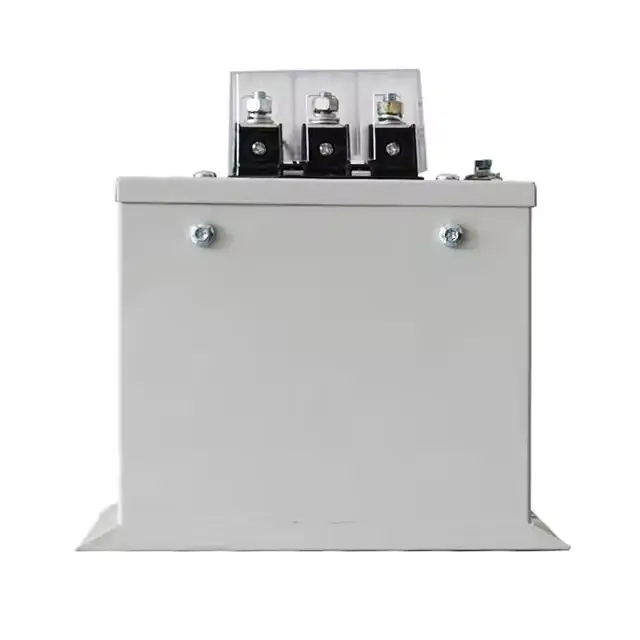
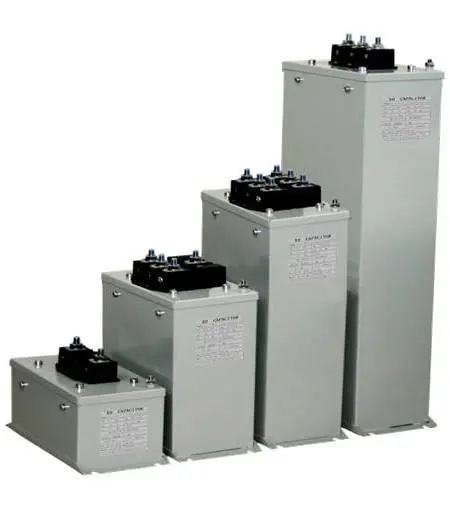
The best choice between Dry-Type Filter Capacitors and oil-filled options relies on the needs of your business. Dry-Type Filter Capacitors are better for sensitive industry settings like data centers and hospitals because they are safer, don't leak, and require little upkeep. The metallized polypropylene film inside these units is surrounded by epoxy resin, which keeps them clean and ensures effective harmonic reduction and power factor adjustment. In modern industry settings, Dry-Type Filter Capacitors usually work better than oil-filled ones for facilities that care more about uptime, following the rules, and saving money in the long run.
|
|
|
Introduction
Power quality problems are getting worse in all industry areas because of more electronic loads, the use of renewable energy, and equipment that is getting old. Dry-Type Filter Capacitors are very important for reducing harmonic distortion, keeping voltage stable, and fixing power factor errors that can shorten the life of equipment and make it less efficient.
This piece talks about a problem that procurement managers, plant engineers, and system designers often have: they have to choose between Dry-Type Filter Capacitors and the more common oil-filled units. Both technologies do similar electrical work, but they are built in very different ways, require very different levels of upkeep, and have very different safety ratings. By knowing these differences, you can make smart choices about what to buy that are in line with operational goals, legal requirements, and the total cost of ownership.
We focus on giving useful advice to big factories, energy companies, and engineering and construction companies that want to make the power system more reliable. By looking at technical specs, performance traits, and trade-offs that are specific to each application, readers will be able to choose capacitor technologies that deliver measurable return on investment, increase uptime, and keep workers safe in harsh industrial settings.
Understanding Dry-Type and Oil-Filled Filter Capacitors
Fundamental Construction Principles
Dry-Type Filter Capacitor uses metallized polypropylene film with no liquid components, eliminating leakage risks and enabling self-healing performance. Oil-filled capacitors use dielectric fluid and paper insulation, offering high capacitance density and cooling, but requiring sealed tanks and suited for high-voltage, space-limited environments.
Operating Principles and Voltage Ratings
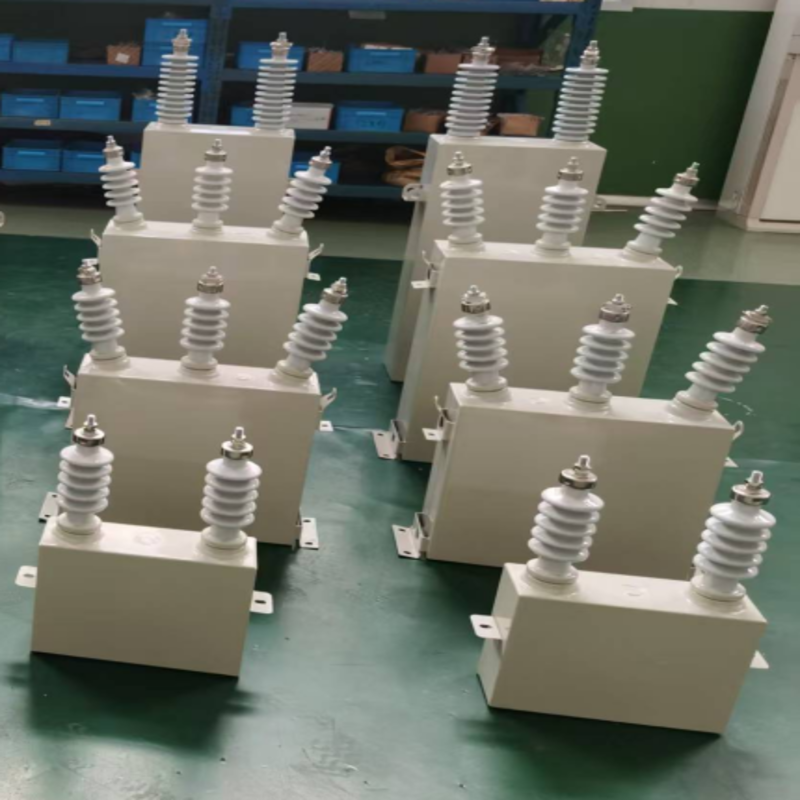
Both capacitor types stabilize voltage and filter harmonics by managing reactive power. Oil-filled units suit medium-voltage systems up to 35kV, while Dry-Type Filter Capacitor options are common in low-voltage networks, offering modular flexibility, safer operation, and built-in protections like overpressure disconnectors.
Maintenance Requirements and Lifecycle Management
Oil-filled capacitors require regular fluid checks, testing, and replacement, increasing maintenance demands. Dry-Type Filter Capacitor designs need minimal upkeep, mainly inspections and testing, due to sealed construction. Their self-healing ability and stable materials extend lifespan, simplify decommissioning, and improve reliability in industrial environments.
Comparing Dry-Type vs Oil-Filled Filter Capacitors
Performance and Efficiency Analysis
Oil-filled capacitors provide high capacitance density and strong heat dissipation, ideal for compact, high-load applications. Dry-Type Filter Capacitor systems feature low ESR, improving efficiency, reducing losses, and enhancing harmonic filtering stability across temperature ranges, making them suitable for variable frequency and industrial environments.
Environmental and Safety Considerations
Oil-filled capacitors carry leakage and contamination risks, requiring monitoring and special disposal. Dry-Type Filter Capacitor designs eliminate fluid hazards through sealed construction, improving environmental compliance, reducing insurance costs, and enhancing fire safety with flame-retardant materials suitable for indoor and sensitive installations.
Failure Modes and Risk Management
Oil-filled capacitors degrade over time and may fail catastrophically under stress. Dry-Type Filter Capacitor technology enables self-healing, allowing continued operation with gradual capacitance loss. This reduces downtime and maintenance, offering better lifecycle value and reliability for industrial applications compared to fluid-based systems.
How to Choose the Best Filter Capacitor for Your Industrial Needs?
Technical Specification Alignment
Selecting the right capacitor requires matching voltage ratings, capacitance, and harmonic filtering needs. Proper sizing avoids overcompensation and ensures stable performance. Dry-Type Filter Capacitor systems paired with reactors enable precise harmonic control, maintaining efficiency and reliability across varying loads and operating conditions.
Environmental Operating Conditions
Installation environments influence capacitor choice. Outdoor substations favor oil-filled units for durability and heat dissipation, while indoor settings benefit from Dry-Type Filter Capacitor designs due to leak-free operation, fire safety, and resistance to vibration, humidity, and corrosive industrial conditions.
Budget Limits and Choosing a Vendor
Cost evaluation should include total ownership, maintenance, lifespan, and energy savings. Dry-Type Filter Capacitor options often deliver better long-term value despite higher upfront costs. Vendor selection should prioritize certifications, technical support, and customization capabilities to ensure reliability and compatibility with specific industrial requirements.
Procurement Guide: Buying Dry-Type Filter Capacitors
Sourcing Channels and Supplier Networks
Industrial capacitor users have a number of ways to get their products, and each has its own benefits. When you work directly with a manufacturer, you can get access to engineering resources, customization options, and cheap price structures. This is especially helpful for big projects or ongoing efforts to standardize equipment. Manufacturers like Xi'an Xikai have expert sales teams that can help with product setup, application analysis, and support after the sale for as long as the equipment is in use.
Authorized dealer networks help manufacturers reach more people by keeping supplies close to home, cutting down on lead times, and letting customers order in different amounts that work for small projects and upkeep parts. Distributors usually keep standard voltage and capacitance values in stock, so pressing substitute needs can be met the same day or the next. Having established ties with distributors makes it easier to buy a lot of different types of products at once, which makes managing vendors and making payments easier.
More and more, procurement workers are using online business-to-business (B2B) tools to find prices and compare vendors. These markets collect products from several Dry-Type Filter Capacitors sellers, letting users compare specs and get quotes from different companies. Before committing to purchases from unknown sellers, buyers should check the supplier's qualifications, ask for proof of certification, and make sure they understand the terms of the guarantee.
Bulk Purchasing Strategies and Customization
Buying in bulk can save you a lot of money because it makes making more efficient and lets you discuss prices. For projects that need 50 or more units, there are usually tiered price cuts that go down to 15% to 25% below catalog rates. Framework deals that set yearly purchase promises ensure better prices while allowing for flexibility in shipping schedules and changes to the product mix.
Requests for customization should weigh the needs of the program against the lead time and cost consequences. Standard product changes, such as different terminal setups, custom label information, or specific test report forms, usually cost little and take an extra one to two weeks. When there are big changes to the engineering, like voltage values that aren't in the catalog, special enclosure materials, or different mounting options, official quote processes and maybe even longer production cycles are needed.
Quality assurance procedures keep buyers safe from goods that don't meet standards and deviations from specifications. Detailed datasheets should list the maximum dissipation factor, voltage proof test settings, capacitance tolerance bands (usually ±5% or ±10%), and estimated service life under certain working conditions. UL, CSA, or TÜV approval marks are used by third parties to make sure that the quality of the making and safety standards are met.
International Logistics and Lead Time Management
Expected lead times depend on how standardized the product is and how much of the factory's capacity is being used. It takes 3–5 business days to ship in-stock items from well-known manufacturers, but 4–8 weeks from the time an order is confirmed until they are delivered for special designs. International shipments take longer to get to their destinations, anywhere from two to six weeks longer based on the route from start to destination, the steps needed to clear customs, and the type of shipping chosen.
When planning logistics, you should think about the size and weight of the packages, as well as any special handling needs. When capacitor banks are put together into multi-unit assemblies, they may take up more space than a normal pallet, which means they need special shipping plans and tools for unloading. When electronics are shipped across the country, they need to be properly packaged to keep them safe from shock, pressure, and moisture.
Total landed costs and shipping times are affected by import duties, customs processes, and paperwork needs. Buyers should make sure they understand the Incoterms that spell out who is responsible for foreign shipping, insurance, and customs clearing. DDP (Delivered Duty Paid) terms make planning easier by setting fixed delivered prices. On the other hand, EXW (Ex Works) quotes require the buyer to coordinate all logistics activities outside of the manufacturer's facility walls.
Maintenance, Testing, and Longevity of Dry-Type Filter Capacitors
Routine Inspection and Testing Protocols
Effective maintenance programs start with regular eye checks to find physical damage like discolored terminals, shell cracks, or unusual swelling that means pressure is building up inside the device. Depending on how important the application is, inspections are usually done every three months or once a year for less demanding setups. High temperatures found by thermal imaging scans could mean that internal parts are breaking down, link resistance is rising, or there isn't enough air flow.
Electrical tests make sure that the continued performance of Dry-Type Filter Capacitors stays within the limits set by the specifications. Using precision bridges or power quality monitors to measure capacitance makes sure that values stay within acceptable deviation ranges, which are usually within ±10% of the official rates. Dissipation factor testing measures dielectric losses; higher values mean the material is getting old or contaminated, which means it needs to be inspected more closely or replaced. Insulation resistance tests between the terminals and ground confirm that the enclosure is solid. Readings below 1000 megohms at the rated voltage indicate that more research is needed.
Voltage proof tests show that the dielectric strength is still there, but they should be done carefully to avoid putting too much stress on the material. IEC 61071 says that for terminal-to-terminal tests, 1.5 times the rated voltage is used, and for terminal-to-case tests, 2 times the rated voltage plus 1000V is used. These destructive tests are usually done during plant acceptance testing and not during field maintenance, unless specific failure studies need to prove the dielectric integrity.
Environmental Management and Service Life Extension
Operating temperature has a big effect on how long a capacitor lasts. For every 10°C rise above the rated outdoor temperature, the estimated service life is cut in half. Enough air flow around capacitor setups keeps heat from building up. This is especially important in cabinets or equipment rooms with a lot of people. The maker promises a 100,000-hour work life, which can be met by keeping the temperature below 40°C and leaving at least 100 mm of space on all sides.
Even though epoxy coating protects the internal parts, moisture-related degradation can't happen because of humidity control. When condensation forms on the outside of the terminals, it makes tracking tracks that let surface flashover events happen. Climate-controlled spaces with 30% to 70% relative humidity make tools last longer. Dehumidification systems or applying anti-tracking chemicals to bushing surfaces on a regular basis can help buildings that experience high seasonal humidity.
Vibrations from nearby machines or earthquakes can damage the mechanical stability of mounting gear and internal connections. Fatigue failures can be avoided by fixing rigidly to stable structures and using the right fastener pressure specs. Facilities that experience a lot of vibration should think about installing vibration-dampening mounts and inspecting mechanical connection points more often.
Troubleshooting Common Problems
If the capacitance starts to drop too soon, it means that the working stress is higher than what was intended. Long-term overvoltage speeds up the aging of the dielectric, and too much harmonic current heats the inside of the device beyond what is allowed by thermal design. Power quality tracking finds the root causes so that problems can be fixed by doing things like improving voltage control or adding more harmonic filtering to stop them from happening again.
When capacitor overcurrent safety devices trip for no reason, it could mean that the inrush current is too high for the circuit breaker or fuse to handle. Pre-insertion resistor circuits or soft-start contactors stop energization transients that would normally stop a safety device from working. Coordination studies make sure that safety devices protect against faults without getting in the way of normal capacitor swapping operations.
Transport, installation, or outside impacts can damage the covering and make it harder for the internal components to line up correctly. If you see cracks in the epoxy coating or the case deforming, you should replace the unit right away, even if the electricity test results are negative. Internal damage might not show up right away, but it gets worse quickly once moisture gets into spaces that are already weakened.
Conclusion
When deciding between Dry-Type Filter Capacitors and oil-filled options, you have to weigh a lot of scientific, financial, and operational factors along with the needs of your facility. Dry-Type Filter Capacitors have strong benefits for industrial uses that prioritize safety for the environment, ease of upkeep, and installation freedom. Their self-healing metallized film technology, leak-free epoxy coating, and ability to be mounted on any surface are all very important for factories, data centers, hospitals, and other business buildings.
Oil-filled capacitors are still better for utility-scale high-voltage uses that need the highest capacitance density and have been shown to work well in harsh outdoor conditions. When procurement workers understand these differences, they can choose capacitor technologies that meet business needs, regulatory requirements, and lifecycle cost goals. Quality makers offer technical support, the ability to customize, and thorough approval paperwork to help buyers make confident purchases that improve the stability of power systems in harsh industrial settings.
FAQ
1. What are the primary safety advantages of dry-type filter capacitors?
Through solid-state construction and epoxy encapsulation, Dry-Type Filter Capacitors completely remove fluid leaking risks. This keeps the environment clean and makes building permits easier to get. Their materials that don't catch fire meet building codes for setups in public spaces that don't need special suppression systems. Self-healing metallized film instantly separates internal faults before they cause catastrophic fails. This keeps people and nearby equipment from getting hurt.
2. Can I replace an oil-filled capacitor with a dry-type unit directly?
For direct replacement to work, voltage ratings, capacitance values, mounting arrangements, and connection arrangements need to be carefully looked at. Electrical specs may be the same, but actual sizes and ways of connecting things are often very different. Before changing technologies, check with the manufacturer's technical support or hire experienced electrical experts to make sure they are compatible and figure out what changes need to be made to any safety features, mounting hardware, or interconnection wiring before proceeding with technology conversions.
3. How do environmental conditions affect capacitor selection?
Extreme temperatures, humidity levels, altitude, and air pollutants all have a big impact on choosing the right technology. Dry-Type Filter Capacitors can work in a wide range of temperatures and keep moisture out thanks to their sealed design, making them ideal for use in harsh industrial settings. For locations above 1000 meters, the voltage needs to be lowered or special designs need to be used to keep the dielectric strength when the air pressure drops. In corrosive environments, terminals need better security or better housing materials to keep them from breaking down too quickly.
Partner With Xi'an Xikai for Reliable Dry-Type Filter Capacitor Solutions
Xi'an Xikai Medium & Low Voltage Electric Co., Ltd. delivers self-healing low-voltage filter capacitors engineered for demanding industrial applications across manufacturing, utility, and commercial sectors. Our metallized polypropylene film technology automatically repairs dielectric breakdowns, reducing replacement costs by 40% compared to traditional designs while delivering 100,000+ hours mean time between failures.
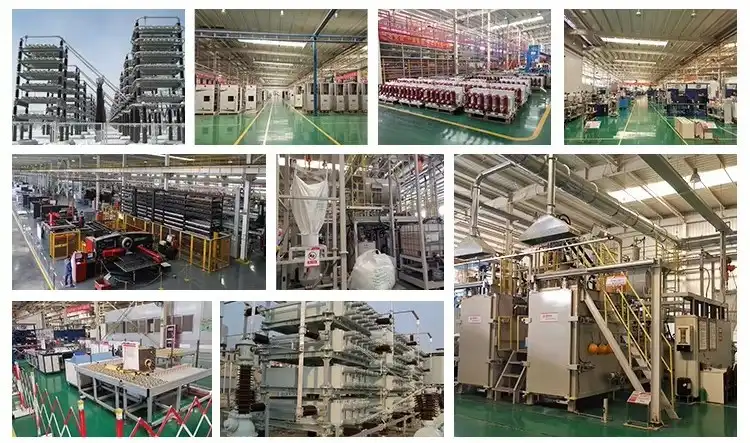
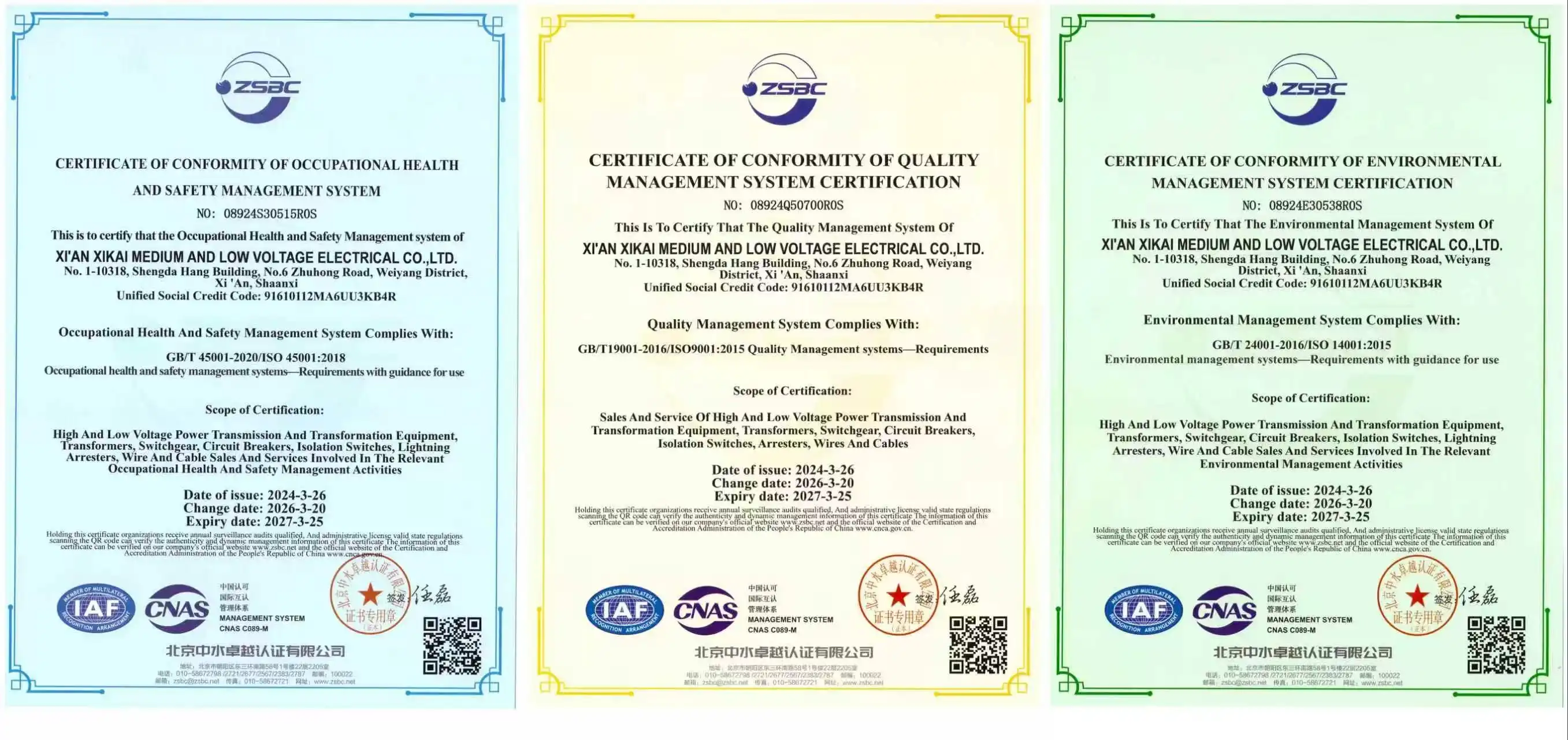
As one of China's largest manufacturing bases for medium and low-voltage electrical equipment, we provide comprehensive system solutions backed by multiple patented technologies and national-level research collaboration. Our Dry-Type Filter Capacitors are rated from 440V to 690V and have capacitance ranges from 5kV to 100kV per unit. They meet IEC 60831-1/2, UL, CE, and RoHS certification standards for global market acceptance.
Contact our technical team at serina@xaxd-electric.com, amber@xaxd-electric.com, or luna@xaxd-electric.com to discuss your specific power quality requirements. We offer customized solutions, competitive bulk pricing for Dry-Type Filter Capacitor suppliers and manufacturers, and dedicated engineering support ensuring optimal equipment selection for your facility's operational demands.
References
1. Institute of Electrical and Electronics Engineers. (2019). IEEE Standard for Shunt Power Capacitors. IEEE Standards Association.
2. International Electrotechnical Commission. (2017). IEC 60831-1: Shunt Capacitors for AC Power Systems Having a Rated Voltage up to and Including 1000V - Part 1: General. IEC Publications.
3. National Electrical Manufacturers Association. (2018). NEMA CP 1: Shunt Capacitors. NEMA Standards Publication.
4. Electric Power Research Institute. (2020). Power Quality Application Guide: Harmonic Distortion. EPRI Technical Report.
5. Dudley, R.M., & Smith, K.L. (2021). Industrial Power Systems Handbook. McGraw-Hill Professional Engineering.
6. Zhang, W., & Chen, H. (2022). Modern Capacitor Technology for Power Electronics Applications. Journal of Electrical Engineering & Technology, 17(3), 1456-1472.