
What is SF6 Circuit Breaker: Working, Construction,Types and Advantages
2026-10-09 17:29:56
SF6 circuit breaker is a high voltage switching device. It uses sulphur hexafluoride (SF6) gas as the principal medium for arc extinction and electrical insulation. If the power supply fails, the breaker opens its contacts within a sealed chamber filled with SF6 gas, which swiftly absorbs free electrons from the arc plasma and restores dielectric strength within milliseconds. This makes the SF6 circuit breaker a good choice for substations ranging from 12kV to 1,100kV, especially when space is at a premium, fire is a concern or the power supply must be dependable.
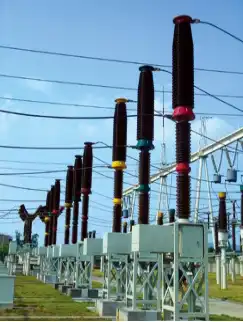
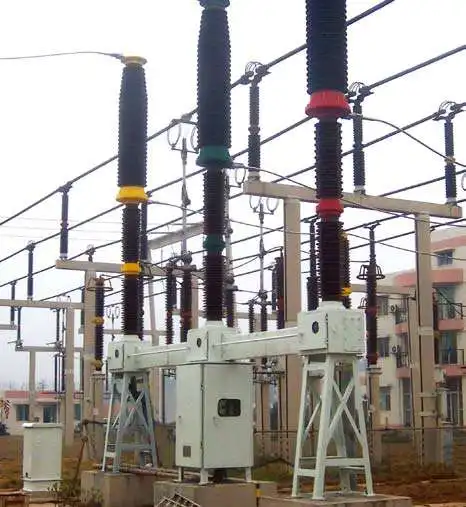
What Is an SF6 Circuit Breaker?
Definition and Core Principle
An SF6 circuit breaker uses a gas-filled housing to open active contacts and minimise fault currents. SF6 gas has dielectric strength around 2.5 to 3 times that of air at same pressure. This enables designers to get away with smaller interrupter chambers yet not lose electrical space. The gas absorbs free electrons very fast during arcing and the arc column dissipates significantly faster than with oil or air blast.
Key Internal Components
There are fixed contacts, moving arc contacts, a puffer cylinder, a vent, and a piston rod in the interrupter system. In a normal state, electricity moves in a straight line through the fixed contact holder, the fixed contact, the moving contact, and the puffer cylinder. This type of spring-operated device, like the CT14 type used in the LW8-40.5, saves energy in a squished spring and releases it when told to move the moving contact through the interruption stroke.
Expected Service Life
A properly maintained SF6 circuit breaker can normally withstand more than 3,000 complete operations with frequent mechanical maintenance and the correct technique to monitor the gas. The electrical lifetime is dependent on the magnitude and periodicity of the fault current. For example, the LW8-40.5 model is capable of breaking 31.5 kA at rated voltage 21 times without repair or gas replacement, a good option for outdoor medium-voltage applications.
Working Mechanism of SF6 Circuit Breakers
Step-by-Step Arc Interruption
When there is a problem signal at the trip coil, the spring mechanism lets go of its stored energy, which moves the moving contact away from the fixed contact. An electric spark appears when the contacts move apart. The puffer cylinder squeezes SF6 gas and sends a high-pressure blast through the nozzle and onto the arc at the same time. The negatively charged SF6 molecules take in free electrons, which cools the arc column and restores the shielding strength at the zero crossing of the current.
Operational Modes
Depending on how the substation is built, an SF6 circuit breaker can work in three different ways. A local control handle is used for setup or repair when the machine is run by hand. Protection relays send trip and close commands within milliseconds of sensing an abnormal current or voltage, which makes automatic operation possible. With remote operation, workers in the control center can use a SCADA link to flip the breaker. This is what is usually done in unmanned outdoor substations in Southeast Asia and Africa.
Maintenance and Monitoring
Modern units make field service a lot easier. The plant fills the LW8-40.5 with SF6 gas before it ships, so the only work that needs to be done on-site is mechanical assembly and checking that the gas level is correct. The MKZ-type SF6 density gage takes into account the temperature of the environment, so techs can get a true reading of the gas density instead of a pressure reading that changes with the weather. Checks include lubricating the mechanism, checking the pressure at the terminals, and checking the gas density. Most of the time, these tasks can be done without special gas-handling tools.
Types of SF6 Circuit Breakers
By Voltage Rating
SF6 circuit breakers can handle a lot of different voltages. These units are used in distribution substations, industrial feeds, and EPC outdoor substation projects. They have voltage ranges from 12 kV to 40.5 kV. Different types of high-voltage models work at 72.5 kV to 550 kV, and extra-high-voltage models can hit 1,100 kV in ultra-high-voltage transmission lines. With rated currents of 1,600 A, 2,000 A, 2,500 A, and 3,150 A, the LW8-40.5 is aimed at the 35 kV to 40.5 kV range.
By Tank Configuration
Live tank SF6 circuit breakers put the interrupter on top of an insulated support column at line potential. This makes it easy to connect higher voltages in series and stops arcs well. The interrupter in a dead tank design is housed in a grounded metal enclosure at earth potential. This makes integrating the current transformer easier and increases resistance to seismic loads, which is useful for projects in geologically busy areas.
SF6 vs. Vacuum vs. Air-Blast
Every technology works best in certain situations. Vacuum circuit breakers work well at medium voltages up to 36 kV and don't need much upkeep. However, when moving inductive loads, they can cause chopping overvoltages. In older transmission systems, air-blast breaks were popular, but they need a lot of space for compressors. SF6 circuit breakers are the standard choice above 36 kV and for capacitive load switching where overvoltage control is important because they have better dielectric recovery and soft-switching properties.
Advantages of SF6 Circuit Breakers
SF6 circuit breakers are quite common in substation projects worldwide because of several performance advantages. These are the key technological advantages, that procurement teams constantly say:
- High dielectric strength: SF6 gas has insulating properties 2.5-3 that of air, enabling the creation of small interrupters, which lower the total footprint of switchgear while maintaining clearance.
- Rapid arc extinction The puffer or self-blast principle blows compressed gas onto the arc to stop it in less than 50 ms – a prerequisite for the protection of transformers and bus bars against lengthy fault energy.
- Low maintenance frequency: Sealed gas system, high mechanical life decrease scheduled outage windows. The LW8-40.5 can break 31.5 kA 21 times without service, reducing lifetime labour expenses.
- Environmental gas management: Controlled SF6 leakage 0.5% per year ensures low cumulative emissions. During decommissioning, closed loop recovery systems comply with IEC and national environmental regulations.
The SF6 circuit breaker is suited for outdoor substations in coastal, tropical and high altitude locations where corrosion, humidity and weather fluctuations may reduce the life of equipment.
Buying Guide and Procurement Tips for SF6 Circuit Breakers
Matching Specifications to Project Requirements
Before issuing a purchase order, verify that the IP rating, rated voltage, rated normal current, rated short-circuit breaking current and rated normal current are correctly in your substation design documentation. IP65 security and anti-corrosion coatings on the enclosures are not an optional option for 40.5 kV outdoor projects in Africa or Southeast Asia, they are a must. Depending on the conditions of your agreement, you must pick an SF6 circuit breaker that satisfies the specifications of GB 1984 or IEC 62271-100.
Evaluating Supplier Reliability
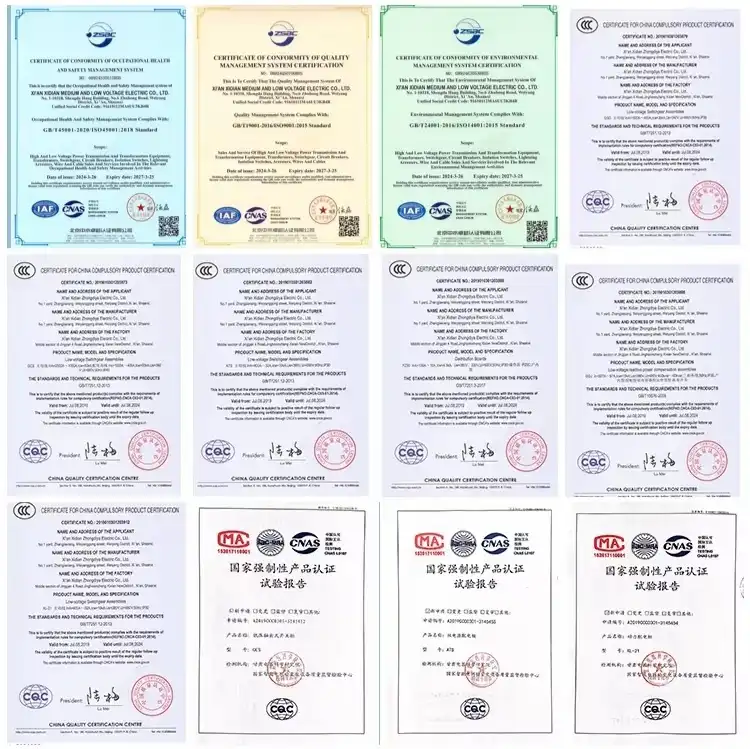
Well-known firms such as Siemens, ABB, Schneider Electric and GE, and Chinese enterprises such as Xi'an Xikai are all ISO 9001 certified and preserve test records. To assess a vendor, request the type test reports, routine test certifications and references for projects comparable to the one you are considering. Medium voltage outdoor breaker lead times for standard applications are 8 to 16 weeks. This window may be extended with custom current transformer integrations.
After-Sales Support and Spare Parts
For distant EPC projects with 2 to 15 units, the unit cost is as critical as the cost of extra parts and the time it takes experts to reach the site. Make that the seller stocks the necessary crucial parts (e.g. operational springs, SF6 density relays and terminal hardware), and provides a specified warranty period. Suppliers who provide 24/7 technical support and documented maintenance plans considerably reduce operational risk during the 20 year life of an asset.
Conclusion
It’s small, it can go for a long time without servicing, and it breaks arcs well, therefore the SF6 circuit breaker has found its way into high voltage power infrastructure. Buying teams can choose the right equipment from the outset if they understand how the gas properties, interrupter form and operating mechanism all fit together. For outdoor projects that need to function in challenging climates, it’s critical to select a unit designed and tested to IEC 62271-100 or GB 1984 standards, with a certified IP rating, established leakage rate and a dependable replacement parts program to guarantee project timelines and long-term grid stability.
FAQ
1.How often does an SF6 circuit breaker need gas refilling?
A properly sealed unit should not need to be refilled during regular operation. The MKZ-type density gauge mounted on the LW8-40.5 can monitor the gas condition constantly. If the density falls to the alert level, the breaker gives an alarm before the lockout level, allowing the operators the opportunity to arrange for a controlled gas top-up.
2.How does an SF6 circuit breaker compare to a vacuum circuit breaker?
SF6 circuit breakers for over 36 kV and for capacitive switching since they create minimum chopping overvoltages. The vacuum circuit breakers are suitable for medium voltages with extremely high switching frequency, however they do not function as well as SF6 designs at fault currents exceeding 31.5 kA.
3.What environmental rules apply to SF6 equipment?
The EU F-gas Regulation (EU) 2014/517 and successive amendments restrict SF6 use and mandate gas recovery during servicing and decommissioning. Other markets, including China, follow GB standards that similarly require closed-loop handling. Buyers should confirm that their service contractor holds certified gas recovery equipment.
4.Can an SF6 circuit breaker handle auto-reclosing duty?
Yes. Standard designs support O–0.3s–CO–180s–CO reclosing sequences, making them appropriate for distribution feeder protection where transient faults are common.
Get a Quote for Xi'an Xikai SF6 Circuit Breakers
The LW8-40.5 SF6 circuit breaker is sold by Xi'an Xikai to EPC builders and power engineering firms in China, Africa, and Southeast Asia. Our goods are certified by ISO 9001 and ISO 14001 and meet the standards set by GB 1984-89 and IEC 56. We also have more than 20 years of experience making high-voltage equipment. Get in touch with our team right away to get project-specific details and delivery times. If you want to get a quote from a reputable SF6 circuit breaker supplier, please email us at serina@xaxd-electric.com, amber@xaxd-electric.com, or luna@xaxd-electric.com, or go to xaxd-electric.com.
References
1. IEC 62271-100: High-Voltage Switchgear and Controlgear — Part 100: Alternating-Current Circuit-Breakers. International Electrotechnical Commission, 2021.
2. GB 1984-2014: High-Voltage Alternating Current Circuit-Breakers. Standardization Administration of China, 2014.
3. CIGRE Working Group A3.28. Switching Phenomena for EHV and UHV Equipment. CIGRE Technical Brochure 570, 2014.
4. Flurscheim, C. H. (Ed.). Power Circuit Breaker Theory and Design. IEE Power Engineering Series, Peter Peregrinus Ltd., 1982.
5. EPA. Reducing SF6 Emissions from Gas-Insulated Switchgear: A Practical Guide. U.S. Environmental Protection Agency, Significant New Alternatives Policy Program, 2019.
6. Ryan, H. M. (Ed.). High Voltage Engineering and Testing (3rd ed.). IET Power and Energy Series, Institution of Engineering and Technology, 2013.
