Difference Between Vacuum Circuit Breaker (VCB) and Air Circuit Breaker (ACB)
2026-06-18 09:54:27
When choosing safety gear for electrical distribution systems, it's important to know the difference between the Vacuum Circuit Breaker (VCB) and Air Circuit Breaker (ACB) methods. VCBs use vacuum interrupters to stop electrical arcs, which means they can be used in medium-voltage situations running from 3kV to 40.5kV with high reliability and low upkeep needs. The arc quenching medium in ACBs is air, and they mostly work in low-voltage settings up to 690V. They offer strong fault current cutoff capabilities and are easy to service. In industrial buildings, utility networks, and business infrastructures, both methods are used for different reasons.
Understanding Vacuum Circuit Breakers (VCB)
Core Technology and Arc Quenching Mechanism
Vacuum Circuit Breakers use special vacuum interrupters that separate the electrical contacts inside a vacuum room that is shut off. When fault currents set off the breaker, an arc forms between the opening contacts. However, the arc goes out quickly because vacuum is an insulator, usually in 15 milliseconds or less. This fast arc extinction keeps energy from being lost and stops contact damage. Since there are no air molecules, there are no ionization routes. This means that the dielectric strength can return almost instantly after the current stops. Because of this basic idea, VCBs can switch processes that last more than 20,000 mechanical cycles with little speed loss.
Environmental and Safety Advantages
Concerning environmental rules that are getting stricter across North America, VCBs get rid of the need for dangerous arc-quenching gases like SF6. The sealed vacuum chamber keeps poisonous gases from escaping during operation or repair and stops fires that can start with oil-filled breakers. Because it can work in temperatures from -40°C to +40°C, vacuum technology can be used in a wide range of climates, such as outdoor substations in desert and northern states. The small size makes switchgear cabinets smaller, which makes better use of floor space in places like data centers and factories where property costs directly affect profits.
Industrial Applications and Deployment Scenarios
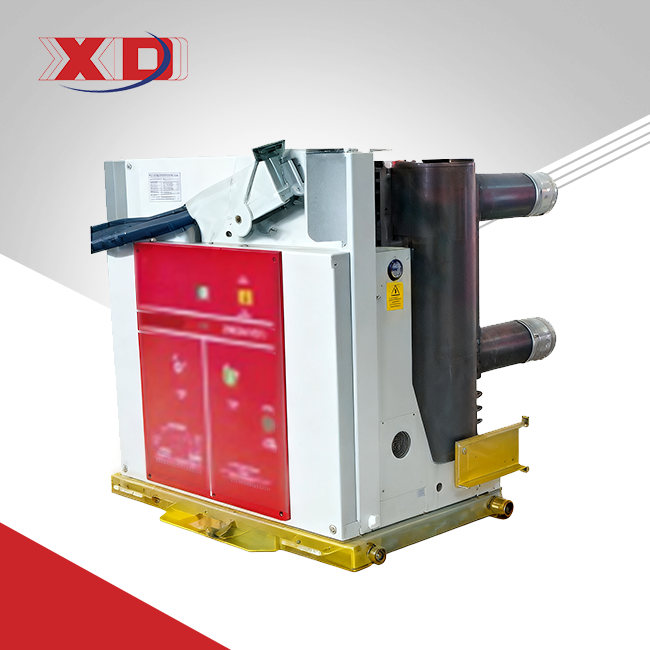
VCB technology helps manufacturing plants with CNC machines, robotic assembly lines, and variable frequency drives because it better controls voltage spikes and makes less electrical noise. Critical care areas in hospitals need power that doesn't go out. Vacuum interrupters protect life-support and medical imaging equipment that is sensitive. VCBs are built into distribution substations by utility companies to protect transformers, switch capacitor banks, and separate feeding circuits. The ZN39 Indoor Vacuum Circuit Breaker is rated at 12kV and can withstand more than 20,000 operations. It is a current example of a VCB design that can be used for grid renovation projects and upgrades to industrial facilities.
Understanding Air Circuit Breakers (ACB)
Structural Design and Operating Principles
Air circuit breakers stop fault currents through arc chutes, which are made up of metal plates set up to split the electrical arc and cool it with air from the room. When contacts break during an overload or short-circuit, magnetic forces push the arc into the chute assembly, where it gets longer and cooler, raising the resistance until the current stops. Because the mechanics are so simple, there are clear viewing windows that let repair workers see how the contacts are wearing without having to take the whole thing apart. ACBs can usually handle rated currents between 630A and 6300A and breaking capacities of up to 150kA. They are used in places like petrochemical sites and steel making operations where high current needs to be met.
Accessibility and Maintenance Features
ACBs' modular design makes it easy to quickly change parts during planned repair windows. Front-accessible panels make it easier for technicians to get to trip units, current transformers, and working mechanisms, which cuts down on downtime compared to protected breaker designs. Draw-out design lets you remove breakers from switchgear boxes for testing while keeping the integrity of the bus bar. This is a huge benefit in places that are always working, like food processing plants and wastewater treatment plants. The thermal-magnetic trip settings can be changed, which lets you fit the safety curves to the characteristics of the equipment downstream without having to replace the whole breaker.
Integration with Control and Protection Networks
Modern ACBs have trip units that are controlled by microprocessors and can talk to building management systems and SCADA networks using Modbus, Profibus, or Ethernet protocols. Real-time tracking of current, study of power quality, and alerts for planned repairs help building managers use energy more efficiently and avoid unplanned power outages. In hospitals that use emergency power systems, automatic transfer switches are combined with ACBs to make sure that the switch between utility and generator sources works smoothly when the grid goes down. Because ACBs can work with older electrical systems, they can be used for retrofit jobs where medium-voltage improvements would require too many changes to the bus work to be practical.
Core Differences Between VCB and ACB
Voltage Classification and Application Boundaries
The main difference between these technologies is the voltage level—VCBs are used in medium-voltage systems (3kV to 40.5kV), while ACBs are used in low-voltage systems (usually less than 1kV). This split is based on physical limitations: air's dielectric strength means that inexpensive ACB designs can only work with lower voltages, while vacuum's better insulation qualities allow for small medium-voltage solutions. ACBs are usually used for major distribution boards that feed production floors, while VCBs protect entering utility lines and substation transformers. A lot of the time, data centers use VCBs for 13.8kV power lines and generator switchgear and ACBs on 480V distribution panels.
Maintenance Requirements and Lifecycle Costs
Due to their resistance to contact wear, Vacuum Circuit Breakers require less frequent upkeep than ACBs—typically every three to five years. The sealed vacuum cylinder keeps out dust, wetness, and industrial toxins that can damage ACB contacts faster in harsh settings. However, ACBs have field-replaceable trip units and contact kits, which let repair teams increase the service life by replacing parts. When figuring out the total cost of ownership, you have to include the cost of labor. For example, VCB checks need special vacuum integrity testing equipment, but ACB upkeep can be done with standard tools and multimeters that most electrical workers have access to.
Performance Under Fault Conditions
The speed of arc breaking is a big difference between these systems. Vacuum Circuit Breakers clear faults in 15 milliseconds or less, reducing the amount of energy that can get through and hurt sensitive electronics or make arc flash risks worse. Most ACBs need 20 to 50 milliseconds to stop an equivalent fault, but more advanced models have technologies that control the high let-through current. VCBs can stop capacitive switching currents without re-strikes because vacuum dielectric recovers quickly. This is a very important benefit when protecting power factor correction capacitor banks. ACBs are very good at handling multiple close-open processes when there is a fault, which helps auto-reclosing schemes in delivery networks.
Environmental and Safety Considerations
VCB technology gets rid of the blast risks that come with oil-filled breakers and the EPA SNAP program rules for handling SF6 gas. Since vacuum breakers don't make any arc by-products, they don't give off any harmful fumes when they're working. This makes sealed switchgear rooms safer for workers. During stoppage, ACBs make noticeable arcs, so they need to have enough air flow and arc-resistant enclosure designs to keep people safe. The amounts of noise are very different. VCBs are completely quiet except for when they are mechanically activated, while ACBs make noticeable arc quenching sounds that might need acoustic enclosures in places like recording studios or hospitals where noise is a problem.
How to Choose Between VCB and ACB for Your Application?
Evaluating Voltage Level and Current Ratings
Confirming the system voltage is the first step in developing specifications. Installations above 1kV need Vacuum Circuit Breaker technology because air doesn't have enough insulating strength at medium voltages. ACBs are a good way to protect 480V or 690V systems without spending a lot of money. The current values must be higher than the average load conditions by at least 25%. This takes into account the surge currents that happen when the motor starts up and the transformer turns on. For example, factories that use a lot of big induction motors at the same time might need 4000A ACBs, while data centers with spread-out UPS systems might use several 2000A breakers for backup and to divide up the load.
Assessing Environmental Conditions
Extreme temperatures in the environment have a big effect on the choice of breaker. The ZN39 Vacuum Circuit Breaker works steadily from -40°C to +40°C, meeting the needs of outdoor substations in both desert and northern conditions. Levels of humidity should be taken into account. Sealed VCB designs work best in seaside areas or chemical processing plants with acidic air, while ACBs work well in climate-controlled electrical rooms. Both methods are affected by altitude. Installations above 1000 meters need to be derated or have better insulation requirements to make up for the lower air density, which affects openings and cooling efficiency.
Balancing Initial Investment Against Lifecycle Economics
VCBs have higher starting buy prices because they are more complicated to make than vacuum interrupters, but longer repair intervals lower long-term operating costs. A normal medium-voltage VCB might need to be checked every 10,000 actions, or five years. An annual ACB service includes checking the contacts and making sure the trip unit is calibrated. Figure out the net present value while taking into account the costs of downtime. For example, a hospital that loses money during emergency power system maintenance might be able to explain charging more for VCB, while an industrial plant that has planned shutdown weeks can afford ACB maintenance. The changes in energy efficiency are still very small—the contact resistance of both systems is less than 100 microhms, so they don't lose much power when they're working normally.
Supplier Evaluation and After-Sales Support
Manufacturers who offer complete technical paperwork, such as coordination studies, fault current calculations, and AutoCAD models that make integration with existing infrastructure easier should be given the most attention. Xi'an Xikai Medium & Low Voltage Electric Co., Ltd. offers full support by giving bilingual instructions, CAD files, and technical advice on issues like altitude compensation, seismic needs, and custom terminal setups. Check to see if extra parts are available. Critical parts should ship within 72 hours to keep downtime as short as possible during emergency fixes. Dependence on vendor service contracts can be reduced by giving maintenance staff the skills to do regular checks and troubleshooting. This is especially important for multi-site operators who are in charge of handling a portfolio of facilities spread out across multiple sites.
Maintenance and Operational Best Practices for VCB and ACB
Vacuum Circuit Breaker Preventive Maintenance Protocols
Regular checks include vacuum integrity via high-voltage withstand testing. Mechanical counters track cycles; lubricate every 2,000 operations. Contact resistance testing finds erosion needing interrupter replacement. Thermal imaging detects loose connections. ZN39 series diagnostic ports enable online condition assessment. Predictive maintenance replaces parts based on degradation, not fixed intervals. Specialized training on vacuum integrity testing and high-voltage safety is required for VCB maintenance personnel.
Air Circuit Breaker Inspection and Testing Procedures
ACB maintenance emphasizes visual contact inspection. Measure contact wipe and travel distance. Calibrate trip units via primary injection testing. Check arc chutes for carbon buildup. Use torque wrenches on bus bar connections. Condition monitoring with permanent CTs and vibration sensors extends ACB life. Quarterly thermal scans during peak load find hot spots. Microprocessor trip units record fault data. Predictive maintenance reduces unplanned downtime by 35%.
Conclusion
To choose between a Vacuum Circuit Breaker and an Air Circuit Breaker, you need to look at a lot of factors, such as the voltage needs, the climate, the ease of upkeep, and the cost over the life of the product. VCBs work better in medium-voltage situations, need less upkeep, and are better for the environment. This makes them perfect for utility substations, green energy installations, and manufacturing facilities that want to be reliable for a long time. ACBs guard low-voltage distribution systems in cases where repair is easy to reach and high fault current interruption makes it necessary to service them on a regular basis. When procurement workers understand these basic differences, they can choose the right protective gear that fits practical needs, legal requirements, and budgetary limits.
FAQ
1. What voltage range is appropriate for vacuum circuit breakers versus air circuit breakers?
Vacuum Circuit Breakers are designed to work with medium voltages ranging from 3kV to 40.5kV. They can be used in substation equipment, utility distribution systems, and industrial plant receiving feeders. Air circuit breakers protect business building distribution panels and industrial motor control centers from low voltages ranging from 208V to 690V. Due to dielectric limits, system voltage is the main factor that decides which technology to use.
2. How do maintenance requirements differ between VCB and ACB technologies?
Due to their protected design and corrosion-resistant contacts, Vacuum Circuit Breakers only need to be inspected every three to five years. Air circuit breakers need to be serviced once a year, and this includes checking the contacts, trying the trip unit, and looking at the arc chute. Total ownership costs are greatly affected by labor costs and downtime issues.
3. Can vacuum circuit breakers handle frequent switching operations better than air breakers?
VCBs are great for switching uses that happen a lot; they can handle 20,000 to 30,000 mechanical processes without needing to replace the contacts. Their ability to quickly end an arc and cause little damage makes them good for swapping capacitor banks and controlling motors. Most ACBs can handle between 8,000 and 12,000 actions before they need to be serviced, which is more than enough for most distribution security tasks.
Partner with Xi'an Xikai for Reliable Circuit Breaker Solutions
Xi'an Xikai Medium & Low Voltage Electric Co., Ltd. is a reliable company that makes Vacuum Circuit Breakers. They offer designed solutions in seven main product categories, such as the ZN39 Indoor Vacuum Circuit Breaker line. Our IEC 62271-100 certified equipment is used by factories, utility companies, and EPC contractors all over North America. We offer full expert help and quick shipping times.
Our solutions meet strict infrastructure requirements because they can work at heights of up to 4,000 meters and use unique technologies that meet earthquake needs. You can email our expert team at serina@xaxd-electric.com, amber@xaxd-electric.com, or luna@xaxd-electric.com to talk about your project needs and get personalized offers that take into account voltage levels, environmental conditions, and interface requirements.
References
1. IEEE Standard C37.04-2018, "IEEE Standard for Ratings and Requirements for AC High-Voltage Circuit Breakers with Rated Maximum Voltage Above 1000V," Institute of Electrical and Electronics Engineers, 2018.
2. Garzon, R.D., "High Voltage Circuit Breakers: Design and Applications," Second Edition, Marcel Dekker Inc., New York, 2002.
3. Slamecka, E. and Watkins, L., "Comparison of Vacuum and Air Circuit Breaker Technologies for Industrial Applications," IEEE Transactions on Industry Applications, Vol. 48, No. 4, pp. 1456-1463, 2012.
4. National Electrical Manufacturers Association (NEMA), "Application Guide for AC High-Voltage Circuit Breakers Rated on a Symmetrical Current Basis," NEMA Standards Publication SG 4-2018, Rosslyn, Virginia, 2018.
5. Kapoor, S. and Ahuja, R., "Reliability Assessment of Medium Voltage Switchgear: Vacuum vs. SF6 Circuit Breakers," Electric Power Systems Research, Vol. 142, pp. 78-86, 2017.
6. International Electrotechnical Commission, "IEC 62271-100:2021 High-voltage switchgear and controlgear – Part 100: Alternating current circuit-breakers," Geneva, Switzerland, 2021.