
How Line Current Limiting Reactors Improve System Stability and EquipmentLongevity
2026-11-04 17:34:04
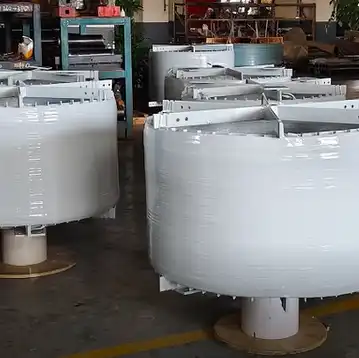
A line current limiting reactor is a series-connected inductive device engineered to reduce short-circuit fault currents in transmission and distribution networks to safe, manageable levels. By inserting impedance into the circuit path, it prevents fault currents from exceeding the interrupting capacity of existing switchgear and circuit breakers. In 110–330 kV substation projects, this single device can protect transformers, bus bars, and downstream equipment from catastrophic thermal and mechanical stress—extending asset service life and reducing total lifecycle costs significantly.

Understanding Line Current Limiting Reactors and Their Role in Power Systems
What a Line Current Limiting Reactor Actually Does
A feeder, bus-tie, or transformer circuit is linked to a line current regulating reactor in series. When there is a problem, the reactor's inductive resistance goes up right away, stopping the current spike before it gets too high and causes damage. Instead of stopping the circuit after the fault, like fuses or circuit breakers do, a reactor shapes the fault current waveform all the time, protecting equipment and keeping the system alive at the same time. In EPC substation design, this proactive behavior is what sets it apart from other types of protective devices.
Core Electrical Characteristics That Drive Stability
A reliable line current limiting reactor has three electrical properties: rated inductance (mH), Q-factor (the ratio of reactive to active power, which shows how efficient the energy is), and short-time current withstand rating (kA/s). A high Q-factor means that the active power loss is very low when the device is working normally. Because there is no iron core, there is no magnetic saturation, so air-core dry-type designs have linear inductance that stays the same even at maximum fault current. IEC 60076-6 says that reactors must keep the linearity of the inductance within ±3% over the whole range of currents.
How It Compares to Conventional Protection Devices
A circuit breaker stops the flow of electricity, while a fuse gives up its own life. A "line current limiting reactor" doesn't do either of those things; it controls current all the time and doesn't wear out. This makes it the only thing that can protect hardware that doesn't have enough stopping capacity without having to buy new expensive equipment. Adding a reactor in series with bus-tie connections is the most cost-effective way to protect the grid today for big 110–330 kV substations where rebuilding old circuit breakers would cost millions.
Key Advantages of Using Line Current Limiting Reactors in Industrial Applications
A properly chosen line current limiting reactor always has benefits, including lower temperature stress, less mechanical shock, and longer equipment life. These benefits are seen in EPC substation projects, heavy industry, and the inclusion of renewable energy. In real life, these are the main benefits this gadget provides:
- Thermal stress reduction: During a fault, uncontrolled current can generate heat exceeding the thermal limits of transformer windings and cable insulation within milliseconds. A line current limiting reactor caps fault current before thermal damage accumulates, directly extending transformer and cable service life.
- Mechanical protection: The electrodynamic forces generated by a short-circuit current scale with the square of current magnitude. By halving fault current, the reactor reduces mechanical force on busbars and windings by up to 75%, preventing deformation and insulation cracking.
- Power quality improvement: In industrial plants with arc furnaces or large variable-frequency drives, the reactor also dampens voltage notches and switching transients, protecting sensitive control equipment from disturbances.
- Improving the quality of the power: In factories that use arc furnaces or big variable-frequency drives, the reactor also smooths out voltage dips and switching transients, keeping sensitive control gear safe from damage.
Design Considerations and Selection Criteria for Procurement
Air-Core vs. Iron-Core: Which to Choose
Dry-type air-core construction is the best choice for 110–330 kV outdoor substation uses. The XKGKL line current limiting reactor from Xi'an Xikai is an example of an air-core design that achieves linear inductance with no chance of saturation and no iron losses at all, resulting in about 30% less energy loss compared to iron-core options. When asymmetrical fault currents hit iron-core reactors, they can become saturated. This makes the inductance drop just when protection is most needed.
Key Electrical Parameters to Specify
Before putting out a request for quotes, procurement engineers should figure out the following: the rated voltage (kV), the rated continuous current (A), the standard inductance (mH), the percent reactance (%), the short-circuit current withstand (kA, 1s/3s), and the Basic Insulation Level (BIL, kV peak). BIL checks how well the reactor can handle lightning shocks, which is an important factor for outdoor sites. Type tests are a common way to check these values, and both IEC 60076-6 and IEEE C57.16 provide them.
Procurement Essentials: Testing and Certification
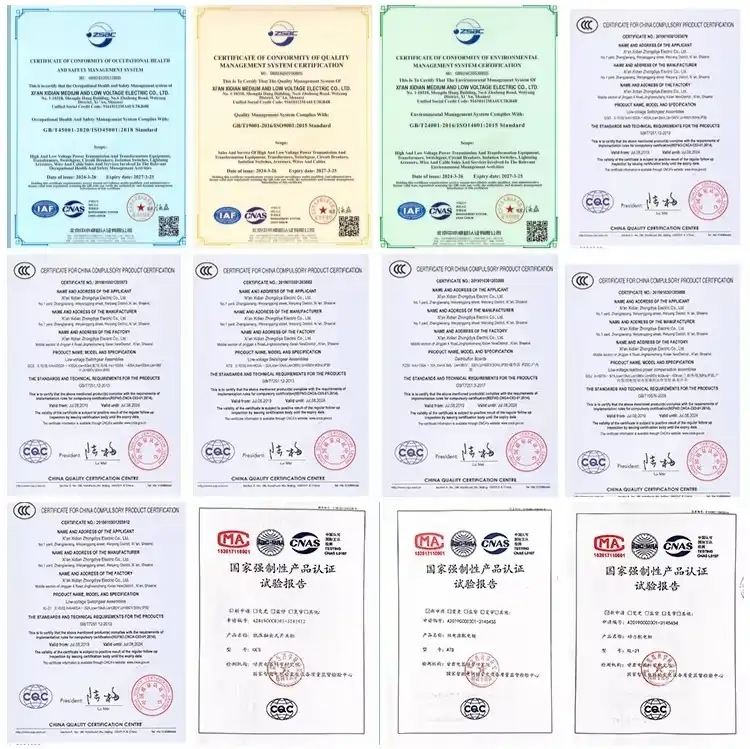
A full type test report must be sent with any "line current limiting reactor" that is sent to a State Grid or EPC project. Some important tests are the short-time current withstand test, which shows that the device can survive full thermal and mechanical fault stress, the lightning impulse voltage withstand test (BIL proof), the partial discharge measurement, and the temperature rise test. Resistance and inductance must be within ±3% of the numbers given. Buying from ISO 9001/14001 certified companies that can show full test records greatly lowers the risk of buying something.
Installation, Testing, and Maintenance Best Practices
Installation Safety and Clearance Requirements
Due to the fact that air-core line current limiting reactors create an outside stray magnetic field, installation space is necessary for safety and performance reasons. To keep eddy current heating from happening, metallic rings like steel fencing, rebar structures, and wire trays need to stay at set distances from each other. Each unit from Xi'an Xikai comes with a full magnetic clearance map. Support insulators need to be torqued to the right level, and the reactor needs to be leveled so that the winding structure doesn't get uneven mechanical loading.
Routine Testing and Commissioning Checks
Before turning it on, make sure the inductance matches the factory test report within ±3%, the insulation resistance to ground is higher than the minimums listed, and all the circuit connections are tight enough. During testing, check the quality of the working current and waveform when the load is on it. As part of yearly checks, the winding surface should be looked at visually for tracking or surface discharge marks. The support insulators should also be cleaned, and the magnetic clearance zone should be checked to make sure that no metal objects have moved into it.
Preventative Maintenance to Extend Service Life
The XKGKL line current limiting reactor is made to last for more than 30 years with very little maintenance. H-class insulation and metal windings that don't rust can handle dust, humidity, and high temperatures without breaking down. Visual checks and cleaning of the insulators once a year are the main types of upkeep that need to be done. There are no cooling fans, oil systems, or parts that need to be replaced. One practical reason why air-core dry-type design rules outdoor EPC substation standards around the world is that it requires little upkeep.
Future Trends and Technological Advances Impacting Current Limiting Reactors
Smart Monitoring Integration
Grid providers are asking inactive devices to have sensors that can connect to the internet of things (IoT) so that they can watch conditions. The XKGKL line current limiting reactor can be built in a flexible way that lets temperature sensors and partial discharge monitors be added. This lets SCADA systems get real-time data. In this way, maintenance teams can find early signs of insulation degradation before it fails, switching from planned to condition-based maintenance plans.
Stricter Grid Codes and Environmental Standards
Tougher harmonic limits and fault ride-through requirements for renewable energy links are being put in place by grid operators like the State Grid Corporation of China and foreign grid codes that are in line with IEC standards. A line current limiting reactor controls fault input from inverter-based generation and attenuates switching transients at the Point of Common Coupling (PCC) of wind and solar farms. This helps projects meet harmonic distortion limits without the need for extra filtering equipment.
Advances in Insulation and Winding Technology
Researchers and manufacturers are testing new epoxy-impregnated fiberglass encapsulation systems that make the mechanical strength better when short-circuit forces are higher than 50 kA. Xi'an Xikai has more than 15 patents on reactor technology developed under China's 863 Program. One of these patents is on patented coil fixation technology that is resistant to vibration and seismic loading and has been certified for use in high seismic zone installations. The difference in performance between normal and premium-tier reactors is getting smaller thanks to these improvements in engineering.

Conclusion
A line current limiting reactor is one of the most cost-effective tools available for protecting substation assets, extending equipment service life, and keeping fault currents within manageable limits. From 110 kV grid expansion projects to renewable energy integration at the PCC, proper reactor selection, installation, and testing directly affects the reliability and financial performance of the entire power system. The XKGKL dry-type air-core line current limiting reactor from Xi'an Xikai combines linear inductance, H-class insulation, and full IEC/IEEE type test compliance into a proven solution for EPC contractors and power design institutes operating in demanding environments.
FAQ
1.Does a line current limiting reactor cause voltage drop during normal operation?
Yes, but within acceptable limits. A properly specified line current limiting reactor introduces a voltage drop typically below 1–2% at rated current. This is considered negligible in standard 110–330 kV system design and can be compensated through transformer tap adjustment if required.
2.What is the magnetic clearance requirement for air-core reactors?
Air-core units produce an external stray magnetic field. Steel fencing, cable trays, and reinforced concrete structures must maintain manufacturer-specified separation distances. Xi'an Xikai provides detailed magnetic clearance diagrams with every line current limiting reactor unit to support site layout planning.
3.How long does a dry-type air-core reactor last?
The XKGKL line current limiting reactor is designed for a 30–40 year service life. Annual visual inspection and insulator cleaning represent the primary maintenance activities. There are no oil systems or rotating components to service.
4.What type tests are required before acceptance?
Standard acceptance requires a short-time current withstand test, lightning impulse voltage withstand (BIL), partial discharge measurement, temperature rise test, and inductance measurement within ±3% tolerance—all per IEC 60076-6 or IEEE C57.16.
Partner with Xi'an Xikai for Your Next Substation Project
When a power system faces rising fault-current levels, selecting the right line current limiting reactor can help control short-circuit current and protect critical electrical equipment. Xi’an Xikai Medium & Low Voltage Electric Co., Ltd. combines large-scale manufacturing capabilities with advanced power distribution system integration, offering customized solutions for demanding industrial and utility applications. Our product portfolio covers multiple electrical equipment categories and more than 100 product variants, backed by patented technologies and compliance with national and industry standards. Xikai also develops plateau-type equipment capable of operating at altitudes up to 4,000 meters, making its solutions suitable for challenging environments. With applications spanning State Grid systems, power engineering, steel and metallurgy, petrochemicals, rail transportation, energy, water conservancy, construction, and renewable energy, Xikai can tailor a line current limiting reactor solution to your system voltage, current, installation environment, and protection requirements. For reliable equipment selection and customized technical support, contact serina@xaxd-electric.com, amber@xaxd-electric.com, or luna@xaxd-electric.com to discuss your project and request a quotation.
References
1. International Electrotechnical Commission. IEC 60076-6: Power Transformers – Part 6: Reactors. IEC, 2007.
2. IEEE Standards Association. IEEE C57.16: Standard Requirements, Terminology, and Test Code for Dry-Type Air-Core Series-Connected Reactors. IEEE, 2011.
3. Kundur, P. Power System Stability and Control. McGraw-Hill, 1994.
4. Glover, J. D., Sarma, M. S., & Overbye, T. J. Power Systems Analysis and Design. Cengage Learning, 2012.
5. Hingorani, N. G., & Gyugyi, L. Understanding FACTS: Concepts and Technology of Flexible AC Transmission Systems. IEEE Press, 2000.
6. Zhang, X., & Li, Y. "Fault Current Limitation Strategies in Modern High-Voltage Substations." IEEE Transactions on Power Delivery, 2019.