
Indoor Vacuum Circuit Breaker: Breaking Capacity and Operating Speed
2026-11-10 17:20:16
An indoor vacuum circuit breaker is judged mainly by two ratings: breaking capacity and operating speed. Breaking capacity is the highest short-circuit current the breaker can interrupt safely at its rated voltage. Operating speed is how quickly it opens, closes, and clears a fault. A 12 kV model such as the ZN39 pairs a sealed vacuum interrupter with a spring mechanism and a breaking time of 15 ms or less. I wrote this guide for switchgear makers and buyers who must match both ratings to the panel, the grid, and the duty cycle before placing an order.
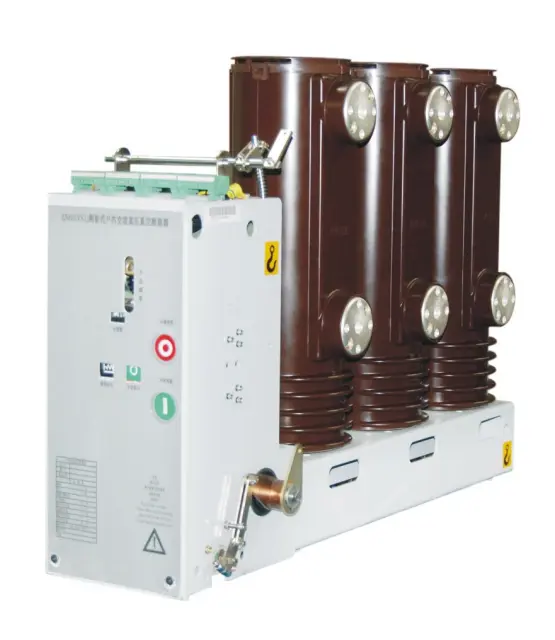

What Is an Indoor Vacuum Circuit Breaker?
Core Function and Operating Sequence
The name for a device that is put inside switchgear and has medium voltage is an indoor vacuum circuit breaker. If there is a problem with the current, you can use it to stop it and separate the equipment so that it can be fixed. When it senses a problem, a safety switch turns off the machine. The trip coil does this. The vacuum interrupter has a handle inside that pulls the moving contact away from the fixed contact. Once the first current point is reached, there is no more gas to keep the arc going, so it ends. The gap quickly gets back to being able to keep electricity out, which keeps the circuit open. Since this loop happens thousands of times over the life of the breaker, both the breaker and the interrupter are very important.
Main Components of an Indoor Vacuum Circuit Breaker
The contacts are kept in a hard-to-open case made of clay or glass. It doesn't touch the frame because of fibers made of epoxy or porcelain. When the spring is closed, it saves power, and every time it closes, a small motor charges the spring again. Another part of the control system is made up of backup buttons, position marks, and coils. The indoor vacuum circuit breaker device and interrupter should be the first things that people who make OEM switchgear look at. The vacuum inside a sealed interrupter must stay the same. Gas does not need to be added to it. You can be sure of this if you put power across the open contacts and watch it fail at test voltage signals lost vacuum. Asking about vacuum decay is a good way to find out how each seller checks their interrupters before sending them out.
Fixed and Withdrawable Designs
Breakers like this one for indoor vacuum circuit breakers are set and don't cost as much to make. Trucks have breaks that can be taken out. The breaks slide in and out of the stall. The team can then take it out, fix it, and put in a spare. For designs to be pulled out, the racks must be smooth, the pieces must be aligned correctly, and the interlocks must work. It can slow down maintenance and put stress on the interlock if a truck won't move. Before they work on a new model, panel makers should check the truck's size, how the shutter works, and how the secondary plugs are set up. Also learn how to test and store records. When you're making something, make sure it fits into the budget, the time frame, and the number of times workers will have to switch units.
Breaking Capacity and Operating Speed in Practice
Reading Breaking Capacity on the Rating Plate
An indoor vacuum circuit breaker has a rating plate that tells you how to use it and what its rated voltage, normal current, and short-circuit breaking current are. A steady flow of electricity always goes through the switch. It can stop up to 31.5 kA of power, or 40 kA for medium-voltage panels. Because a high rating for continuous doesn't always mean a high rating for breaking, you should read each line on its own. These three things are also important to you. When they reach a certain level, breakers can stop the flow of electricity. The most power is 2.5 times that amount around 50 Hz and 2.6 times that amount around 60 Hz. When it is closed, the breaker can only handle a certain amount of current for a certain amount of time.
Matching Breaking Capacity to Your System
First, find out what kind of fault current is present where the installation is being done. Things like how much power there is, how big the transformer is, and how strong the network is all matter. Pick out an indoor vacuum circuit breaker for your home that can handle more power than the one you have now. The fault level will go up with a new generator, which will allow for future growth. You should ask for the literature, proof of the short-circuit test, time-current curves, and security settings. Just looking at voltage and current doesn't tell you anything important about safety. Your engineers can check that everything is right by reading the ZN39 document and comparing the breaking value to the fault study they created. We'll match your fault study and panel grade with the right model after you send them to us.
Operating Speed and the Fault-Clearing Sequence
Going fast and moving quickly with contacts are not the same thing. It keeps track of how long it takes to charge the spring, move it back and forth, and make a loop with it. When something goes wrong with the relay, the trip coil is set off, the spring loosens up, the contacts separate, the arc ends when the current drops to zero, and the gap opens back up. IEEE 1584 gives an estimate of the relationship between link impact energy and arcing time. Fast clearing lowers the energy of an arc flash and keeps transformers and cables from getting too hot. The ZN39 says it can break in 15 ms or less. The trip coil might move more slowly if the control voltage is low. Use a circuit-breaker tester to check the timing, anti-pumping, and trip-free features while the circuit is being set up.
How Breaking Capacity and Operating Speed Work Together
The two scores match up well. An indoor vacuum circuit breaker can turn off the power, but if it takes too long, it can still hurt more. If the quick-break can't stop the fault current, it won't work. This is the grid I use to show the rated voltage, normal current, breaking current, times for opening and closing, mechanical durability, certificates, and service support. Then there is a test report in each cell. It helps me get the best deal. People who buy parts for OEMs look at how long the parts will last when they compare 10,000-operation classes to 30,000-operation classes. The ZN39 can move in at least 20,000 different ways.
Indoor Vacuum Circuit Breaker Applications and Configuration Options
Typical Applications
Indoor vacuum circuit breakers keep places like mines, shopping malls, hospitals, workplaces, and green energy collector sites safe. The feeders, pumps, wires, and police always keep an eye on them. As many swaps happen as possible, it's important for substations that the performance stays stable. Plants like it when safety issues are taken care of quickly. If there is wind or sun, inverter-based sources must always be able to switch. Company that makes OEM panels use the same tools as main parts in their switchgear lines. Match the job cycle to the machine's grade. This means that a feeder that is changed every day needs more energy than an incomer that is only used sometimes. A 12 kV type like the ZN39 works well for these jobs because they are inside, as long as the service conditions don't get too bad.
Voltage Class and Panel Compatibility
Levels of 12 kV, 24 kV, and 36 kV are used a lot of the time. When there is more power, the frames are bigger, the poles are higher, and the phase spacing is wider. Because of this, an indoor vacuum circuit breaker needs to be able to handle the voltage and the panel, truck rails, and plug setup's size. Not only does it need to work with the motor, but safety relays and current transformers must also be able to do so. The poles, contacts, and secondary wires must all line up for OEM lines to work with current cells. Before they build a model, give the engineers rough sketches of the cubicles to look at and see how they match up with the shape of the breaker.
ZN39 Indoor Vacuum Circuit Breaker Specifications
This breaker is the right type for your 12 kV ZN39 indoor vacuum circuit breaker. It must be below 35 °C for at least 24 hours in a row and be in the range of -40 °C to +40 °C for service. The humidity can get as high as 95% every day and 90% every month on average. It can get as high as 1,000 m. It breaks in 15 ms or less and has at least 20,000 mechanical steps. The CE mark is on it and it's set to IEC 62271-100. The system includes different springs, stronger frames, high-creepage porcelain plates for polluted or earthquake-prone areas, and the ability to create your own terminal plans. The ZN39-S line has condition tracking that is ready for the Internet of Things. It costs less to buy the ZN39-E series. Xi'an Xikai is a company that makes tools for plateaus up to 4,000 m high that are used very high up.
How to Choose and Buy the Best Indoor Vacuum Circuit Breaker
Selection Steps
To pick an indoor vacuum circuit breaker, you need to know about the room: the switching frequency, the system voltage, the total load current, the fault current, the control voltage, and the amount of space you have. Write these down before you call each one. First, choose whether the object stays in place or can be moved. Next, choose whether the motor or you will charge the springs by hand. Finally, choose the security screen. Rooms inside units work well when they are clean. Air circuit breakers are mostly used for low-voltage systems, while SF6 breakers use gas to stop the flow of electricity and keep it from getting through. Vacuum breakers that are outside can handle the weather. When vacuum systems are used, SF6 is not used to stop sparks, so there is only one repair job that needs to be done. Check out how much it costs to own everything, not just how much it costs to buy it. In the long run, spare parts, downtime, and service calls add up.
Writing a Clear RFQ
If your RFQ for an indoor vacuum circuit breaker is clear, you'll get a better and faster answer. It's important to include the voltage type, the highest current, the current that breaks a short circuit, the construction (fixed or detachable), the way it works, the control voltage, the switch needs, the panel interface, the number, the location, the certificates, and the conditions of the site. When the quotes come in, look at what each one includes: tests, parts, packaging, paperwork, warranty, delivery terms, and spare parts. Check the type and regular tests for OEM and distributor orders to make sure they are right. Also, make sure the serial number can be tracked, and ask for a check before the goods are sent out. You might want to look at a sample first for new specs. Putting in a series order can take months, so you should start planning this step early.
Final Checks for Engineers and Buyers
Engineers need to look at the voltage class, the highest current that can flow, the fault level, the length of time that it can work, the insulation level, how long it will last, how easy it is to control, and how well the panel fits. If someone wants to buy an indoor vacuum circuit breaker, they should look at the company's skills, certifications, regular testing methods, warranty, schedule, technical support, export documents, and plans for spare parts. Then, find out which state of the vacuum interrupter and truck racks are the most important to the OEM teams. Find out what the checks are for and how to do the vacuum test. It breaks while you're using it and costs more than the difference. If something is cheap, it doesn't always mean it's safe. Pick the internal vacuum circuit breaker that has the right grades, a speed that has been tested and proven, safe integration, quality that has been tested and proven, and a price that is fair over its lifetime.
Installation, Maintenance, and Limitations
Installing an Indoor Vacuum Circuit Breaker
When installation is done right, performance is kept safe. Look at the gaps, the grounding, the control wiring, the ends of the cables, the interlocks, and how the truck is lined up. Watch out for the size and placement of the panel. Before you turn it on, make sure that the position indicators are correct, that the spring is charged, and that the against-pump and racking functions work. Read the sticker and take a look at the insulation and interrupter as well. Use a timing analyzer to write down the times that the doors open and close. Then, check those times against the first ones. The work should only be done by people who are qualified, and they should follow NFPA 70E rules, state laws, and the lockout/tagout process. They will help you get back to work on things in the future, so keep all of your records safe. It's simple to see how things have changed over time once the norm is clear.
Routine Maintenance
They will be found through checks before things get worse. Make sure the grounding is correct, check the timing tests again, and measure the resistance of the contacts and the insulation. Lubricate the mechanism as directed in the guidebook. Run the power-frequency withstand test on contacts that are not closed to make sure the vacuum is healthy. If the room is dirty or damp, you should clean the insulation more often. Always have extra coils and switches on hand, just in case something goes wrong and the power goes out for a long time. Before the next repair interval, compare each result to the standard that was set during commissioning. Also, see if the timing or resistance has changed. Condition monitoring is built into smart models like the ZN39-S, which makes this job easier.
Advantages and Limitations
Inside, there is an indoor vacuum circuit breaker that can quickly stop an arc. It has small poles, doesn't need to handle SF6 to stop an arc, lasts a long time, and doesn't need much maintenance. There is only so much you can do. There are tests that show how well the panel works with the other parts, the state of the system, and how well the defenses work together. Someone trained might be able to help you change an interrupter. If there is low duty or high frequency switching, like in cap banks, the application needs to be looked over again. Other things that can be used outside need to be approved for that weather if they are to work well with low-voltage systems. ZN39 can't be used above 1,000 m, so projects that are high up will need a different plan. Before changes that cost a lot happen, there needs to be a fair review.

Conclusion
If there is a fault in a home, an indoor vacuum circuit breaker must stop the fault current and clear the fault every time. The breaking capacity can be found by adding up these three numbers: making, peak, and short-time withstand. The breaking capacity is based on how much current is needed to break a short circuit. It needs to be bigger than the fault level that was found and be able to get bigger. How fast the machine is going affects how much damage is done to the tools and how much arc-flash energy is released. It also changes the times for opening, charging, arcing, and shutting. Get the most out of it by using a single comparison grid that is backed up by test results. This is possible because of how the two numbers work together. You can narrow down your choices by looking at things like how well the panels fit, how the truck drives, how clean the vacuum is, and how long they last. The 12 kV ZN39 specs make this clear. As long as the work is done right and tests are given often, the scores are good.
FAQ
1. What does breaking capacity mean on an indoor vacuum circuit breaker?
At its rated voltage, this is the biggest short-circuit current that the breaker can stop. Compare the number on the document to the level of fault you found. It might be 31.5 kA or 40 kA. On the paper next to it are the numbers for the making resist, the peak resist, and the short-time resist. In each one, different kinds of stress are tested.
2. How do I measure operating speed?
When you make the circuit, you should use a circuit-breaker timing analyzer. You can compare the times it keeps track of to the numbers from the factory's regular tests. Do the test again to find drift after fixing it. The ZN39 says it can break in 15 ms or less.
3. How do I detect lost vacuum?
Power and frequency tests should be done on the links that are open. If the vacuum breaks at the set test voltage, it is no longer useful. Before you ship, ask the service provider for this test record.
4. Can the ZN39 operate above 1,000 m?
Outside of 1,000 m, the air is too thin to keep it from getting cold for ZN39 to work. Make sure you look over the plan for higher elevation before you place your order. It also makes hill tools that can be used at heights of up to 4,000 m.
Contact Xi'an Xikai for Your Indoor Vacuum Circuit Breaker Project
The indoor vacuum circuit breakers that Xi'an Xikai makes are used inside. In 7 different groups, they have more than 100 different kinds of goods. They also make gear for plateaus that are over 4,000 meters high. Our team will look over the ZN39 for your switchgear line after you send pictures of the panels, the breaking current, and the voltage class to serina@xaxd-electric.com, amber@xaxd-electric.com, or luna@xaxd-electric.com. It's great when you ask for samples for new wants. You can find out more at xaxd-electric.com.

References
1. IEC 62271-100: High-voltage switchgear and controlgear – Alternating-current circuit-breakers, 2021
2. IEEE C37.04: IEEE Standard for Ratings and Requirements for AC High-Voltage Circuit Breakers with Rated Maximum Voltage Above 1000 V, 2018
3. IEEE C37.09: IEEE Standard Test Procedure for AC High-Voltage Circuit Breakers with Rated Maximum Voltage Above 1000 V, 2018
4. IEEE 1584: IEEE Guide for Performing Arc-Flash Hazard Calculations, 2018
5. NFPA 70E: Standard for Electrical Safety in the Workplace, 2024
6. The Vacuum Interrupter: Theory, Design, and Application, CRC Press, 2008