
The Advantages of Line Current Limiting Reactors for Power Systems
2026-10-14 17:23:31
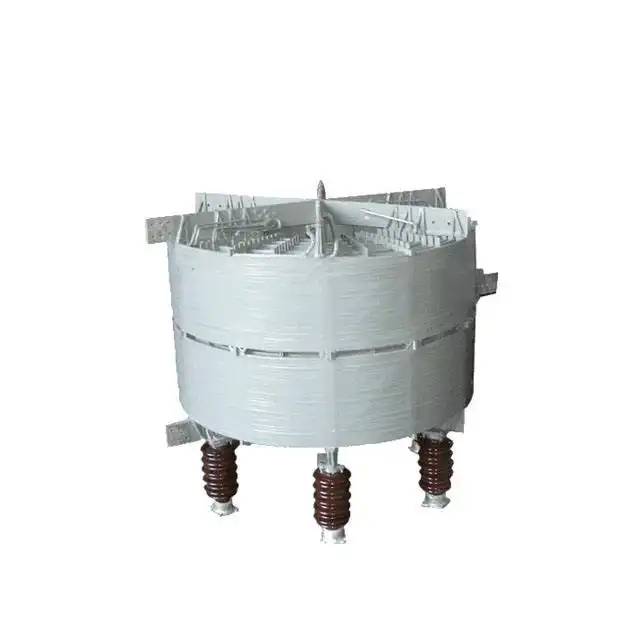
Line current limiting reactor is one of the most technically sound alternatives for handling fault currents in contemporary electrical infrastructure. The device is connected in series in a system line to raise the total system impedance so that a short-circuit current falls to a permitted level before it may harm downstream equipment. Whether you are developing a 110kV substation or integrating renewable power into an existing grid, knowing how these reactors function—and what distinguishes a decent reactor from a fantastic one—can directly impact your project’s safety record and price.
Understanding Line Current Limiting Reactors
What They Are and How They Differ
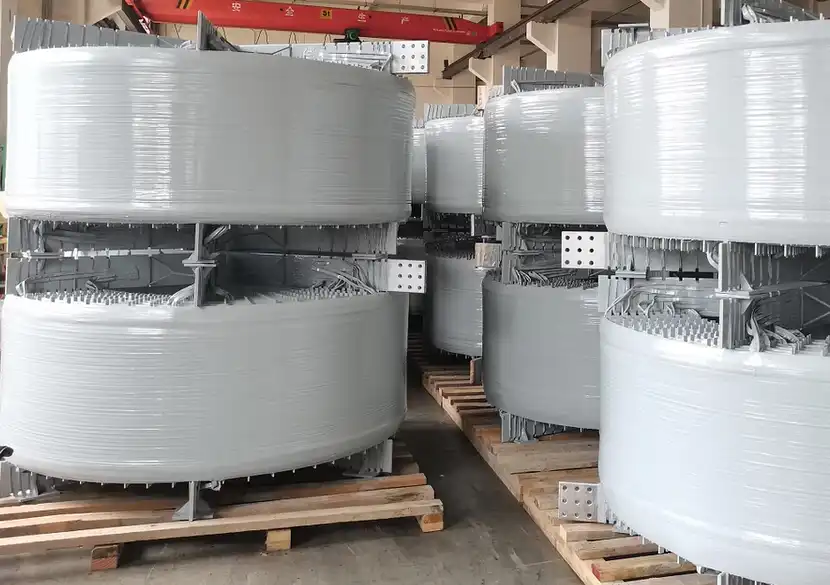
A line current limiting reactor is an electrical device connected in series and developed to prevent the fault currents in transmission and distribution systems. A SVC’s major duty is to serve as an impedance cushion during a short-circuit occurrence . It is unlike a regular smoothing reactor or shunt reactor . This prevents fault currents from reaching magnitudes that the present switchgear cannot manage. This distinction is essential in procurement because misidentification of reactor types may result in under-specified equipment and costly corrections in the field.
Operating Principle
If a fault occurs, the inductive resistance of the reactor instantly increases and there is no current flowing through the shielded feeder or bus section. The relationship is simple, the higher inductance the lower the prospective fault current. Air-core systems maintain their linear inductance at large fault currents because there is no iron core to overload. This is particularly helpful in networks where fault levels might increase dramatically without notice.
Types, Ratings, and Specifications
The building types are mainly divided into dry-type air core, oil-immersed iron core and hybrid kinds. Typically, outdoor substations are furnished with dry-type air-core units, since they do not present any fire hazard, demand less maintenance, and fulfil IEC 60076-6 and IEEE C57.16 standards. Ratings for medium voltage application are typically a few millihenries to several henries. Typical short-time resist currents are 25kA to 63kA for 1 to 3 seconds.
Key Advantages of Line Current Limiting Reactors in Power Systems
A well chosen current limiting reactor provides benefit in three unique areas: protection, power quality, and total cost of ownership. Here are the key benefits that make these devices a realistic alternative for both EPC contractors and design professionals.
- Short-circuit protection: The reactor limits the projected fault current, protecting transformers, circuit breakers, and cable insulation from the thermal and mechanical stress that would be present during a complete fault occurrence. Research published in IEEE Transactions on Power Delivery shows that a 20% decrease in fault current may dramatically improve the service life of the related switchgear.
- Improved Power Quality – Series reactor reduces high frequency harmonic currents from variable frequency drive and rectifier loads. This decreases voltage distortion on the bus, which helps sensitive industrial equipment maintain production tolerances.
- Lower Lifetime Costs: The reactor prevents fault energy from reaching breakers and busbars, enabling longer maintenance cycles and lower emergency repair costs. An air-core dry-type device manufactured by IEC may provide over 30 years of service life with yearly visual inspections only.
- Arc Flash Risk Reduction: less fault current means less incident energy at the place of work, reducing arc flash danger categories in accordance with NFPA 70E and protecting people during live switching operations.
These benefits jointly address the most persistent challenges in high-density industrial power systems: equipment damage caused by fault occurrences, voltage instability from harmonic loads, and increasing maintenance expenditures.
Comparison: Line Current Limiting Reactors vs Other Protective Devices
Reactors vs Fuses
Fuses halt a problem but can only be used once. If an issue is addressed, the fuse has to be replaced and that may happen in rooms with active switchgear. A line reactor always restricts current and has no components that wear out. So it’s the greatest solution for applications where service dependability is critical, such as hospital feeds or steel mill drives.
Reactors vs Current-Limiting Circuit Breakers
Present limiting breakers operate extremely fast - but they have to operate after the problem has occurred. The series reactor reduces the available fault current before the breaker gets to notice the problem. That indicates the breaker is well inside its limit and its stopping mechanism wears down considerably more slowly.
Selection Criteria for Procurement Teams
The choice of the correct gadget depends on the system size, the projected failure level and the load characteristics. The most economical option is generally a dry type air core reactor, which is enough to reduce the prospective fault current to a level that can be managed by the existing circuit breakers, in a 110–330kV substation, when fault levels have increased due to expansion of the network. The fundamental standards for industrial bus-tie applications must meet IEC 60076-6 for inductance, heat grade and mechanical stress.
Practical Application and Design Principles
Grid Expansion and Substation Retrofitting
When power companies expand generating capability or parallel transformers , fault levels are increased . The additional load may be beyond the capabilities of present breakers . By attaching a series line current limiting reactor to feeders or bus-ties, the utility may retain existing equipment without the need to pay for costly replacement plans. State Grid Corporation of China has adopted this approach in a number of infrastructure upgrades and projects along the Belt and Road corridors.
Heavy Industrial and Renewable Integration
Arc furnaces and variable frequency motors are the source of high inrush current and substantial harmonic distortion in steel factories and petroleum refineries. A correctly built reactor minimises the magnitude of the inrush and at the same time reduces the intensity of the harmonics. In the wind and solar farms connected at the Point of Common Coupling, the reactor limits the effect of the faults of the plant on the main grid and smooths switching transients. This allows the grid to comply with the Grid Code criteria for harmonic distortion and fault ride-through.
Installation and Maintenance Best Practices
Outdoor air-core reactors create a stray magnetic field, thus metal loops like fence posts and rebar must be kept away from them, as seen in the manufacturer’s magnetic clearance graphic. Each year, the tests should include surface tracking on the winding encapsulation, cleanliness of the support insulators, and torque checks on the end connections. If the unit is well defined from the beginning, there is little to do in the way of maintenance. No oil to test, no core to re-gap.
Procurement Insights for Line Current Limiting Reactors
Evaluating Suppliers and Total Cost of Ownership
When looking for a line current limiting reactor supplier for a major substation project, procurement teams should obtain type test data for lightning impulse voltage withstand (BIL), short-time current resist and temperature increase. The three tests required by IEC 60076-6 are the empirical proof that the unit can endure the thermal and mechanical stresses of an actual fault condition. Inductance and resistance measurements must be plus or minus 3% of the nameplate values for the batch being delivered.
What Xi'an Xikai's XKGKL Series Offers
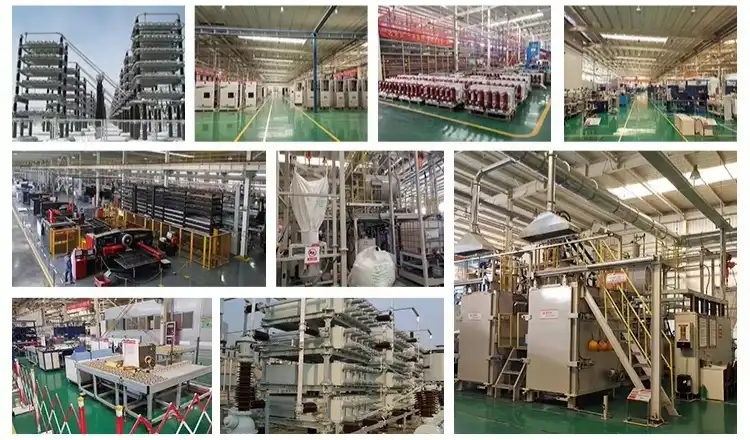
Xi'an Xikai Medium & Low Voltage Electric Co., Ltd. XKGKL Dry-Type Air Core Current Limiting Reactor XKGKL Dry-Type Air Core Current Limiting Reactor 34 Product Series The XKGKL employs a spiral-wound aluminium coil without an iron core, therefore avoiding iron losses and reducing energy waste by around 30% when compared to iron-core types. Featuring H-class insulation and corrosion-resistant aluminium windings, the design life exceeds 30 years in severe outdoor conditions.
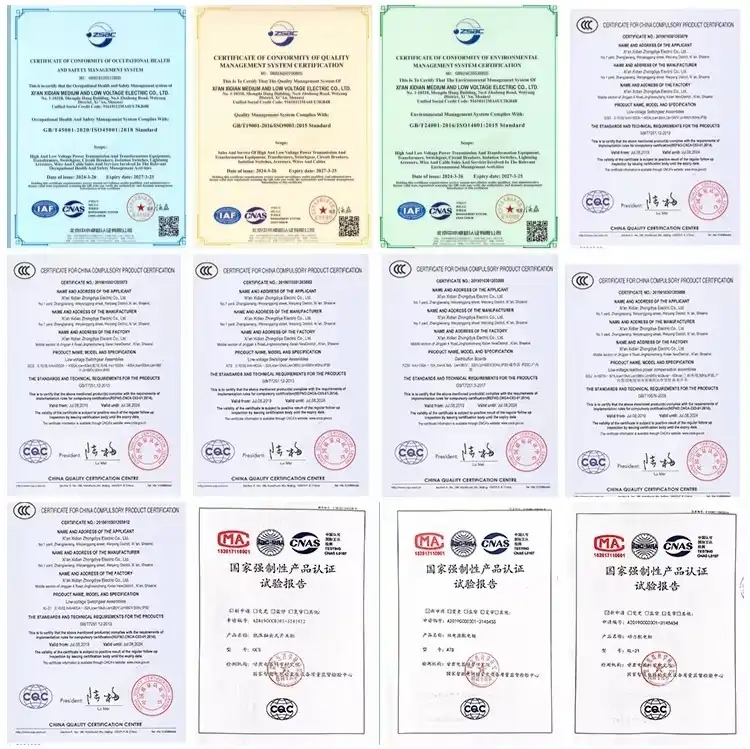
The series XKGKL is produced on methods ISO 9001/14001 and has 3C certification for low voltage variants. The patented coil attachment method offers better vibration resistance and a modular design with IoT-compatible monitoring to facilitate inclusion in automated grid management systems. Custom impedance values, protective coatings, seismic-rated mounting pedestals may all be specified to meet site specific needs, from high altitude plateau installations up to 4000 meters to high pollution coastal substations.
Conclusion
If there is a growing fault level in any power system, from a 110 kV utility substation to a big industrial plant with heavy motor loads, a line current limiting reactor is an easy, long-lasting, and cheap way to handle it. The important thing is to choose a unit that has type test results that can be proven, linear inductance characteristics, and a construction grade that works well in your environment.
FAQ
1.How does a line current limiting reactor differ from a regular reactor?
A standard reactor may smooth current or provide reactive power compensation. A line current limiting reactor is specifically sized and connected in series to cap prospective short-circuit current to a safe level, protecting downstream switchgear and transformers from fault-level stress.
2.Does it introduce a voltage drop under normal load?
Yes, but the drop is typically kept below 1–2% of rated voltage through careful impedance selection. Tap positions can be provided to adjust inductance if load profiles change after commissioning.
3.Why choose air-core over oil-immersed construction?
Air-core dry-type units carry no fire risk, show no magnetic saturation at fault currents, and require no oil sampling or containment. For outdoor substations, these properties significantly reduce both safety risk and lifecycle maintenance cost.
4.What magnetic clearance is needed?
Stray fields from air-core units require metallic loops to maintain distances specified in the manufacturer's clearance diagram. Specific distances depend on rated current and coil geometry and are provided with each project drawing package.
5.What standards govern acceptance testing?
IEC 60076-6 and IEEE C57.16 define the routine and type tests: inductance measurement, winding resistance, insulation resistance, lightning impulse withstand, short-time current withstand, and temperature rise. Procurement teams should confirm all type tests are covered before contract award.
Request a Quote from Xi'an Xikai — Your Line Current Limiting Reactor Manufacturer
Xi'an Xikai has supplied XKGKL series reactors across State Grid projects, Belt and Road substations, and industrial power systems on four continents. If you are specifying a line current limiting reactor for an upcoming EPC project, our engineering team can provide impedance calculations, magnetic clearance diagrams, and full type test documentation. Contact us today at serina@xaxd-electric.com, amber@xaxd-electric.com, or luna@xaxd-electric.com, or visit xaxd-electric.com to discuss your project requirements.
References
1. IEEE Transactions on Power Delivery — "Short-Circuit Current Limitation Techniques in Distribution Networks," IEEE, 2019.
2. IEC 60076-6 — Power Transformers – Part 6: Reactors, International Electrotechnical Commission, 2007 (revised 2018).
3. IEEE C57.16 — IEEE Standard Requirements, Terminology, and Test Code for Dry-Type Air-Core Series-Connected Reactors, IEEE, 2011.
4. CIGRE Technical Brochure 542 — "Current Limiting Devices in Distribution and Subtransmission Networks," CIGRE, 2013.
5. Electric Power Systems Research — "Impact of Series Reactors on Fault Current Levels in Modern Power Grids," Elsevier, 2021.
6. NFPA 70E — Standard for Electrical Safety in the Workplace, National Fire Protection Association, 2021.