Why SF6 Circuit Breakers Dominate Medium and High Voltage
2026-06-18 09:55:06
When industry operators, utility companies, and system designers need to choose switching tools for medium and high voltage uses, SF6 Circuit Breakers are now the first choice. The success comes from SF6 gas's amazing ability to put out arcs—about 100 times better than air—combined with small designs that take up up to 60% less room for installation than standard oil or air-blast technologies. This gas-insulated technology makes sure that fault currents are cut off quickly, saving sensitive equipment and keeping the power quality that data centers, hospitals, and factories need.
Understanding SF6 Circuit Breakers: Principle and Operation
How SF6 Gas Enables Superior Arc Extinction?
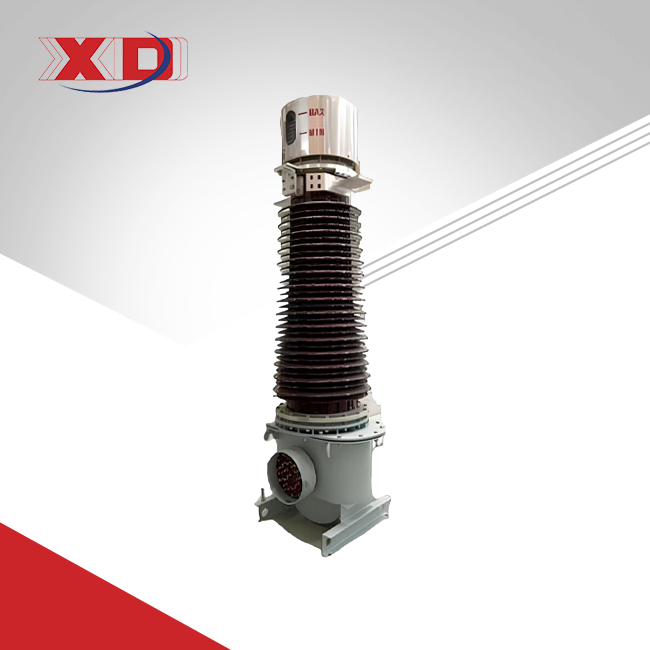
SF6 gas captures free electrons in arc plasma and converts them into immobile negative ions, extinguishing the arc in milliseconds. Our LW8-40.5 Outdoor SF6 breaker stops 31.5kA currents at rated voltage with very short arc times. It performs 21 consecutive interruptions without repair or gas refills, directly addressing operational uptime concerns for production lines and critical data operations.
Puffer and Self-Blast Mechanisms Explained
Puffer systems mechanically compress SF6 gas through tubes to cool the arc, creating 6-10 bar blast pressures for systems up to 245kV. Self-blast breakers use arc temperature rise to build quenching pressure automatically, requiring less mechanical energy. Our LW8-40.5 uses the CT14 spring-operating mechanism based on self-blast, delivering over 3,000 mechanical operations from -30°C to +55°C.
Structural Advantages for Industrial Environments
Modern SF6 interrupters are sealed for life, never exposed to moisture or contaminants. LW8-40.5 features IP65-rated housing blocking dust and high-pressure water jets for coastal and corrosive areas. Seismic resistance up to magnitude 9 ensures operation during earthquakes. The 40.5kV SF6 breaker occupies one-third the space of air-insulated units. Retrofit base design replaces legacy DW8-35 oil breakers without civil changes.
Why SF6 Circuit Breakers Are Preferred over Other Technologies?
Comparative Performance Against Vacuum and Oil Alternatives
Vacuum circuit breakers work well for low to medium voltage tasks, but they can't handle voltages above 40.5kV because of contact wear and cutting currents. When vacuum technology interrupts inductive loads, it can produce sudden overvoltages greater than 2.5 per unit. This can put a lot of stress on transformer insulation and could lead to it failing early. SF6 Circuit Breakers protect linked equipment by causing soft interruptions with overvoltages usually below 1.8 per unit.
Even though oil circuit breakers are an old technology, they need a lot of upkeep. Testing for oil, touch inspections, and fire control systems on a regular basis all add to the cost of doing business. A power company with 100 oil breakers spends about $150,000 a year just on replacing and getting rid of the oil. SF6 technology makes this easier—our MKZ-type density gauge constantly checks gas pressure without making mistakes due to temperature—and only alerts workers when they need to do something. If the rate of gas loss is less than 0.5% per year, then refills should happen about once every 15 to 20 years.
Advanced Monitoring Capabilities for Predictive Maintenance
Digital sensors in SF6 breakers monitor gas quality, operating times, and contact wear. LW8-40.5 works with up to 12 current transformers simultaneously for load profiling and harmonic analysis. Data feeds into Industrial IoT platforms, triggering maintenance alerts when parameters exceed set limits. Utilities report 40% reduction in unexpected breakdowns after implementing predictive maintenance. Data centers save revenue when downtime costs exceed $9,000 per minute.
Real-World Impact on System Reliability
Steel mills with arc furnaces switching up to 200 times daily—traditional breaker contacts need replacement every 18 months. SF6 extends this to 5-7 years due to minimal contact erosion in inert gas. LW8-40.5 handles rated currents of 1600A to 3150A. Hospitals benefit from fast fault clearing below 50ms, minimizing voltage dips. Low noise below 45dB meets NFPA 70 for patient care areas.
Maintenance and Troubleshooting of SF6 Circuit Breakers
Routine Inspection Protocols for Optimal Performance
Monthly patrols: compare gas pressure to baseline values, check ceramic insulators, verify control circuit operation. Investigate pressure changes exceeding 5%—density-compensated gauges auto-adjust for temperature. Yearly inspections: check bolted connections, especially at high-current ends. 60% of field failures come from loose links, not defective parts. Verify SF6 valves fully close. Check shaft pins and bearing rings for wear.
Handling SF6 Gas Safely and Responsibly
Even though SF6 is useful in some situations, it is 23,500 times more likely to cause global warming than CO2, so it needs to be handled carefully. During repair, gas recovery tools must catch 99.5% of SF6 to keep it from escaping into the air. Technicians need to be taught the right way to evacuate using vacuum pumps that are rated for the breaker volume. Checking the moisture level is important for refilling operations because water levels above 150 ppm weaken the dielectric strength and speed up the formation of breakdown byproducts.
Common Fault Diagnosis and Resolution
EU F-Gas Regulation requires annual leak checks for equipment with over 5kg SF6, with records kept 15 years. Choose low-leakage breakers with factory pre-charging. LW8-40.5 certified to GB1984-89, IEC 56, IEC 62271-100, and GB/T 11022. 30% of non-operation faults relate to motor control circuits. Hydraulic spring devices may charge slowly due to fluid wear—replace every 10 years. Ultrasonic tools locate flange or valve stem leaks. Density gauges with built-in compensation prevent false alarms.
Procurement Considerations for SF6 Circuit Breakers
Matching Technical Specifications to Application Requirements
The choice of voltage grade for an SF6 Circuit Breaker is based on studies of the system's baseline voltage and how well the insulation works together. In order to provide safety during overvoltage events, a 35kV distribution network needs SF6 circuit breakers that can handle a maximum voltage of 40.5kV. The current values need to take into account both regular load and short-term thermal capacity during outages. A 2000A SF6 circuit breaker can handle 31.5kA fault currents for three seconds without breaking. This keeps equipment below it safe until the protection upstream starts working.
Evaluating Manufacturer Support and Total Cost of Ownership
Fault stoppage potential is based on breaking capacity. High fault currents are made by factories with big transformers. For example, a 5MVA transformer connected to a stiff power source can make 25kA of fault current. Breakers with a breaking power of 31.5kA or 40kA are recommended for effective fault clearing in the worst situations. The type of operating mechanism you choose affects how often you should service it. For example, spring mechanisms need to be serviced less often than hydraulic ones, but hydraulic ones can be closed faster for automatic repair schemes. Only 30 to 40 percent of the total cost of ownership is paid up front. Costs for installation, launching, and training programs all add a lot of value. Turnkey solutions from manufacturers that include foundation drawings, wire termination kits, and on-site guidance speed up the finishing of a job.
Supply Chain Reliability in Critical Infrastructure Projects
The warranty terms should be carefully read. Standard coverage lasts for two years, but guarantees that last up to five years protect against problems that happen too soon. Importantly, the guarantee should cover gas refills if leaking goes above a certain level, which is a sign of a problem with the way it was made. Repair times depend on how quickly spare parts are available, and having wear parts like contact sets and working mechanism pawls on hand locally shortens the time that the machine is down.
Lead times are very different depending on the maker and the difficulty of the specification. Standard rates usually ship between 8 and 12 weeks, but custom options can take up to 16 to 20 weeks. Suppliers that keep a stock of popular options are helpful for projects with tight deadlines. The production capability and ISO 9001-certified quality systems at Xi'an Xikai make sure that delivery dates are always met, so fines for late commissioning are avoided.
The buying group should make sure that the maker follows the necessary rules, such as IEC, IEEE, and state codes like GB in China or ANSI in the US. Many-standard approval makes foreign projects easier and saves money by avoiding the need for expensive re-testing. Our plateau-type equipment works reliably at heights of up to 4,000 meters without degrading, meeting the needs of places in the mountains where air density affects regular shielding. Xi'an Xikai is often chosen as the top SF6 Circuit Breaker source for projects that need unwavering performance and long-term value.
Case Studies and Industry Applications Highlighting SF6 Circuit Breakers' Dominance
Utility Grid Stabilization Through Advanced Switching
A regional transmission provider that was in charge of 800 circuit breakers spread out over 45 substations had problems with equipment that was getting old. When oil breakers were put in place in the 1980s, they started breaking down more often, and upkeep cost 40% of the annual budget. Over five years, forced outages were cut by 65% when SF6 technology was used to replace old systems. When gas density tracking systems were connected to SCADA, they showed how healthy assets were in real time. This made condition-based maintenance possible, which reduced the need for inspections by 30%.
The economic impact of adopting the SF6 Circuit Breaker was significant. Although initial capital costs were higher, the investment paid for itself within seven years through reduced maintenance and improved reliability. Avoided downtime costs, estimated at $50,000 per event, contributed substantially to ROI. Enhanced safety eliminated the risk of oil spills, closing a gap in the utility's environmental compliance that had exposed it to potential regulatory fines.
Manufacturing Sector Power Quality Improvements
A company that puts together cars often had to stop making things because of voltage drops caused by nearby utility switches. Putting SF6 breakers on important lines that serve robotic welders and paint systems stopped disturbances and kept the voltage within ±3% when there were external problems. The plant cut the number of quality rejections from 4.2% to 1.1%, which saved $800,000 a year in scrap and repair costs.
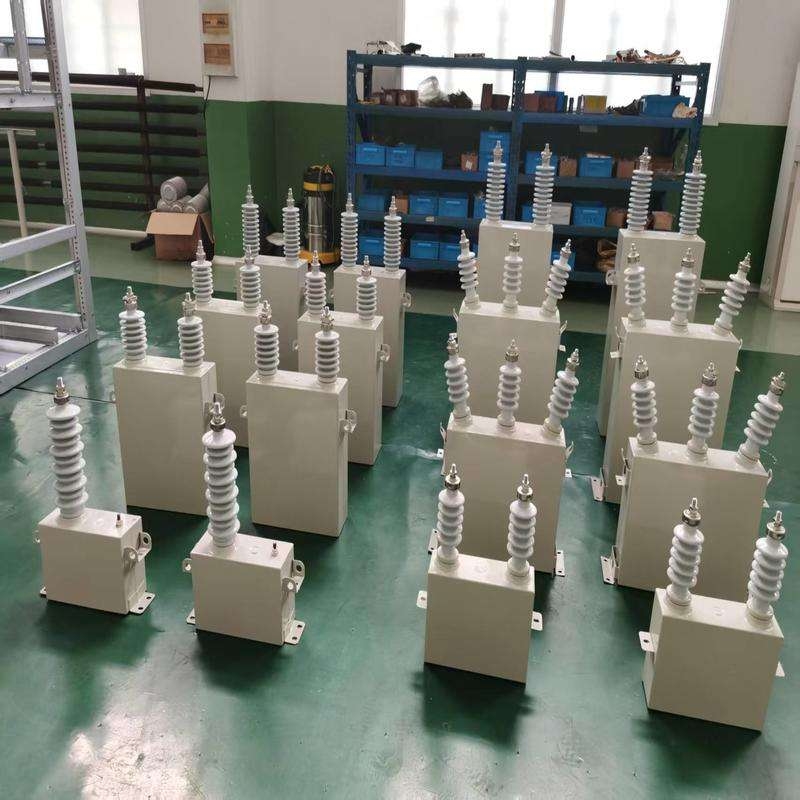
Initially, it was hard to integrate power factor adjustment capacitors. When capacitors were switched, older breakers caused restrikes, which damaged units and caused unnecessary trips. The soft breaking properties of SF6 technology got rid of the need to restrike, which increased the life of capacitors from 6 years to 12 years. This double benefit—higher reliability and lower costs for replacing equipment—showed how choosing the right parts can multiply operating wins.
Renewable Energy Integration and Smart Grid Compatibility
To account for changeable output, wind farms need to switch generators often. A 150MW system uses breakers more than 500 times a year to connect and separate turbines based on the demand from the grid and the wind speed. The high mechanical durability of SF6 breakers—at least 3,000 operations—makes them suitable for this job cycle without premature wear. Digital tracking tools show when each action is happening and how much current is flowing. This information is used by data analytics that improve the way turbine dispatch algorithms work.
As grids move toward remote power and microgrids in the future, they will need smart switchgear. SF6 breakers with IEC 61850 transmission protocols work perfectly with substation automation systems, letting them be controlled from afar and automatically isolating faults. This architecture allows self-healing grids that quickly reroute power, so customers aren't affected as much when something goes wrong. Because it is reliable and flexible, the dominance of SF6 Circuit Breakers is becoming an important part of modern electricity infrastructure as the use of green energy grows.
Conclusion
SF6 Circuit Breakers are the most popular choice for middle and high voltage applications because they offer the best mix of technical performance, operational dependability, and value for money. These devices solve important problems that industrial operators, utilities, and system designers face. They do this by using SF6's special physical qualities to quickly extinguish arcs and by being small so they take up as little room as possible. Because SF6 can release greenhouse gases into the air, it needs to be handled carefully. However, leak prevention and gas management methods are always getting better, which eases worries. When making a purchase choice, you should think about the total costs over the product's entire life, such as repairs, changes to reliability, and the manufacturer's support options. As electricity infrastructure moves toward better, more resilient designs, SF6 technology will still be useful in many situations because it works well and can be changed easily.
FAQ
1. What voltage levels are SF6 circuit breakers suitable for?
SF6 Circuit Breakers work great for both low voltage (12kV to 52kV) and high voltage (up to 800kV) uses. The LW8-40.5 type is designed to work with 35kV systems that can handle a maximum voltage of 40.5kV. This includes most industrial distribution networks and utility subtransmission networks. Vacuum technology is usually used for lower voltage uses below 12kV because it is cheaper.
2. How often does SF6 gas require refilling or replacement?
Every 15 to 20 years, gas repair is needed on good breaks with leak rates below 0.5% per year. Modern density gauges constantly check the pressure and let workers know when they need to do something. Since SF6 doesn't break down chemically during regular operation, proper handling during upkeep keeps the gas from getting contaminated, which extends its life forever.
3. Can SF6 breakers integrate with existing substation automation systems?
Modern units accept IEC 61850 standards, which makes SCADA connection easy. Digital I/O ports let safety relays and control systems talk to each other, and embedded tracking gives asset management tools information about how things are working. With the help of extra contacts and analog sensors, retrofit setups can work with old control systems.
Partner with a Trusted SF6 Circuit Breaker Manufacturer
The engineers at Xi'an Xikai Medium & Low Voltage Electric Co., Ltd. have been doing great work for over twenty years, and they can help you with your important power infrastructure projects. We have tested and proven that our LW8-40.5 Outdoor SF6 Circuit Breaker is reliable in the field. Each unit goes through 12+ quality checks to make sure it meets strict IEC and GB standards before it is shipped. Whether you're updating utility substations, keeping industrial buildings safe, or adding green energy, our expert team can help you from the initial specification stage through commissioning and beyond. Get in touch with our experts at serina@xaxd-electric.com, amber@xaxd-electric.com, or luna@xaxd-electric.com to talk about your voltage change needs. Find out why top EPC companies choose Xi'an Xikai as their top source for projects that need unwavering performance and long-term value.
References
1. International Electrotechnical Commission. (2021). "High-voltage switchgear and controlgear – Part 100: Alternating current circuit-breakers," IEC Standard 62271-100.
2. Christophorou, L.G., Olthoff, J.K., and Green, D.S. (1997). "Gases for Electrical Insulation and Arc Interruption: Possible Present and Future Alternatives to Pure SF6," National Institute of Standards and Technology Technical Note 1425.
3. IEEE Power and Energy Society. (2019). "IEEE Guide for the Application of Gas-Insulated Substations Rated 1 kV to 52 kV," IEEE Standard C37.122.1-2019.
4. CIGRE Working Group A3.10. (2014). "Circuit-Breaker Economics," CIGRE Technical Brochure 591.
5. Rokunohe, T., Yagihashi, Y., Aoyagi, K., and Endo, F. (2006). "Development of SF6-Free 72.5kV GIS," IEEE Transactions on Power Delivery, Vol. 22, No. 3, pp. 1869-1876.
6. Electric Power Research Institute. (2018). "SF6 Circuit Breaker Applications and Best Practices for Reducing Emissions," EPRI Technical Report 3002014762.