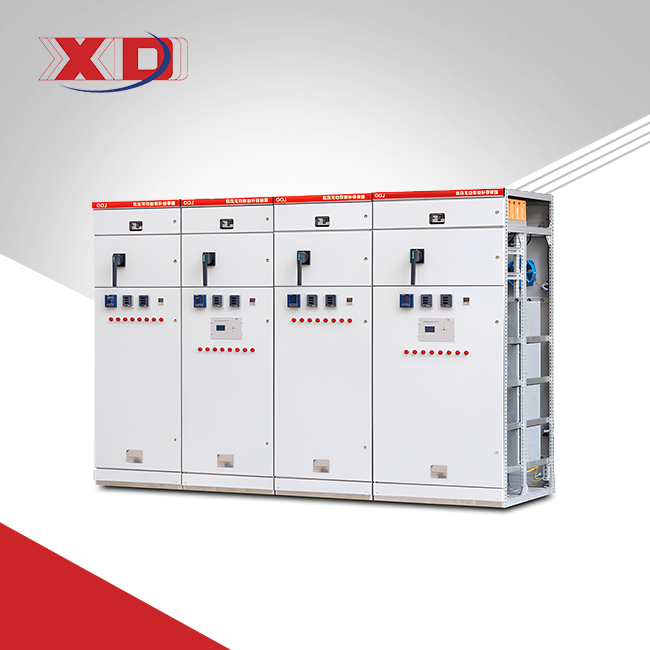
GGJ Low Voltage Reactive Power Intelligent Compensation Device
A Comprehensive Guide to Zero-Sequence Current Transformers
2026-06-15 15:40:55
Ground fault protection represents a critical concern for facility managers overseeing data centers, manufacturing plants, and utility substations. Zero Sequence Current Transformers serve as specialized protective devices engineered to detect earth faults before they cascade into costly equipment damage or dangerous safety incidents. Unlike conventional measurement instruments, these transformers monitor the vector sum of three-phase currents, immediately identifying imbalances that signal insulation breakdown or ground leakage. This comprehensive guide explores the operational principles, practical applications, and procurement considerations essential for specifying the optimal ground fault detection solution for your electrical infrastructure.
 |
 |
Understanding Zero Sequence Current Transformers
Operational Principles and Electromagnetic Fundamentals
Zero Sequence Current Transformers work in a very different way than other devices used to measure current. When three-phase power is working normally, the vector sum of the currents going through all three wires is zero. When there is an earth fault, which can happen because of worn-out insulation, water getting in, or equipment breaking down, current flows back through the ground path instead of the neutral conductor to complete the circuit. This makes a mismatch that the gadget notices right away.
All three phase wires are wrapped around the transformer at the same time. Its magnetic core only reacts to the net current that flows through the bundle of cables. In balanced operation, magnetic fields that are at odds with each other cancel each other out totally. As soon as there is ground current, the magnetic balance is thrown off, which causes a corresponding voltage to be generated in the secondary winding. This signal turns on safety switches, which quickly set off circuit breakers to cut power to the damaged area.
Core Construction and Design Architecture
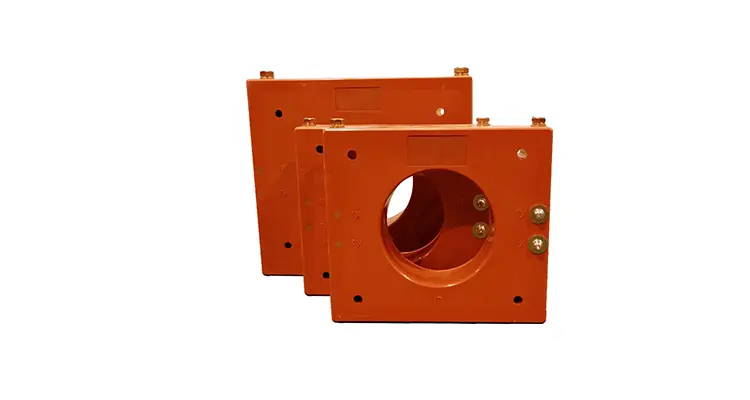
Modern zero-sequence safety devices are made of epoxy resin-casting, which is better for protecting the environment than oil-filled options. The fully sealed electromagnetic design stops water and dust from getting in, which are common ways for things to break down in tough industrial settings. Core materials usually have silicon steel laminations with a high permeability. This keeps measurement accuracy high over a wide working range while reducing magnetic losses.
Zero Sequence Current Transformers made by Xi'an Xikai can handle primary currents ranging from 20A to 1000A, making them useful for a wide range of uses, from small business setups to heavy industrial feeders. The secondary outputs can send either 5A or 1A, so they can work with both old analog safety systems and new digital relay platforms. The devices work successfully across frequency bands of 50 Hz and 60 Hz, so Zero Sequence Current Transformers can be used all over the world without any changes.
Accuracy and Performance Advantages
In ground fault identification, accuracy is still very important. Modern devices are accurate to within ±1% of the stated current range. This means they can work reliably even when finding leakage currents as low as 20mA. This sensitivity is very important in data centers, where even small changes in protection can put sensitive electronics at risk.
The epoxy-cast design is very thermally stable, so the reading stays accurate from -40°C to +85°C. This performance range works for sites in harsh environments, like solar farms in the desert or substations in the Arctic. The IP67 rating means that the building can withstand wet, dusty, and corrosive environments. This makes it useful in seaside substations and chemical processing plants for longer.
Applications and Use Cases of Zero Sequence Current Transformers
Utility Grid Protection Systems
To keep the system reliable, transmission and distribution companies put these transformers all over their networks. When combined with earth fault switches, the devices offer selective protection systems that cut off faulty parts while keeping service going for customers who aren't impacted. This feature directly supports the main goals of utilities, which are to keep the grid stable and keep customer interruptions to a minimum.
When 11kV resistance-grounded systems are used, the transformers find flaws that might not be seen until they become phase-to-phase faults. Early discovery stops damage to equipment and cuts down on the time it takes to fix. Standard distribution voltages are the same as the 400V output grade, which makes it easier to integrate into current substation control systems.
Industrial Manufacturing Environments
Finding the right balance between electricity safety rules and keeping production going is hard for manufacturing sites. Electronics that are sensitive to changes in power are used in CNC cutting centers, robotic assembly lines, and process control systems. Harmonic distortion and sudden overvoltages are caused by ground faults, which mess up the processes used in precision manufacturing.
Putting zero sequence security on important lines lets you know early on when insulation is wearing down. Instead of waiting for a problem to happen, maintenance teams can plan fixes for times when the system isn't being used. The devices can handle surge currents up to 100 times their rated capacity. They can also handle the sudden increases in current that happen when big motor loads or generator banks are turned on.
Data Center and Critical Infrastructure Applications
It's possible that data centers are the most difficult places for Zero Sequence Current Transformers applications to run. When you measure uptime in minutes per year, there is no room for unplanned breakdowns. Busbar systems are used by server farms, storage stacks, and network switches, which all use a lot of electricity. Any ground fault puts multimillion-dollar IT assets at risk right away.
The open-core design lets it be added to lines that are already live without stopping service. This ability to install without any downtime is very helpful when updating old buildings that can't have their power cut off for equipment changes. With split-core types, you can place them around existing cable runs without having to disconnect the ends of the cables or break the seals on explosion-proof cabinets.
Renewable Energy Integration
Solar farms and wind farms have special safety issues that need to be considered. High-frequency harmonics are made by inverter-based power and can overload most protective systems. The carefully designed core materials and epoxy-cast construction keep the accuracy even when there is harmonic content, making sure that these increasingly important assets are protected reliably. As a result of the unpredictable generation patterns that come from green sources, the devices keep the power stable.
Comparing Zero Sequence Current Transformers with Related Devices
Differentiation from Standard Current Transformers
Normal current transformers find the load current in each phase and give you measurement information and overcurrent protection. They keep an eye on the amount of current, but they can't pick up on the phase mismatches that happen around ground faults. For installation, one transformer is needed for each phase, which raises the cost and needs more panel room.
Zero Sequence Current Transformers go around all stages at the same time, only reacting to ground fault currents and ignoring balanced load currents. This unique feature makes it possible to find sensitive ground faults without tripping when the load changes normally or when the motor starts up quickly. For ground protection purposes, one device can be used instead of three normal transformers. This cuts down on hardware costs and makes panel plans easier.
Complementary Relationship with Earth Fault Relays
As part of the whole safety system, these transformers work as monitors. The transformer finds the ground current, measures it, and turns it into a standard output. When this signal reaches earth fault monitors, they compare it to safe levels and send out trip orders when fault conditions are too high. Both gadgets work together; neither one can protect you completely on its own.
Modern digital relays can handle a secondary output of 1A, which cuts down on the cost of wire in big sites where safety devices are mounted far away from the measurement point. Because the current is lower, the conductors can be smaller, and the voltage drop is less in long wire runs. Legacy systems use 5A output, which keeps the analog relay equipment that is already in place compatible.
Performance Benchmarking Across Manufacturers
When reviewing suppliers, people who work in procurement should look at more than just basic requirements. The transformer's burden capacity tells us the highest secondary circuit resistance it can run while still being accurate. Longer wire runs and more relay links are possible with a higher burden capacity. Xi'an Xikai devices with a 200:1 ratio can handle 20Ω of load, while 100:1 transformers can handle 6Ω.
Levels of partial discharge show how good the insulation is and how reliable it will be in the long run. Premium devices keep the partial discharge below 5 picocoulombs, which stops the insulation from breaking down over time. Temperature cycling tests make sure that the device works well within the allowed temperature range and that the setting stays stable even when temperatures change with the seasons.
Procurement Guide for Zero Sequence Current Transformers
Critical Specification Parameters
Understanding system needs is the first step in choosing the right gadgets. The primary current grade needs to include both the highest load current and a safety margin in case of overload. For installations that have to deal with motor starting or generator inrush on a regular basis, devices that can handle 100 times the normal current must be used so that they don't overload during brief events.
Another important measurement is the core width. The device has to be able to fit around groups of cables or busbar systems. Xi'an Xikai has core sizes ranging from 120mm to 300mm in diameter, so it can be used for a wide range of tasks, from small feeder circuits to high-current distribution mains. Split-core types make installation easier on systems that are already in place, where disconnecting wires would be too much work.
Compliance clearance ensures that the government and insurance companies will accept the product. International safety and efficiency standards are met by devices made to GB 20840.2-2014 and IEC 61869-1/2 standards. UL 508 and CE marking are two more standards that make it easier for tools to be sold in North America and Europe.
Supplier Evaluation Criteria
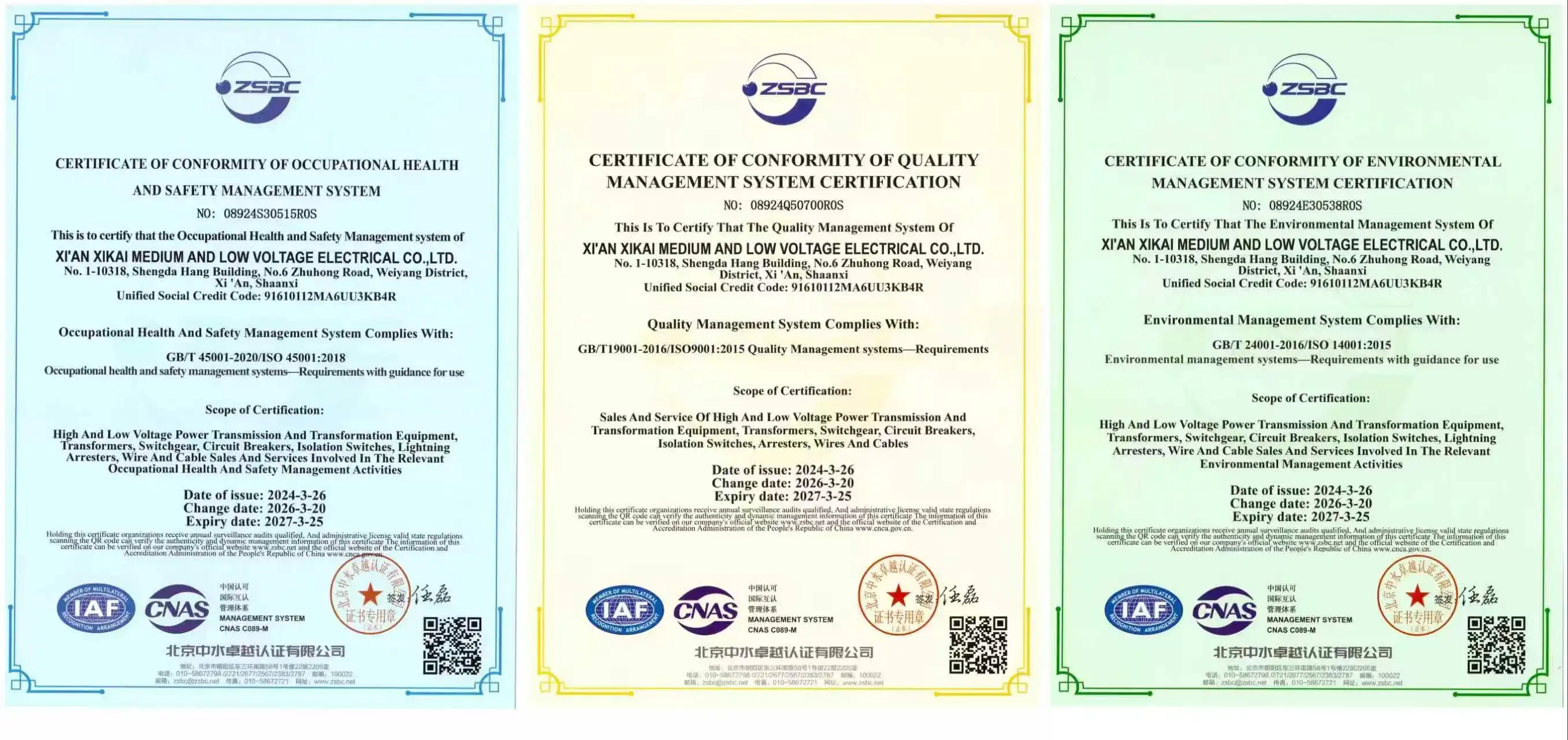
Long-term system dependability is directly affected by how trustworthy the manufacturer is. Suppliers that have been around for a while have quality control systems that are written down and approved to ISO 9001 standards. Environmental approvals under ISO 14001 show a dedication to environmentally friendly production methods and following RoHS rules for dangerous materials.
The success of a project depends on how well it can provide technical support, especially for complicated setups that need help from application engineers. When questions about specifications come up, suppliers who offer international help and quick responses keep project delays to a minimum. Xi'an Xikai offers expert help in 12 languages and within 48 hours, meeting the needs of global deployment.
When ordering in bulk to serve multiple substations or for building expansions, lead times affect the schedule of the project. Delivery plans are set by how much can be produced and how well material is managed. Talking about wait times when evaluating suppliers keeps schedules from clashing and lets you plan the project correctly.
Bulk Procurement Strategies
When you have a lot of sales, it makes sense to ask for unique specs that meet the exact needs of the application. Standard store items might not work as well as they could for certain uses. Custom core diameters, mounting arrangements, or extra output choices that are made to fit particular needs usually cost less than making changes to stock units in the field. Engineering costs for unique designs can be lowered by making volume agreements.
The costs of owning something over time can be measured by the warranty terms and the mean time between failure (MTBF) estimates. Even though they cost more at first, premium devices with 15-year MTBF calculations and full warranty support lower costs over their entire lifetime. Accelerated life testing confirms predictions of dependability, giving consumers faith in what manufacturers say about their products' performance.
Installation, Maintenance, and Best Practices
Proper Sizing and System Integration
Correct application starts with correct estimates of the fault current. The size of the ground fault current relies on how the system is grounded, the capacitance of the insulation, and the fault resistance. Engineers have to choose devices that can withstand the smallest predicted fault current and keep up with the biggest fault levels without getting too hot.
Pay attention to how the cables are routed and how the devices are positioned during physical installation. The transformer needs to go around all the phase conductors and the neutral, if there is one, but not the device grounding line. If you include the ground conductor in the measurement area, ground fault signs are lost, which means the protective feature is no longer effective. To avoid wiring mistakes during installation, installation plans should clearly show where the conductors will go.
Using the right auxiliary wire keeps the signal strong and stops safety risks in Zero Sequence Current Transformers. With the right wire size and mechanical terminations, secondary connections must join to relay inputs. Leaving the secondary wires open-circuited while the device is working can cause dangerous voltages and damage the device. For safe repair that can be done without taking the device out of service, terminal blocks for Zero Sequence Current Transformers should have shorting features.
Compliance with Safety Standards
Electrical setups have to follow the rules and codes that are in place. The National Electrical Code (NFPA 70) from the National Fire Protection Association sets the basic safety standards for electrical systems in the US. Devices that protect against ground faults help meet code standards for protecting electronics and keeping people safe.
Coordination studies make sure that safety devices only work on the part of the circuit that is faulty. Upstream and downstream protective devices must work together with the ground fault prevention system to clear faults as quickly as possible without tripping healthy circuits. To coordinate, you have to look at how the whole security plan changes over time.
Preventive Maintenance Programs
Even though there aren't many moving parts, regular inspections keep things running at their best. Every year, tests are done to make sure that the accuracy stays within the acceptable range and that the links stay tight and free of rust. Thermographic scans find links with a lot of resistance before they break. Testing of the ground fault system is done at many sites during their yearly shutdown repair windows.
Functional testing makes sure that the whole safety system works right, from the sensor to the switch to the circuit breaker. Calibrated ground fault currents are injected during test processes to make sure that switches work at the right setpoints and breakers trip as planned. Keeping track of test data sets performance standards that can be used for trend analysis.
Troubleshooting Common Issues
Nuisance tripping could mean that the device is the wrong size, was installed incorrectly, or there are harmonic problems in the system. Root causes are found by looking at the features of the load and measuring the real ground current during normal operation. Long wire runs with too much capacitive charging current can trip sensitive switches. These problems can be fixed by changing the setpoints or adding devices with higher pickup current.
Failed detection during deliberate fault injection means there are problems with the wires, the cores are too full, or the relays aren't working right. Through systematic fixing, the broken part is found. The most common assembly mistake can be avoided by making sure that all phase conductors pass through the measurement window and that there are no ground conductors present.
Conclusion
It is essential for industrial sites, utility networks, and business structures to have good ground fault protection so that their electrical systems work reliably. Zero Sequence Current Transformers are very good at finding things that are wrong, which is very important for keeping people, things, and operations going. Facility managers, utility engineers, and system integrators can find the best solutions by understanding the operating principles, application needs, and procurement issues.
Xi'an Xikai has a wide range of products that can be used for many different purposes. These products are made to meet international standards and are proven to work by strict testing procedures. Due to their precise manufacturing, expert support, and ability to be customized, these devices are useful for a wide range of difficult security tasks. To choose the right ground fault monitoring equipment, you have to balance technical performance, regulatory compliance, and lifetime economics. This will give you effective security that fits your business goals.
FAQ
1. What distinguishes Zero Sequence Current Transformers from regular current transformers?
Regular current transformers measure the current in each phase wire, which is used for measuring and protecting against overcurrent. Zero Sequence Current Transformers go around all stages at the same time and only pick up the imbalance current that flows when there is a ground fault. This special testing function lets you find ground faults more accurately without having to worry about normal changes in load.
2. Can these devices detect all types of earth faults?
The devices detect any fault condition that creates ground current, including phase-to-ground faults, insulation leakage, and deteriorating cable conditions. The level of sensitivity relies on the device grade and the relay setpoint choice. When systems are set up correctly, they can find problems before they get too bad. However, the detection limits need to be able to combine sensitivity with annoying trips caused by system capacitance.
3. How should accuracy be verified before purchase?
Reputable makers give out calibration papers that show that the accuracy of the product was tested at the factory. To make sure that the product meets the requirements, you can ask for test results that show how accurate it is at different current levels across the working range. Independent certification comes from testing by a third party to IEC 61869-2 guidelines. Before accepting shipments, some sellers use precision current injection tools to test the goods during the incoming review.
Partner with Xi'an Xikai for Reliable Ground Fault Protection Solutions
Xi'an Xikai makes Zero Sequence Current Transformers that are precisely designed and meet international standards. These transformers will meet your building security needs and have a history of reliability. Our epoxy-cast devices work at 11kV/400V and have rated primary currents ranging from 20A to 1000A. They are accurate and long-lasting enough for important uses. No matter if you run a utility substation, an industrial facility, or a business building, our expert team can help you find the best options through application engineering. Get in touch with our purchasing experts at serina@xaxd-electric.com, amber@xaxd-electric.com, or luna@xaxd-electric.com to talk to a reliable Zero Sequence Current Transformer maker about your ground fault protection needs. We offer reasonable prices, flexible delivery times, and thorough technical instructions to help you complete your job successfully.
References
1. Institute of Electrical and Electronics Engineers, "IEEE Guide for Protective Relay Applications to Transmission Lines," IEEE Standard C37.113-2015, Revised 2020.
2. International Electrotechnical Commission, "Instrument Transformers - Part 2: Additional Requirements for Current Transformers," IEC 61869-2, Edition 2.0, 2012.
3. Blackburn, J.L. and Domin, T.J., "Protective Relaying: Principles and Applications," Fourth Edition, CRC Press, 2014.
4. National Fire Protection Association, "National Electrical Code," NFPA 70, 2023 Edition, Article 230 - Services.
5. Anderson, P.M., "Power System Protection," IEEE Press Series on Power Engineering, Wiley-IEEE Press, 1999.
6. Gonen, T., "Electric Power Distribution System Engineering," Third Edition, CRC Press, 2014.