how a outdoor sf6 circuit breaker works?
2026-06-15 15:40:58
If there are electrical problems in a substation, the reaction time of the protection equipment decides whether the problems are small or major. An Outdoor SF6 Circuit Breaker is the main safety device in high-voltage power lines. It stops fault currents in milliseconds using sulfur hexafluoride gas. SF6 has a very high dielectric strength—about 2.5 times higher than air—which these devices use to quickly put out electrical sparks that form when contacts separate. This stops failures that could spread and put people in danger across transmission networks.
 |
 |
Introduction
Power delivery network protection equipment for factories, data centers, and utility grids must be dependable and efficient. Sulphur hexafluoride-based circuit breakers are the global standard for high-voltage switching. They are ideal for exterior applications when space and weather provide technical problems. This book is for procurement, building management, and system integration professionals interested in SF6-based interruption technology. We examine the technical stages that enable safe current stopping, the material science behind why SF6 gas is required, and the practical aspects that impact equipment selection for gearbox voltages between 40.5kV and 252kV. Knowing these essentials will help you match technical requirements to actual performance demands and ensure that your investment improves uptime and safety gaps.SF6 breakers affect system resilience, whether you're replacing manufacturing equipment or creating security strategies for green energy. The following sections simplify electrical engineering concepts for you. This will bridge the gap between datasheets and real-world applications.
What Is an Outdoor SF6 Circuit Breaker?
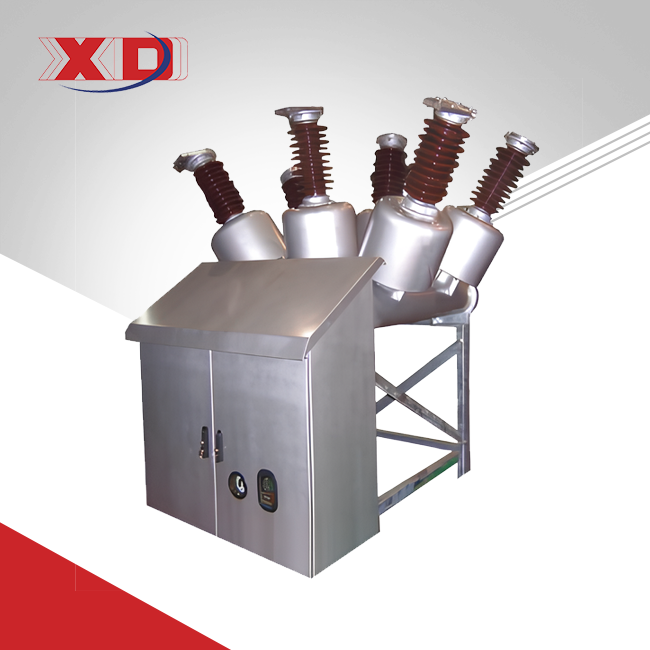
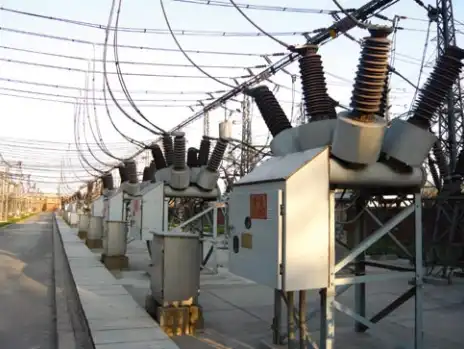
Outdoor SF6 Circuit Breakers keep electrical networks safe by stopping current flows that aren't supposed to be there, like when there is a short circuit, broken equipment, or lightning. Outdoor versions can handle direct rain, dust, temperature changes, and UV rays while still being ready to use, unlike indoor models that are protected by metal-clad switches. The number "SF6" refers to sulfur hexafluoride gas that is trapped inside interrupter cells and acts as both an insulator and an arc-quencher at the same time.
The Unique Properties of SF6 Gas
There are some things about sulfur hexafluoride that make it very good at stopping high-voltage power. Its molecular structure lets it absorb heat from electrical sparks up to 100 times faster than air. At temperatures ranging from -30°C to +40°C, it stays chemically stable. Under normal working conditions, the gas is not flammable and is not poisonous. However, when it breaks down thermally during arcing, it creates byproducts that need to be checked on a regular basis. At normal atmospheric pressure, SF6 offers insulation equal to air at five times the pressure. This lets equipment be designed more compactly, which is important for substations that don't have a lot of room.
Core Functions in Power Networks
In addition to switching from "on" to "off," these breakers do things like controlling reactors, switching battery banks, and moving loads. These tasks require thousands of mechanical turns over decades of service. Utility companies depend on them to separate broken transmission lines from healthy network parts, so hospitals, communication hubs, and industrial processes can keep getting power. Rapid arc extinction, which usually happens in 20 to 50 milliseconds, keeps wires from getting damaged by heat and shortens the time that voltage drops can affect sensitive electronics in linked buildings.
How Does an Outdoor SF6 Circuit Breaker Work?
The stoppage process is made up of carefully planned electrical and mechanical events. Knowing this order helps buying teams compare different designs and find possible problems with reliability while evaluating vendors.
Stage 1: Contact Separation Initiation
Protection relays send trip signals to operating mechanisms, which are usually spring-charged systems like the CT20 drive, when they sense fault conditions. The mechanical energy that was saved is released right away, driving insulated links that physically separate the interrupter chamber's main contacts. During the first 5–10 milliseconds, current keeps running through the contact gap that is getting smaller. This creates a lot of heat that turns tiny metal particles into ions and vaporizes the SF6 gas around them.
Stage 2: Arc Formation and Pressure Buildup
When the contacts separate, the ionized route keeps the flow of current going through the "electric arc," which is basically a plasma column that gets hotter than 20,000°C. This arc energy is not a problem in dead-tank Outdoor SF6 Circuit Breaker systems like the LW24 series. Instead, it is useful. When SF6 gas inside the sealed puffer cylinder heats up, it causes pressure differences that move the gas across the arc path. Self-optimized blast pressure systems fit this flow rate to the real fault current magnitude. This makes sure that the fault is interrupted effectively across breaking capacities from 25kA to 63kA without wasting energy on the mechanism in Outdoor SF6 Circuit Breaker applications.
Stage 3: Arc Extinction Through Gas Blast
SF6 streams moving quickly through tubes with special shapes quickly cool the arc plasma and move charged particles away from the contact gap. At the same time, the gas takes in heat energy and puts free electrons back together with positive ions, which makes it dielectrically stronger again. When the current zero-crossing point in AC waves happens, which happens every 8.3 milliseconds on 60Hz systems, cooling and dielectric recovery stop the arc from starting up again. Within two to three cycles of current, the breaker stops all fault currents while the voltage across the open contacts rises to system levels.
Key Components Enabling This Process
Understanding component responsibilities clarifies maintenance goals and failure mode analysis. The interrupter unit's copper-tungsten alloy fixed and movable contacts last over 10,000 switching activities. Buffer cylinders may direct gas flow from linear piston motion with the correct form. Gas-tight containers, built of ceramic or polymer composites, maintain SF6 pressure at 0.5 to 0.6 MPa absolute and prevent moisture from reducing performance. Operating mechanisms use buffer dampers to limit touch speed to prevent mechanical shocks that reduce part life.
LW24 breakers are modular three-chamber designs that enable each pole to function independently. This enables one component to be repaired without turning off all three. This architecture reduces expected outage periods by 60% over single-chamber systems. This immediately enhances facility availability measurements, improving plant monitoring.
Advantages and Maintenance Tips of Outdoor SF6 Circuit Breakers
When choosing the right delay technology, you have to weigh the benefits of better performance against the needs of operations. Outdoor SF6 Circuit Breakers have strong benefits that have solidified their place in transmission uses. However, proper ownership requires that owners follow certain maintenance procedures.
Superior Technical Performance
The small size that SF6's insulation qualities allow cuts the amount of land needed for substations by 40 to 50 percent compared to air-insulated options with the same voltage ratings. This efficient use of space means lower civil engineering costs for new buildings and easier upgrades at places that already don't have much room to grow. In contrast to vacuum interrupters, which lose some of their function below -25°C, breaking capacity stays the same across a wide range of temperatures without derating. Because the gas environment is sealed, there is no need for upkeep like cleaning contamination off uncovered contacts or adjusting arc chutes mechanically, which are needed in air-break designs.
Reliability in Harsh Environments
Equipment is exposed to corrosive air, rough dust, and sudden changes in temperature in mining activities, industrial sites near the coast, and installations in the desert. These problems can be solved by weatherproof housings and gas-sealed parts that are kept away from dirt and other natural toxins. Units that can work at elevations of up to 4,000 meters keep working even when air pressure drops, which breaks down other insulation systems. Because SF6 technology doesn't have any visible arc control devices, it is safer for industrial plants and other high-risk places than oil circuit breakers, which can catch fire.
Environmental Considerations and Modern Approaches
Because sulfur hexafluoride has a global warming potential 23,500 times that of CO2 over 100 years, buying teams can't ignore the scrutiny that comes from regulators. Manufacturers who are responsible use leak detection methods to keep yearly loss rates below 0.5%. This is a lot better than the 1.0% threshold that was set by older standards. To keep gases from escaping into the atmosphere, they need to be handled by trained professionals and special tools during installation, upkeep, and eventually shut down. New technologies are coming out that use gas mixtures that are better for the environment. However, pure SF6 systems will still be the most common choice for transportation uses until 2024.
Practical Maintenance Protocols
Breakers must be inspected regularly to last beyond 25 years. Every year, check SF6 pressure, analyse moisture (keep it below 150 ppm to prevent acid production), and physically examine ceramic insulators for fractures or contamination. Loop resistance tests with DC test currents over 100A detect worn-out contacts before they overheat—values above 50 microhms at the rated current indicate replacement. Mechanical characteristic tests verify opening and closing timings and three-phase synchronisation. Variances under 2 milliseconds prevent system stress when switching. Operating mechanism cleaning and spring tension checks prevent mechanical issues from occurring too soon, which might disable crucial fault trip procedures.
Utility and large industrial asset management systems increasingly utilise condition-based tracking instead of fixed-interval servicing, which matches these maintenance activities. Regular inspections are used to build predictive models that determine when to replace equipment to avoid breakdowns or premature failure.
Comparing Outdoor SF6 Circuit Breakers: How to Choose the Right One
Buying choices depend on how well the features of the Outdoor SF6 Circuit Breaker match the needs of the application. There are a lot of different setups on the market, and each one is best for a different voltage class, environment, and operating objectives.
SF6 Versus Alternative Technologies
Because they don't need to be maintained and are small, vacuum circuit breakers are the most common choice for medium-voltage applications from 12kV to 38kV. However, they have trouble with reactive current switching, which raises the voltage. Because SF6 technology is so good at stopping capacitor banks and controlling cable charging current, it is the best choice for networks with a lot of underground wiring. Due to their complexity and the need for regular upkeep on pneumatic systems, air-blast breakers aren't used in many new sites anymore. However, they are still used in older substations. Even though they pose a fire risk and are hard to get rid of environmentally, oil circuit breakers are still used in places where new infrastructure investments are not financially viable.
Voltage Class Considerations
As system voltage rises, so do the needs for breaking ability. A 72.5kV breaker that protects distribution lines is put under a lot of different stresses than a 252kV unit that protects transmission links. To handle lightning impulse voltages and switching spikes, higher voltage classes need contacts with a longer stroke. The LW24 series solves this problem with scalable interrupter designs that keep the same working mechanism platforms across voltage levels. This makes it easier for multi-voltage substations to keep track of spare parts. Coordinating with protection devices upstream and downstream needs exact timing—utilities set maximum interrupting times between 40 and 80 milliseconds, based on how the network is set up and how faults are cleared.
Indoor Versus Outdoor Design Distinctions
In addition to being waterproof, outdoor breakers have porcelain or polymer insulators that provide phase-to-ground gaps and creepage lengths that metal-clad designs do not physically separate in indoor designs. Installing things outside saves money on building costs, but the equipment is exposed to weather stresses that speed up the breakdown of insulators. Coastal locations need longer creepage distances to stop salt-contamination flashovers, while high-altitude sites need pressure adjustments or components that are rated for high altitudes. Indoor breakers work better in controlled settings, but they make it harder to vent fault gases and limit future growth. Often, the choice comes down to things that are unique to the place, like the amount of land that is available, how much it costs to build, and how the infrastructure is already set up.
Manufacturer Evaluation Criteria
While well-known names like Siemens, ABB, and GE Grid Solutions have good reputations, the review should go beyond just looking at the nameplate. Interoperability with current substation control systems, the ability to get new parts over the asset's 30-plus year life, and the ability to get expert help locally are often more important than the original price differences. Xi'an Xikai has been making things for more than 50 years and follows the IEC 62271 and IEEE C37.04 standards, which shows that it can meet foreign quality standards. Third-party testing certifications from KEMA and other similar labs provide independent confirmation of performance claims, which lowers the risk of purchase compared to specs that haven't been checked.
Procurement Guide for Outdoor SF6 Circuit Breakers
To buy the right Outdoor SF6 Circuit Breakers, you need to carefully look at more than just the technical specs. You need to think about things like the total cost of ownership and how reliable the provider is as well.
Critical Specification Parameters
Rated voltage and current show basic compatibility, but short-circuit breaking ability shows how well safety works. A factory with a 50 MVA transformer needs breakers that can handle uneven fault currents of up to 40–50 kA, taking into account the system's X/R ratios and expected future load growth. Operating duty cycles, or the number of close-open processes at maximum current, affect the size of mechanical parts in places where loads are moved around a lot. To keep things from breaking down too soon, environmental factors like temperature range, humidity tolerance, earthquake qualification, and pollution level classification must match the conditions at the installation site.
Delivery Timelines and Customization Flexibility
Standard catalog items usually ship within 8 to 12 weeks. However, wait times can be up to 16 to 20 weeks for custom voltage grades, specialized bushing setups, or integrated tracking systems. Factory testing protocols—type testing vs. regular testing—that check performance before shipment must be taken into account in procurement plans. Suppliers that offer modular designs let you make some changes while still keeping fair delivery windows. This lets you balance project plans with your specific needs. Communication methods for remote monitoring, like Modbus RTU, IEC 61850, or DNP3, need to be specified more and more during the original purchase process instead of being added later in the field.
Supplier Vetting Essentials
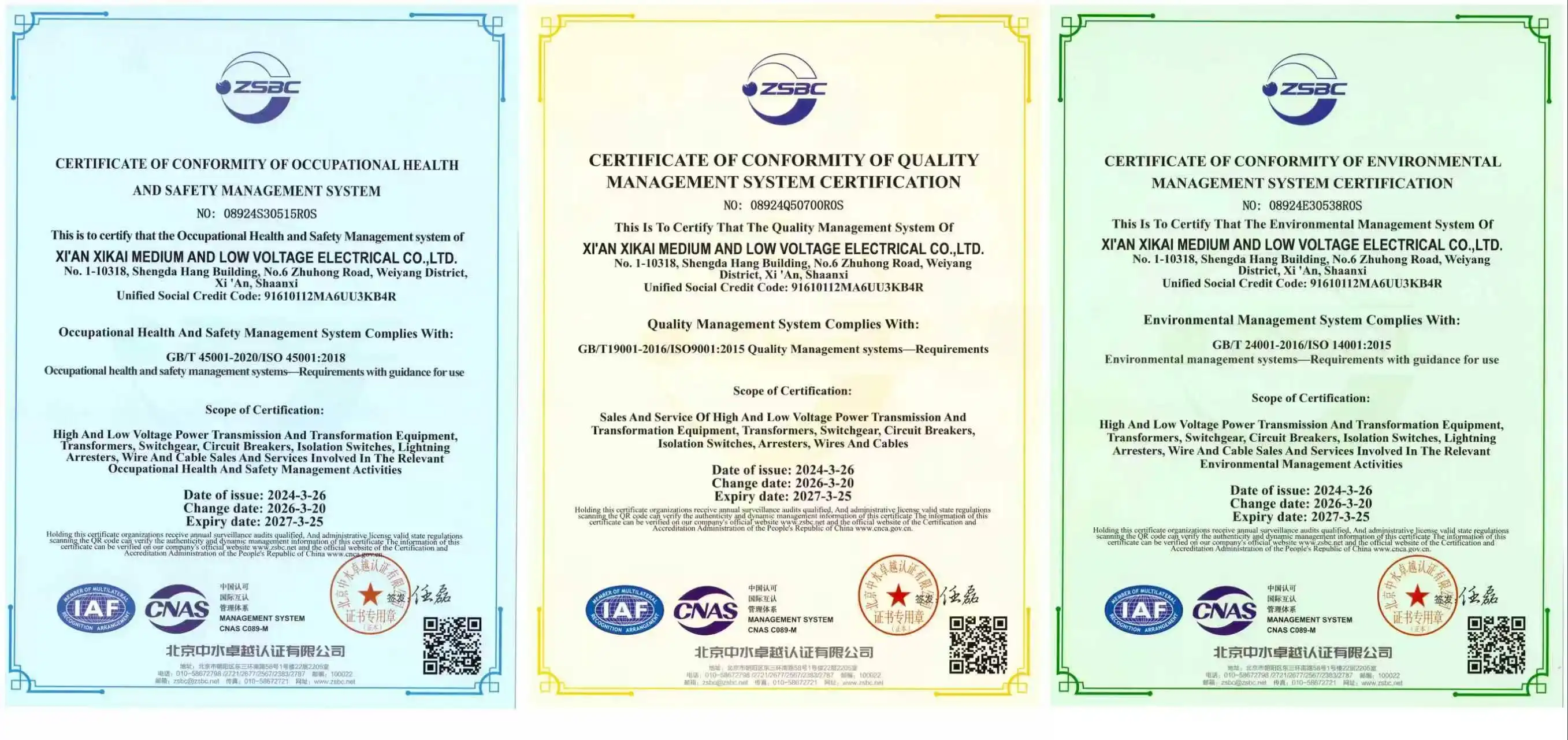
Manufacturing quality systems that are approved to ISO 9001, ISO 14001, and ISO 45001 show that the processes are well-run, which leads to reliable products. Site visits to production sites show how quality control really works, not just what the ads say. This is especially true when comparing making parts in-house to putting together foreign parts. References from current users who use similar applications give more useful, raw performance data than controlled case studies. Manufacturers who offer warranties that last longer than one year, especially for gas-sealing systems and working processes, are sure that the product will last for a long time. After-sales support infrastructure, such as expert hotlines, extra parts logistics, and field service options, keep small problems from turning into long-lasting outages.
Cost Versus Value Analysis
The cost of buying the equipment makes up about 60% of its total costs. The other 40% comes from installation, commissioning, upkeep, and repair. Lifecycle study shows that a breaker with 40% lower maintenance costs due to better design, like the CT20 spring system that shortens the time between inspections, is worth the 10-15% higher purchase price. The energy efficiency of working mechanisms has almost no effect on power costs compared to the production losses caused by sudden breakdowns. This means that reliability is more important than small efficiency gains. Total cost models that include projected service life, outage costs that are specific to your building, and the availability of spare parts over decades give you a way to make smart decisions that price comparison alone can't.
Conclusion
When purchasing managers understand how SF6 interruption technology works, they can compare rival goods based on what the application needs, not just what the marketing says it should do. The arc extinction method uses the thermal qualities of sulfur hexafluoride gas along with improved mechanical designs to protect electrical systems reliably across all voltage levels, from distribution to transmission.
To choose the right Outdoor SF6 Circuit Breaker, you have to weigh technical performance factors like breaking capacity and working duty cycles against practical factors like maintenance needs, environmental compliance, and the ability of the provider to provide support. Modern designs like the LW24 series show how self-optimized gas blast systems and flexible structures can lower costs and raise reliability levels, which directly affects how much time a facility is up and running.
Responsible ownership includes more than just buying something. It also includes following strict upkeep rules and being environmentally friendly when handling SF6. The technology keeps getting better with new ways to stop leaks and studies of other gases, but standard SF6 systems will still be the best choice for tough transmission tasks for as long as the market cycles last.
FAQ
1. What maintenance frequency do SF6 breakers require?
The baseline program is made up of yearly tests that check the gas pressure, look at the wetness levels, and look at the structure visually. Every two to three years, based on the working duty cycles, full testing is done, which includes measuring contact resistance and analyzing mechanical characteristics. High-use applications that switch processes often may need faster schedules, while transmission breakers that are mostly used for safety may need longer intervals based on data from condition monitoring. As required by the warranty, manufacturers provide maintenance manuals that list jobs to be done, when they should be done, and what the acceptance standards are.
2. How do environmental regulations affect purchasing decisions?
SF6 pollution tracking requires leak detection systems and keeping records for the whole life of the tools in places that use them. In some places, new installations must take different technologies into account. However, as of 2024, there are no widely proven alternatives for transmission voltages above 145kV. More and more, procurement requirements include makers' promises to collect end-of-life gas and the highest leakage rate that can be allowed, which is usually 0.3% to 0.5% per year. These things affect the total cost of ownership and the responsibility for removal, so they need to be looked at when choosing a provider.
3. Can breakers be customized for specific voltage or current requirements?
Customization options include changing the design of the bushings, the working voltages across the rated ranges, and the inclusion of the monitoring system. It is only economically possible to make full custom designs for big sales or specific utility needs. When you mix standard parts in a modular design like the LW24 series, you can meet non-standard needs while still keeping delivery times and costs lower than with fully built solutions.
Partner With Xi'an Xikai for Reliable SF6 Circuit Breaker Solutions
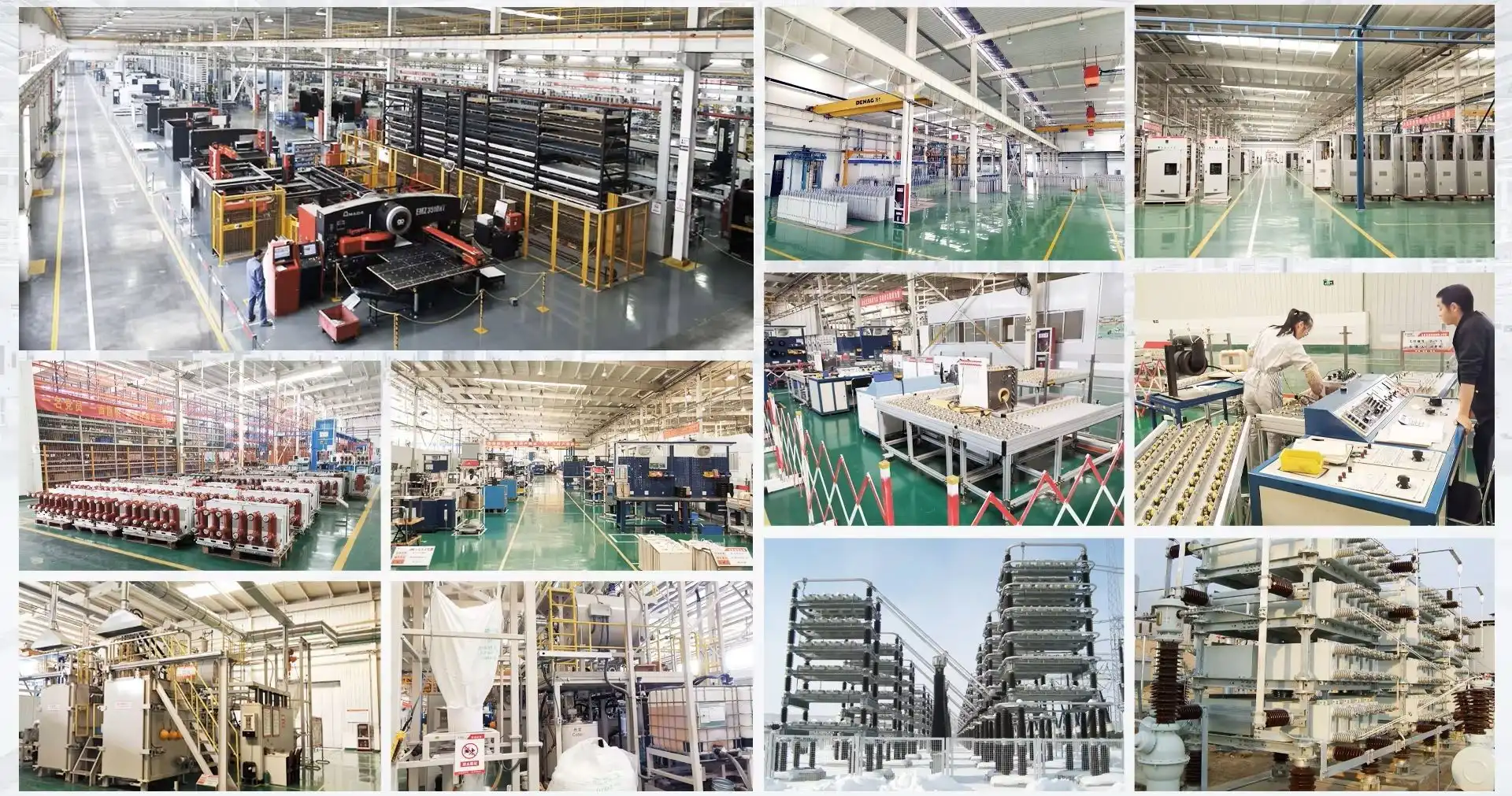
Xi'an Xikai Medium & Low Voltage Electric Co., Ltd. has been making power distribution equipment for over fifty years and works with utility networks, factories, and building projects in six countries. Our LW24 Dead Tank Outdoor SF6 Circuit Breaker line has voltage levels from 40.5kV to 252kV and rated currents up to 4000A. It can be used in a wide range of situations, from transmission links to distribution substations. The self-optimized gas blast technology and maintenance-optimized CT20 spring drive system lower costs over the lifetime and meet the IEC 62271 and IEEE C37.04 compliance standards that engineers around the world need.
As a reliable company that makes Outdoor SF6 Circuit Breakers, we offer full professional support through regional service teams. This includes application engineering, help with setup, and advice on ongoing maintenance. Our complete vertical integration, from making interrupters to putting them all together, guarantees the high quality of our parts and on-time delivery that procurement professionals need when planning important infrastructure projects. You can email our technical experts at serina@xaxd-electric.com, amber@xaxd-electric.com, or luna@xaxd-electric.com to talk about your unique needs and get full technical documentation to help you with the evaluation process.
References
1. IEEE Standards Association. IEEE Std C37.04-2018: IEEE Standard for Ratings and Requirements for AC High-Voltage Circuit Breakers with Rated Maximum Voltage Above 1000V. Institute of Electrical and Electronics Engineers, 2018.
2. Smeets, René P.P., et al. Switching in Electrical Transmission and Distribution Systems. John Wiley & Sons, 2015.
3. International Electrotechnical Commission. IEC 62271-100:2021 High-Voltage Switchgear and Controlgear - Part 100: Alternating Current Circuit-Breakers. IEC Central Office, 2021.
4. Cigré Working Group A3.10. Final Report on the Second International Enquiry on High Voltage Circuit Breaker Failures and Defects in Service. Cigré Technical Brochure 510, 2012.
5. Dufournet, Denis. "SF6 Properties and Use in MV and HV Switchgear." Schneider Electric Technical Paper, 2014.
6. Hyrenbach, Maik and Zache, Sandro. "Alternative Insulation Gas for Medium-Voltage Switchgear." IEEE Petroleum and Chemical Industry Technical Conference Proceedings, 2016.