Active Power Filter: Protecting Your Electrical Equipment
2026-09-16 17:24:42
An active power filter (APF) is a real-time power conditioning device that detects and cancels harmonic currents, reactive power imbalances, and voltage fluctuations in electrical systems before they damage sensitive downstream equipment. Unlike passive solutions, an APF continuously monitors the load current, injects precise counter-currents, and adapts instantly to changing grid conditions. For data centers, hospitals, and precision manufacturing facilities, this dynamic correction capability is not optional — it is a core infrastructure requirement. This article breaks down how active power filters work, how they compare to alternatives, and what procurement teams should know before specifying a solution.


Understanding How an Active Power Filter Works
The Real-Time Correction Principle
A current transformer picks up changes in the load current pattern, which is how an active power filter works. Within microseconds, its built-in DSP driver figures out the harmonic components and then tells an IGBT-based inverter to add an equal and opposite correcting current to the circuit. The clean, nearly sinusoidal waveform that is sent to connected equipment is the result. This closed-loop process finishes in 10 milliseconds, so it works even when load rates change quickly, which happens a lot in places with variable-frequency drives and in hospital imaging rooms.
Types and Configurations
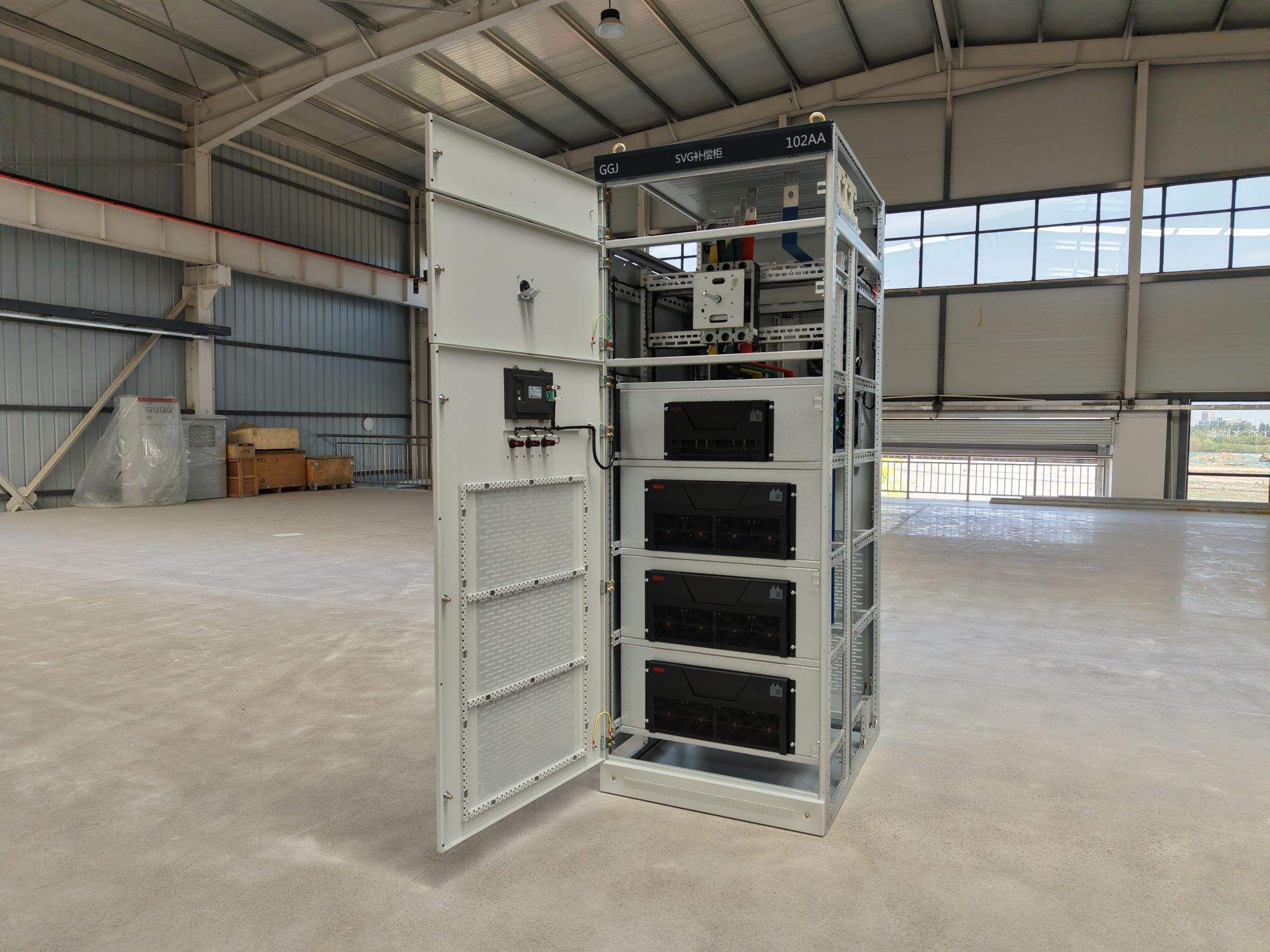
There are three main types of APF setups. Most of the time, shunt-type active filters are used to fix harmonic current because they join in parallel with the load. Series-type filters work to fix voltage imbalance and connect directly. A passive filter bank and an active stage are put together in a hybrid arrangement, which lowers the initial cost while keeping the dynamic reaction. Modular APF designs let you increase capacity without rewiring, which is helpful when load growth is slow and steady. This is true for rack-mounted installations in data center PDUs or wall-mounted installations in industrial panels.
A study in IEEE Transactions on Industrial Electronics shows that current APFs can reduce harmonic distortion to THDi values below 5%, which is in line with the grid compliance standards set by IEEE 519-2022.
Comparing Active Power Filters with Other Power Quality Solutions
Comprehensive Harmonic, Reactive, and Unbalance Correction
There are some power quality issues that passive LC filters, capacitor banks, and STATCOMs can fix, but none of them are as good as an active power filter when the load changes.
Passive filters are devices with a fixed frequency. When the harmonic spectrum is stable and predictable, they work fine. But when loads are changing, like on assembly lines that switch between different modes of operation, they can make resonance worse instead of better. A bank of capacitors raises the power factor but does nothing to lower harmonics. At the transmission level, a STATCOM handles reactive power correction. At the distribution level, however, it has a high capital cost.
An active power filter addresses all three disturbance categories simultaneously: harmonics, reactive power, and neutral current unbalance. It does this without the risk of resonance that comes with passive topologies, and it works even when the voltage is low, which is when passive devices stop working well. This wide range of coverage makes panel design easier for system integrators working on solutions for medical facilities or data centers and cuts down on the number of compensating devices that need to be used.
Manufacturers such as ABB, Siemens, and Schneider Electric offer active filter products tailored to large-scale industrial applications. Xi'an Xikai's APF line targets the same technical requirements with a modular architecture optimized for both new installations and retrofit projects in existing compensation cabinets.
Key Features That Define a Reliable Active Power Filter
Dynamic Performance, Response Speed, and Modular Scalability
Before choosing an APF for a key facility, procurement engineers should test it against a clear set of performance and durability standards. Here are the core technical attributes that separate a dependable unit from a marginal one.
- Dynamic harmonic suppression with 97% filtration rate: The device constantly tracks harmonic orders from the 2nd to the 50th, introducing compensating currents that lower THDi to below 5%. This level of suppression meets both the IEEE 519-2022 and IEC 61000-3-2 standards at the same time.
- 10ms response speed: A response time of 10 milliseconds stops short-term problems from affecting equipment further down the line in places where CNC machines, MRI scanners, or UPS systems cause sudden reactive load spikes. At this speed, passive methods just can't work.
- Resistance to grid fluctuations with surge current handling: The active design stops resonance amplification, which is something that inactive LC filters tend to do. It can handle surge currents of up to 100 times its rated capacity, which is an important feature for factories that use heavy inductive motor starts.
- Modular rack-mounted and wall-mounted design: Capacity can be increased by adding more modules instead of changing the whole unit. This way of designing keeps the original investment safe and makes it easier to add more space as the facility's needs change.
These skills directly lead to outcomes that can be measured. When facilities use active power filters, the power factor goes up to 0.99, energy costs go down by 8–15%, and transformer and motor service lives are extended because harmonic currents don't cause as much thermal stress.
Real-World Applications Across Critical Sectors
Industrial, Substation, and Commercial Deployment Scenarios
The practical value of an active power filter becomes clearest when examined through specific deployment scenarios.
In industrial plants, CNC machining centers and automated assembly lines generate substantial 5th and 7th harmonic currents. Without reduction, utilities charge penalty fees for power factors, and motor shielding wears out faster than it should. Putting in an active power filter at the main distribution board gets rid of these fines and protects the whole line from spike currents when equipment starts up.
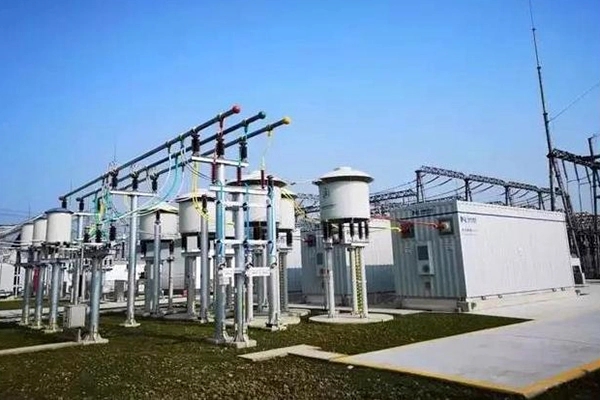
In substation environments, the proliferation of renewable energy inverters — solar PV and wind — introduces intermittent harmonic injection that destabilizes bus voltage. An active power filter installed at the point of common coupling stabilizes substation voltage, protecting metering equipment and downstream feeder circuits from distortion-induced errors.
In commercial buildings such as hospitals and retail malls, retrofit installations face constraints around noise and fire safety. The active power filter units designed for these environments operate below 45dB — comparable to a quiet library — and use flame-resistant capacitors that meet the standards of the NFPA 70 electrical code. This combination makes them suitable for occupied spaces where audible noise and fire risk are non-negotiable concerns.
Procurement, Installation, and Quality Assurance
Load Matching, CT Placement, and Factory Validation
Sourcing an active power filter for a business-to-business job requires more than just comparing datasheets. Procurement teams should request load study data from the supplier to confirm that the specified unit matches the actual harmonic spectrum on site. A mismatch between the filter's compensation algorithm and the real harmonic environment is the leading cause of underperformance in field deployments.
Installation requires professional involvement at the current transformer placement stage. Incorrectly positioned CTs produce inaccurate feedback signals that degrade the filter's compensation accuracy. Post-installation commissioning should include a power quality analyzer measurement to verify that THDi targets are achieved before the project is signed off.
Xi'an Xikai subjects each unit to a 72-hour aging test and 100% load validation before shipment. Certifications covering the product line include ISO 9001, ISO 14001, CE, UL, and CCC, providing the documentation that European and North American procurement specifications typically require. The modular architecture also simplifies maintenance: individual power modules can be replaced without shutting down the entire system, reducing mean time to repair in critical facility environments.

Conclusion
Harmonic distortion is not just an academic issue; it has a real-world cost that data centers, hospitals, and factories have to pay for by having equipment break down, wasting energy, and getting fined by the utility companies. An active power filter is a technically sound and tactically useful way to deal with these risks. With a 97% harmonic filtration rate, a 10ms response time, flexible scalability, and certifications that meet global procurement requirements, the right APF specification protects both the facility's equipment and its energy budget. Evaluating the system thoroughly before purchase — including site-specific harmonic analysis — remains the most effective way to ensure that the investment delivers its projected performance.
FAQ
1. How long does an active power filter typically last in service?
A unit that is well taken care of and kept clean inside can usually last between 15 and 20 years. The main parts that wear out are the IGBT units and capacitors; both can be replaced in the field without taking the whole system offline. Suppliers offering a modular active power filter design significantly reduce the total cost of ownership over the product lifecycle.
2. Can an active power filter reduce electricity bills?
Yes. An active power filter lowers reactive power charges and I²R losses in wires and transformers by bringing the power factor closer to unity and getting rid of harmonic currents. After putting in a harmonic filter system, most facilities say they save 8–15% on energy costs. However, the exact savings rely on how good the power quality was before the system was put in place.
3. How do I determine the correct APF capacity for my facility?
To choose the right capacity, a harmonic tester must be used to check the power quality at the placement site. The survey data shows the main harmonic orders and the highest levels of current distortion. The provider uses this information to correctly size the compensation current rating.
Connect with Xi'an Xikai for Your Active Power Filter Project
Xi'an Xikai's active power filter supplier team brings certified engineering expertise and global delivery capability to every project specification. Our units carry ISO 9001, CE, UL, and CCC certifications, backed by 72-hour aging tests and 100% load validation before shipment. Reach our technical team directly to request a site-specific harmonic analysis, product brochure, or customized quote: serina@xaxd-electric.com, amber@xaxd-electric.com, or luna@xaxd-electric.com. Visit xaxd-electric.com to learn more.

References
1. IEEE Standard 519-2022 — IEEE Recommended Practice and Requirements for Harmonic Control in Electric Power Systems, IEEE, 2022.
2. Akagi, H. — "Active Harmonic Filters," Proceedings of the IEEE, Vol. 93, No. 12, 2005.
3. IEC 61000-3-2 — Electromagnetic Compatibility (EMC) — Limits for Harmonic Current Emissions, International Electrotechnical Commission, 2018.
4. Singh, B., Al-Haddad, K., & Chandra, A. — "A Review of Active Filters for Power Quality Improvement," IEEE Transactions on Industrial Electronics, Vol. 46, No. 5, 1999.
5. Bollen, M.H.J. — Understanding Power Quality Problems: Voltage Sags and Interruptions, IEEE Press / Wiley-Interscience, 2000.
6. Das, J.C. — Power System Harmonics and Passive Filter Designs, Wiley-IEEE Press, 2015.