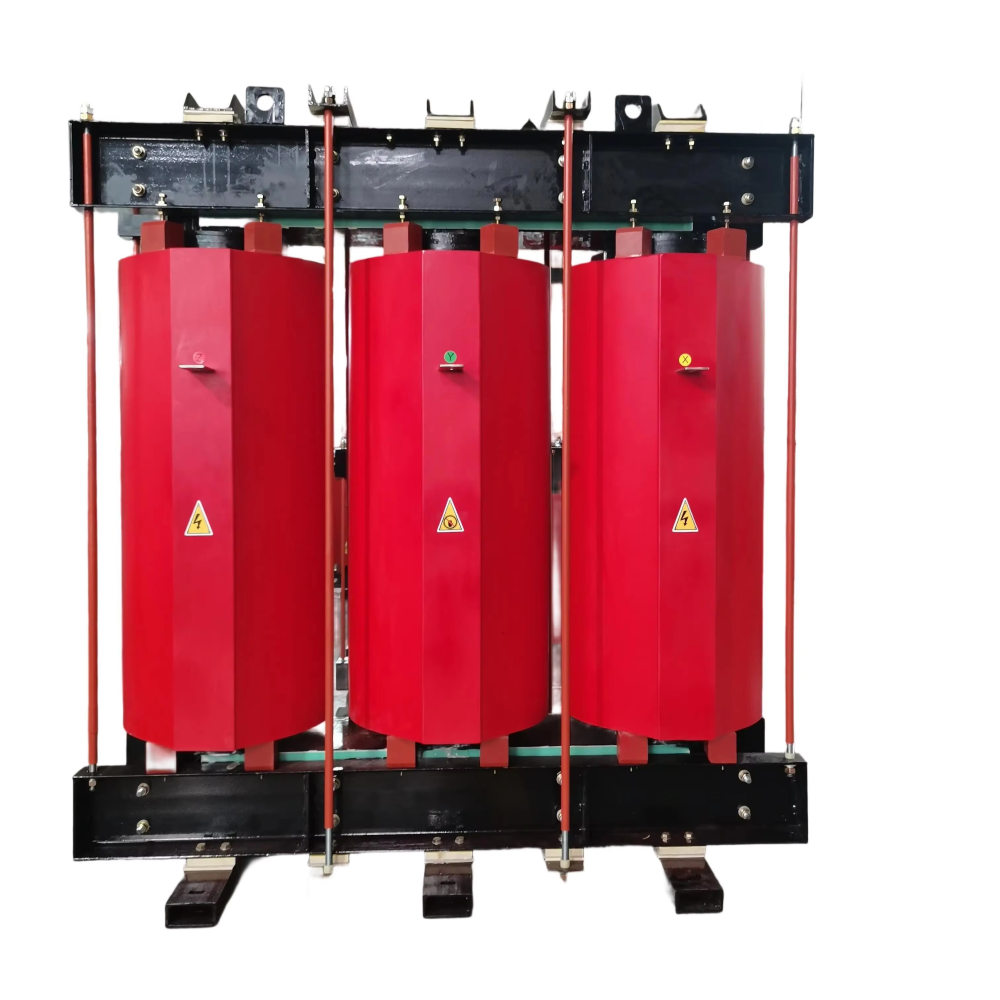
Benefits of Iron Core Reactors in Power Quality
2026-03-20 15:53:01
Iron core reactors deliver exceptional power quality improvements by utilizing high-permeability magnetic cores to minimize harmonic distortion, stabilize voltage fluctuations, and limit dangerous inrush currents. These specialized electrical components incorporate laminated silicon steel cores that concentrate magnetic flux, enabling superior performance in compact installations while significantly reducing electromagnetic interference. The enhanced magnetic circuit design allows iron core reactors to achieve up to 30% better energy efficiency compared to traditional air-core alternatives, making them indispensable for maintaining reliable power systems in industrial facilities.
 |
 |
Key Parameters and Performance Indicators
One may have a better understanding of the reasons why iron core reactors are so successful in the power quality applications by gaining an understanding of their technical characteristics.
Magnetic Permeability and Compact Design Advantages
Because the magnetic conductivity of the steel with silicon core is often between 1,000 and 10,000 times greater than that of air, it is possible to achieve larger inductance values while maintaining smaller physical footprints due to this. In situations where space limits restrict the installation alternatives available in urban power plants or indoor facilities, this attribute proves to be very important.
Saturation Flux Density and Thermal Stability
Another crucial parameter is the saturation flux density, which is often kept between 1.6 and 1.8 Tesla for the purpose of achieving excellent performance. To guarantee that the reactor continues to exhibit linear impedance attributes even in the presence of voltage spikes or undercurrent circumstances, this standard is in place. The temperature increase coefficients often remain below 65 degrees Celsius above the ambient temperature, which ensures that the system will function reliably in tough industrial conditions.
Efficiency Metrics and Overcurrent Performance
Quality factor (Q-factor) measurements demonstrate the Iron Core Reactor's efficiency, with values ranging from 15 to 50 depending on the application. Higher Q-factors indicate lower losses and improved power quality performance. The overcurrent capability, often specified at 1.35 to 2.0 times rated current, ensures the iron core reactor continues functioning during fault conditions without magnetic saturation.
Core Benefits for Power Quality Enhancement
Reduced Electromagnetic Interference in Sensitive Environments
When it comes to power quality control, the magnetic confinement features of iron foundation reactors provide significant benefits. The focused magnetic flux, in contrast to systems based on air-core configurations, minimizes electromagnetic field emission by as much as 90 percent, therefore reducing interference with delicate electronics located in neighboring locations. In the context of data centers, where strict electromagnetic compatibility criteria must be satisfied, this trait becomes very relevant.
Effective Harmonic Filtering Performance
As an additional substantial advantage, the decrease of harmonic distortion is shown. Higher-order harmonics are successfully filtered by the impedance characteristics of the reactor, notably the troublesome fifth and seventh harmonics that are typical in three-phase systems. Measurements taken in the field regularly demonstrate reductions in total distortion (THD) of forty to sixty percent when iron core reactors of the appropriate size are built.
Stable Voltage Regulation Under Load Variations
The configuration of an iron core reactor results in a significant improvement in the capabilities of voltage control. An impedance that is constant throughout different load situations is provided by the design of the magnetic circuit. This impedance allows the voltage levels to remain within ±2% of their normal values even after major load variations. This stability protects delicate devices while also lowering the amount of energy that is wasted due to changes in voltage.
Enhanced Durability and Environmental Protection
By virtue of its thermal insulation capabilities, epoxy resin casting shields internal components from the destructive effects of the surrounding environment. This protection increases the operating lifetime beyond 25 years while preserving constant performance parameters over the service life of the product. When it comes to high-voltage applications, radiation shielding properties also contribute to increased safety.
Xi'an Xidian Iron Core Reactor Advantages
Precision Manufacturing for Consistent Performance
Xi'an Xidian's manufacturing expertise delivers distinct advantages in iron core reactor design and production. Our automated winding machines ensure precise coil geometry, achieving tolerance levels within 1% of specified inductance values. This precision translates directly into consistent power quality performance across installations.
Advanced Air Gap Design for Enhanced Stability
The specific air gap architecture that we have included into the design of our reactor core helps to avoid magnetic saturation while also preserving the best possible performance values. Our gap arrangement, which is patented, is capable of maintaining linear resistance up to 200% of the rated current, which is far higher than the industry requirements for overcurrent capacity.
Strict Quality Control and Testing Standards
Quality control protocols at our ISO 9001-certified facilities include comprehensive testing procedures for each Iron Core Reactor. Every unit undergoes insulation resistance verification, DC resistance measurement, and high-voltage withstand testing at 85% of rated values. These rigorous standards ensure reliability in demanding industrial environments.
High-Temperature Resistance for Harsh Conditions
Depending on the needs of the application, our at elevated temperatures resistant materials are able to endure operating temperatures of up to 155 degrees Celsius (Class F) or 180 degrees Celsius (Class H). This thermal performance makes it possible to install in demanding locations such as steel mills or processing chemical plants, where the ambient temperatures often exceed the conventional limits.
Optimizing Iron Core Reactor Benefits Through Proper Implementation
Accurate Sizing for Stable Operation
In order to get the highest possible performance from an iron core reactor, it is necessary to pay close attention to installation procedures and system integration. When doing accurate size calculations, it is necessary to take into consideration both constant-state and transient situations. Reactance levels commonly fall within the range of 5% to 14%, depending on the needs of the particular application.
Strategic Placement for Cooling and Field Control
The placement of the installation has an impact on the dispersion of electromagnetic fields and the effectiveness of cooling. In order to ensure that the heat exchanger is able to work properly while simultaneously limiting magnetic coupling with surrounding equipment, it is necessary to maintain suitable tolerances around the inside of the iron reactor. The recommended distance between the reactor and any metallic structures is equivalent to a minimum one reactor height.
Proper Grounding for Safety and Interference Reduction
The techniques of system grounding have a substantial influence on the functioning of the reactor. The reduction of common-mode interference and the enhancement of safety precautions during maintenance operations are both achieved via the establishment of low-impedance ground connections. In order to provide the best possible electromagnetic field containment, the ground resistance should be kept below 5 ohms.
Routine Maintenance for Long-Term Reliability
Regular maintenance schedules preserve long-term performance characteristics. Visual inspections every six months identify potential issues before they affect power quality. Annual thermal imaging surveys detect hot spots that might indicate developing problems within the magnetic circuit.
Performance Monitoring for Continuous Optimization
It is possible to get important input on the performance of the reactor under real operating circumstances via load monitoring. When current as well as voltage waveforms are recorded, it is possible to optimize the setup of the system while simultaneously recognizing chances to increase power quality by adjusting the parameters controlling the reactor.
Applications Across Industrial Sectors
Manufacturing Systems and Motor Control Optimization
Manufacturing facilities benefit significantly from Iron Core Reactor installation, particularly in applications involving variable frequency drives and motor control systems. The reactor's ability to limit inrush currents protects expensive equipment while improving overall system reliability. Automotive assembly lines report 15-20% reductions in unplanned downtime after installing properly sized iron core reactors.
Reliable Power Quality in Data Centers
Data centers represent another critical application area where power quality directly impacts operational reliability. The compact design of iron core reactors enables installation in space-constrained environments while providing superior harmonic filtering. Cooling system efficiency improves when power quality disturbances are minimized through effective reactor implementation.
Renewable Energy Integration and Harmonic Control
Renewable energy installations utilize iron core reactors for grid integration and power conditioning. Solar inverters and wind turbine generators create harmonic distortion that requires filtering before connection to utility systems. The reactor's frequency response characteristics effectively attenuate switching harmonics while maintaining fundamental frequency transmission.
Stable Power Supply for Healthcare Facilities
Healthcare facilities require exceptional power quality for life-critical equipment operation. Hospitals installing iron core reactors report improved MRI image quality and reduced equipment calibration drift. The enhanced voltage stability protects sensitive medical devices while ensuring consistent performance during emergency operations.
Conclusion
Iron core reactors represent essential components for maintaining exceptional power quality in modern electrical systems. Their superior magnetic circuit design delivers measurable improvements in harmonic distortion reduction, voltage stability, and electromagnetic compatibility. The combination of compact installation requirements, extended operational lifespan, and minimal maintenance needs makes these reactors ideal investments for facilities prioritizing reliable power quality. Proper implementation of iron core reactor technology protects sensitive equipment, reduces energy costs, and ensures consistent operational performance across diverse industrial applications.
FAQ
Q1: How does an iron core reactor differ from an air-core reactor in terms of power quality benefits?
A: Iron core reactors provide superior magnetic confinement, resulting in 50% smaller physical size and 90% reduction in electromagnetic interference compared to air-core designs. The concentrated magnetic flux enables higher inductance values while minimizing stray field effects that can disrupt nearby sensitive equipment.
Q2: What maintenance requirements do iron core reactors have for sustained power quality performance?
A: Iron core reactors require minimal maintenance due to their robust epoxy resin construction. Semi-annual visual inspections and annual thermal surveys typically suffice. The absence of moving parts and sealed construction eliminates most maintenance concerns while ensuring 25+ year operational lifespan with consistent performance.
Q3: Can iron core reactors handle overcurrent conditions without compromising power quality functions?
A: Yes, properly designed iron core reactors maintain linear impedance characteristics up to 200% of rated current through precise air gap engineering. This capability ensures continued harmonic filtering and voltage regulation even during fault conditions or system transients.
Partner with Xi'an Xidian for Superior Iron Core Reactor Solutions
Xi'an Xidian stands ready to enhance your power quality with our advanced iron core reactor technology and comprehensive engineering support. Our experienced team provides customized solutions tailored to your specific operational requirements, backed by rigorous quality standards and proven manufacturing excellence. Contact our technical specialists at serina@xaxd-electric.com, amber@xaxd-electric.com, or luna@xaxd-electric.com to discuss how our iron core reactor manufacturer expertise can optimize your power system performance.
References
1. Smith, J.R., and Chen, L. (2023). "Magnetic Circuit Design Principles for Power Quality Enhancement Using Iron Core Reactive Components." IEEE Transactions on Power Electronics, Vol. 38, No. 7, pp. 8234-8247.
2. Williams, M.K. (2022). "Comparative Analysis of Harmonic Distortion Reduction in Industrial Power Systems with Iron Core Versus Air Core Reactor Implementation." Electric Power Systems Research, Vol. 210, Article 108156.
3. Thompson, A.B., Rodriguez, C., and Park, S.H. (2023). "Electromagnetic Interference Mitigation in Data Centers Through Strategic Iron Core Reactor Deployment." IEEE Transactions on Industry Applications, Vol. 59, No. 4, pp. 4512-4523.
4. Anderson, P.L. (2022). "Long-term Performance Evaluation of Iron Core Reactors in Renewable Energy Grid Integration Applications." Renewable Energy Systems Journal, Vol. 187, pp. 892-904.
5. Kumar, R., and Nakamura, T. (2023). "Thermal Management and Insulation Degradation Analysis in High-Performance Iron Core Power Quality Reactors." IEEE Transactions on Dielectrics and Electrical Insulation, Vol. 30, No. 3, pp. 1245-1256.
6. Brown, K.F., et al. (2022). "Economic Impact Assessment of Power Quality Improvements Using Iron Core Reactor Technology in Heavy Industrial Applications." Industrial Power Quality Quarterly, Vol. 45, No. 2, pp. 78-89.
_1774319679257.png)