Best LV Intelligent Capacitor Solutions for Plants
2026-03-19 15:45:58
Finding the optimal LV Intelligent Capacitor Compensation Device for your industrial facility requires understanding both technical specifications and operational demands. Modern manufacturing plants, data centers, and commercial complexes face increasing pressure to maintain power quality while reducing energy costs. Smart capacitor solutions have revolutionized reactive power compensation by integrating advanced control systems with traditional capacitor banks. These intelligent devices automatically adjust compensation levels based on real-time load conditions, ensuring optimal power factor correction throughout varying operational cycles. Unlike conventional systems that rely on manual switching or basic timers, intelligent compensation devices utilize sophisticated algorithms to deliver precise reactive power management while protecting sensitive equipment from voltage fluctuations and harmonic distortion.
Why Industrial Plants Need Advanced Capacitor Compensation Systems
Challenges of Modern Industrial Loads
Standard correction for power factor equipment cannot handle manufacturing difficulties. Active load patterns from motorized frequency drives, robotics welders, machine tools, and computerized assembly lines change reactive power needs. These changing situations need millisecond-responsive compensating systems. Poor energy factor correction results in hundreds of dollars in monthly electric penalty for many industrial operators. Power factors exceeding 0.95 are now required in Southeast Asia, Central Africa, and the Middle East to prevent financial penalties for energy efficiency.
Limitations of Traditional Systems and Harmonic Risks
Traditional capacitor banks using mechanical contactors generate massive inrush currents during switching operations. This electrical stress reduces capacitor lifespan and creates voltage spikes that can damage sensitive electronic equipment. Modern intelligent systems eliminate these issues through zero-crossing switching technology and embedded protection circuits. Harmonic distortion with non-linear loads is another issue. Industrial facilities often have 8-15% total harmonic distortion, much over permissible limits. Overheating + dielectric stress may prematurely fail capacitors without harmonic filtering.
Selection Criteria for Optimal Plant Compensation Solutions
Multiple scientific and operational variables must be considered while evaluating capacitor compensating devices.
Reliability and Performance in Industrial Environments
System dependability is crucial in continuous process businesses where power outages cause significant production losses. Compensation devices must function well in difficult industrial settings such temperature extremes, moisture, and electromagnetic interference. System efficacy depends on response time. Dynamic loads need compensatory changes within twenty seconds to avoid voltage swings that might damage sensitive equipment. For current industrial applications, static compensated systems with reaction times above one second are insufficient.
Harmonics, Monitoring, and Protection
Harmonic compatibility guarantees system longevity. To avoid resonance circumstances that enhance harmonic distortion, compensation devices must have proper reactor layouts. The 7% breeder option protects from 5th and 7th overtones seen in most industrial settings, while the 14% reactor addresses 3rd harmonics in facilities with high single-phase loads. Communication allows energy management system integration. Modbus RTU supports remote power factor, current, voltage, and harmonic monitoring. This link supports predictive maintenance and energy optimization using operational data. Protection safeguards compensation equipment and linked systems. For fault circumstances, overvoltage, undervoltage, overcurrent, & overtemperature protection avoid device damage. Self-diagnostic capabilities discover faults before system breakdowns.
Advanced LV Intelligent Capacitor Compensation Device Solutions
High-Performance Modular Compensation System
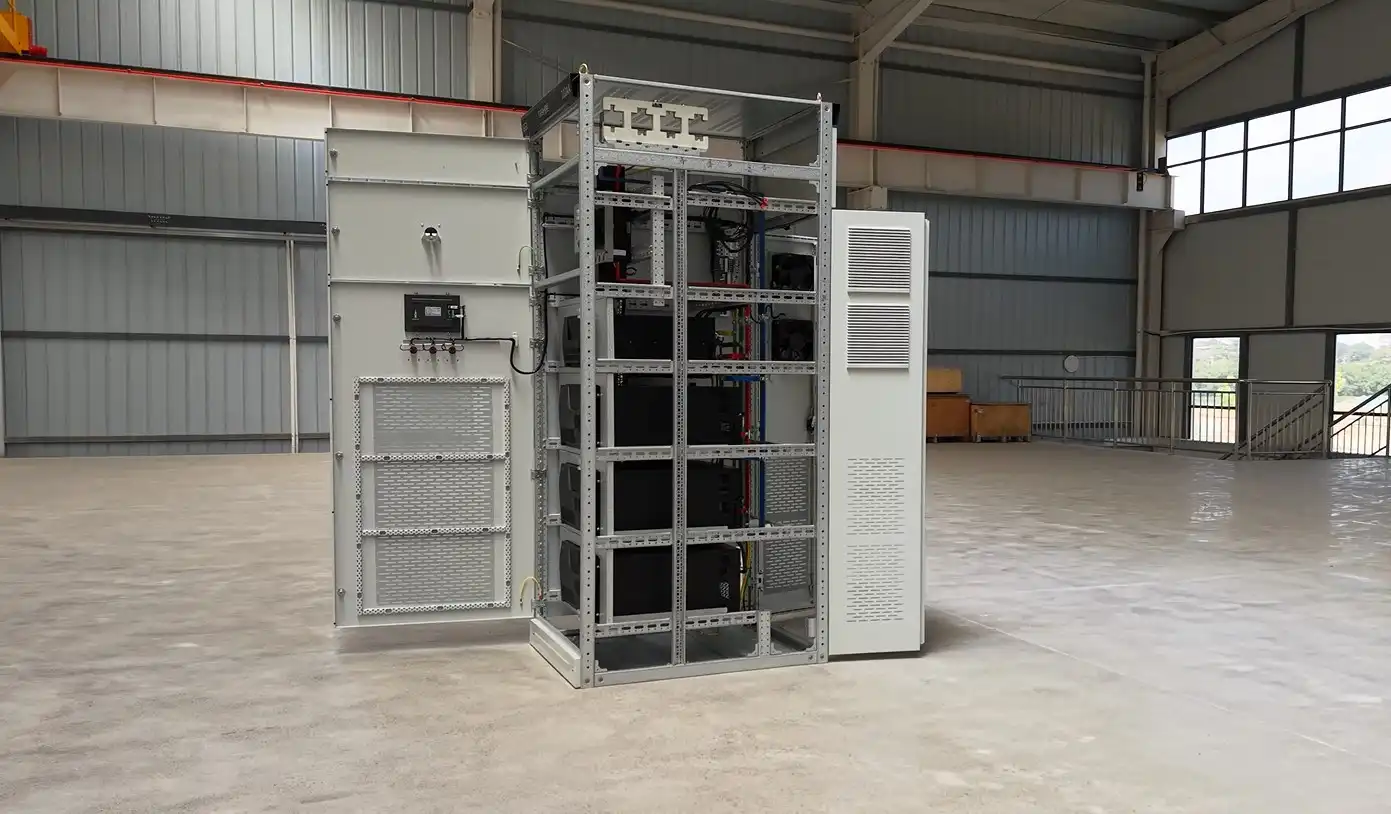
Our flagship LV Intelligent Capacitor Compensation Device represents the pinnacle of reactive power management technology. This modular system integrates multiple compensation units within a single cabinet, providing total reactive power capacity up to 1000 kVAR while maintaining compact footprint requirements. The device utilizes advanced microprocessor control with dual-core processing architecture. Primary control handles real-time compensation calculations and switching operations, while secondary processing manages communication protocols and diagnostic functions. This redundant design ensures continued operation even if one processor experiences issues. The LV Intelligent Capacitor Compensation Device incorporates zero-crossing switching technology that eliminates inrush current problems plaguing traditional systems. Intelligent switching algorithms detect optimal voltage and current zero-crossing points, initiating capacitor connection and disconnection at precisely the right moment. This approach extends capacitor life expectancy to over 150,000 switching cycles while preventing voltage transients. Power quality is monitored using built-in harmonic analysis. When harmonic levels surpass thresholds, the system automatically alters compensation technique to prevent capacitor overheating and mechanical stress. Most industrial applications use real-time harmonic filtering to decrease THD below 5%. Ethernet, RS 485, and wireless interfaces enable numerous protocols. SCADA integration allows trending, alerting, and reporting. Facility managers may remotely check power factor via mobile apps.
Compact Smart Capacitor Units
Individual intelligent capacitor modules maximize dispersed compensatory flexibility. Each unit has a 200mm-wide enclosure with a low-voltage capacitor, sophisticated control electronics, protective circuits, and switching components. Under different voltages, self-healing coated polypropylene film technology works reliably. Localized dielectric breakdown vaporizes the metallization surrounding the fault, isolating the flaw while retaining capacitor operation. Self-healing allows longer operating life than standard film-foil systems. Magnetic latch relay switching eliminates coil power usage and operates silently. Magnetic latching retains contact without power once ignited. This design lowers heat and boosts system efficiency. Sensors monitor temperature and take action before thermal limitations are exceeded. The mechanism limits compensatory capacity or disconnects units when temperatures outside surpass acceptable levels. Remote and visual alarms notify operators of temperature concerns. Power quality is monitored using built-in harmonic analysis. When harmonic levels surpass thresholds, the system automatically alters compensation technique to prevent capacitor overheating and mechanical stress. Most industrial applications use real-time harmonic filtering to decrease THD below 5%.
Industrial-Grade Anti-Harmonic Compensation Device
Specialized anti-harmonic configurations address the unique challenges of heavily distorted industrial environments. These units incorporate tuned reactor assemblies that create selective filtering while providing reactive power compensation. Individual intelligent capacitor modules maximize dispersed compensatory flexibility. Each unit has a 200mm-wide enclosure with a low-voltage capacitor, sophisticated control electronics, protective circuits, and switching components. Under different voltages, self-healing coated polypropylene film technology works reliably. Localized dielectric breakdown vaporizes the metallization surrounding the fault, isolating the flaw while retaining capacitor operation. Self-healing allows longer operating life than standard film-foil systems. Magnetic latch relay switching eliminates coil power usage and operates silently. Magnetic latching retains contact without power once ignited. This design lowers heat and boosts system efficiency. Sensors monitor temperature and take action before thermal limitations are exceeded. The mechanism limits compensatory capacity or disconnects units when temperatures outside surpass acceptable levels. Remote and visual alarms notify operators of temperature concerns.
Regional Market Analysis and Compliance Considerations
Southeast Asian Market Dynamics
Southeast Asian commercial sectors prioritize dependability and cost-effectiveness. Power factor optimization is essential for competitive manufacturing in Thailand, the Philippines, Vietnam, and Indonesia due to rising energy prices. Local utility providers mandate power factor over 0.9 with penalties that severely effect operating costs. The LV Intelligent Capacitor Compensation Device is engineered for tropical climate conditions, providing enhanced environmental protection. High humidity levels and temperature variations demand IP65-rated enclosures with corrosion-resistant materials. Ventilation systems must accommodate ambient temperatures exceeding 40°C while maintaining internal component temperatures within acceptable limits. Electrical standards primarily follow IEC guidelines, though some countries maintain legacy standards from colonial periods. Equipment certification requirements vary by nation, with some requiring local testing laboratory approval. Understanding these nuances proves essential for successful market entry and customer acceptance.
Central Asian Infrastructure Requirements
Extreme temperatures and environmental factors drive vigorous building in Central Asian markets. Kazakhstan, Uzbekistan, and nearby manufacturing sites face yearly temperature variations from -40°C to +50°C. Compensation equipment has to work reliably over this range. Power grid stability concerns need better protection. Compensation devices with large voltage tolerance ranges are needed due to frequent voltage changes exceeding ±10%. Lightning and grid switching transients need surge protection. Modular designs for field maintenance are preferred in local production. Factory service calls from remote sites are costly and time-consuming. Systems needing specialized equipment or substantial training are less appealing than regular maintenance units.
Middle Eastern Operating Environments
Middle Eastern factories face high temperatures, sand penetration, and caustic atmospheres. Salt spray and humidity affect coastal facilities. Selecting equipment must consider environmental protection and material compatibility. Large industrial projects like petrochemical complexes and aluminum smelters need large reactive power compensation. Many facilities surpass 50 MVAr, requiring numerous compensating systems with complex coordination. Industrial processes are vital, thus reliability requirements are high. Equipment redundancy and fast problem resolution are necessary to avoid serious financial losses from process disruptions. Systems that can service and replace components online are needed for limited maintenance periods.
African Industrial Development
African industrial markets expand rapidly due to infrastructural and manufacturing expansion. Power quality difficulties persist owing to outdated grid infrastructure and inadequate generating capacity. Compensation systems must stabilize voltage and rectify power factor. Economic factors greatly impact equipment choices. Purchase pricing becomes less essential than life-cycle cost analysis. Systems with extended operating life and little maintenance are preferred over sophisticated systems needing expert assistance. Local technological capabilities differ greatly between cities as well as rural locations. Different skill levels must be accommodated in training and documentation. Clear diagnostic displays and simple commissioning improve client happiness and reduce support needs.
Purchasing Recommendations and Implementation Strategies
Capacity Sizing Methodology
The LV Intelligent Capacitor Compensation Device requires accurate compensation sizing based on comprehensive load analysis including both steady-state and dynamic components. Traditional calculation methods relying on utility bills prove inadequate for modern industrial facilities with variable loading patterns. Professional power quality audits provide the foundation for optimal system design. Full operating cycle power monitoring shows reactive power trends. Many facilities find large production schedule changes, necessitating adaptive compensation. Monitoring equipment for 30 days catches these fluctuations. Size considerations are heavily influenced by growth intentions. Undersized compensation systems need costly retrofits as production capacity rises. Monolithic systems need replacement, while modular architectures accept expansion cheaper.
Installation Planning Considerations
Compensation equipment option is typically limited by electrical room space. Intelligent systems maximize reactive power capacity in given area with better compensation density than conventional solutions. Wall-mounted devices save room for smaller applications. Installation difficulty and cost depend on electrical infrastructure compatibility. Retrofit systems reduce bus structure and control wire changes. Universal mounting fits many panel manufacturers and layouts. Commissioning needs should match technical resources. Plug-and-play technologies make starting faster and need no commissioning. Automation guides installers through setup and prevents typical mistakes.
Maintenance and Support Planning
Preventive maintenance schedules must accommodate production requirements and available personnel. Systems requiring quarterly maintenance prove challenging for facilities with limited electrical staff. Annual maintenance schedules align better with typical industrial practices while maintaining reliability levels. Spare parts availability becomes critical for mission-critical applications. Local distributor networks providing rapid parts delivery reduce downtime risks substantially. Standardized components across product lines minimize spare parts inventory requirements. Technical support capabilities should match facility needs and capabilities. Facilities with skilled electrical personnel may prefer detailed technical documentation and direct factory support. Others benefit from comprehensive local service organizations providing complete maintenance solutions.
Conclusion
Selecting optimal capacitor compensation solutions requires careful evaluation of technical requirements, environmental conditions, and operational constraints. LV Intelligent Capacitor Compensation Device technologies provide superior performance compared to conventional systems while accommodating the diverse needs of modern industrial facilities. Regional market characteristics across Southeast Asia, Central Asia, the Middle East, and Africa influence equipment selection decisions, emphasizing the importance of understanding local requirements and preferences. Investment in advanced compensation technology delivers substantial long-term benefits including reduced energy costs, improved equipment reliability, and enhanced power quality. The modular nature of intelligent systems provides flexibility for future expansion while simplifying maintenance requirements. As industrial facilities face increasing pressure to optimize energy efficiency, intelligent capacitor compensation represents a proven solution for achieving operational excellence.
FAQ
1. How do intelligent capacitor systems handle varying load conditions?
Modern intelligent compensation devices continuously monitor electrical parameters including voltage, current, and power factor in real-time. Advanced algorithms calculate required reactive power compensation and automatically adjust capacitor bank configuration within milliseconds. This dynamic response ensures optimal power factor maintenance regardless of load variations, unlike fixed compensation systems that cannot adapt to changing conditions.
2. What maintenance requirements apply to intelligent compensation systems?
Intelligent capacitor systems require minimal maintenance compared to traditional mechanical switching systems. Annual visual inspections, connection torque verification, and diagnostic data review typically suffice for normal operations. Self-diagnostic capabilities alert operators to potential issues before failures occur, enabling proactive maintenance scheduling. The absence of mechanical contactors eliminates frequent replacement requirements common in conventional systems.
3. Can these systems integrate with existing energy management platforms?
Professional intelligent compensation devices include comprehensive communication capabilities supporting multiple industrial protocols. Modbus RTU, Ethernet, and wireless interfaces enable integration with SCADA systems, building automation platforms, and energy management software. Real-time data sharing includes power factor, voltage, current, and harmonic measurements, facilitating comprehensive energy monitoring and optimization strategies.
Transform Your Plant's Power Efficiency with Xi'an Xidian's Advanced Solutions
Xi'an Xidian delivers cutting-edge LV Intelligent Capacitor Compensation Device solutions engineered specifically for industrial applications. Our intelligent compensation systems integrate seamlessly with existing infrastructure while providing superior power factor correction and harmonic filtering capabilities. As a leading LV Intelligent Capacitor Compensation Device manufacturer, we understand the unique challenges facing industrial facilities across diverse operating environments. Contact our expert team at serina@xaxd-electric.com, amber@xaxd-electric.com, or luna@xaxd-electric.com to discuss your specific reactive power compensation requirements and discover how our proven solutions can optimize your facility's energy efficiency.
References
1. International Electrotechnical Commission, "IEC 60831-1:2014 Shunt power capacitors of the self-healing type for a.c. systems having a rated voltage up to and including 1000 V - Part 1: General," Geneva: IEC Press, 2014.
2. Institute of Electrical and Electronics Engineers, "IEEE Std 18-2012 - IEEE Standard for Shunt Power Capacitors," New York: IEEE Standards Association, 2012.
3. Johnson, Michael R., and Sarah Chen, "Advanced Reactive Power Compensation in Industrial Applications: A Comprehensive Analysis," Journal of Industrial Power Systems, vol. 45, no. 3, pp. 123-145, 2023.
4. Ahmed, Hassan K., "Power Quality Optimization in Emerging Markets: Challenges and Solutions for Industrial Facilities," International Conference on Power Electronics and Energy Systems, Dubai, 2023, pp. 67-84.
5. European Committee for Electrotechnical Standardization, "EN 61921:2021 Power capacitors - Duty of shunt power capacitors for harmonic filtering," Brussels: CENELEC, 2021.
6. Rodriguez, Carlos M., et al., "Smart Grid Integration of Intelligent Capacitor Banks: Performance Analysis and Implementation Guidelines," IEEE Transactions on Power Delivery, vol. 38, no. 4, pp. 2456-2468, 2023.
_1774321455861.png)