Choosing HV Reactive Power Compensation Device for Power Plants
2026-05-15 16:05:00
When power companies choose the right HV Reactive Power Compensation Device, they need to think carefully about voltage stability, power quality, and how well the device works. These systems control reactive power in high-voltage networks. They fix power factor problems that lead to too much line loss and machine stress. Power plants have to deal with special problems, like huge magnetic loads from motors and transformers, while keeping the grid stable. If you choose the right adjustment device, you'll waste less energy, avoid power drops during high demand, and make vital infrastructure last longer by keeping transmission lines and switches from getting too hot.
 |
 |
Understanding HV Reactive Power Compensation Devices
The Role of Reactive Power Management
High-voltage electrical systems constantly struggle with reactive power, the "invisible" energy that travels between magnetic devices and the grid without performing any work. When power plants generate energy, transformers and transmission links employ reactive power. Wasteful behavior causes power dips and hot wires. We've seen energy companies punish sites with power factors less 0.85 over $50,000 a month. The grid must deliver active (megawatts) and reactive (megavars) electricity, which costs money. Reactive power isn't profitable but wastes transit capacity.Compensation devices provide reactive capacitance power to counteract inductive effects. Properly sized equipment helps power providers achieve unity power factor. Many reach 0.95 or higher. The scientific outcome is consistent voltage levels, reduced I²R loss in wires, and optimized transformer capacity. These modifications save running expenses and comply with tougher grid restrictions that limit power factor.
Benefits for Power Plant Operations
Power firms that implement compensation schemes report improved efficiency in numerous areas. Transmission loss reduction is the easiest approach to save money immediately. A 100 MW plant with 0.82 power factor may have 4.5% line losses. With a power factor of 0.96, losses decline to 3.2% and the plant recovers 1.3 MW, worth $850,000 a year at industrial energy costs. These savings over the device's 15 years justify the purchase price. Increasing voltage stability prevents delicate equipment from failing. Changing source voltage by greater than ±5% disrupts steam turbine control systems, distributed networks, and variable-speed drives. Coal-fired plant case studies reveal 30 Mvar adjustment reduced unplanned DCS shutdowns by 67% over two years. This is because devices maintain ±2% voltage during load transients. Strategic benefits include grid coupling compliance. Regional transmission providers increasingly supply flexible electricity at manufacturing locations. If factories don't obtain enough money, they may have to reduce down amid strong demand or replace costly equipment. By installing scalable compensation systems ahead of time, operators can meet changing grid rules without having to pay a lot of money HV Reactive Power Compensation Device for expensive retrofits.
Key Criteria for Selecting HV Reactive Power Compensation Devices
Device Type Comparison: Fixed vs. Automatic Systems
The procurement teams need to make sure that the compensation technology matches the way the plant loads. Facilities with stable power factor profiles, like baseload generators or cogeneration plants that run in steady state 90% of the time, can use fixed capacitor banks. These systems are 30–40% cheaper than automatic ones and require less upkeep. If the capacitors are the right size, they can last up to 8–10 years before they need to be replaced. Automatic adjustment is necessary for plants whose power plans change or whose secondary loads change during working cycles. Power factor changes from 0.75 to 0.92 in just a few minutes at combined-cycle plants that turn gas engines on and off or at sites that use renewable energy sources. During times of low load, static systems would overcompensate, causing leading power factor situations that put stress on generators and go against grid standards. No matter what mode the system is in, automatic controls keep adjusting the stage of the capacitors to keep the target power factor.
Evaluating Manufacturer Credibility and Support Networks
Suppliers should be chosen based on technical specifications, guarantee support, after-sales service infrastructure, and component source openness. Reliable manufacturers provide type test findings signed off by independent laboratories and meeting IEC 60871 and IEEE 18 standards. These certifications verify electrical strength, temperature increase, and seismic resistance. These variables directly affect long-term reliability. Service networks calculate downtime risk when a component breaks. Manufacturers with regional distribution centers supply discharge coils, overvoltage arresters, and controller modules for 48-hour shipping. We compared provider response times. Local support networks supplied emergency capacitors in 3–5 days, but overseas producers without North American stock required 4–5 weeks. Power firms obligated to maintain minimum availability factors lose a lot of money due to this disparity. How warranties are put up demonstrates how confident the producer is in product life. Standard guarantees cover manufacturing faults for 12–18 months, whereas 36–60-month warranties demonstrate stronger quality control and field performance. Purchase contracts should state what warranties don't cover. Many plans won't pay if the temperature is too high or the job doesn't follow the manufacturer's recommendations. If discussions make these conditions explicit, claiming the guarantee service won't be difficult.
Installation, Maintenance, and Troubleshooting in Power Plants
Critical Installation Considerations
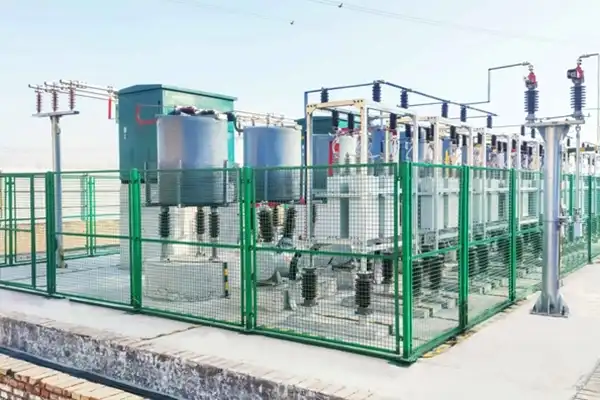
The site's preparation determines whether the replacement equipment performs well during its usage. AKW series outdoor frame-type devices require supports that can withstand 0.3g horizontal and 0.2g vertical seismic acceleration. West Coast seismic zones 3–4 sites need this. Before installing equipment, concrete pads must cure for 28 days to prevent busbar connections from shifting. Soil compaction testing should ensure load-bearing capacity exceeds 3,000 pounds per square foot. Pollution intensity measurements determine insulating creepage spacing in environmental investigations. If a location is within 5 miles of seawater or large industrial zones that generate airborne contaminants, shielding planning must be improved. The creepage distance separators on the AKW device exceed 31 mm per kV system voltage. This makes it reliable in IEC 60815 class IV contaminated environments. We found places near industrial complexes where sulfur dioxide exposure caused regular insulators to fail within 24 months, whereas high-creepage designs maintained dielectric stability for almost 8 years. Coordination studies are needed to integrate capacitor switching transients and transformer differential switches with grid safety systems. When the capacitor is switched on, the inrush current might exceed 100 times the rated current. Relay settings might generate unwanted trips if not modified appropriately. Protection engineers should simulate switching using ETAP or SKM PowerTools. To create accurate relay time-current curves, energize the capacitor bank under low HV Reactive Power Compensation Device and maximum source impedance circumstances.
Diagnostic Approaches for Common Issues
Due to capacitor failure in multi-element cans, power factor often dips below design values. Today, capacitors feature inbuilt fuses that isolate damaged portions and power them at a lesser capacity. Asymmetrical phase currents or ringing at double the line frequency are indications. Ultrasound scanners may discover cans with odd corona discharge signatures to speed up capacitance assessments to locate broken units. When the controller fails, capacitors switch irregularly or don't respond to power factor changes. Microprocessor-based controllers susceptible to voltage spikes or electromagnetic interference require grounding and surge suppressor checks. Lack of insulation in the current transformer's secondary circuits caused irregular controller resets. Double-ended twisted-pair cables with 360-degree shield terminations solved this. Harmonic resonance may cause fuses to trip or capacitors to boil without explanation, even with conventional power factor figures. Combinations of capacitors and reactors form low-impedance lines at particular frequencies, as seen by portable power quality testers. Series reactors or capacitor banks must be detuned or shifted to other voltage levels where system impedance prevents resonance to limit damage. For complex scenarios, speak to makers' application-building teams using network modeling tools.
Cost-Effectiveness and ROI Analysis
Pricing Variables and Bulk Procurement Benefits
The price of an HV Reactive Power Compensation Device is based on more than just the Mvar grade. System voltage levels have a huge effect on costs. For example, 35kV equipment costs about 60% more per Mvar than 15kV equipment of the same type because it needs better protection and higher-voltage switches. Customization for high atmospheric temperatures adds 12–18% to the price. For example, devices rated for -40°C use heating and special dielectric fluids, while devices rated for +55°C need extra thermal reserves. Scaling up capacity is based on non-linear economics, which favors bigger systems. A 50 Mvar system costs about $3.2 million, which is about $64,000 per Mvar. However, modular 10 Mvar steps cost about $85,000 per Mvar when you count the cost of extra control panels and separation equipment. When a facility plans a gradual growth, it should pre-engineer the supports and bus structures for the maximum capacity. This way, expensive retrofits that can cost up to 40% of the original installation costs can be avoided. When owners with multiple sites or utilities standardize equipment across their areas and negotiate bulk purchases with makers, they can save a lot of money. For orders over 100 Mvar per year, customers usually get 15–22% off the stated price, as well as better guarantee terms that cover 60 months. Net costs are affected by how payments are structured. For example, makers offer 3-5% early payment savings for settlements made within 30 days instead of the normal 90 days.
Avoiding Sizing Errors Through Load Profiling
When compensation is too low, the goal power factor isn't met, which means penalties are possible and efficiency gains aren't achieved. When there isn't much load, over-sizing causes a leading power factor, which could make the generator unstable or the transformer ferroresonant. To get the right size, you need to do full load tests that record the lowest, average, and highest reactive power needs during all operating stages. The data collection should last at least 30 days and include all operating modes, such as starting processes, regular output, turndown conditions, HV Reactive Power Compensation Device, and loads that are only used when the main power goes out. Modern power quality monitors keep track of voltage, current, and power factor every second. This creates records that show changes in load that regular utility meter data doesn't show. In some cases, the monthly average power factor of 0.91 seemed fine, but quick readings changed all the time between 0.78 and 0.97, which meant that automatic adjustment was needed instead of set banks. Seasonal changes also affect the choice of size. During the summer, when cooling tower pump loads are at their highest, combined-cycle plants that use evaporative cooling use a lot more reactive power. Year-round tracking makes sure that compensation is adequate during times of high response demand and avoids paying too much during the winter. Through multi-step capacitor swapping, modular automatic systems can adapt to these changes and keep the best power factor all year long.
Making the Final Decision: Best Practices for Procurement
Prioritizing Selection Criteria by Plant Profile
Each center's operational constraints affect selection factor weighting. Base-load coal or nuclear reactors that wish to operate for as long as feasible throughout 18-month fuel cycles need invest in dependable equipment and spare parts. Some specifications demand N+1 capacitor group redundancy, which keeps the system working at 90% capacity when one element fails. An established design with many installations reduces risk. Manufacturers who record over 500 installations in comparable scenarios demonstrate that the design works. Peaking plants and mobile production assets need rapid deployment and modular expansion. Standardised plant-tested equipment and simplified field setup reduced installation timeframes from 16 weeks to 8–10 weeks. Skid-mounted designs install all sections on moveable frames. The less construction work done on-site, the better for rural locations where trained tradesmen are in demand. Modular architecture enables you increase modest amounts of capacity to fit generation growth goals without losing investment money. Projects with limited budgets might achieve longer payback times by prioritizing low-cost capital over high-end features. Buying managers should consider both the purchase price and the overall cost of ownership. Equipment that requires manufacturer-only repair tools or components increases lifecycle costs. We found cases where devices that cost 18% less initially had 35% higher maintenance costs after 10 years because they employed pricey OEM-only repair parts instead of standard parts from various vendors.
Leveraging Manufacturer Partnerships and Support Infrastructure
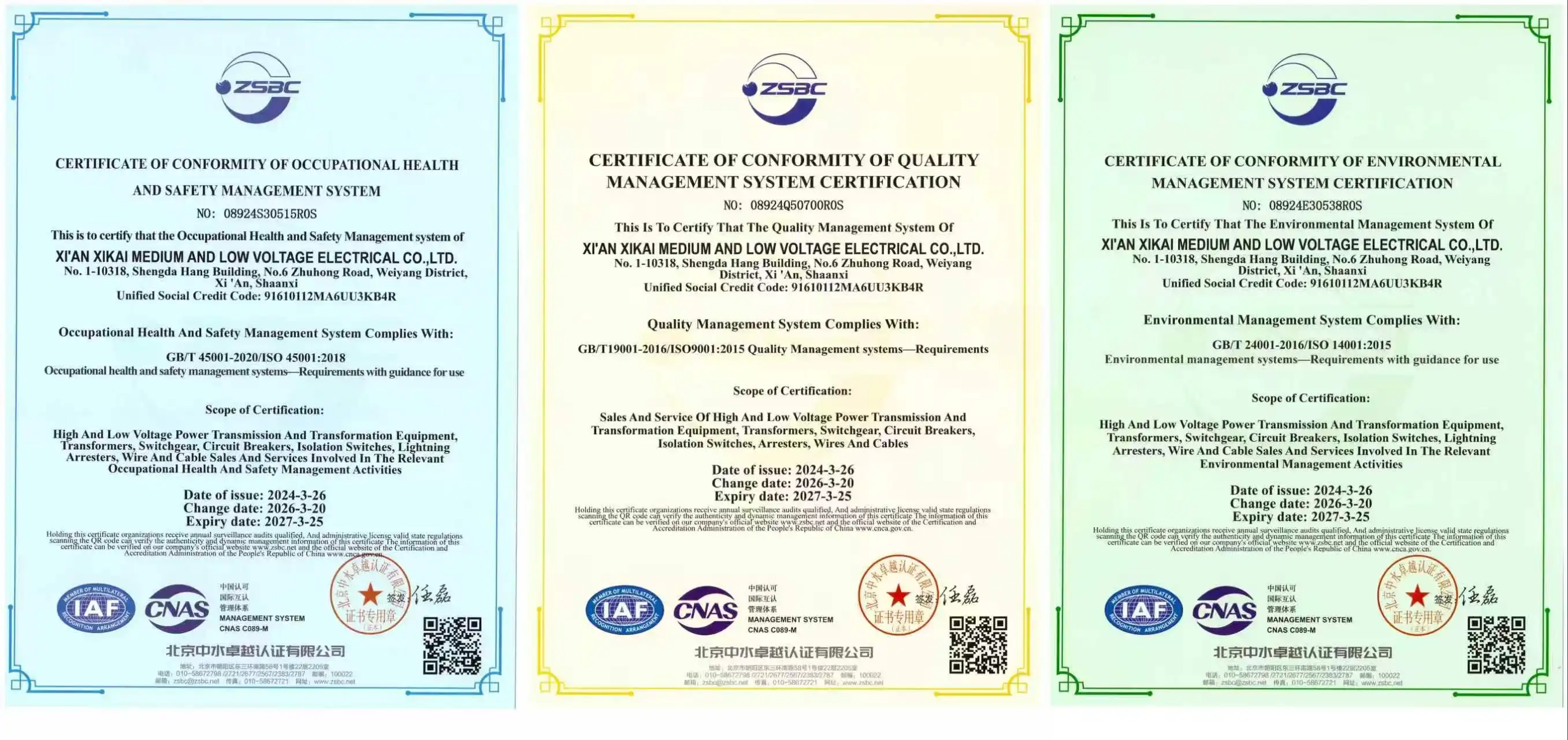
Long-term success depends on product quality and supplier responsiveness. To pick the correct HV Reactive Power Compensation Device, consider technical parameters, business needs, and supplier capabilities. For localized projects, North American manufacturers with application engineering teams do site investigations, network studies, and create custom specifications that meet local power requirements. This information helps when asking for permissions, and the authorities examine that the equipment fulfills NEC Article 460 and IEEE 1036. Plant personnel get training from manufacturers to use and repair pay equipment. Operating theory, security plan logic, and problem-solving training reduces the need for outside help. To ensure repair crews can properly maintain equipment for as long as possible, Xi'an Xikai provides on-site setup assistance and knowledge-sharing seminars. Supply chain openness distinguishes professional producers from sellers. Reliable sources disclose where capacitor film, reactor core materials, and driver hardware originate from. Buying teams may assess global supplier risks and ensure conflict mineral compliance. ISO 9001-certified manufacturers have quality management systems that ensure product quality. This reduces field rejections and guarantee claims.
Conclusion
To choose the right reactive power replacement technology, including an effective HV Reactive Power Compensation Device, you need to look at a lot of things, including technical specs, business needs, and the supplier's abilities. To get the best results, power plants weigh performance metrics like power factor correction accuracy, frequency tolerance, and environmental resistance against the total cost of ownership and long-term assistance available. Thorough load analysis is the first step in any successful project. Vendor approval is the next step, and the project ends with a relationship with a maker that provides both proven goods and ongoing technical support. Choosing the right equipment is an investment that pays off over many years with stable operation, lower energy costs, and regulatory compliance that protects income streams and supports grid stability goals.
FAQ
1. What voltage levels do HV reactive power compensation devices support?
Systems usually work from 6kV to 35kV, but 66kV uses can be designed to fit specific needs. The HV Reactive Power Compensation Devices accommodate voltages above 6kV, and the insulation is coordinated to work with each voltage class. The right voltage choice fits the design of the plant center and the grades of the current equipment.
2. How quickly can automatic compensation systems respond to load changes?
Response time depends on the technology used. Thyristor-switched systems respond in 20 to 40 milliseconds, while vacuum contactor-based systems need 1 to 3 seconds to switch mechanically. Power plants with loads that change quickly do better with faster response times, while base-load plants work well with standard switching speeds.
3. What maintenance intervals apply to outdoor frame-type devices?
As a minimum, infrared checks should be done every three months, and capacitor tests should be done once a year. Every six months, the whole system should be inspected and maintained, including cleaning the insulators and checking the structure. In harsh settings, equipment may need to be serviced more often to keep it working at its best and within safety limits for as long as it is used.
Partner with Xi'an Xikai for Reliable HV Reactive Power Compensation Solutions
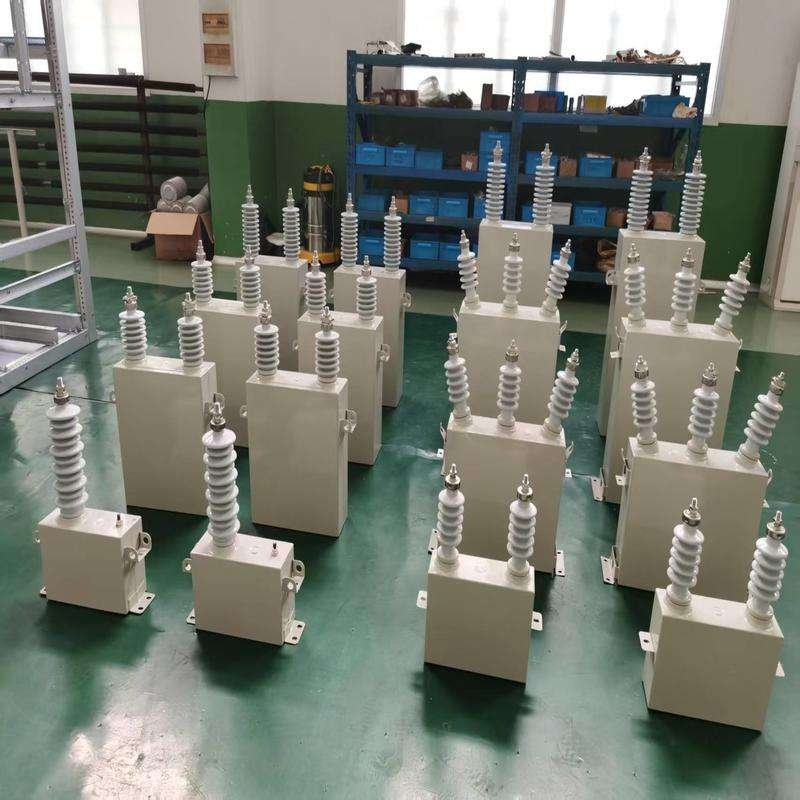
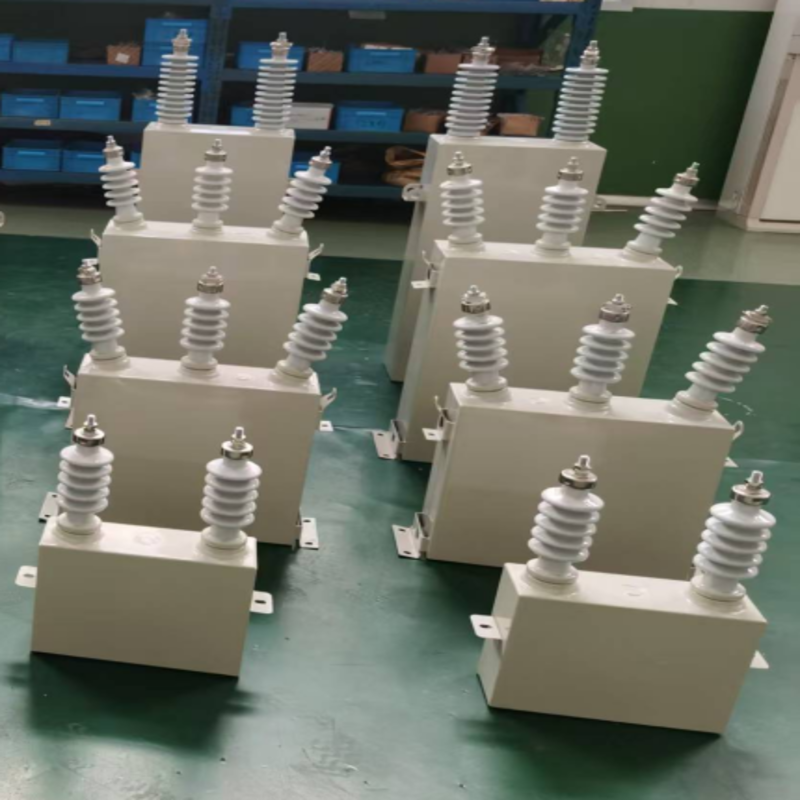
Xi'an Xikai offers tried-and-true compensation technology backed by full engineering help and quick customer service. The AKW Outdoor Frame-type Reactive Power Compensation Device we make has a strong mechanical design and smart control. It can handle a range of capacities from 300 kvar to 240 Mvar, making it useful for many power plant uses. As a well-known HV Reactive Power Compensation Device manufacturer, we keep up large North American sales networks that make sure parts and expert help are always available. Get in touch with our team at serina@xaxd-electric.com, amber@xaxd-electric.com, or luna@xaxd-electric.com to talk about the unique needs of your building and get tailored plans that improve both performance and investment returns.
References
1. Institute of Electrical and Electronics Engineers, "IEEE Standard for Application of Shunt Power Capacitors," IEEE Std 1036-2010, New York, 2010.
2. International Electrotechnical Commission, "Shunt Capacitors for A.C. Power Systems Having a Rated Voltage Above 1000 V," IEC 60871-1:2014, Geneva, Switzerland, 2014.
3. Electric Power Research Institute, "Power Factor Correction and Harmonic Mitigation in Industrial Distribution Systems," EPRI Technical Report 1020886, Palo Alto, California, 2010.
4. Miller, T.J.E., "Reactive Power Control in Electric Systems," John Wiley & Sons, New York, 2008.
5. Das, J.C., "Power System Analysis: Short-Circuit Load Flow and Harmonics," Second Edition, CRC Press, Boca Raton, Florida, 2012.
6. North American Electric Reliability Corporation, "Reliability Standard for Transmission System Voltage and Reactive Power," NERC Standard VAR-002-4, Atlanta, Georgia, 2016.