Functions and Applications of Dry-Type Air Core Series Reactors
2026-04-16 16:10:18
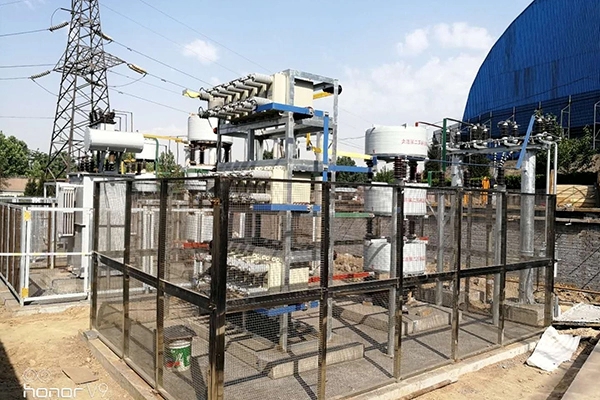
Dry-Type Air Core Series Reactors are an important part of today's electrical infrastructure because they stop harmonic distortion, limit inrush currents when capacitors switch on and off, and keep voltage changes in power networks stable. These reactors don't have magnetic cores; instead, they use air-core coils that are encased in cement and keep their inductance constant, even when there are high fault conditions. Their coreless design removes the risk of magnetic saturation and provides fire-resistant and environmentally safe alternatives to oil-filled equipment. This makes them perfect for places that need to be completely reliable and keep operations going without interruption.
 |
 |
Understanding Dry-Type Air Core Series Reactors
Core Design Principles and Construction
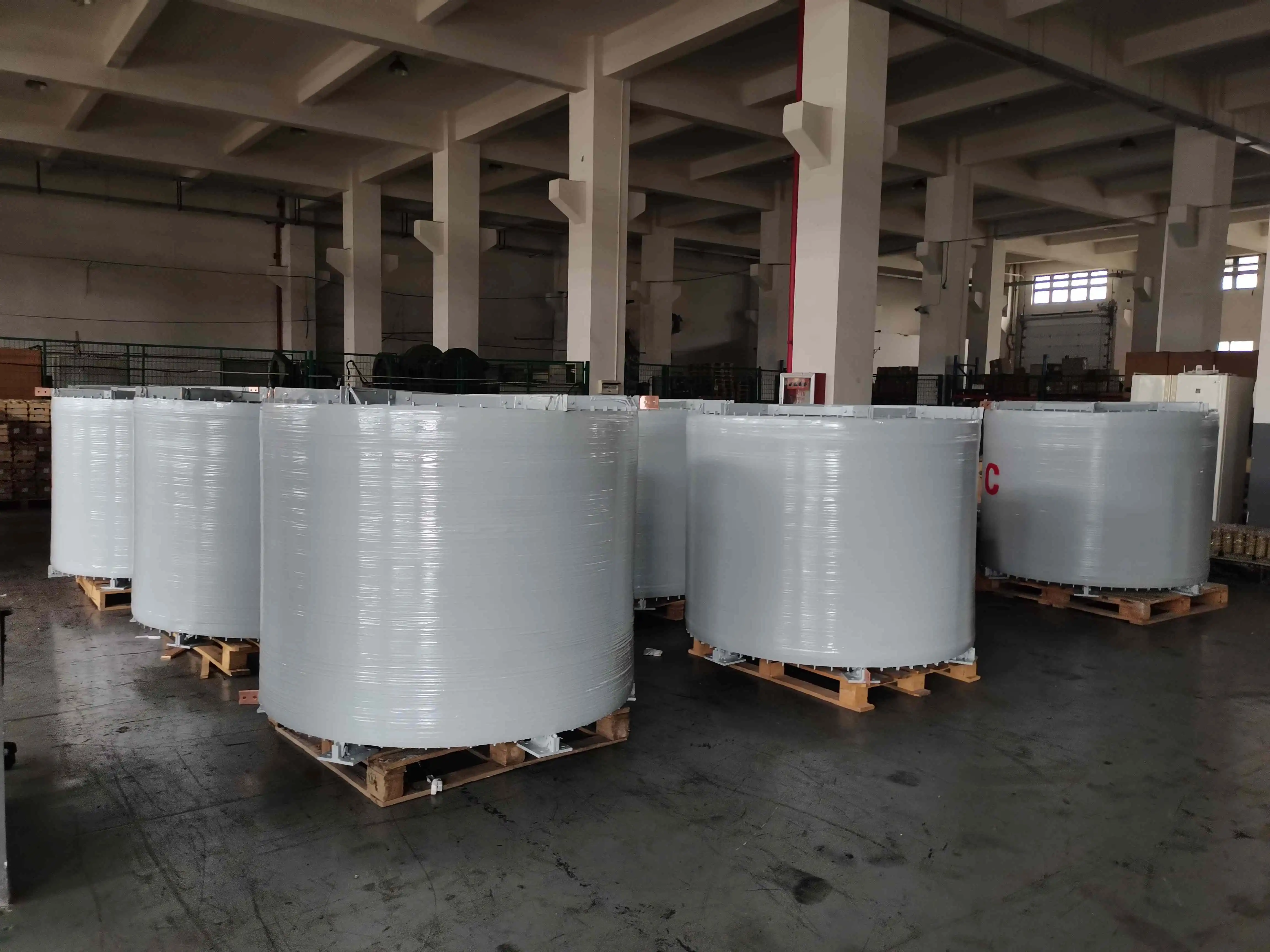
A Dry-Type Air Core Series Reactor is made up of carefully wound copper or aluminum coils stacked in layers that are closer together. The coils are covered with glass-fiber strengthened epoxy resin. In contrast to iron-core reactors, which use ferromagnetic materials to focus magnetic flux, these devices use air as their magnetic medium. This basic design choice gives linear inductance properties at all current levels. This stops the saturation effect that hurts iron-core performance during short-circuit events.
This way of engineering is shown by the CKGKL line, which has automatic CNC-wound coils with ±0.5mm precision tolerances. Each layer of wrapping goes through epoxy vacuum impregnation, which makes a single structure that is resistant to both mechanical stress and water getting in. This building method solves a problem that has been around for a long time: keeping electricity stable in places where temperatures can be as low as -40°C (in the north) and as high as +70°C (in the desert).
Operating Principles in Power Systems
When these reactors are linked in series with capacitor banks rated at 3464.1V, they make tuned filter circuits that stop certain harmonic frequencies from traveling through distribution networks. The inductive reactance fights against sudden changes in current, which slows down the charging rates of the capacitors during switching operations. Surges that damage equipment have happened in the past in places that used high-speed manufacturing equipment or sensitive medical imaging systems. This managed current rise stops those surges.
Ohm's Law for AC circuits says that the voltage drop across the device is Z = 2πfL. This is how the reactor's resistance works. At the basic frequency, which is usually 50 or 60 Hz, the impedance stays low, which lets power move normally. Higher harmonic frequencies, like the 5th, 7th, and 11th harmonics made by variable frequency drives, cause the resistance to rise. This stops these distortions before they reach important structures.
Distinguishing Characteristics from Alternative Technologies
Unlike oil-immersed reactors that are often used in older setups, Dry-Type Air Core Series Reactor designs don't have the fire risks that come with mineral oil dielectrics and are better for the environment. Resin-cast iron-core options are small, but their irregular inductance curves make it hard to tune the filter accurately. At full load, the air-core design has losses below 0.05%, which is much better than iron-core units, which have hysteresis and eddy current losses that make them less efficient.
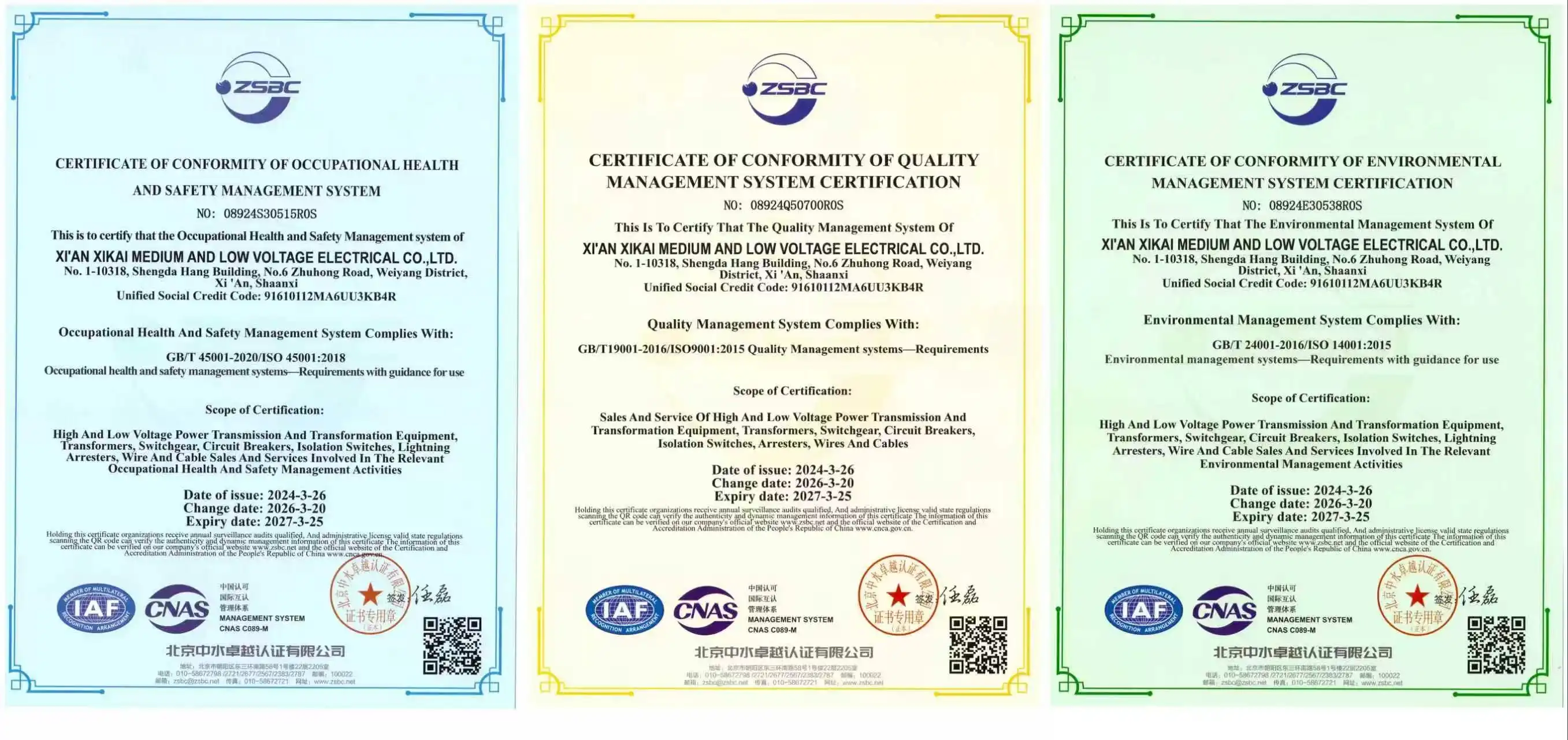
Xi'an Xikai's production lines and other factories that follow ISO 9001 quality standards use material tracking methods to keep track of every coil part from the raw aluminum ingot to the final assembly. This vertical integration makes sure that the electrical parameters are the same across all production batches, which is very important when buying many units for large-scale projects that need matched impedance characteristics.
Key Benefits and Advantages of Dry-Type Air Core Series Reactors
Dry-Type Air Core Series Reactor designs eliminate liquid dielectrics, reducing maintenance needs and enabling service lives exceeding 15 years with minimal inspection. Epoxy insulation ensures thermal stability and durability, while factory thermal cycling tests identify defects early, significantly lowering field failure rates and long-term ownership costs.
These reactors feature non-flammable construction, meeting fire safety standards without special containment systems. Their compact installation clearance and low noise levels make them suitable for urban or occupied environments. Absence of core vibration ensures quiet operation, ideal for facilities requiring minimal acoustic and mechanical disturbance.
With efficiency up to 99.95%, energy losses are minimal, reducing operational waste and emissions. The design avoids hazardous materials like oil or SF6, simplifying recycling and disposal. Though initial costs are higher, lifecycle savings and high reliability make them ideal for critical, uptime-sensitive industrial applications.
Applications Across Industries and Systems
Power Quality Enhancement in Industrial Manufacturing
Heavy businesses that use electric arc furnaces, induction heating systems, and big motor drives create large harmonic currents that change the shape of voltage waves in all of their distribution networks. Before adding detuned reactor-capacitor banks, a steel mill in Pennsylvania found 8.2% total harmonic distortion (THD), which was higher than the 5% IEEE 519 limit. When 100 times the rated surge capacity of the Dry-Type Air Core Series Reactors were added, THD dropped to 2.8%, which stopped the annoying trips of the drives that control rolling mill equipment.
It is especially easy for voltage distortion to mess up CNC machining centers, where controller microprocessors mistake noise for real order messages. Plant engineers put Dry-Type Air Core Series Reactors between capacitor banks and distribution transformers, which led to a 40% drop in tool path mistakes that couldn't be explained by assembly line workers. High-frequency transients were absorbed by the managed inductive reactance, which kept the power factor adjustment at the fundamental frequency.
Grid Integration of Renewable Energy Systems
Inverter-based output from wind farms and solar panels adds intermittent power to the grid. This causes voltage changes that make the grid less stable. During times of high output, a 150MW wind plant in Texas was told to cut back because the voltage rise went beyond what was agreed upon by the utilities. The person in charge of the project added static VAR compensators with Dry-Type Air Core Series Reactors that could handle ±3% inductance. This allowed for real-time reactive power change that kept the voltage within the agreed-upon ranges.
At switching frequencies, which are usually between 2 and 20 kHz based on the semiconductor technology, photovoltaic inverters make distinct harmonics. These high-frequency parts move through collection systems, starting flowing currents in transformer neutrals and speeding up the age of insulation. Installing Dry-Type Air Core Series Reactors at the outputs of inverters blocks switching frequencies with a high resistance while letting 60 Hz power flow. This filters harmonics at their source before they enter the grid.
Critical Infrastructure and Commercial Facilities
Imaging equipment in hospitals, like MRI and CT machines, needs very clean power with less than 3% voltage fluctuation. In a medical center in Chicago, picture flaws were caused by harmonics from the variable speed drives in the building's HVAC system. Electrical workers put in reactor-capacitor filter banks that were tuned to the 5th and 7th harmonics. This cut distortion down to 1.8% and got rid of problems with diagnostic imaging that were slowing down patient processes.
Power quality problems are also common in data centers, which are made worse by large uninterruptible power supply (UPS) systems that use pulsed currents. The nonlinear loading makes the neutral wire get too hot and causes triplen harmonic resonance with utility transformers. By strategically placing detuning reactors, resonance conditions can be avoided while keeping the power factor above 0.95. This helps avoid utility penalty charges that can be more than $50,000 a year for megawatt-scale plants.
These real-world operations show how reactors that are properly defined can solve operational problems in a wide range of fields. More and more, engineering teams are realizing that investing in power quality can save them a lot of money in the long run by avoiding costly problems like scrapped production runs, broken equipment, and fines for not following the rules.
Selection Guide for Procurement Managers and Engineers
Technical Specification Alignment
Selecting a Dry-Type Air Core Series Reactor requires matching voltage ratings to system conditions, typically with a 10% safety margin. Inductance is determined through harmonic analysis to prevent resonance. Current ratings must handle both steady loads and high inrush currents without mechanical or insulation failure.
Evaluating Manufacturer Capabilities
Reliable suppliers provide engineering support, system modeling, and customization for specific environments and standards. Options include enclosure protection levels, altitude adjustments, and seismic designs. Verified certifications like ISO 9001 and ISO 14001 ensure quality and compliance, helping buyers avoid risks associated with unreliable or uncertified manufacturers.
Lifecycle Cost Analysis Framework
Initial cost represents only part of total ownership, with energy losses and downtime risks significantly impacting long-term expenses. High-efficiency designs reduce operational costs over time. Reliability is critical, especially in industries with high downtime costs, making real-world performance data essential for informed procurement decisions.
How to Purchase Dry-Type Air Core Series Reactors
Strategic Sourcing Best Practices
Detailed specs that include all technical needs and working conditions are the first step to a successful procurement. Specifications that aren't clear allow non-compliant bids to come in that look like they're a good deal but don't meet performance standards. Engineering teams should include information about voltage ratings, inductance limits, ambient temperature ranges, altitude, pollution intensity, and seismic zone classifications in packages that ask for quotes.
When projects need a lot of the same units, negotiating for bulk purchases of Dry-Type Air Core Series Reactors can save a lot of money. By combining orders, utilities that are improving substation capacitor banks across service areas can save 15–25%, and makers can make better use of their production runs. Payment terms usually include a 30% payment, 60% before shipping, and 10% retention that is released after ordering. However, long-term buyers with good credit can negotiate better terms.
Different sellers offer very different warranty terms, ranging from 12 months to 5 years and covering both material flaws and poor workmanship. Full warranties cover on-site expert help during commissioning, quick replacement units, and losses that happen as a result. The departments that buy things should carefully read the parts of warranties that don't cover things like mistakes made during installation or using the product in ways that aren't recommended by the manufacturer.
Verification and Quality Assurance
Factory acceptance testing, or FAT, lets buyers see how well a product works before it is shipped. Standard tests include measuring the inductance at different current levels to make sure it is constant, testing the insulation's ability to handle an impulse voltage, and making sure it doesn't get too hot. Engineers can check the quality of the building, make sure the nameplate data is correct, and write down the "as-built" conditions for facility records by going to FAT.
Certified test results, dimensional models showing where the terminals are and the patterns of the foundation bolts, installation guides with torque specs, and upkeep instructions should all be included in the documentation packages. Detailed paperwork makes future expansions easier when engineers need to describe more units that will work with the ones that were installed at the start. Digital documentation that can be accessed through maker websites makes sure that information is always available, even when employees leave.
Building Long-Term Partnerships
When you choose makers that offer help after the sale, you build relationships that go beyond transactions. Technical help during installation approval keeps costly starting delays from happening when conditions at the site change without warning. Xi'an Xikai offers bilingual help 24 hours a day, seven days a week through dedicated engineering contacts. This way, questions are answered quickly by experts, even if they are in a different time zone.
Collaboration that lasts throughout the span of an item is beneficial. Manufacturers who keep detailed project records can help with planning for growth by finding the original specs and suggesting changes that will work well. When facility paperwork is lost or original engineers have moved on to new jobs, this historical knowledge comes in very handy. Strong relationships turn suppliers into trusted experts who help shape the growth of infrastructure over many years.
Conclusion
By reducing harmonics, limiting inrush current, and stabilizing voltage, Dry-Type Air Core Series Reactors make a real difference in the way industrial manufacturing, utility transmission, and business infrastructure work. Their coreless design prevents magnetic saturation weaknesses and allows for maintenance-free operation, which lowers lifetime costs despite the higher original cost. When procurement professionals look at power quality solutions, they should compare technical specs to application-specific needs, check the manufacturer's skills with certifications and references, and form partnerships with suppliers who show they care about their customers' long-term success.
Frequently Asked Questions
1. What distinguishes air-core reactors from iron-core alternatives in capacitor bank applications?
Dry-Type Air Core Series Reactors have a steady inductance no matter how much power they have. This keeps them from becoming saturated, which happens with iron-core reactors when conditions change quickly. This linear property makes sure that the filter setting is always the same, even when there is no load or a fault current is present. Core losses lower efficiency by 0.3 to 0.5 percent and get rid of the hum that comes from magnetostrictive shaking.
2. How do installation altitude and ambient temperature affect reactor performance and selection?
Lower air density above 1000 meters makes cooling less effective, so designs need to be derated or made bigger to keep temperature rise within the limits of the insulation class. In the same way, figures for derating are needed when ambient temperatures are higher than 40°C normal rating. The CKGKL series can handle installations up to 4000 meters due to its improved cooling design, which meets the needs of hill installations that are popular in western utility networks.
3. What lead times should procurement teams anticipate when ordering custom configurations?
Standard stock designs ship 4 to 6 weeks after an order is confirmed. Delivery times can be longer for custom voltage rates, enclosure changes, or special testing needs, taking 8 to 12 weeks. These times should be included in project plans, along with the time it takes to ship and prepare for installation. Early involvement with manufacturers during the planning phase helps find long-lead items, which stops building from being held up by critical path delays.
Partner with Xi'an Xikai for Reliable Dry-Type Air Core Series Reactor Solutions
Xi'an Xikai Medium & Low Voltage Electric Co., Ltd. can help you reach your power quality goals with Dry-Type Air Core Series Reactor options made for tough utility and industrial uses. Our manufacturing methods are backed by 12 or more international patents and are ISO 9001 and ISO 14001 approved. They give your important infrastructure the reliability it needs. Our expert team can help you with everything from specification to commissioning, whether you're an EPC company planning to upgrade a substation, a site manager dealing with harmonic compliance, or a utility engineer integrating green energy. Get in touch with our application engineers at serina@xaxd-electric.com, amber@xaxd-electric.com, or luna@xaxd-electric.com to talk about the needs of your project. We have been making Dry-Type Air Core Series Reactors for over 40 years and bring decades of experience to every relationship.
References
1. Institute of Electrical and Electronics Engineers, "IEEE Recommended Practice and Requirements for Harmonic Control in Electric Power Systems," IEEE Standard 519-2014, Institute of Electrical and Electronics Engineers, New York, 2014.
2. International Electrotechnical Commission, "Power Transformers – Part 6: Reactors," IEC 60076-6 Standard, International Electrotechnical Commission, Geneva, Switzerland, 2007.
3. Wildi, Theodore, "Electrical Machines, Drives, and Power Systems," Sixth Edition, Pearson Education, Upper Saddle River, New Jersey, 2006, pp. 487-512.
4. Arrillaga, Jos and Neville R. Watson, "Power System Harmonics," Second Edition, John Wiley & Sons, Chichester, United Kingdom, 2003, Chapter 8.
5. National Electrical Manufacturers Association, "Shunt Power Capacitors," NEMA CP1-2017 Standard, National Electrical Manufacturers Association, Rosslyn, Virginia, 2017.
6. Dugan, Roger C., Mark F. McGranaghan, Surya Santoso, and H. Wayne Beaty, "Electrical Power Systems Quality," Third Edition, McGraw-Hill Education, New York, 2012, pp. 213-245.
_1774411186884.png)