
Harmonic Mitigation Capacitor vs Detuned Reactor: Which Wins?
2026-11-17 17:37:26
Neither one wins alone, because each does a different job. A harmonic mitigation capacitor supplies reactive power and withstands the extra heat and voltage stress that harmonics create. A detuned reactor moves the circuit's parallel resonant point away from dominant harmonic orders and limits inrush current. In a harmonic-rich network, the winning solution is usually the pair working together as a detuned capacitor bank. Where one harmonic order dominates or distortion limits are strict, a tuned passive filter or an active filter may beat both. Below, I explain how to decide, and where our high voltage single phase filter capacitor fits.
Start With the Real Power Quality Problem
Power Factor Correction Is Not Harmonic Control
A power factor correction capacitor adds reactive power so a plant can raise its displacement power factor. It does not clean the waveform. Capacitor reactance falls as frequency rises, so a capacitor draws more current at the 5th or 7th harmonic than at 60 Hz. Facilities running variable frequency drives, UPS systems, rectifiers, and welding equipment push that harmonic current toward the bank. A standard bank meets this extra current with the same dielectric and the same protection it uses on a clean network. This mismatch is a frequent reason for early bank failures, which is why the question of harmonic mitigation capacitor versus detuned reactor starts with the network, not the catalog.
How Nonlinear Loads Create Parallel Resonant Peaks?
A capacitor bank and the supply system form a parallel circuit. Its resonant order is roughly the square root of the short-circuit kVA divided by the bank's kvar. As a simple example, a 10 MVA short-circuit level with a 400 kvar bank gives the square root of 25, which is the 5th harmonic, exactly where many drives inject current. Harmonic currents then magnify, and the symptoms follow: overheated capacitors, nuisance breaker trips, transformer derating, and a distorted voltage waveform. Adding capacitance does not solve this; it only moves the peak. A harmonic mitigation capacitor tolerates more stress when the peak occurs, while a detuned reactor moves the peak away from the orders your loads produce.
Data to Collect Before You Compare Options
Gather system voltage, frequency, transformer rating, short-circuit level, existing compensation, nonlinear load size, and expansion plans. Then measure voltage distortion, current distortion, individual harmonic orders, and power factor under representative load. IEEE 519-2022 gives a practical benchmark: at the point of common coupling for systems from 1 kV to 69 kV, it recommends 5% voltage THD and 3% for any individual harmonic. Measured numbers, not habit, should set the reactor percentage and the capacitor rating. Without them, any comparison between a harmonic mitigation capacitor and a detuned reactor stays theoretical.
How a Harmonic Mitigation Capacitor and a Detuned Reactor Work
The Role of the Harmonic Mitigation Capacitor
A harmonic mitigation capacitor supplies reactive power while it carries the added heat and voltage stress of harmonic-rich networks. Designers look at dielectric construction, voltage rating, self-healing behavior, internal protection, and harmonic current withstand. Metallized polypropylene film is a common dielectric for self-healing units. A small fault vaporizes the thin metal layer around the defect, and the capacitor keeps working. Overpressure disconnectors or internal fuses isolate a failing section before the case ruptures. When the capacitor works with a reactor, it also needs a voltage rating above the system voltage, as the next section shows.
The Role of the Detuned Reactor
A detuned reactor sits in series with the capacitor. Its percentage sets the tuning order, which equals one divided by the square root of the reactor ratio. A 5.67% reactor tunes near the 4.2nd harmonic, a 7% reactor near the 3.78th, and a 14% reactor near the 2.67th. Because the circuit tunes below the lowest harmonic present, it behaves inductively at those frequencies and avoids the parallel resonant peak. The reactor also limits inrush current during switching. It has a cost: capacitor voltage rises by a factor of 1/(1 − p), so a 7% reactor lifts it about 7.5%. Detuning reduces amplification risk, but it does not remove the distortion.
Key Differences at a Glance
The two parts do different jobs. A harmonic mitigation capacitor creates reactive power and improves power factor. The reactor manages the resonant point, limits inrush, and protects the capacitor. A harmonic-rated capacitor can tolerate harsh conditions, yet it is not a complete harmonic filter on its own. A detuned capacitor bank, by contrast, packages capacitors, reactors, switching devices, protection, and controls into one assembly. Compare like with like, because a bare capacitor and a full bank differ in scope, installation effort, and lifecycle cost. A fair comparison weighs electrical purpose, harmonic performance, installation scope, and system compatibility.
Which Solution Performs Better in Common Industrial Applications
Factories With Many Variable Frequency Drives
Drive-heavy plants usually gain the most from a detuned capacitor bank. The 5th and 7th harmonics dominate six-pulse drive current, so a 5.67% or 7% reactor keeps the bank away from those orders. A 14% reactor suits networks with strong 3rd harmonic content, such as single-phase rectifier loads, although it needs a higher capacitor voltage rating. Where distortion limits are strict, active filters or multipulse drives may be necessary alongside or instead of the bank. In my view, the capacitor and reactor pair wins here on cost and simplicity, provided the network study confirms the tuning. A harmonic mitigation capacitor with extra voltage margin also absorbs the reactor-related voltage rise.
Data Centers and UPS Facilities
Availability drives every decision in these sites. UPS rectifiers and server power supplies produce harmonics, and the system must stay stable on utility power, generator power, and bypass. A generator has higher source impedance than a utility, so harmonic voltage distortion rises and the bank's resonant behavior changes. Engineers should model each source condition and consider switching stages that drop out when a generator carries the load. Monitoring also matters, because capacitance loss shifts the tuning point over time. Some designs pair a detuned bank with an active filter. The active unit handles fast-changing harmonic content, while the bank corrects power factor.
Heavy Industry, Rail Traction, and High-Voltage Passive Filters
Steel mills, mining sites, and welding lines draw rapidly changing loads that fixed banks cannot follow. High-voltage users such as electrified railway substations and electrolytic aluminum plants often rely on passive filter branches tuned to specific harmonic orders. Traction loads are single-phase, so single-phase filter capacitors suit these circuits. Technical chiefs in this segment typically check dielectric loss, partial discharge level, and rated voltage margin, and they request type test reports before they approve a design. A harmonic mitigation capacitor in such a branch must hold its capacitance steadily, because capacitance drift detunes the filter. In these cases, a tuned passive filter often beats a plain detuned bank.
How to Choose a Harmonic Mitigation Capacitor and Which Option Wins
A Simple Decision Sequence
Follow five steps: measure, model, specify, validate, and monitor. Measure the network first. Model resonant orders with the actual short-circuit level and every switching stage. Specify the capacitor, reactor, and protection together. Validate with commissioning tests, then monitor temperature, current, and capacitance. The result usually falls into one of three groups. If reactive power is the main need and the network has moderate to high harmonics, a harmonic mitigation capacitor inside an engineered system fits. If resonant risk and power factor correction both matter, a detuned bank wins. If one order dominates, loads change fast, or limits are tight, choose a passive or active harmonic filter. Match the choice to risk rather than product category.
Sizing, Voltage Rating, and Altitude
A kvar calculation alone is not enough. Size the bank from required reactive power, operating voltage, target power factor, minimum and maximum load, switching stages, duty cycle, and future capacity. Then check the harmonic mitigation capacitor rating against harmonic stress, switching transients, reactor voltage rise, ambient temperature, and altitude. For example, a 480 V system with a 7% reactor needs a capacitor rated near 516 V or higher, so designers commonly select 525 V units. Thin air at high altitude weakens cooling and external insulation, so state the site elevation in your request. Our plateau-type equipment meets operating requirements at altitudes up to 4,000 meters.
Procurement Checks and Installation Basics
Request datasheets, type test reports, certificates, service-life information, warranty terms, and application references before you place an order. Confirm standards such as IEEE, IEC, or UL, along with packaging, Incoterms, inspection procedures, traceability, and lead times. Common mistakes include picking a reactor percentage without a harmonic study, ignoring voltage rise across the capacitor, and comparing a bare capacitor quote with a complete bank. During installation, verify cable sizing, ventilation, grounding, clearances, protection coordination, and safe discharge times. Then measure voltage, current, individual harmonics, THD, and temperature at low, normal, and peak load. Thermal imaging during routine maintenance catches loose joints and hot spots early. Plan for future VFDs, EV chargers, and solar inverters, because new loads change the harmonic spectrum.
Xi'an Xikai High Voltage Single Phase Filter Capacitor
Design Features Built for Filter Duty
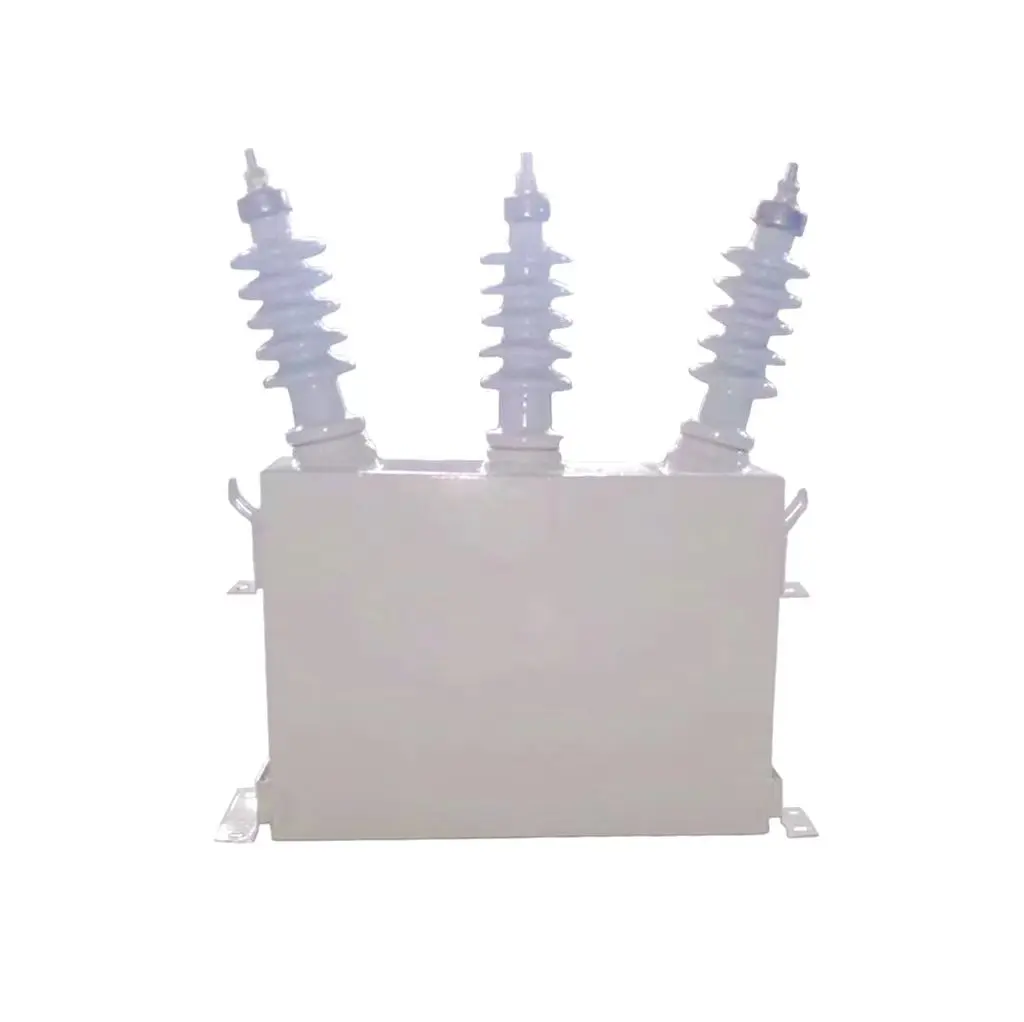
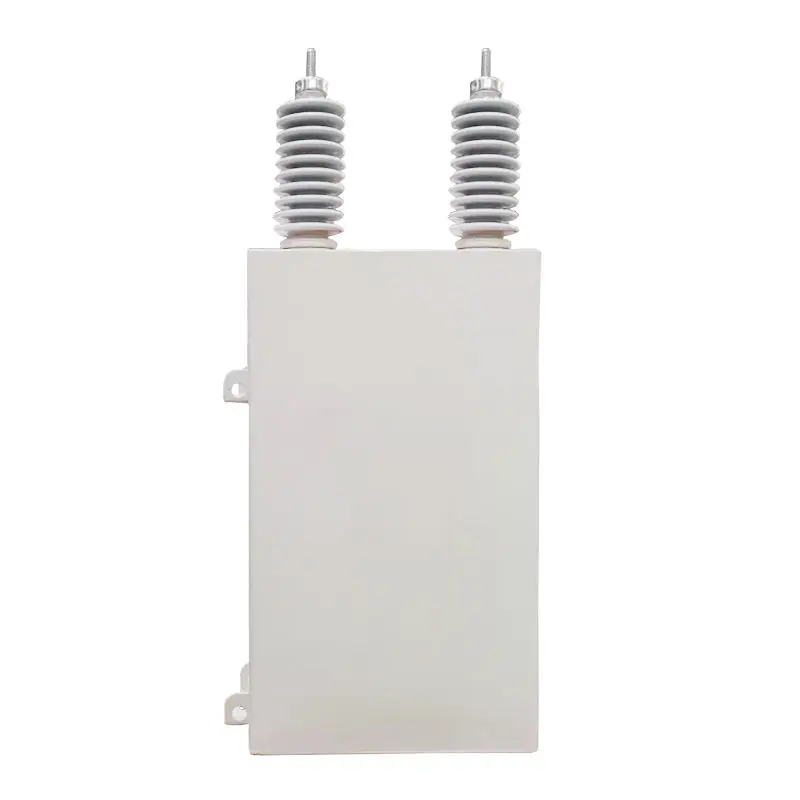
Our high voltage single phase filter capacitor works as a harmonic mitigation capacitor in passive filter branches and other high-voltage compensation circuits. Here are the core design features:
- Discharge resistors: Each unit comes equipped with discharge resistors. We improved the way the resistors connect, which solved the over-voltage problem in the series section and helps remove residual voltage after the capacitor disconnects from the supply. That protects maintenance crews during isolation work.
- Internal fuses: Internationally advanced internal fuse technology isolates a faulty element inside the unit, so one defect does not take down the whole capacitor. This supports dependable operation across long duty cycles and gives maintenance teams time to plan a replacement.
- Sealed tank and structure: New bushings and automatic argon arc welded tanks prevent leakage, which matters in desert heat or sub-zero sites. The new structure delivers low noise and strong overload capacity, and its electrical properties reach the international advanced level.
These features address the failures that appear most often in harmonic-rich service: leakage, residual voltage, and element faults.
How the Capacitor Works and How We Build It
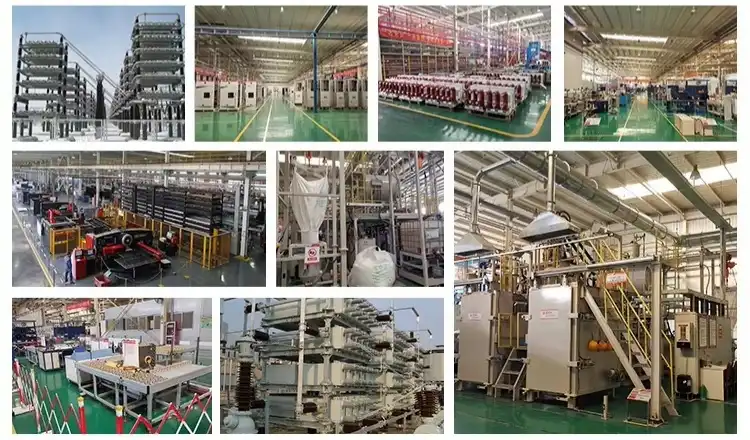
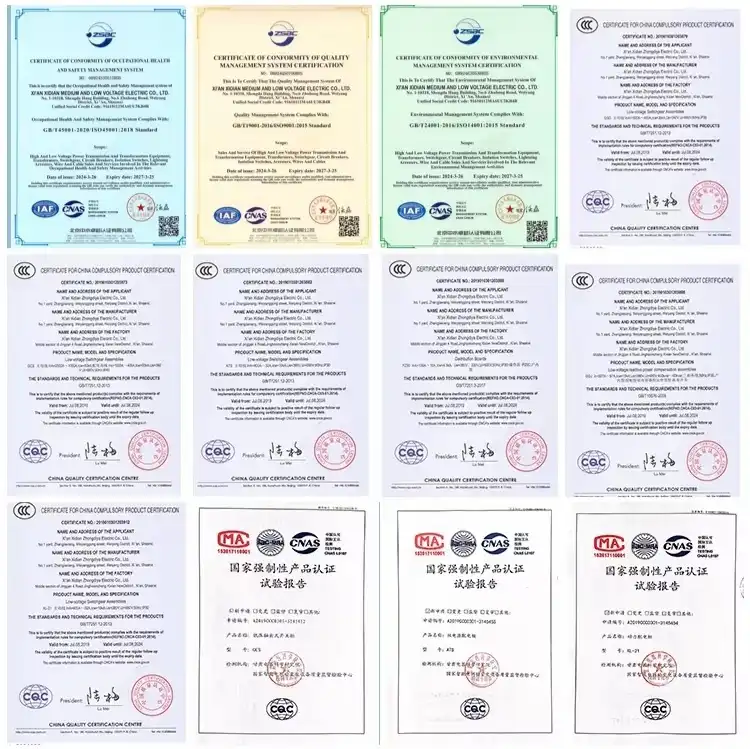
The dielectric is multi-layer polypropylene film with zinc-aluminum alloy metallization. When dielectric stress creates a local fault, the metal layer around the defect clears, and the capacitor recovers quickly. The modular design integrates into existing systems. Raw materials pass ISO 9001-certified checks, and each unit goes through load cycling, thermal shock, and impulse voltage tests. The design follows IEC 60831 and UL 810 standards. Ask us for dielectric loss and partial discharge data for a harmonic mitigation capacitor at your project rating. Those figures, together with voltage margin, decide whether a design passes type testing.
Where It Fits and What to Send Us
Typical uses include industrial plants facing power factor penalties and substations dealing with harmonics from renewable inverters. Xi'an Xikai equipment serves State Grid systems, steel and metallurgy, rail transportation, and renewable energy projects, so we understand the duty conditions your design faces. To prepare a recommendation, send a single-line diagram, load profile, harmonic measurements, target kvar, voltage rating, operating environment, and delivery requirements. Our engineers then match capacitor selection, reactor pairing, and customization to those data. A clear data package shortens the technical discussion and keeps the harmonic mitigation capacitor selection tied to your actual network.
Conclusion
A detuned reactor and a harmonic mitigation capacitor do different jobs, so the better choice depends on the network rather than the product name. The capacitor supplies reactive power and withstands harmonic stress. The reactor moves the resonant point below dominant harmonic orders, limits inrush current, and raises capacitor voltage by a factor of 1/(1 − p). Drive-heavy factories and data centers generally favor a detuned bank, while strict distortion limits, a dominant harmonic order, or fast-changing loads call for tuned passive or active filters. Measured data, resonant modeling, correct voltage and altitude ratings, and test-report review matter more than unit price. Matching the solution to measured risk protects capacitors from early failure and keeps distortion within limits such as IEEE 519.
FAQ
1. What Is a Harmonic Mitigation Capacitor?
It is a capacitor built to supply reactive power while carrying more harmonic current and voltage stress than a standard unit. Designers pair it with a detuned reactor in most harmonic-rich networks.
2. Can I Use a Harmonic Mitigation Capacitor Without a Reactor?
Technically yes, but in a harmonic-rich network a reactor prevents parallel resonant amplification. Even a well-built capacitor cannot control that risk alone, so design both parts as one system.
3. How Do I Choose Between 7% and 14% Reactors?
Choose 7% when the 5th harmonic dominates. Choose 14% when the 3rd harmonic is strong. The higher percentage raises capacitor voltage more, so it needs a higher voltage rating.
4. When Should I Replace a Capacitor in a Detuned Bank?
Replace it when you see bulging, leakage, or measured capacitance loss. Capacitance drift shifts the tuning point, so follow the manufacturer's replacement threshold.
Request a Harmonic Mitigation Capacitor Quotation From Xi'an Xikai
Xi'an Xikai supplies high voltage single phase filter capacitors and works as a harmonic mitigation capacitor manufacturer for project-specific orders. Our plateau-type equipment meets operating requirements at altitudes up to 4,000 meters, and our team customizes capacitance and terminals to your design. Send your single-line diagram, harmonic measurements, target kvar, and voltage rating to serina@xaxd-electric.com, amber@xaxd-electric.com, or luna@xaxd-electric.com. Visit xaxd-electric.com for details.
References
1. IEEE Standard for Harmonic Control in Electric Power Systems (IEEE Std 519), 2022
2. IEEE Guide for the Application of Shunt Power Capacitors (IEEE Std 1036), 2020
3. IEEE Standard for Shunt Power Capacitors (IEEE Std 18), 2012
4. Industrial A.C. Networks Affected by Harmonics: Application of Filters and Shunt Capacitors (IEC 61642), 1997
5. Electrical Power Systems Quality, Third Edition, 2012
6. Harmonics and Power Systems, 2006