
Benefits of Using a Line Reactor on AC Drives
2026-11-17 17:37:25
The main benefits of using a line reactor on AC drives are lower harmonic current, smaller inrush peaks, fewer nuisance trips, and longer life for rectifier diodes and DC bus capacitors. A line reactor, often searched as a linear reactor, adds inductive impedance in series with the drive input. That impedance slows rapid current changes and softens supply disturbances. A well-sized linear reactor also takes stress off nearby capacitor banks and transformers. At Xi'an Xikai, I see these gains most clearly in panels where drives, capacitors, and weak supplies share one bus.
Introduction: Why Line Reactors Matter in Modern AC Drive Systems
How Drives Create Power Quality Problems?
A standard AC drive uses a six-pulse diode rectifier. It draws current in short peaks instead of a smooth sine wave, which produces harmonics at the 5th, 7th, 11th, and 13th orders. Those currents flow back through the transformer and feeder, distort the voltage, and heat conductors. Capacitor-bank switching adds another stress. A discharged bank acts like a brief short circuit and pulls a sharp inrush current. On a weak supply, these events can cause overvoltage trips, overheating, and early failure of drive parts. I treat the supply side as part of the drive system.
Line Reactor, AC Line Reactor, and Linear Reactor: Clearing Up the Terms
"Line reactor" and "AC line reactor" name the same device: a series inductor placed ahead of the drive. Industry documents use "line reactor." Buyers often type "linear reactor" into search engines, and some catalogs list it that way. The word "linear" also describes a design goal. A linear reactor keeps its inductance steady as current rises, because the core does not saturate early. Steady inductance keeps the impedance predictable during peaks. I use both terms in this guide.
Who This Guide Helps
Many readers I work with build low-voltage capacitor cabinets, power factor correction panels, and OEM drive panels. Others are contractors, distributors, or plant engineers. If you serve US facilities, you mostly deal with 480 V and 600 V three-phase systems at 60 Hz, and with installations that follow NFPA 70, the National Electrical Code. This guide covers operation, sizing, selection, sourcing, and verification, so you can specify a linear reactor for your panel with fewer surprises.
What Is a Line Reactor and How Does It Work?
Core, Windings, and Insulation
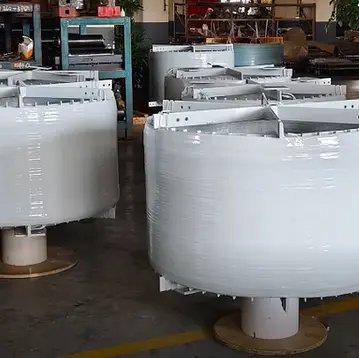
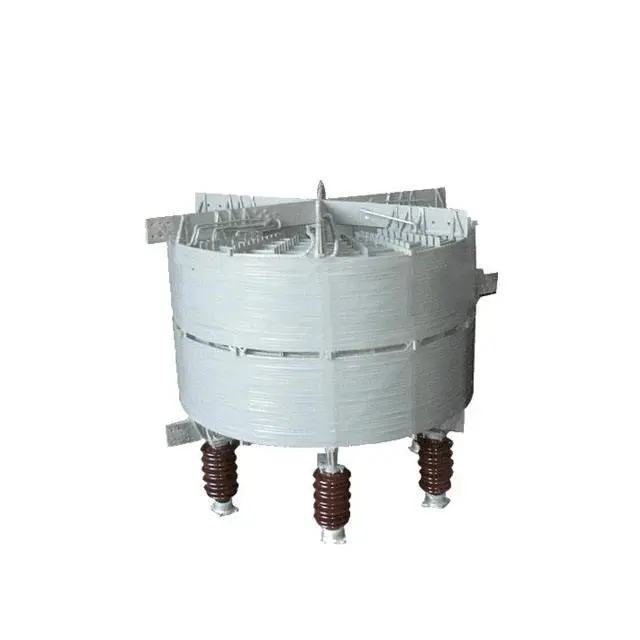
A dry-type reactor has a magnetic core, windings, an insulation system, terminals, and an enclosure. The CKSG Series Low Voltage Reactor uses imported cold-rolled silicon steel laminations, segmented by epoxy-laminated glass spacers that stabilize the air gaps. Stable gaps help the core resist saturation, which is the idea behind a linear reactor. The windings use tightly wound Class H/C enamel-coated flat copper wire for high-temperature resistance and quiet operation. Non-magnetic fasteners hold the assembly. The unit is pre-baked, vacuum-impregnated, and thermally cured, so the core and windings bond into one solid body. Terminals and enclosures resist corrosion.
Impedance Ratings and the V = I × X Relationship
A reactor adds inductive reactance, X = 2πfL, in series with the circuit. The voltage across it follows V = I × X, so the reactor opposes fast current change and smooths spikes. Drive line reactors usually come in 3% or 5% impedance. That figure states the voltage drop at rated current as a percentage of line voltage. At 480 V, a 5% reactor drops about 14 V per phase, because phase voltage is 277 V. Higher impedance filters more harmonics but adds voltage drop and heat. Source strength also matters, since a stiff transformer gains less from the same reactor than a weak one.
Input Reactors Versus Output Reactors
An input reactor sits between the supply and the drive. It limits harmonics, inrush, and transients that reach the rectifier. An output reactor, also called a load reactor, sits between the drive and the motor. It reduces dV/dt and reflected-wave voltage on long cables, which can damage motor insulation. The two are not always interchangeable, because output devices face high carrier-frequency currents from the drive's IGBTs. I always check that a product's rating matches its side of the drive. The CKSG Series is a low-voltage reactor for harmonic suppression and current limiting, so I place it on the supply side or in capacitor-bank circuits.
The Main Benefits of Using a Line Reactor on AC Drives
Lower Harmonics and Smaller Transient Peaks
Added impedance flattens the narrow current peaks that a six-pulse rectifier draws. Manufacturer data commonly shows a 5% reactor bringing current distortion (THDi) down to roughly 35%, well below the level of a drive with no added impedance. Lower harmonic current means less voltage distortion at the point of common coupling. IEEE 519-2022 sets a voltage THD limit of 8% for buses at or below 1 kV, and its current limits depend on the ratio of short-circuit current to load current. A properly sized linear reactor helps you approach those limits, but I recommend measuring before you promise compliance.
Protection for Drive Components and Fewer Trips
Rectifier diodes and DC bus capacitors take the hardest hits from line transients and inrush. A linear reactor limits the rate of current rise, so diodes see smaller peaks and capacitors see less ripple current. Utility switching and neighboring capacitor banks often trigger overvoltage faults, and added impedance absorbs part of that energy. That cuts nuisance trips on pumps, fans, and conveyors. Upstream transformers and feeders also carry less harmonic current, so they run cooler. Results depend on impedance, source conditions, drive design, and installation quality, so I treat every figure as an estimate.
Better Fit with Weak Supplies and Capacitor Banks
Capacitor banks and harmonics interact. A bank can form a resonant circuit with transformer inductance and amplify harmonic current. A series reactor moves that resonance below the dominant harmonic. The CKSG Series offers three reactance rates. The 7% rate suppresses harmonics above the 5th order, 14% above the 3rd order, and 27% above the 2nd order. A 7% reactor places series resonance near 3.8 times the fundamental frequency, which suits six-pulse drive loads. Because its segmented core minimizes magnetic saturation, a linear reactor of this type keeps its behavior stable during peaks. Check the capacitor voltage rating, since a series reactor raises the voltage across the capacitor.
Line Reactor Applications and Recommended Configurations
Common Industrial Uses
I see line reactors most often on VFDs that run pumps, fans, compressors, conveyors, HVAC equipment, and water-treatment systems. OEM control panels use them to keep several drives stable on one feeder. Generators, microgrids, and renewable systems need extra care, because source impedance is higher and waveform quality shifts with load. In the United States, common classes are 480 V and 600 V three-phase at 60 Hz, with ratings from 50 A or 100 A upward. Single-phase units serve smaller equipment. For every linear reactor rating, compact size, temperature rise, low noise, certification, and repeatable supply drive the final choice.
Typical Configurations by Supply Condition
For a general-purpose drive on a stable utility, a 3% input reactor matched to the drive's continuous input current is a typical starting point. A weak transformer, generator, or remote supply may call for 5%, after you check voltage drop and source compatibility. Long motor cables or multiple-motor systems may need an output reactor, dV/dt filter, or sine-wave filter instead of an input reactor alone. For repeated OEM production, standard dimensions, labeling, documentation, and steady supply save time on every build. Verify each linear reactor configuration against the drive manufacturer's data before you order.
CKSG Series in Panels and Plants
The CKSG Series fits several settings. In industrial plants, it helps cut power factor penalties on CNC machines and assembly lines, and supplier data lists tolerance for inrush currents up to 100 times rated capacity. In substations, it stabilizes voltage against harmonics from renewable inverters. In commercial buildings such as hospitals and malls, it supports retrofits with quiet operation below 45 dB. The series comes in three-phase and single-phase dry-type iron-core versions. Its compact, lightweight body is cabinet-compatible, which keeps installation cost down. For North American projects, confirm required certifications at the quote stage.
How to Choose, Source, and Verify a Line Reactor
Selection Data and Common Mistakes
Start with voltage, phase, frequency, drive input current, transformer impedance, and available short-circuit current. Then add ambient temperature, altitude, enclosure ventilation, mounting, and dimensions. The most common mistake is sizing by motor horsepower. Use the drive's actual input current instead. Other errors include choosing 5% without checking voltage drop, ignoring heat inside the enclosure, and installing the reactor on the wrong side of the drive. A linear reactor selection also fails when buyers treat the unit as a full harmonic solution despite strict project limits. Review datasheets, wiring diagrams, test reports, and warranty terms first.
Line Reactors Versus Other Power Quality Solutions
An isolation transformer fits cases that need galvanic isolation or voltage conversion. A harmonic filter suits strict distortion limits. A DC link choke sits inside the drive's DC bus, so it offers less retrofit flexibility than an external AC reactor. dV/dt filters and sine-wave filters handle long cables and reflected-wave voltage on the motor side. When I compare a standard product with a drive-brand reactor, I match electrical ratings, dimensions, compliance, warranty, and availability. A technically equivalent linear reactor can serve the same function in a similar footprint, provided the datasheet confirms it.
Supplier Evaluation and Performance Verification
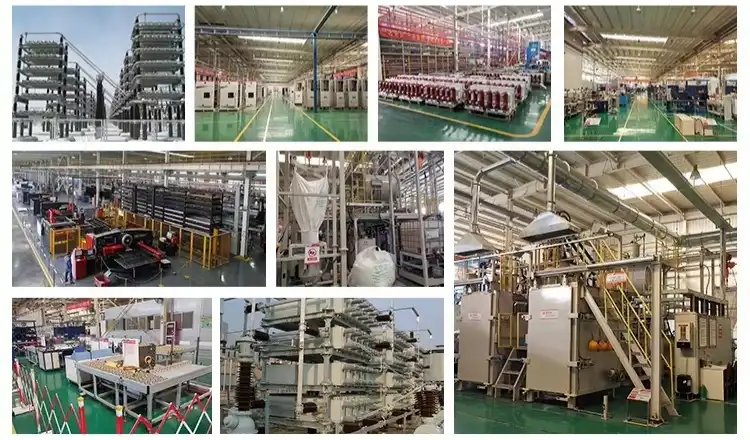
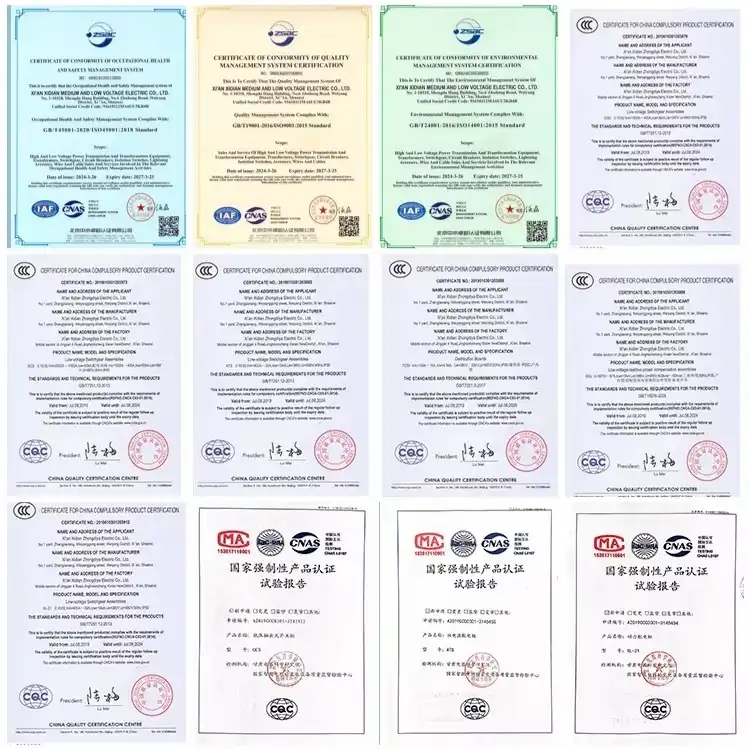
A clear RFQ lists phase, voltage, current, frequency, impedance, installation location, enclosure, certifications, quantity, and delivery date. Judge suppliers on engineering ability, core and winding processes, test facilities, traceability, and export experience. Xi'an Xikai builds the CKSG Series with 12-stage QC checks for reactance accuracy (±3%), thermal cycling, and dielectric strength. The team holds 3C certification, ISO 9001, 45001, and 14001, and 15+ patents in reactor technology. Support includes 24/7 technical guidance and lead times under 12 weeks. After delivery, check wiring, terminal torque, clearance, and grounding, then measure temperature rise and harmonics under load. Weigh losses, warranty, and downtime risk along with the linear reactor price.
Conclusion
A line reactor, also searched as a linear reactor, adds controlled series impedance that limits harmonics, inrush current, and transients in AC drive systems. This protects rectifier diodes, DC bus capacitors, transformers, and capacitor banks, and it reduces nuisance trips. Correct selection depends on the drive's input current, voltage, frequency, supply strength, and temperature conditions, not on motor horsepower. Impedance choices of 3% or 5% balance harmonic reduction against voltage drop and heat, while 7%, 14%, and 27% reactance rates detune capacitor-bank circuits. Input reactors, output reactors, filters, and transformers solve different problems. Measurement after installation confirms the result.
FAQ
1. Is a linear reactor the same as a line reactor?
In most catalogs, yes. "Line reactor" is the standard industry term, while "linear reactor" is a common search phrase. The word "linear" also points to inductance that stays stable as current rises.
2. Should I choose 3% or 5% impedance?
Choose 3% for a general-purpose drive on a stable supply. Choose 5% when the supply is weak or harmonic limits are tight, after you check voltage drop and heat. Size the reactor by the drive's input current.
3. Can a reactor guarantee IEEE 519 compliance?
No. A reactor reduces harmonic severity, but compliance depends on the point of common coupling, short-circuit capacity, and other loads. Measure on site, and add a harmonic filter if limits remain unmet.
Request a Linear Reactor Quotation from Xi'an Xikai
Xi'an Xikai supplies the CKSG Series as a linear reactor manufacturer, with copper windings, cabinet-ready dimensions, and 12-stage quality testing. Send your drive model, voltage, phase, current, impedance, quantity, and destination to serina@xaxd-electric.com, amber@xaxd-electric.com, or luna@xaxd-electric.com, and our engineers will review your sizing. Visit xaxd-electric.com for datasheet and OEM support details.
References
1. IEEE Std 519 Recommended Practice and Requirements for Harmonic Control in Electric Power Systems, 2022
2. NEMA ICS 7 Industrial Control and Systems: Adjustable-Speed Drives, 2020
3. IEC 61800-3 Adjustable Speed Electrical Power Drive Systems: EMC Requirements and Specific Test Methods, 2017
4. IEC 60076-6 Power Transformers: Reactors, 2007
5. NFPA 70 National Electrical Code, 2023
6. IEEE Std 1036 Guide for the Application of Shunt Power Capacitors, 2010
