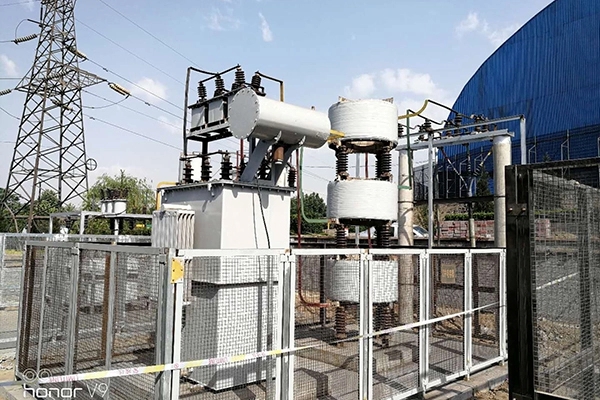
How to Choose an Outdoor SF6 Circuit Breaker for Substations
2026-08-19 10:15:50
Selecting an outdoor SF6 circuit breaker demands careful evaluation of technical specifications, environmental resilience, and long-term operational reliability. These devices use sulfur hexafluoride gas for insulation and arc extinction, making them suitable for substations operating between 35kV and 40.5kV. When choosing equipment, project managers should prioritize breaking capacity (typically 31.5kA or higher), mechanical endurance exceeding 3,000 operations, and gas leakage rates below 0.5% annually. Equally critical are ingress protection ratings (IP65 minimum), compliance with IEC 62271-100 standards, and compatibility with existing infrastructure—particularly in regions experiencing temperature extremes, high humidity, or corrosive coastal conditions. This decision directly impacts substation uptime and maintenance costs over decades of service.
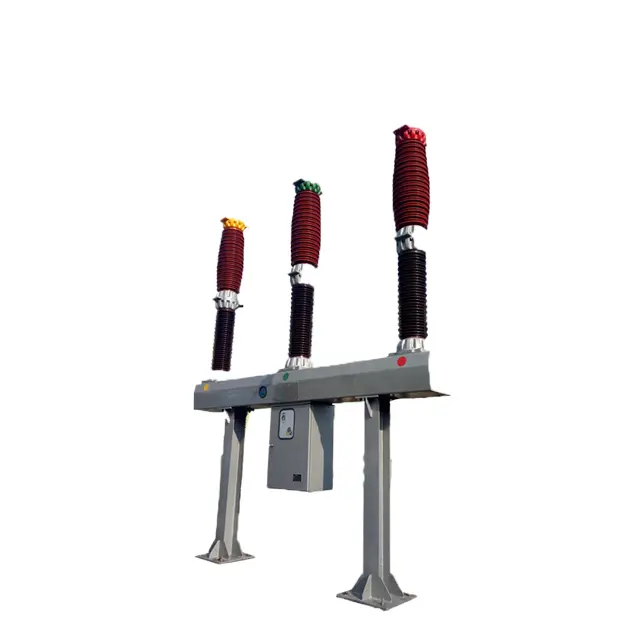

Understanding Outdoor SF6 Circuit Breakers: Key Concepts and Benefits
What Makes SF6 Technology Essential for Outdoor Applications
SF6 gas has a dielectric strength that is almost three times that of air. This means that interrupter chambers can be small while still having great arc-quenching performance. When fault currents happen, the gas quickly takes in any free electrons that are present during contact separation. This puts out arcs within 50 milliseconds. This physical feature gets rid of the fire risks that come with oil-filled options and makes the system smaller than air-insulated systems. Outdoor versions have weatherproof housings with an IP65 rating or higher, which keeps water and dust from getting into the internal parts.
Structural Components and Operational Mechanics
A fixed contact clamp, a moving arc contact assembly, a puffer cylinder, and a nozzle design are all common parts of an assembly. The CT14's spring-operated system moves the contacts through an insulation rod when the door is open. The compressed gas inside the puffer barrel creates blast pressure, which cools and deionizes the path of the arc. The MKZ-type density gauge checks the gas pressure all the time and adjusts for changes in temperature to keep readings accurate. This sealed-for-life design reduces the need for regular maintenance, which is a problem that EPC companies who manage rural substation sites often have.
Environmental Stewardship and Regulatory Compliance
Even though SF6 is still very useful, its ability to cause global warming means that leaks must be carefully controlled. Modern breakers have precision seal technology and automated monitoring systems that keep leakage rates below 0.5% per year. When GB1984-89 and IEC 56 standards are met, the plant tests the equipment by measuring its power frequency tolerate voltage and partial discharge. These rules make sure that the system can work safely in temperatures ranging from -30°C to +55°C. This is very important for installations in the African desert or Southeast Asia's monsoon zones.
Key Criteria for Selecting the Right Outdoor SF6 Circuit Breaker
Matching Voltage and Current Ratings to System Requirements
The electrical architecture of your substation sets the basic rules. The LW8-40.5 series can handle rated voltages of 35kV and system voltages as high as 40.5kV. It is ideal for distribution networks that connect industrial buildings or city grids. Rated current choices range from 1600A to 3150A, which can handle loads from medium-sized factories to transmission points in the area. Breaking capacity must be higher than the expected fault currents—31.5kA outdoor SF6 circuit breaker devices are rated for this. A short circuit happens 21 times in a row without needing gas replacement or mechanical repair.
Evaluating Environmental Durability and Mechanical Resilience
Extreme heat, salt spray from the coast, and earthquakes can all shorten the life of equipment. Breakers that are approved for seismic intensity 9 can handle ground accelerations of up to 0.4g, which protects investments in places where earthquakes are common. Anti-corrosion coatings on shelters keep rust from getting inside in marine settings, and materials that are resistant to UV light keep the structure strong even after years of being in the sun. A mechanical life of more than 3,000 operations allows for frequent switching in substations that serve green energy sources whose output changes.
Integration Capabilities and Retrofit Compatibility
When substations are upgraded, old DW8-35 oil breakers often need to be replaced without making a lot of changes to the civil engineering. Transition bases let SF6 units be mounted directly on top of existing supports, which cuts project times by weeks. If you choose to integrate up to 12 current transformers per pole, you won't have to install different CTs. This makes metering and protection plans easier. This modularity is very helpful when working with design firms or meeting the tight commissioning deadlines that come with power engineering contracts.
Comparing Outdoor SF6 Circuit Breakers with Other Technologies
Performance Benchmarking Against Vacuum and Oil Alternatives
Vacuum circuit breakers are most common indoors, but they don't work well in changing temperatures outside, which puts a lot of stress on ceramic interrupters and rubber seals. When they are being serviced, oil-filled units pose a risk of contamination and need a lot of containment infrastructure. SF6 breakers have a faster arc interruption speed—less than 50ms compared to 70–90ms for older technologies—which means that transformers don't have to deal with as much transient recovery voltage stress. Their small size makes it cheaper to buy land, which is very important when growing urban substations that are limited by infrastructure.
Lifecycle Cost Analysis and Maintenance Intervals
The cost of buying SF6 equipment is 15-20% higher than buying vacuum options at first, but gas-insulated solutions are cheaper in the long run. Factory pre-charging gets rid of the need for complicated gas handling on-site, and sealed construction means that inspections are limited to every two years to check the density gauge. Over a 25-year service life, total maintenance costs drop 30–40% compared to oil systems that need dielectric fluid analysis and breather maintenance every so often. These savings are very important to procurement teams that have to balance capital budgets with operational costs.
Emerging Innovations in Gas Monitoring and Eco-Friendly Alternatives
IoT sensors are now built into smart tracking systems. These sensors send real-time data about temperature, humidity, and pressure to SCADA platforms. Predictive analytics can find signs of seal degradation before they happen, which stops unexpected outages. Research into fluoronitrile-based gas mixes shows that they can lessen global warming effects while still insulating well, but they haven't been widely used yet. The current best practice combines the best way to use SF6 with strict rules for finding leaks. This meets environmental standards without sacrificing technical excellence.
How to Procure Outdoor SF6 Circuit Breakers: Market Insights and Best Practices
Evaluating Manufacturers and Certification Credentials
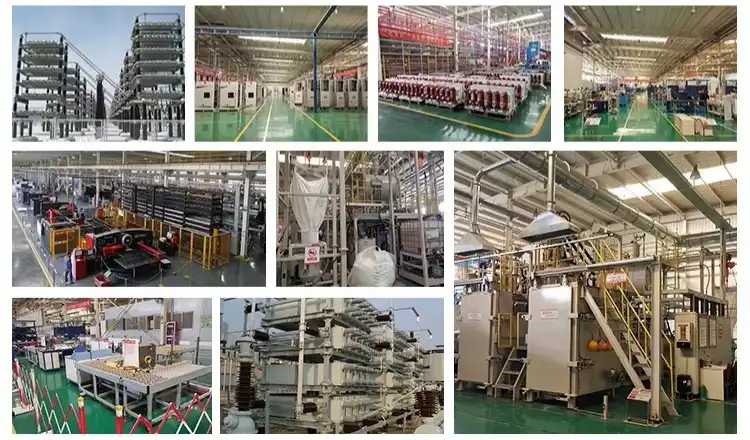
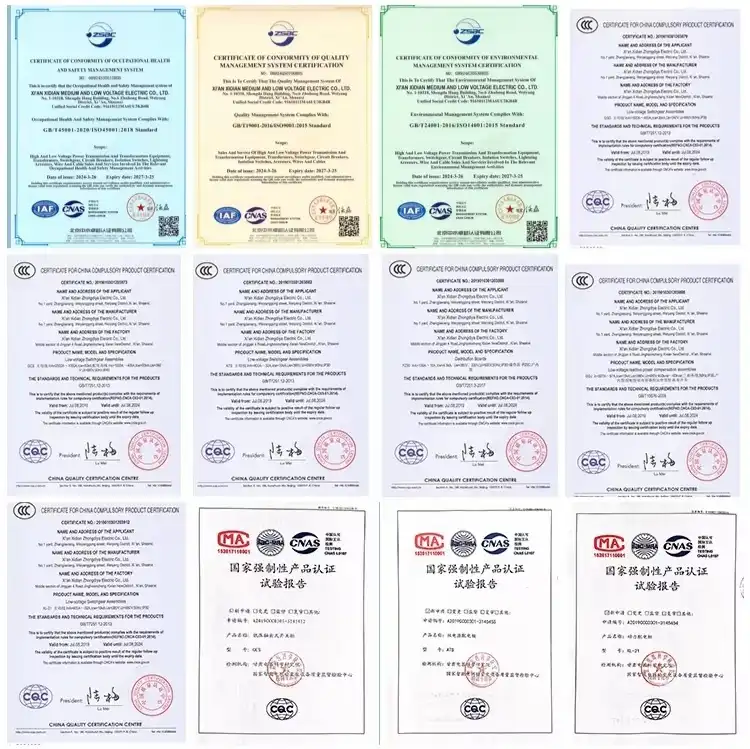
Suppliers you can trust will have both ISO 9001 quality management and ISO 14001 environmental standards. These show that they have strict rules over their production and are committed to being environmentally friendly. Xi'an Xikai Medium & Low Voltage Electric Co., Ltd. has one of the biggest factories in China that makes medium-voltage equipment. Every unit goes through 12 or more quality checks in testing labs to make sure it is safe. For coastal uses, outdoor SF6 circuit breaker parts are tested by putting them through 10,000 cycles of endurance runs on spring systems and being exposed to salt spray. Checking for compliance with IEC 62271-100 makes sure that international protection relays and control systems can talk to each other.
The amount of tailoring affects how long it takes to buy something. Standard configurations ship in 6 to 8 weeks, but custom units with specific CT ratios or altitude compensation take 10 to 14 weeks. When you place a bulk order for a multi-phase EPC project, you can get discounts and delivery times that work with each other, which cuts down on the cost of storage at the project sites. During the commissioning phases of a substation, critical path delays can be avoided by communicating openly about lead times.
After-Sales Support and Spare Parts Logistics
A full guarantee should cover both mechanical parts (for at least 5 years) and SF6 sealing systems for 3 years. Manufacturers with a good reputation keep regional service centers stocked with new density gauges, operating mechanism kits, and contact parts. Emergency dispatch procedures make sure that a technician gets to major failures within 48 hours, which is very important for power companies that have to meet dependability standards. Vibration analysis and thermography are used in predictive maintenance contracts to find wear patterns before they lead to major failures.
Making the Final Decision: Matching Breaker Features to Your Operational Needs
Segmenting Requirements by Application Type
Utility-scale substations put fault-clearing speed and electrical endurance at the top of their lists. It is necessary to have a breaking capacity of 31.5kA and 21-operation ratings. For industrial applications that use variable frequency drives, high capacitive switching power is needed to handle waves with a lot of harmonics without contact loss. OEM uses in prefabricated substations need small sizes and easier installation processes. Modular designs that are already wired at the factory can meet these needs.
Balancing Performance Specifications Against Budget Constraints
To figure out the total cost of ownership, you have to add up the purchase price, the labor costs for installation, the costs of maintenance over 25 years, and any penalties for downtime. Equipment with a main current rating of 3,150A costs 40% more than equipment with a rating of 1600A, but it doesn't need to be upgraded when the load increases. For the same reason, choosing IP66 protection over IP65 raises the unit cost by 10% but doubles the warranty coverage for seals in harsh environments. Because of these trade-offs, procurement officers, electrical engineers, and project finance teams need to work together.
Ensuring Scalability and Future-Proofing
Master plans for substations should include demand predictions for the next 20 to 30 years, and the choice of breakers should allow for small increases in capacity. As grid upgrading speeds up, choosing platforms that can be upgraded with things like bolt-on earthquake dampers or smart sensor packages will protect the value of your investment. Supplier roadmaps that show commitment to parts availability and technology refresh cycles give buyers peace of mind that the decisions they make today won't leave assets unusable too soon.
Conclusion
When picking out an outdoor SF6 circuit breaker, it's important to make sure that the technical specs match up with the real-world needs and long-term strategy goals. Sound selection factors are based on breaking strength, mechanical longevity, resistance to environmental stress, and gas leaking performance. Modern design goals are shown by equipment like the LW8-40.5 series, which has an electrical durability of 21 operations, an IP65 rating, and maintenance-free operation through MKZ density monitoring. Investments in buying are kept safe by a strict evaluation of suppliers that includes licenses, quality controls during production, and after-sales infrastructure. Project teams find reliable switching solutions that can last for decades in harsh settings by carefully checking voltage ratings, current handling, seismic resistance, and lifecycle costs.
FAQ
1.What maintenance schedule should we follow for outdoor SF6 breakers?
Modern sealed units only need to be inspected every two years, with a focus on readings from the density gauge and the stability of the outside container. Make sure the gas pressure stays within the manufacturer's recommended range (usually between 0.5 and 0.7 MPa at 20°C) and check that any metal areas that are visible do not have any corrosion. Every five years, a full test should be done that includes measuring loop resistance and checking operational timing to find signs of contact wear or mechanism degradation.
2.How do we detect and manage SF6 gas leakage effectively?
With a detection level of 1 ppm, quantitative leak monitors that use infrared absorption or ultrasonic sensors can find breaks. For sealed breakers, acceptable leaking rates stay below 0.5% per year. By taking baseline pressure readings during commissioning, you can look at trends that show how the seal is slowly breaking down. When monthly pressure drops are more than 2% of rated values, an immediate investigation is triggered. This stops catastrophic arc failures from happening.
3.Can we customize breaker configurations for unique substation needs?
If asked, manufacturers can handle specific CT ratios, extra contact setups, and the merging of communication protocols. For locations above 1,000 meters, custom altitude adjustments changes the gas density, and tropical-rated seals can handle 95% humidity for a long time. Lead times are 4 to 6 weeks longer than normal models, so you need to get involved early in the engineering design stages to keep your plan from getting thrown off.
Partner with Experienced Outdoor SF6 Circuit Breaker Suppliers
Xi'an Xikai Medium & Low Voltage Electric Co., Ltd. has a track record of success with substation projects in China, Africa, and Southeast Asia. Our LW8-40.5 outdoor SF6 circuit breaker line has a 31.5kA interrupting capacity and doesn't need any upkeep because it is precision-sealed and uses CT14 spring mechanisms. Products are tested thoroughly at ISO-certified centers to make sure they meet the strict GB1984-89 and IEC standards needed for foreign bids. To talk about your 40.5kV substation needs, email our technical team at serina@xaxd-electric.com, amber@xaxd-electric.com, or luna@xaxd-electric.com. Our custom solutions help with climate problems, quick rollout times, and lowering the costs over the whole lifecycle. We back them up with support 24 hours a day, seven days a week, and full spare parts logistics across target areas.
References
1. IEEE Standard C37.06-2009, "AC High-Voltage Circuit Breakers Rated on a Symmetrical Current Basis—Preferred Ratings and Related Required Capabilities for Voltages Above 1000 V," Institute of Electrical and Electronics Engineers, 2009.
2. CIGRE Working Group A3.10, "Circuit Breaker Reliability Databases and Performance Indicators," International Council on Large Electric Systems, 2012.
3. Zhang, Liang, and Wang, Hui, "SF6 Gas Leakage Detection Technologies for High-Voltage Switchgear: A Comparative Analysis," Journal of Electrical Engineering and Technology, vol. 14, no. 3, 2019, pp. 1145-1158.
4. International Electrotechnical Commission, "IEC 62271-100:2021 High-Voltage Switchgear and Controlgear – Part 100: Alternating-Current Circuit-Breakers," Geneva, Switzerland, 2021.
5. Smeets, René, et al., Switching in Electrical Transmission and Distribution Systems, John Wiley & Sons, 2015.
6. National Electric Power Regulatory Commission of China, "Technical Guidelines for 40.5kV Outdoor Substation Equipment Selection in Tropical and Coastal Regions," State Grid Corporation Standard Q/GDW-2018, Beijing, 2018.