Why Outdoor SF6 Circuit Breakers Improve Grid Fault Protection
2026-08-19 10:15:44
Outdoor SF6 circuit breakers represent a critical advancement in electrical grid fault protection, leveraging sulfur hexafluoride gas to deliver rapid, reliable arc interruption during fault conditions. Their superior dielectric strength—approximately 2.5 times that of air—enables compact designs capable of managing fault currents exceeding 31.5kA while maintaining operational integrity in extreme temperatures ranging from -30°C to +55°C. When power distribution networks face lightning strikes, short circuits, or equipment failures, these breakers respond within milliseconds to isolate faults, preventing cascading failures that could compromise entire substations and industrial operations across Africa, Southeast Asia, and domestic Chinese markets.

Introduction
Modern power lines need equipment that is both technically excellent and reliable in the real world. When purchasing managers are in charge of EPC projects and electrical engineers are planning 40.5kV substation layouts, the circuit protection technology they choose has a direct effect on project timelines, maintenance budgets, and the reliability of the system. In industries like the merger of renewable energy and petrochemical plants, where unexpected downtime can result in significant financial losses, outdoor SF6 circuit breakers have become essential. This guide looks at how SF6-based interruption technology helps B2B clients with their main concerns, such as making sure that the breaking capacity is checked and that the seal stays intact over time in seaside or high-altitude settings. We'll talk about the engineering ideas behind these devices that make them work in substations that are exposed to changes in temperature, salt fog, and earthquakes. This will give procurement teams the technical background they need to compare suppliers and find the best total cost of ownership for projects that last more than one year.
Understanding Outdoor SF6 Circuit Breakers and Their Operating Principles
The Role of SF6 Gas in Arc Extinction
Within outdoor SF6 circuit breakers, sulfur hexafluoride does two things: it acts as an insulator when the device is not in use, and it stops an arc when a fault occurs. When contacts come apart because of a load, an electric spark forms between them. SF6 molecules are strongly electronegative, which means they quickly take free electrons from the ionized arc plasma. This process of attaching electrons breaks the arc's electrical path, which gives the gas back its insulating qualities in microseconds. SF6's ability to transfer heat helps cool things down even more. It gets rid of the intense heat that is made during arcing (temperatures can reach over 20,000°C at the core of the arc) and restores dielectric strength before the next voltage cycle.
Structural Components and Mechanical Operation
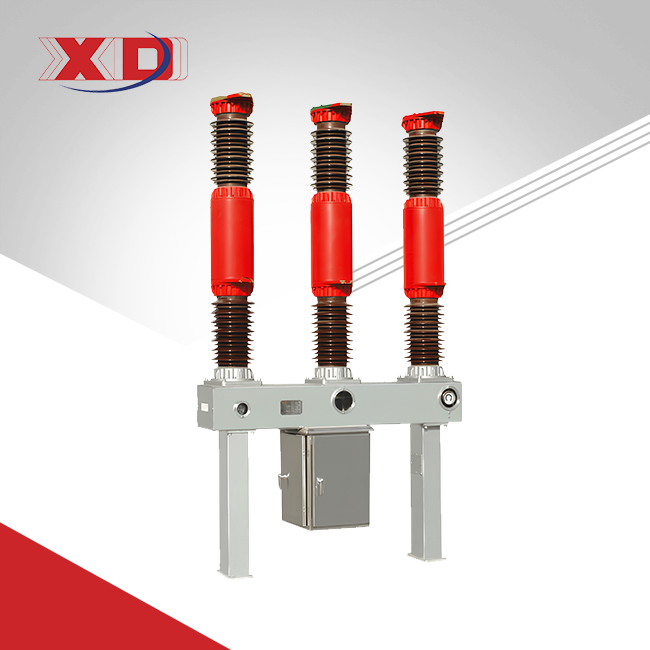
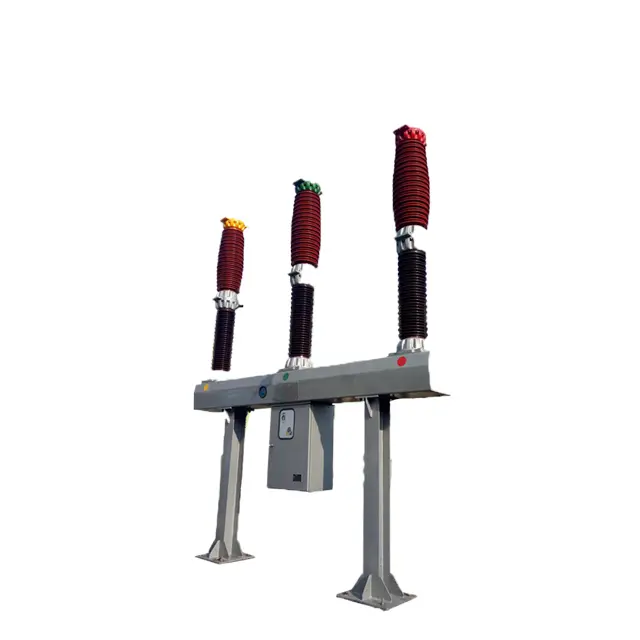
An average outdoor SF6 circuit breaker is made up of three main parts: the interrupter chamber, which holds the fixed and moving contacts; the working mechanism, which moves the contacts; and the support structure, which holds the current transformers and monitoring instruments. The LW8-40.5 model has a puffer-type design. Contact separation squeezes gas inside a cylinder and forces it through a nozzle to blast the arc. With this compressed-gas method, arc lengths are very short—often less than 50 milliseconds—which lowers the thermal stress on the materials that come into touch. The CT14 spring-operated system physically stores energy, so the speeds of closing and opening stay the same even when the voltage drops or the control power goes out. Live parts are kept separate from the grounded frame by porcelain or polymer insulators, and IP65-rated enclosures keep dust and water jets out of the internal mechanisms during bad weather.
Pressure Monitoring and Thermal Compensation
It is important to keep the SF6 density at the right level for consistent operation. Changes in temperature cause changes in gas pressure, which could set off false alarms or hide real leaks. Advanced density gauges, like the MKZ type that comes with high-end models, take temperature changes into account by using both pressure and atmospheric conditions. These tools show in real time the amount of gas mass per unit volume, which is the correct way to measure how well something can insulate and stop an arc. When density drops below certain levels, alarms go off, and interlocks may stop breakers from working to avoid catastrophic failures. Precision sealing methods, such as O-ring materials that don't let SF6 through, and controlled assembly processes that get rid of micro-gaps at flange interfaces, can lower annual leakage rates to less than 0.5%.
Key Advantages of Outdoor SF6 Circuit Breakers in Grid Fault Protection
Superior Breaking Capacity and Electrical Endurance
Outdoor SF6 circuit breakers have a number of benefits for protecting against grid faults. A breaker's quality is determined by how many times it can stop high fault currents without breaking down. Outdoor SF6 units with a 40.5kV rating can interrupt currents of 31.5kA up to 21 times without needing new SF6 or contact repair. This is enough to clear problems in transmission networks with a lot of connections. This electrical durability comes from the fact that SF6 regenerates itself. Unlike oil breakers, which build up carbonized leftovers, SF6 recombines after each arc event, so it always works the same way. When compared to air-blast or vacuum technologies, compressed-gas arc interruption causes less contact erosion. This means that service times are longer and spare parts stocks are smaller. This stability is very important in remote substations where repair workers can't get to them easily because of where they are or because of safety concerns.
Mechanical Longevity and Operational Flexibility
Mechanical life of more than 3,000 operations meets the needs of systems that have to switch tasks often, like distribution networks that serve industrial groups or grids that use changing renewable energy. The spring-loaded mechanism absorbs shock loads when the door is closed, which keeps the linkage parts from wearing out and breaking. Up to 12 current transformers can be optionally added to each pole. This lets full metering and protection schemes work without having to install external CTs, which makes substation layouts easier and reduces the footprint. This modularity helps EPC companies who are in charge of small urban sites or upgrade projects that need to cut down on civil work as much as possible. Breakers with zone-selective interlocking or directed overcurrent protection work better with devices upstream and downstream when they can be set up to do so. This keeps industrial processes from being interrupted by trips that aren't needed.
Robust Environmental Protection
When equipment is installed outside, it is exposed to UV light, changing temperatures, humidity, and airborne contaminants. IP65 ingress protection makes sure that neither dust particles nor pressurized water jets can damage the inside workings. This is important for coastal substations where salty winds speed up corrosion. In industrial settings with high levels of hydrogen sulfide and sulfur dioxide, anti-corrosion coatings on enclosures and gear keep them from breaking down. Up to an intensity 9 on the Chinese seismic scale, the system can withstand earthquakes, and the flexible busbar connections can absorb ground motion without sending damaging forces to the porcelain insulators. Temperature ratings from -30°C to +55°C allow placements in places from the Arctic to tropical power plants. This means that no extra heating or cooling systems are needed, which would increase the amount of energy used by parasitic systems. These benefits all help with the problems that project managers mentioned, like not knowing how well equipment will work in tough environments, worrying about how easy it is to get to for repair, and worrying about how much money it will cost if something breaks down too soon. SF6 technology helps the business case for substation investments with 20–30 year operating horizons by providing predictable lifetime costs and reducing the number of unplanned breakdowns.
Comparative Analysis: Outdoor SF6 Circuit Breakers vs. Alternative Technologies
Vacuum Circuit Breakers: Strengths and Limitations
Outdoor SF6 circuit breakers are compared to other technologies in this comparison. Vacuum interrupters put out arcs in sealed chambers that have been emptied to high vacuum levels, so gaseous dielectrics are not needed. They come in small sizes that work with metal-clad circuitry and don't release any carbon gases. However, vacuum technology can't be used for voltages above 40.5kV because of problems with reactive current switching and the length of the insulation. Overvoltages can damage connected equipment when the capacitor bank is repeatedly re-energized. In SF6 breakers, this risk is reduced by controlled arc extinction. Vacuum bottles usually need to be serviced every 5,000 to 10,000 processes. After that, contact loss means they need to be replaced. Vacuum breakers work well with voltages up to 24kV, but SF6 is better for transmission-class uses because it has been shown to stop short-circuit currents of more than 40kA.
Oil Circuit Breakers: Legacy Technology Considerations
For many years, mineral oil was the main substance used to put out arcs because it was cheap and good at cooling. But oil breakers can start fires because breaking down oil creates flammable gases and carbon layers that need to be cleaned out of the tank on a regular basis. Environmental laws are making it harder to use oil-filled tools near ecosystems that are sensitive, which is driving replacement programs around the world. SF6 breakers get rid of the risk of fire, cut down on maintenance work by 60–70%, and take up 30–40% less space than oil units of the same size. Retrofit projects can use transition bases to connect SF6 breakers to oil breaker foundations that are already there. This saves money on costly civil changes. This smooth upgrade path speeds up the time it takes for companies to update their old equipment and meet new safety standards.
Air-Blast and GIS Alternatives
Air-blast breakers used to be popular in high-voltage settings, but they need to be installed with a generator and use a lot of extra power. Gas-insulated switchgear (GIS) packs all of the substation's parts into SF6-filled modules, making them very small for use in cities. GIS makes better use of room than open air-insulated substations (AIS) with SF6 breakers, but it costs 2-3 times more to build. Outdoor SF6 breakers are the best mix for projects that need to be flexible and keep costs low, which are common in EPC contracts in developing markets. They offer interruption performance at AIS levels at AIS prices, and their modular designs allow for phased expansion as load growth calls for more feeders.
Practical Considerations for Procuring Outdoor SF6 Circuit Breakers
Total Cost of Ownership Analysis
An analysis of the total cost of ownership involves more than just the original buy price. They also include costs for installation, commissioning, and the product's entire life. Pre-charged outdoor SF6 circuit breakers only need gas top-ups and mechanical adjustments when they get to the site, which cuts commissioning time by 30–50% compared to alternatives that are put together in the field. Loop resistance measurements make sure that the contacts are lined up correctly. Values below 40 to 50 microohms are common for rated currents of 1600 to 3150A. Low resistance reduces joule heating and energy loss over many years of use. Oil breakers require inspections every year, but planned maintenance times are every 5 to 7 years. This means that less work is needed and fewer spare parts are needed. To find the true value, project managers should ask for lifecycle cost models that include energy losses, maintenance labor, and SF6 replacement over 25-year service periods.
Supplier Qualification and Technical Support
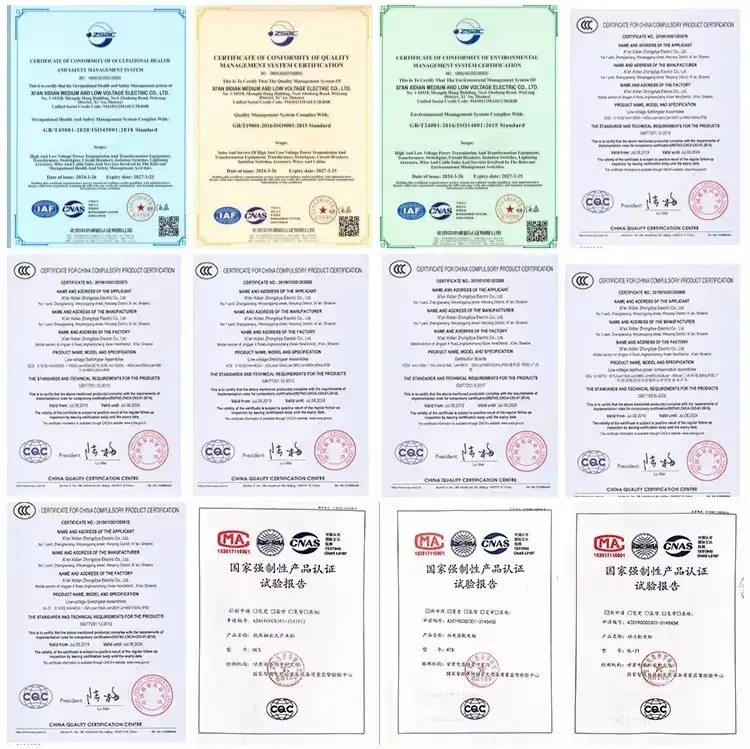
The risks of a project are lower when you choose makers who have worked in difficult conditions before. Certifications that meet the requirements of GB1984-89 and IEC 62271-100 standards show that the product meets national and foreign performance standards for things like short-circuit breaking tests, mechanical endurance checks, and environmental approval. Fast response times are guaranteed by suppliers who offer expert support 24 hours a day, seven days a week, and regional transportation for spare parts. The warranty should cover the amount of SF6 that leaks, how reliable the mechanism is, and how well the insulation works. There should also be clear steps for fixing problems. References from similar projects, like substations in similar climates or duty cycles, give you confidence in the supplier's skills. By working with makers who have their own testing labs that can do full-power short-circuit testing, you can be sure that the performance claims go beyond what is written in the catalog.
Integration with Grid Infrastructure
How hard it is to integrate depends on how well it works with current safety relays, SCADA systems, and communication methods. Modern SF6 breakers have digital relay connections that work with IEC 61850 protocols. This lets data flow smoothly for tracking conditions and automatically analyzing faults. Current transformer ratios need to match the input requirements of the relay. Common secondary choices are 1600/5A, 2000/5A, or 2500/5A. Accuracy classes (0.5 for metering, 5P20 for safety) make sure that measurements are correct. Busbar sizes and mounting hole patterns should meet standard plans so that they can be installed without having to be made from scratch. Coordination studies make sure that the TCC curves and breaker interrupt times are in sync with upstream reclosers and downstream fuses. This keeps things from going wrong during transient faults. These technical checks, which are done during purchase, speed up execution and cut down on project delays caused by problems with compatibility.
Addressing Environmental and Regulatory Concerns
SF6 Gas Management and Emission Control
SF6 Gas Control and Management of Emissions is critical given that sulfur hexafluoride is one of the most powerful greenhouse gases. The responsible management of SF6 balances the company's unmatched technology success with care for the environment. Modern outdoor SF6 circuit breakers have annual leakage rates of less than 0.5% thanks to advanced sealing technologies like metal-to-metal seal interfaces at critical junctions, elastomer O-rings that are compressed in a controlled way, and hermetic welding of interrupter chambers. SF6 can be recovered during upkeep by using gas handling equipment with vacuum pumps and molecular sieve dryers. This stops the gas from escaping into the atmosphere. Rules like the EU F-Gas Regulation and the U.S. Reporting requirements from the EPA require leak detection programs and the reuse of end-of-life gas. Failure to comply will result in penalties. To help companies meet their environmental goals, they should require providers to provide gas inventory records, leak detection methods, and recycling partnerships as part of the bidding process.
Emerging Alternatives and Technology Trends
Researchers are mostly looking into gas mixtures that contain carbon dioxide and fluoronitriles or fluoroketones. These mixtures have a lower potential to cause global warming while still having high dielectric strength. However, these mixes often have lower temperature limits for operation than pure SF6, which makes outdoor uses in harsh conditions more difficult. Solid-state circuit breakers that use power electronics promise to clear faults instantly and control current in both directions, which is good for DC microgrids and incorporating green energy. However, their high cost and low fault current ratings mean they can only be used in a few specific situations. Because they are reliable, cost-effective, and have a global service infrastructure, SF6 breakers will be the most common type of medium-voltage transmission for the next ten years. Utilities that have to balance environmental regulations with operational needs are using leak reduction strategies more and more. These include better maintenance training, yearly inspections with optical gas imaging cameras, and predictive analytics that link changes in pressure with impending seal failures. These strategies help to extend the life of breakers while reducing emissions.
Conclusion
Outdoor SF6 circuit breakers offer the best fault protection thanks to their fast arc termination, mechanical strength, and ability to withstand harsh environments. Because they can constantly stop 31.5kA currents, they can handle earthquakes and extreme temperatures, and they work well with modern safety systems, these devices are necessary for substations that support industry growth in emerging markets. Environmental concerns mean that SF6 needs to be managed carefully, but improvements in sealing and tracking technology have made it possible for leakage rates to be well below the limits set by regulators. For electrical engineers and EPC workers looking at 40.5kV substation parts, these breakers offer the best lifecycle value because they require less upkeep, can be serviced more often, and can work with changing grid designs that include digital automation and renewable energy.
FAQ
1.What maintenance intervals apply to outdoor SF6 circuit breakers?
Every 12 to 18 months, routine checks are done to make sure the SF6 density is correct, the machinery is well-oiled, and the extra circuits are working. Major upkeep, like checking the contacts and the mechanism, should be done every 5 to 7 years or after 500 to 1000 operations, based on the job cycle. Every three to five years, the gas should be analyzed for moisture content and decomposition byproducts to find any problems inside before they affect performance.
2.How do these breakers perform in extreme climates?
How well do these outdoor SF6 circuit breakers work in harsh environments? In this temperature range, models rated from -30°C to +55°C keep their full breaking strength. In wet hot areas, heaters keep condensation from forming, and arctic-grade lubricants keep mechanisms running when it gets cold. IEC 60068-2-52 salt fog testing confirms that coastal installations are resistant to corrosion. Special coatings protect hardware from chloride attack.
3.Can SF6 breakers integrate with renewable energy systems?
Of course. Their fast fault clearing keeps inverters safe from damage caused by too much current during grid shocks, and their capacitive switching rates can handle the reactive power compensation gear that is popular in wind and solar farms. Being compatible with IEC 61850 protocols lets real-time data exchange with SCADA systems at renewable energy plants for coordinated support of the grid.
Partner with Xi'an Xikai for Reliable Outdoor SF6 Circuit Breaker Solutions
The engineers at Xi'an Xikai Medium & Low Voltage Electric Co., Ltd. have been making great LW8-40.5 breakers for 20 years. Our ISO 9001-certified factories make breakers that have been tried beyond IEC standards. These breakers are qualified for use in areas with seismic activity up to level 9 and have been shown to work well at heights above 4,000 meters. Our expert team can help you with unique specs, onsite commissioning support, and predictive maintenance plans for any project, whether it's replacing old oil breakers or building new substations in harsh coastal environments. Get in touch with our experts at serina@xaxd-electric.com, amber@xaxd-electric.com, or luna@xaxd-electric.com to talk about your grid security needs. As a reliable company that makes outdoor SF6 circuit breakers, we make sure that your infrastructure investments are as reliable and legal as possible.
References
1. IEEE Standard C37.04-2018, IEEE Standard for Ratings and Requirements for AC High-Voltage Circuit Breakers with Rated Maximum Voltage Above 1000 V, Institute of Electrical and Electronics Engineers, New York, 2018.
2. International Electrotechnical Commission, IEC 62271-100: High-voltage switchgear and controlgear – Part 100: Alternating current circuit-breakers, Geneva, Switzerland, 2021 Edition.
3. Ryan, H.M., High Voltage Engineering and Testing, 3rd Edition, Institution of Engineering and Technology, London, 2013.
4. Smeets, R.P.P., van der Sluis, L., Kapetanović, M., Peelo, D.F., and Janssen, A., Switching in Electrical Transmission and Distribution Systems, John Wiley & Sons, Chichester, UK, 2015.
5. Cigré Working Group A3.10, Final Report on the Technical Performance Issues Related to the Application of SF6 Gas in Transmission Systems, Technical Brochure 276, International Council on Large Electric Systems, Paris, 2005.
6. National Electric Power Regulatory Standards Committee, GB 1984-2014 AC High-Voltage Circuit Breakers, Standards Press of China, Beijing, 2014.