
Indoor Potential Transformer: Types, Functions and Applications
2026-11-12 17:21:58
An indoor potential transformer, also called an indoor voltage transformer, steps a medium or high system voltage down to a standard, isolated signal. Meters, protection relays and control devices can read that signal safely. It comes in single-phase and three-phase types, usually with epoxy resin insulation. It serves metering, protection, synchronization and monitoring inside switchgear, substations, plants and commercial buildings. I wrote this guide for switchgear builders and procurement teams who must match accuracy class, burden and cabinet size. It also introduces our 35kV indoor voltage transformer.
What Is an Indoor Potential Transformer and How Does It Work?
Definition and Core Functions
Two points in a power circuit are linked by an indoor potential transformer. It sends a lower voltage to a secondary coil that is not connected to anything else. Energy meters, safety switches, synchronizing devices, and automation systems all use that signal, so workers never have to touch the main voltage. "Indoor" describes the place where the installation took place. Inside a safe switching section or electrical room, away from rain, sun, and a lot of pollution, the unit is kept. The extra rules for inductive voltage transformers are set by IEC 61869-3. In the US, IEEE C57.13 is the standard that most instrument transformers are based on. From what I've seen, specification mistakes start when buyers think of the device as a simple step-down unit instead of a measuring tool.
Working Principle and Construction
Electromagnetic induction makes the thing work. A voltage is created in the secondary winding by the flux in the magnetic core, which is caused by alternating current in the primary winding. How much voltage there is is set by the turns ratio. Buyers often look at both grain-oriented silicon steel and microcrystalline metal cores side by side because the core material impacts the magnetizing current and ratio mistake. The body of a cast-resin indoor potential transformer is insulated with epoxy and has copper windings, primary and secondary terminals, a mounting base, and a nameplate. For a PT, running close to no-load is like running with no load. A current transformer works the other way, almost like a short circuit.
Connections and Pre-Installation Checks
Single-phase units can connect either the phase to the ground or the phase to the ground. It takes less hardware to measure three-phase line voltages with two units set up in an open-delta mode. Three single-phase units arranged in the shape of a star send messages from the phase to ground, and an extra residual-voltage wire helps find ground faults. Checking the polarity marks, terminal identification, secondary grounding, fuse arrangement, and insulation coordination should all be done before installation. The same amount of care should be given to site conditions like elevation, humidity, and pollution. Even if the indoor potential transformer is fine, any of these things that don't match up can lead to metering errors or relays that don't work right.
Types and Accuracy Classes of Indoor Voltage Transformers
Single-Phase and Three-Phase Designs
Medium-voltage switchgear often has single-phase units because each phase can be tested, changed, or taken out on its own. The wiring is cut down in three-phase designs, and panel space is saved. But they limit the connections that can be made, and they work best with lower voltage classes. For OEM builders, the cabinet usually tells them whether they want a fixed unit behind the busbar compartment or a PT truck with fuses that can be pulled out. Before you ask for a quote, you should decide on the connection method and the number of secondary windings. The size and production process of any indoor potential transformer are based on these two things.
Cast-Resin and Oil-Insulated Insulation
For indoor switchgear, cast-resin epoxy insulation is most often used. It makes the body small, eliminates the chance of liquid leakage, and keeps up-keep low. When you vacuum cast, the air gaps that can cause partial release are cut down. There are still times when oil-insulated designs are useful, but they add more rules and checks for leaks to the switchgear room. Ask the factory about the casting process, curing control, and partial discharge test when you look at an indoor potential transformer. The quality of the insulation has a big impact on how long it lasts. Class of voltage is also important. Indoor classes usually range from 6.6kV to 35kV, and as the class goes up, more testing and insulation design requirements come up.
Accuracy Classes and Burden
The accuracy class tells you how closely the secondary voltage matches the main ratio. The 0.2 and 0.5 metering classes measure revenue and instruments, and the 3P and other protection classes take care of relays. Class 0.2 of IEC 61869-3 says that the ratio mistake can't be more than ±0.2% between 80% and 120% of the standard voltage. You can only be that accurate up to the rated load, so add up the VA of each meter, relay, and cable on the secondary before you make your choice. The result can also change based on temperature, frequency, and power factor. One unit of a dual-winding indoor potential transformer can be used for both a measuring circuit and a safety circuit, but with different levels of accuracy.
35kV Indoor Voltage Transformer from Xi'an Xikai
Rated Parameters
This is what the 35kV indoor potential transformer (potential transformer) is rated for, taken from our datasheet.
| Item | Price |
|---|---|
| Voltage coming in | 35kV |
| 10kV is the output voltage | Value |
| The frequency is 50/60Hz | Value |
| Rating for primary current: 600/800A | Value |
| Low power | 5V or 1A |
| Accuracy class: 0.2 to 0.5 for metering and 3P to 5P for safety | Value |
| The rules are GB 20840.2-2014, IEC 61869-1 and 61869-2 | Value |
| Insulation: flame-resistant epoxy resin that is completely sealed | Value |
| The temperature range is from -40°C to +70°C | Value |
| Partial release | Less than 10pC |
A technical manager checks these values first. They cover the fields they look at. Before production, I compare the final ratio, load, and winding layout to your switchgear drawing. This is because a datasheet only shows a standard configuration and not every project.
H3_008
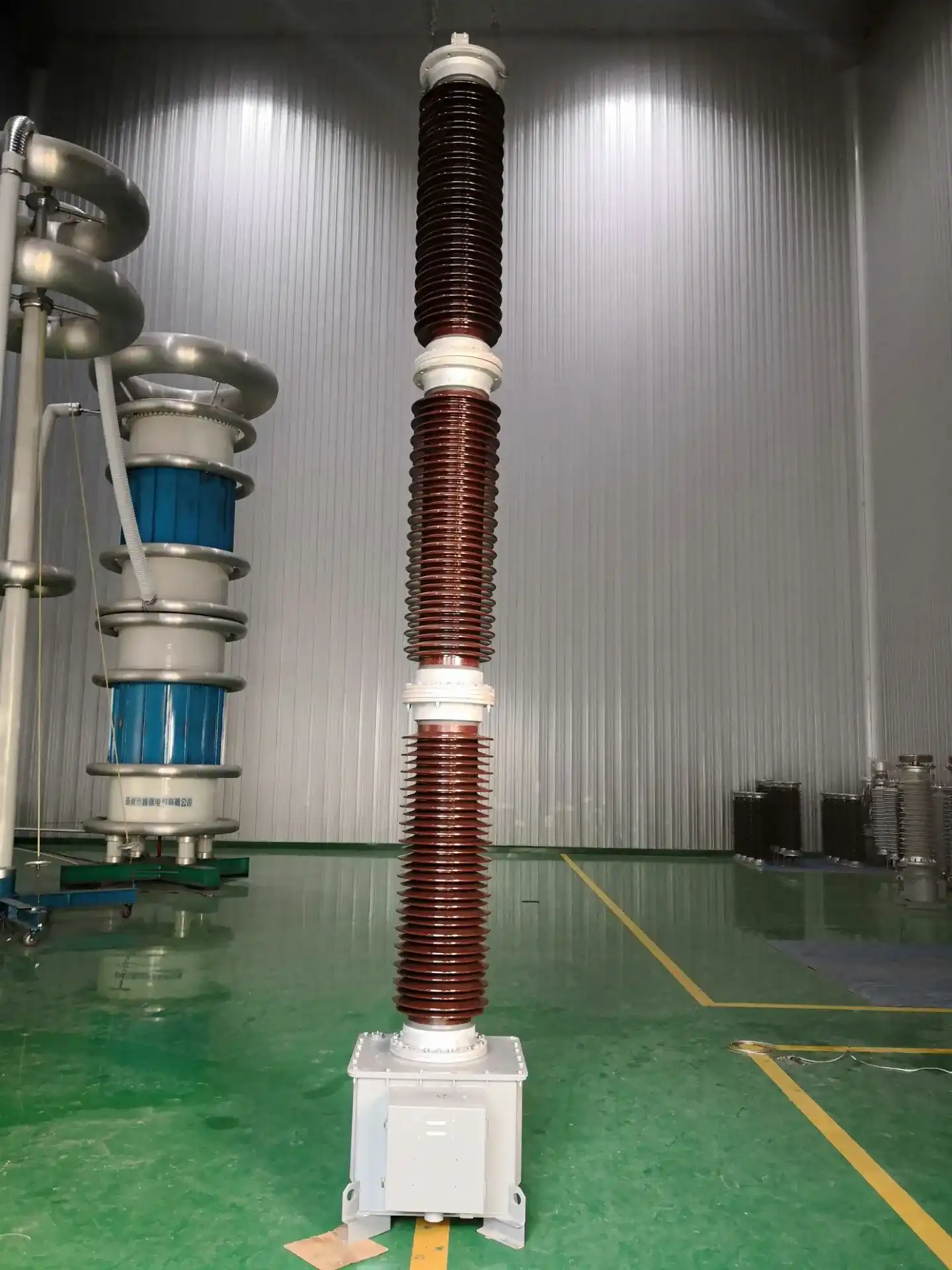
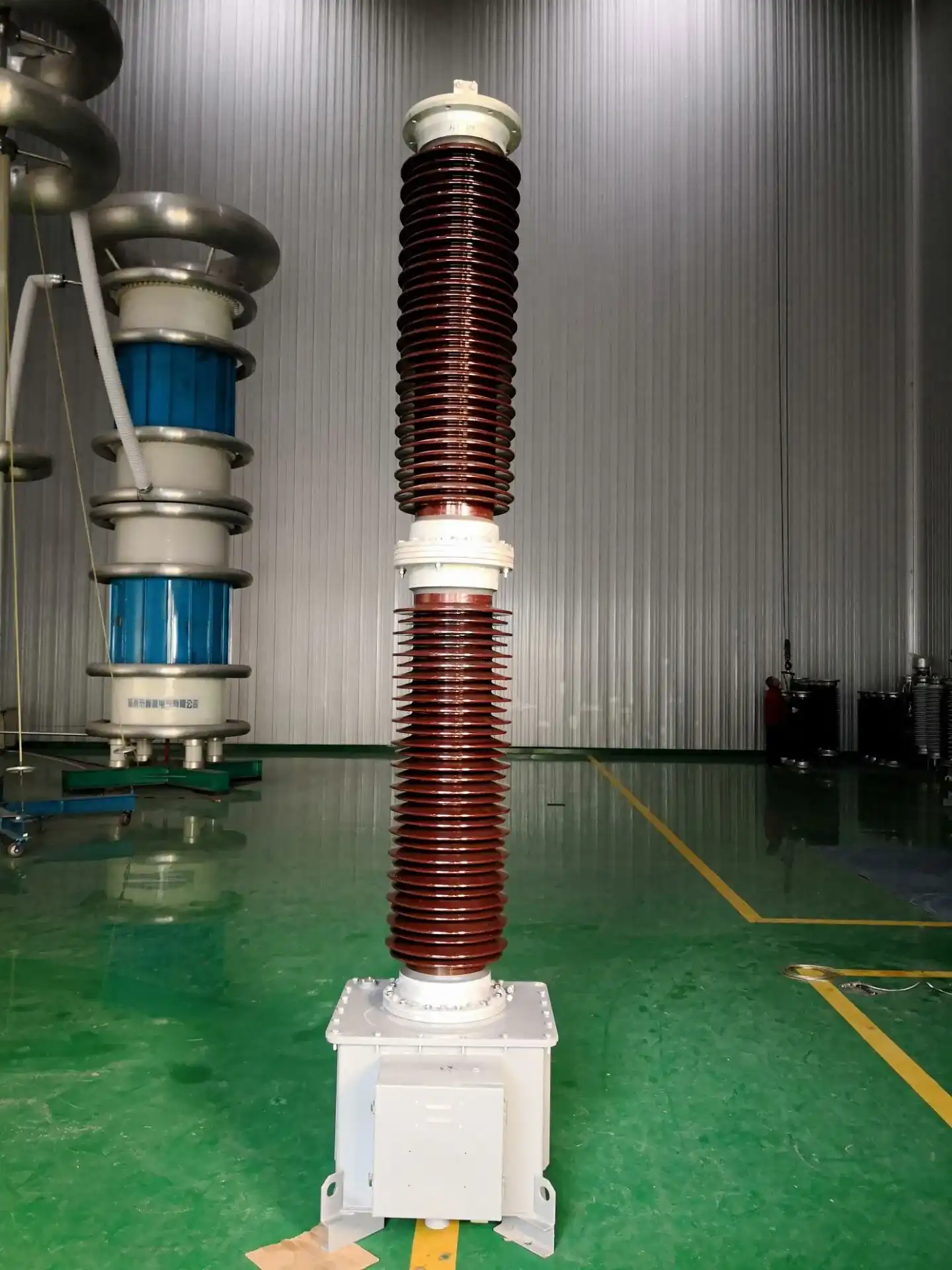
The electromagnetic unit inside this indoor potential transformer is made of epoxy resin and is completely sealed. It has a lot of space, works reliably, and is very accurate. The risk of partial discharge is lower when there are no air gaps in the insulation. For low hysteresis loss, the core is made of grain-oriented silicon steel, and the windings are made of high-purity copper. Both the measurement circuit and the protection circuit are kept separate by dual-wound secondary coils. The standard size is 400 mm x 300 mm x 200 mm, and it can be mounted on the wall, which saves room in indoor switchgear. Because OEM cabinets aren't all the same, we compare your picture to the mounting holes and input direction.
Testing and Quality Control
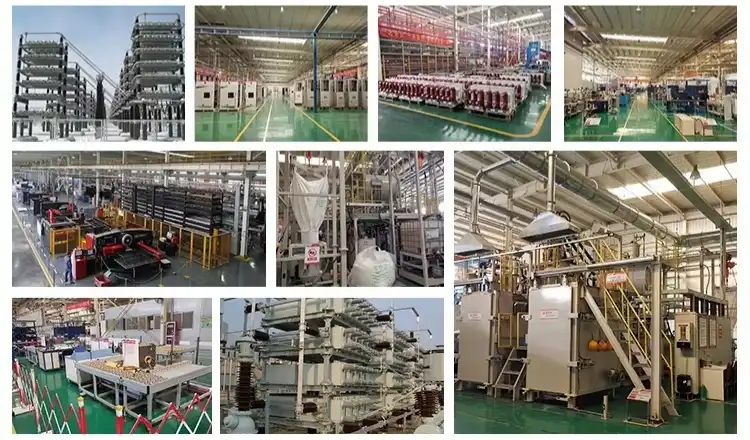
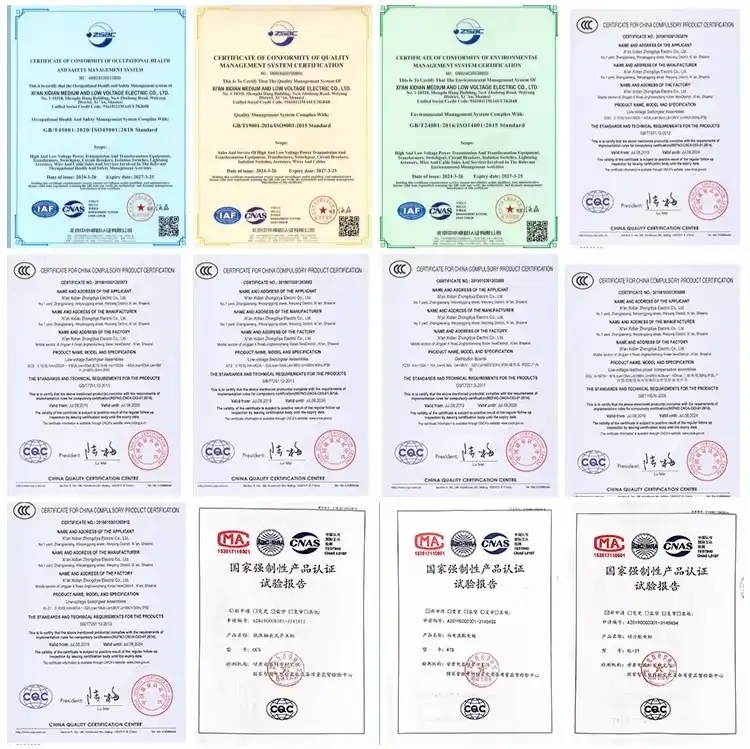
Before it leaves our factory, every indoor potential transformer goes through a set of standard tests. Some of these are a power-frequency withstand test at 70kV for one minute, measuring the partial discharge, and making sure the accuracy. High-purity copper windings and vacuum-cast epoxy resin are some of the materials used. The ISO 9001, ISO 14001, and ISO 45001 management methods guide our work. Furthermore, Xi'an Xikai creates plateau-style machinery that can work at heights of up to 4,000 meters. Our goods are used in train transportation, petrochemicals, steel and metalworking, State Grid systems, and green energy projects. Our seven product categories and 34 series mean that OEM clients only need to go to one place to get instrument transformers and switchgear that goes with them.
Applications and Comparison with Other Solutions
Switchgear, Industrial and Commercial Uses
An indoor potential transformer in switchgear helps with watching the busbar, safety switches, interlocking, synchronization, and measuring. It is put in factory substations, motor control systems, and process plants by industrial users. The function is used by battery storage sites, data centers, hospitals, rail networks, and systems that collect energy from the sun and wind. OEM panel builders often ask for specific voltage ratios, mounting dimensions, and arrangements of terminals. I work on these requests based on the drawing you gave me permission to use. When loads change, a unit of the right size keeps voltage signals steady for meters and relays. This allows for accurate energy measurement and reliable safety.
Indoor Potential Transformer vs Current Transformer
You connect a PT across the circuit to measure voltage and a CT in series to measure current. Their secondary rules are not the same. You should never short a PT secondary or open a CT secondary when the main is still working. Most of the time, the two gadgets work together. The PT sends voltage and the CT sends current. A switch or meter then adds them together to figure out power, energy, and problem direction. There are also fuses on the PT primary in a lot of switchgear designs. Choose a fuse whose voltage rating is at least as high as the system voltage and whose interrupting rating is higher than the current that could flow through a short circuit. When you list the unit, you should also list the fuse arrangement.
Indoor vs Outdoor Units and Direct Measurement
PTs that are worn outside can handle rain, UV light, and pollution. If you're using an indoor model, keep it out of open areas unless the shelter is right for them. They may not be able to handle direct weather or condensation. A PT gives a safer isolation and a standard low-voltage signal than direct medium-voltage measurement. This means that meters and switches don't need their own medium-voltage protection. If you pick the right indoor potential generator, the secondary wiring will stay short and the panel layout will be easy to understand. This is helpful when you are building many cabinets from the same design.
Buying Guide for Switchgear OEM Teams
How to Choose the Right Unit
Before technical managers and buyers choose an indoor potential transformer for a new panel, I go over these two checks with them.
- System data: First, make sure you know the nominal and maximum voltage, frequency, phase arrangement, grounding method, and type of switchgear. The number of windings, the insulation level, and the voltage ratio are all set by these parts. So the factory doesn't have to guess, write them on the RFQ. Also, say whether the unit is fixed in your cabinet or can be taken out.
- Accuracy and burden: To find the accuracy and load, choose the metering or protection class for each winding and then add up the VA of all the meters, relays, cables, and other devices. If you don't keep the total within the rated burden, the accuracy class that was given will no longer be valid. For units with more than one winding, make a separate list of each winding's weight and class so the design team can figure out the right core size.
After these two checks, look at your cabinet drawing and compare the mounting holes, terminal position, clearances, and section sizes to the ones on the drawing. Before starting production, make sure you have approved drawings, test results, and export paperwork. Also, agree on a sample approval step for any new requirements.
Price Factors and RFQ Content
The price of an indoor potential transformer is based on all of its features, not just the voltage. Cost is mostly affected by the amount of insulation, the accuracy class, the rated load, the number of windings, the materials used for the core and conductor, the specialized terminals, tests, the quantity, and the packing. The insulation design and test program for a 35kV unit needs to be stricter than those for an 11kV unit. In a good RFQ, the voltage ratio, frequency, load, accuracy, windings, dimensions, standards, test reports, destination, and delivery date are all listed. If you have a yearly agreement to buy something and get orders every month, share your forecast early on. At the beginning of the conversation, ask about the minimum order quantity for custom designs with multiple winds.
Choosing a Qualified Manufacturer or Supplier
A good indoor potential transformer maker has experience with medium-voltage, special places to make and test their products, and can give you the voltage classes your panels need. Before giving a quote, engineering support is needed so that ratios, loads, accuracy, insulation, and switchgear interfaces can be looked over. Check the type-test proof, quality control, traceability, and agreement with standards. Also, find out how the shipping dates will work with the way you make cabinets. Xi'an Xikai makes more than 100 different kinds of medium- and low-voltage tools in 34 different types. Our engineers can look over your model, help you get the paperwork approved, and organize the shipping papers and export packing for orders from other countries.
Installation, Commissioning and Maintenance
Before you start installing, make sure the nameplate matches the approved drawings. Then check the casting, the terminals, the mounting surface, the polarity, the grounding, the secondary wiring, and the phase identification. Make sure the minimum gaps and creepage distances are met, and make sure the area is clean, dry, and free of condensation. Check the insulator resistance, ratio, polarity, phase sequence, secondary output, meter connections, and switch settings before turning the power on. During maintenance, check for cracks, discoloration, overheating, contamination, loose terminals, noises or smells that don't seem right. When test results aren't normal or insulation is damaged, it's time for a technical look-over and maybe a replacement.
Conclusion
For meters, relays, and control systems inside secured switchgear rooms, an indoor potential transformer takes medium- or high-voltage signals and turns them into separate, standard values. In this guide, we learned how electromagnetic induction, core material, and cast-resin insulation affect how well something works. It also showed how different panels can be set up with single-phase, three-phase, metering, and protection. The accuracy only works within the rated load, and a unit fits a cabinet if it fits mechanically. By comparing each device to current transformers, outdoor units, and direct measurement, the purpose of each one became clear. The most important things for selection are the system data, the burden, the accuracy class, the dimensions, the test proof, and the source engineering review. The accuracy will last for a long time thanks to regular testing and careful setup. The 35kV datasheet values show how these standards show up in a certain product.
FAQ
1. Are VT and PT the same device?
Both terms refer to a transformer that lowers the voltage in the system to a standard value on the secondary side. In North America, "PT" is more common, while "VT" is more common in IEC papers.
2. Can I install an indoor unit outdoors?
No, not usually. Because it's made for covered areas, rain, UV light, and humidity can damage it. For installations outside, the barrier needs to be rated for the spot.
3. Why does price vary between 11kV and 35kV units?
The price is affected by the type of insulation, the rated load, the number of windings, testing, customization, and the amount ordered. Insulation and test plans must be tighter for higher voltage classes.
4. Can you customize an indoor potential transformer for OEM cabinets?
Yes. Send us your picture, and we'll look over the ratios, windings, connections, measurements, nameplate information, and your needs for accuracy and load.
Request an Indoor Potential Transformer Quote from Xi'an Xikai
Send Xi'an Xikai your voltage class, load, accuracy class, and cabinet drawing. Our engineers will look over your indoor potential transformer needs and get back to you with a quote. We help with OEM switchgear projects because we make indoor potential transformers with plateau-type equipment rated to 4,000 meters. To find out more, email serina@xaxd-electric.com, amber@xaxd-electric.com, or luna@xaxd-electric.com, or go to xaxd-electric.com.
References
1. IEC 61869-3, Instrument Transformers – Additional Requirements for Inductive Voltage Transformers, 2011
2. IEC 61869-1, Instrument Transformers – General Requirements, 2023
3. IEEE C57.13, Standard Requirements for Instrument Transformers, 2016
4. Protective Relaying: Principles and Applications, CRC Press, 2014
5. Electric Power Substations Engineering, CRC Press, 2012
6. Switchgear and Control Handbook, McGraw-Hill, 1997