
Can an Indoor Current Transformer Reduce Partial Discharge Risks?
2026-11-12 17:22:01
Yes, but only within limits. An indoor current transformer cannot remove partial discharge (PD) on its own. However, a well-made unit with void-free epoxy insulation, smooth electric-field geometry, and correct panel clearances can lower PD risk considerably. PD is a localized breakdown that does not bridge the gap between two conductors, and over time it can wear down insulation in medium-voltage switchgear. In this guide, I explain how the device works, how design and testing control PD, and how switchgear OEMs can select a 24kV model. Standards such as IEC 60270 and IEC 61869-2 set the rules for measurement and performance.
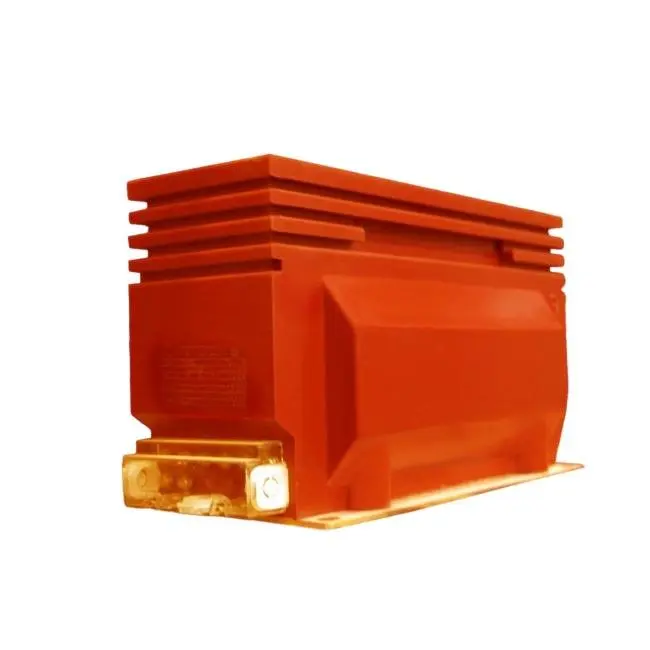
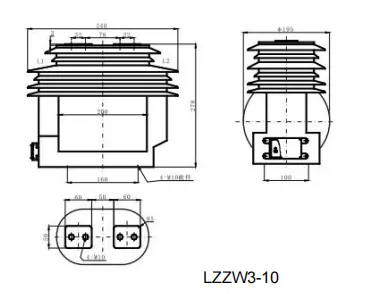
What Is an Indoor Current Transformer and How Does It Work?
How an Indoor Current Transformer Scales Current
Electromagnetic induction is how an indoor current transformer works. As the primary current flows through the wire, magnetic flux builds up in the core. A proportional current flows through the secondary winding because of that flux. This current powers meters, safety switches, or monitoring devices. A 1000/1 A unit changes 1000 A on the primary to 1 A at the instrument. This is because standard secondary ratings are 5 A or 1 A. This keeps secondary wiring away from wires that carry medium-voltage electricity. You should never leave an active secondary open, because voltage can build up across its terminals and be very dangerous. How correct the meter or relay reading is is based on the ratio error and phase error of this scaling.
Main Components Inside the Housing
An indoor cast-resin indoor current transformer has a main conductor, one or more magnetic cores, secondary windings, epoxy insulation, and connections with places to put the transformer. Small ratio and phase mistakes are what metering cores try to get rid of, while protection cores have to keep accuracy even when there is a problem current. Important core material. When it comes to protection duty, silicon steel can handle a higher flux density, while nanocrystalline or microcrystalline alloys offer high permeability for accurate low-current operation. The 24kV unit that Xi'an Xikai makes is made with high-quality silicon steel and copper windings. Send us your drawing and a request for a different core material. Our techs will look it over and get back to you.
Where the Unit Sits in Medium-Voltage Switchgear
The indoor current transformer is inside the metal enclosure of 1 kV to 52 kV switchgear that is covered by IEC 62271-200. It is in the feeder, busbar, or breaker compartment. Because it is close to busbars, cable terminations, and voltage transformers, the way it is shaped, the way its bolts are arranged, and the distance between its insulation all affect how PD works. If the indoor current transformer only fits by a few millimeters, there may not be as much air space as the panel design thought there would be. Together, before the first sample, look over the indoor current transformer drawing and the cabinet drawing. Don't look at them one after the other. For OEM builders, that one check can save them a lot of time and money.
How Can Indoor Current Transformer Design Reduce Partial Discharge Risks?
Casting Quality and Void Control
Void is a typical cause of PD in cast resin. The dielectric strength of an air pocket is lower than that of the solid epoxy around it. This means that the electric field can gather there and cause small discharges to begin. Vacuum degassing of the resin, mixing it correctly, controlling the hardening process, and making sure the production area is clean and dry all help lower the risk of voids. The windings stay dry and clean because the epoxy body is completely sealed. For its 24kV indoor current transformer, Xi'an Xikai says that the partial discharge is less than 10 pC at 24 kV. You can compare this number to what you need. Ask any supplier how they figure out that number.
Field Control, Insulation Level, and Clearances
The electric field is focused on rough surfaces, sharp edges on the conductor, and thin walls of insulation. To lower stress, designers round off the edges, smooth out the casting surface, add shielding where it's needed, and make sure the insulation is the right thickness for the rated voltage. The indoor current transformer must also match the panel's insulation coordination, which includes the air gap, rated voltage, withstand level, and creepage distance. A low reading on the test bench for an indoor current transformer might not mean anything if the panel is too close to a busbar. The team can find high-stress areas with the help of a sketch that shows the indoor current transformer body, main conductor, cores, insulating layers, and mounting points.
What Causes Partial Discharge Around the CT
Most of the time, PD around an indoor current transformer goes to one of three groups. This is how I organize field problems:
- Manufacturing defects: Weak spots in the insulation are caused by things like air bubbles, cracks, delamination, bad resin bonding, and not enough drying. The only ways to find these flaws early, before the unit gets to your panel and goes into service, are through supplier process control and the factory PD test.
- Installation errors: Damaged insulation, loose connections, not enough space between parts, incorrect grounding, dust, and moisture all increase the risk of PD after assembly. When heavy secondary cables pull on terminals, they can crack nearby resin. Because of this, cable routing and torque values need to be looked at carefully during every panel build, final inspection, and site commissioning.
- System and environment: Some of the things that can start or speed up discharge are bad busbar joints, bad wire terminations, switching transients, temperature cycling, vibration, humidity, and chemical contamination. There are times when the indoor current transformer shows the symptom but the cause is somewhere else. This is why troubleshooting must include the whole assembly, including the grounding, and not just the transformer.
This split tells you whether to call the panel designer, the installer, or the supplier first.
How Should an Indoor Current Transformer Be Tested and Installed?
Routine and Type Tests for PD and Accuracy
It's best to test in layers. Normal tests include checking the size and shape, checking the winding resistance, the ratio, the polarity, the insulation resistance, the power-frequency withstand, and measuring the PD when the specification calls for it. When it comes to new designs, unique sizes, and OEM panel interaction, type tests are the most important. IEC 60270 says that the measurement of PD is the perceived charge in picocoulombs. When you read the results, be careful. The inception voltage, the extinction voltage, the background noise, and the trend over time are all important, and there is no one pass or fail number that works for all designs. Ask for the report that goes with the model and rating you want to buy.
Installation Steps That Protect the Insulation
A good plan is kept safe by a good installation. Check the nameplate, polarity marks (P1/P2 on the primary and S1/S2 on the secondary), mounting alignment, clearances, terminal labels, grounding point, and tightening torque before turning it on. Make sure that the resin surfaces are clean and dry, and make sure that the secondary cables don't pull on the terminals. Before turning on, short any secondary core that isn't being used. If you put too much force on a terminal, the plastic nearby can crack, and that crack can become a PD site. The commissioning crew can avoid making mistakes with the help of a wiring plan that notes each core and switch circuit.
Maintenance and Monitoring in Service
Care that is done regularly is easy. Check each indoor current transformer for cracks, discoloration, or tracking marks. Clean dust off of the insulating surfaces, make sure the terminals are tight, and keep an eye on the temperature at the connection points. Test the resistance of the insulation during planned power outages. When it comes to important feeders, online PD tracking can show a rising trend before a fault happens. Checks need to be done more often in rooms that are humid or dirty than in climate-controlled substations. Our 24kV unit's fully enclosed epoxy body keeps out dust and water, but I still think it's important to record each inspection so that later readings have a starting point.
How Should Buyers Select an Indoor Current Transformer for Switchgear?
Indoor, Outdoor, and Split-Core Types Compared
In general, neither type is safer against PD; they each work to solve a different issue. A small, cast indoor current transformer is made for panels that are kept inside, where the main dangers are condensation, dust, and limited space. Because of the weather, UV light, pollution, and surface leaks that outdoor units have to deal with, they need longer creepage tracks. Split-core CTs can open up to fit around an existing conductor, which is helpful for retrofits. However, the opening joint, interface form, and accuracy need to be carefully looked over. As long as you check its dielectric performance, a molded indoor unit usually works best for new compact medium-voltage panels.
Accuracy Class, Burden, and Dimensions
Do your duty first. Class 0.2, 0.2S, or 0.5 are used by metering cores, and 5P and 10P with an accuracy limit factor of 5P10 are used by protection cores. These codes talk about the accuracy of measurements, not how well PD works. Next, add up the meter or relay load, the lead resistance, and the contact losses. Standard load levels from 2.5 VA to 30 VA are given in IEC 61869-2. A 1 A secondary cuts lead loss by 25 times more than a 5 A secondary in the same cable. Last, put the outline, window, and mounting holes up against your cabinet to make sure they fit.
Core Material and Multi-Winding Orders
When it comes to multi-winding designs, the minimum order quantity, lead time, and choice of core all become more complicated. Cores made of silicon steel work well for safety windings that need to stay accurate at high fault currents. Cores that are microcrystalline or nanocrystalline work well for metering windings that need small errors at low current. When there are mixed needs, there are often two or three cores in one body, which also changes the size. Give us your cabinet drawing and the number of cores, classes, loads, and ratios for each winding. Then we'll talk with you about whether it's possible, when samples will be ready, and how much you need to order. It saves a second trial round to settle these things before the first sample.
What Should Buyers Check Before Purchasing an Indoor Current Transformer?
Documents to Request Before You Order
Before you place an order for an indoor current transformer, make sure you get a technical package with the following items: a datasheet, a dimensional drawing, a wiring diagram, data on accuracy and load, insulation specifications, a routine test report, type test documents, PD data, material details, certificates, and installation instructions. Before making a lot of them, ask for drawings to be approved and a sample to be fitted. Most of the time, a supplier who can explain its PD test method, test voltage, and measuring circuit has a controlled process behind the number. Records are also useful later on; if a unit breaks down in use, batch records can help figure out what went wrong.
Common Mistakes That Raise PD and Lifecycle Risk
Four mistakes keep happening. First, people choose an indoor current transformer based only on its ratio, without taking into account its insulation level, weight, or size. Second, they read 5P10 or 10P10 as a PD rating, but these codes only show how well the protection works. Third, they'll take a unit that fits the bolts but doesn't have enough space between the phases or between the phases and ground. Fourth, they picked the cheapest indoor current transformer with no test records being asked for. There should also be language in the design about humidity, dust, shaking, overload, and future load growth.
Xi'an Xikai 24kV Indoor Current Transformer at a Glance
Xi'an Xikai's 24kV indoor current transformer is a fully enclosed electromagnetic unit made of epoxy resin. It is very accurate, has a large capacity, and works reliably. It works at 50/60 Hz, has a main current range of 20 A to 3150 A, and has a secondary current of either 5 A or 1 A. The levels of accuracy are 0.2 and 0.5. The plan is in line with IEC 61869-1 and 61869-2 and GB 20840.2-2014. From -40°C to +70°C, the product data also says that it can handle a short-circuit of 25 kA for 3 s. Check the exact model grade against the picture of the panel.
Why OEM Switchgear Builders Work With Xi'an Xikai
Xi'an Xikai makes seven main types of products, such as switchgear, dry-type transformers, vacuum circuit breakers, and instrument transformers. This means that CT drawings and panel drawings can be looked at together. The State Grid, petrochemicals, rail transportation, and renewable energy projects all use our solutions. There are more than 15 patents that protect the 24kV system, which was made possible by China's National 863 Program. We can change the dual-ratio outputs and small sizes for cases that aren't very big. If you buy once a year and place orders every month, please let us know what you think the next few months will look like so we can plan our production around your cabinet schedule and give ourselves time to sample the new specifications.

Conclusion
An indoor current transformer lessens the risk of partial discharge, but it can't get rid of it by itself. The design is based on void control in epoxy casting, a smooth field geometry, and good insulation coordination. Factory PD tests under IEC 60270 plus type tests back this up. Good installation, clean surfaces, and regular inspections protect that in service, and a lot of PD cases are caused by panel parts instead of the CT. The accuracy class, burden, core material, and cabinet dimensions all play a role in the choice. The codes 5P10 and 10P10 don't say anything about PD. If buyers look at test records and papers as well as price, they lower the risk of merging and service.
FAQ
1. Can an indoor current transformer completely prevent partial discharge?
No. It can lower the risk of PD by making sure the epoxy casting is void-free and that the field geometry is smooth. PD is also affected by busbar joints, terminations, grounding, and the environment, so look at the whole panel.
2. Are 5P10 and 10P10 partial discharge ratings?
No. These classes show how well the indoor current transformer reproduces fault current and are used for protection. PD performance is written in test reports, and is usually given in picocoulombs at a certain test voltage.
3. What should I ask a supplier before ordering?
You should ask for the datasheet, the dimensional drawing, the wiring diagram, the data on load and accuracy, the routine and type test reports, the PD data, and the installation instructions. Ask about customization, trial approval, and shipping to exporters as well.
4. How can I assess a dependable manufacturer?
Look at their technical skills, experience with quality systems like ISO 9001, testing tools, ability to work with medium voltage, ability to export, and ability to help with customization. The claims are backed up by a sample fit-up done before mass production.
Request a 24kV Indoor Current Transformer Quote from Xi'an Xikai
Looking for a company that can make an indoor current transformer for your switchgear line? Xi'an Xikai makes epoxy resin cast 24kV units that can be made to fit your needs and are backed by ISO 9001 quality control and several unique technologies. You can email serina@xaxd-electric.com, amber@xaxd-electric.com, or luna@xaxd-electric.com your voltage, ratio, accuracy class, load, and cabinet model. In response, our engineers give you a technical suggestion. To find out more, go to xaxd-electric.com.

References
1. IEC 61869-2: Instrument Transformers – Part 2: Additional Requirements for Current Transformers, 2012
2. IEC 61869-1: Instrument Transformers – Part 1: General Requirements, 2007
3. IEC 60270: High-Voltage Test Techniques – Partial Discharge Measurements, 2000
4. IEC 62271-200: High-Voltage Switchgear and Controlgear – AC Metal-Enclosed Switchgear and Controlgear for Rated Voltages Above 1 kV and Up to and Including 52 kV, 2021
5. GB 20840.2: Instrument Transformers – Part 2: Additional Requirements for Current Transformers, 2014
6. IEEE Std C57.13: IEEE Standard Requirements for Instrument Transformers, 2016