
Low Voltage shunt Capacitor: Benefits for Power Factor Correction
2026-11-03 17:28:28
A low voltage shunt capacitor improves power factor by supplying reactive power right next to the load. Motors, transformers, and compressors draw both active and reactive power, and the reactive part raises current without doing useful work. When we connect a low voltage shunt capacitor in parallel, the upstream cables, transformers, and switchgear carry less current. That lowers losses, reduces voltage drop, and frees capacity for more load. In this guide, I explain how these capacitors work, where they fit, how to size them, and how to buy them from a manufacturer such as Xi'an Xikai.


Low Voltage Shunt Capacitor Basics for Power Factor Correction
What Is a Low Voltage Shunt Capacitor?
There is a part called a low voltage shunt capacitor that works with an AC source to give reactive capacitive power. Because they can work with systems rated up to 1000 V, IEC 60831-1 says that self-healing shunt capacitors can be used. This is what "low voltage" means. In modern units, the self-healing dielectric is made of polypropylene film that has been metalized. They are made of metal and have discharge resistors inside. Many of them also have safety features for overloading. If you put one in for motor correction, you can put several of them together to make an automatic capacitor bank. You can also pair them with reactors to make systems that filter harmonics. Most of the time, 230 V, 380 V, 400 V, 415 V, and 440 V at 50 or 60 Hz are used. You can pick by real voltage, harmonics, phase configuration, insulation, and switching duty instead of theoretical system voltage if you don't want to.
How Does a Low Voltage Shunt Capacitor Improve Power Factor?
Motors, transformers, air conditioner fans, welding tools, and pumps are all examples of things that use induction. These things need both active and reactive power. A low voltage shunt capacitor gives leading reactive power to the load. Going upstream, this means that less reactive current needs to run through the wires, transformers, and switches. We can figure out what size we need by using the formula Qc = P × (tan φ1 − tan φ2), where Qc is the capacity in kvar. For set capacitors, a steady load works best. To respond to changes in customer needs, automatic banks use a controller and switching devices. When compensation is done right, the power factor goes up, the power drop and current drop go down, and more space is made available for distribution. The amount of physical energy your gear needs doesn't go down.
Key Benefits of Low Voltage Shunt Capacitors for Power Factor Correction
When you set up something the right size, these main benefits happen:
- Lower reactive demand and utility charges: It shows less kvar from the grid because of a low voltage shunt capacitor that gives the area reactive power. Power factor terms or demand charges are used by a lot of companies, even ones in the US. That's what correctional centers do to meet those rules. Check your rate before you decide how big the bank should be.
- Lower losses and voltage drop: There is less I²R loss, less wire temperature, and less feeder voltage drop when active power stays the same but current stays the same. It's worse when there are long lines and generators that are highly loaded. Measure the current before and after the gain is put into service to check it.
- Released capacity and simple upkeep: When reactive current drops, switchboards, busbars, motor control centers, and transformers have more room, so you can add load without having to update. Dry-type self-healing designs are also simple to set up, don't need much maintenance, and don't have an oil leak risk.
These perks can only go so far. Harmonics, conductors that are too small, and a supply that isn't stable all need their own audit by an engineer.
Applications, Sizing, and Selection of the Low Voltage Shunt Capacitor
Where Are Low Voltage Shunt Capacitors Used?
Low voltage shunt capacitors are used in chemical plants, factories that make food and drinks, packaging lines, stores, business buildings, and factories that make metal or textile goods. Installers put them in at motor control centers, distribution panels, main switchboards, or on just one motor. This works well for HVAC systems, pumps, compressors, and fans, whether the pay is local or central. For welding tools and loads that change quickly, you may need fast-switching options. The following things, like solar inverters, UPS systems, variable-frequency drives, and rectifiers, can all pose harmony or resonance risks. It is better to use detuned reactors or engineered filter banks instead of standard capacitors alone to fix this. These units are also sold by electrical wholesalers and panel makers as extra parts for capacitor cabinets that are already in use.
How to Calculate and Size a Low Voltage Shunt Capacitor
You need to know the active power, voltage, frequency, load profile, harmonic levels, and transformer or feeder data of a low voltage shunt capacitor in order to choose the right size. Multiply P by [tan(cos⁻¹ PF1) - tan(cos⁻¹ PF2)]. This will give you Qc. Here's an easy way to use it. You get about 221 kvar if you change the power factor from 0.75 to 0.95 and add 400 kW to it. This is because tan(cos⁻¹ 0.75) is 0.882 and tan(cos⁻¹ 0.95) is 0.329. For 30 kvar, that's about seven to eight capacitors, but it depends on how the steps are made. Kvar should be broken up into steps that are automatically matched to changes in load, minimum demand, and controller resolution. You need to look at more than just the nameplate numbers to make a choice. You also need to see the rates for voltage, current, temperature, short-circuit, and harmonics.
Low Voltage Shunt Capacitor Selection Guide for B2B Buyers
Make sure you know what kind of capacitor you need for the project before you buy one. Is it a set capacitor, an automatic bank, a mixed system, or a detuned solution? For stable loads, fixed compensation can be used. But for changing facilities, automatic control is usually needed to keep the load from being overcompensated. Dry-type capacitors are often used in low voltage systems inside because they stay small and don't need much upkeep. But designs that are filled with oil work better in some places. Comparing cylindrical and rectangular shapes can help you save space in your cabinet, keep things cool, mount things, and get to new parts. Cylindrical cans, like the BKMJ0.46-30-3, work well for board builds that need to be put together in a small space. Plan for reactors that are out of tune in places where harmonics are present. Before you buy something, make sure it meets IEC standards and looks good in tests. Look at the datasheets, wiring diagrams, certificates, warranty, and ability to be tracked.
Installation, Safety, and Troubleshooting for Low Voltage Shunt Capacitors
Installation and Safety Requirements
Before you put in a low voltage shunt capacitor, make sure you check the temperature, short-circuit, power factor, harmonic distortion, and voltage stability. For drives that can change speeds, generators, and UPS units should all be able to connect to it. The circuit needs the right fuses or breakers, capacitor-duty contactors, properly tightened contacts, easy phase identification, and a strong connection to earth. When you take out a resistor, the energy that is still there goes down. Article 460 of NFPA 70 in the US says that capacitors with a rating of 1000 V or less must drop to 50 V in one minute. As per IEC 60831, they need to drop to 75 V in three minutes in Europe. Still, remember to lock out and tag out and check with a meter to make sure there is no voltage before touching a wire. Think about things like air flow, cabinet space, the right IP security, and the environment's highest and hottest points.
Common Problems and How to Prevent Them
A failed low voltage shunt capacitor will often get too hot, bulge, leak, separate under pressure, have blown fuses, contactor wear, or trip for no reason. There could be too many harmonics, too much voltage, too much heat, not enough air flow, too many on-and-off cycles, bad contactors, or resonance between the bank and network inductance. The first steps in stopping this from happening are to measure harmonics and pick the right voltage. Following that, you need to include detuned reactors, safety, temperature control, and the right design for the switches. People often use the rule that the service life is cut in half for every 7 to 10 °C above the temperature limit. Maintenance teams should check the temperature, deformation, power factor trends, power enclosures, fuses, terminals, and how well the discharge works. You should not put a capacitor back into service. Instead, you should take it out of service and check for damage or an overpressure disconnector that has been set off.
Comparison: Choosing the Right Solution
Unit price alone is not enough to pick the best payment method. The voltage that a low voltage shunt capacitor and a high voltage unit are used for, how they are insulated, where they are installed, and how they are put together as a system are all different. When the load is stable, fixed capacitors are cheaper, but automatic banks are better at handling demand that changes. For systems with low harmonic levels, standard banks work. Detuned banks, on the other hand, lower the risk of resonance in places where drives, UPS equipment, rectifiers, or inverters are used. Compare the estimated losses, thermal performance, service life, safety features, compliance with standards, warranties, expert support, shipping choices, and the ability to get replacements. For a panel builder who gets the same thing every month, these things show the total cost of ownership, which is more important than the first bill.
Buying a Low Voltage Shunt Capacitor from Xi'an Xikai
BKMJ0.46-30-3 400V Self-Healing Cylindrical Capacitor
The most important things about the model we sell are:
- Voltage and frequency: Up to 2000 V can go through the unit, but it was made to work with 250 V to 525 V. It can work at 50 or 60 Hz too. It can handle a normal cabinet step at 400 V, 30 kvar, and devices in North America can use the 60 Hz rate. Before you buy, please tell us what voltage your machine works on.
- Compact build: The round can is 242 mm tall, doesn't weigh much, and has a bolt inside for grounding. To protect the coils, PU resin (soft resin) is used to fill the can. Because it's easy to wire, it takes less time to put together on a busy panel line and lowers the cost of replacing capacitor banks.
- Self-healing, maintenance-free: Before a voltage spike, a metalized polypropylene film evaporates around a fault and quickly turns back into insulation. To make things safer in case of overload, a pressure-sensitive disconnector is added. The plan is meant to last more than 100,000 hours in approved circumstances.
If you buy a lot of 400 V, 30 kvar units, this low voltage shunt capacitor works well for you.
How to Buy a Low Voltage Shunt Capacitor from a Dependable Supplier
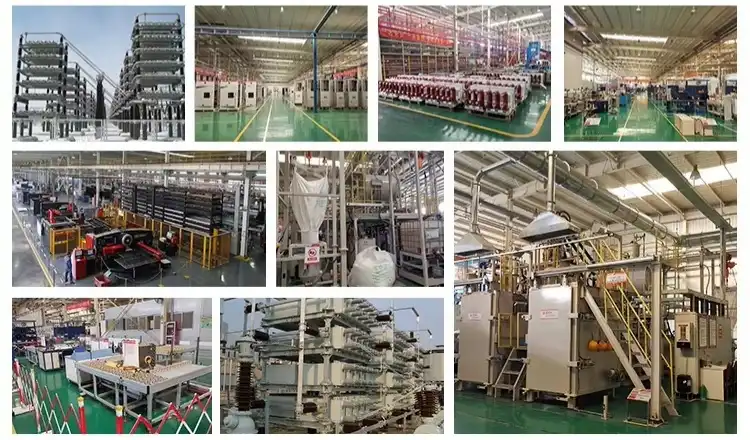
A clear RFQ for a low voltage shunt capacitor lists the voltage, frequency, kvar, phase setup, measures, terminals, building type, harmonic conditions, ambient environment, standards, amount, and delivery location. You need to add the step arrangement, controller, switching method, reactors, and enclosure rating to make a full bank. A lot of quotes use standard models like BKMJ0.46-30-3, which makes prices look the same. How reliable each batch is is what makes them different. It is part of the regular tests for IEC 60831 to measure capacitance, so ask each provider for test records for each lot. Checking the materials, automated precision winding, 72-hour load cycling, impulse voltage checks, and thermal shock trials are all things that each unit at Xi'an Xikai has to go through. Following IEC and CCC rules, these tests are done in a way that is ISO 9001-certified. We have more than 15 patents and have been in business for more than 20 years. The item is guaranteed for 10 years and ships in bulk in four weeks.
Practical Decision Process for Global B2B Procurement Teams
There are five things they do to make the project less risky when they buy a low voltage shunt capacitor. Step one is to choose the program, load profile, and installation spot. Next, split the loads into three groups: those that change slowly, those that change quickly, and those that change steadily. Second, know the goal power factor, harmonic levels, atmospheric conditions, voltage, frequency, kvar, and any standards that apply. Third, pick whether the compensation is fixed, automatic, detuned, or swaps quickly. This is the fourth step. Give providers points for quality, price, delivery, customization, customer service, and following the rules. Fifth, compare what you found when you measured the reactive demand, harmonics, temperature, power factor, and voltage to the goals you set at the beginning. There are more than 100 different models and 7 product groups of medium and low voltage electrical tools that Xi'an Xikai makes. We help with this process by looking over it from a technical point of view and giving them tools that can be used at up to 4,000 meters above sea level.
Conclusion
Lots of loads that use induction get reactive power from a low voltage shunt capacitor. The power factor goes up, the current goes down, losses and voltage drop go down, and space is made in cables, transformers, and switchgear. Use the kvar method to find the right size, pick a type of capacitor that works with the load, and do a harmonic check before putting it in. For safe use, you need capacitor-duty contactors, discharge ways, airflow, and to check them often. Heat, too much voltage, and resonance are the main reasons why things break. People who want to buy should compare fixed, automatic, and detuned options side by side. They should also think about the unit price and the total cost of ownership. Small, low-maintenance designs and tried-and-true models like the BKMJ0.46-30-3 that heal themselves show how those needs can be met.
FAQ
1. How do I size a low voltage shunt capacitor?
Take the measured kW, the current power factor, and the goal power factor. Then, use Qc = P × (tan φ1 − tan φ2) to find the goal power factor. You should divide the answer into steps that match changes in the load. After that, you should check the voltage and frequency levels before you place your order. Your numbers can be looked over by a supplier's tech team.
2. Can I use a standard low voltage shunt capacitor where harmonics are high?
Not at all. Harmonics can overload a standard unit, which sets off resonance. First, look for distortion. Next, connect the capacitor to a reactor that has been tuned down for when there are inverters, drives, or UPS units on the same bus.
3. What does a bulging low voltage shunt capacitor mean?
The overpressure disconnector probably worked after gas built up inside. Figure out what's wrong with the unit, then get a new one.
Request a Low Voltage Shunt Capacitor Quote from Xi'an Xikai
Xi'an Xikai makes low voltage shunt capacitors, which is what the BKMJ0.46-30-3 is. It's for wholesalers and people who make panels and need a steady 400 V, 30 kvar supply. Tell us the voltage, frequency, kvar, amount, and where you want the power to go. Then, our team will either give you a quote or look over your application. To find out more, visit xaxd-electric.com or email serina@xaxd-electric.com, amber@xaxd-electric.com, or luna@xaxd-electric.com.

References
1. IEC 60831-1 – Shunt Power Capacitors of the Self-Healing Type for AC Systems Having a Rated Voltage up to and Including 1000 V, 2014
2. IEEE Std 18 – IEEE Standard for Shunt Power Capacitors, 2012
3. IEEE Std 1036 – IEEE Guide for Application of Shunt Power Capacitors, 2020
4. NFPA 70 – National Electrical Code, 2023
5. U.S. Department of Energy – Improving Motor and Drive System Performance: A Sourcebook for Industry, 2014
6. Schneider Electric – Electrical Installation Guide, 2018