
Why must we Use a Line Reactor?
2026-11-03 17:28:40
We use a line reactor because it adds a small, controlled amount of impedance to an AC circuit. That impedance slows fast current changes, trims inrush current, and cuts harmonic current from drives and other nonlinear loads. A linear reactor does this while holding its inductance steady as current rises, since air gaps keep its core out of saturation. The result is less stress on rectifiers, capacitors, transformers, and motors. Below, I explain how the device works, where it fits, and how I would select and install one for a U.S. facility or panel build.

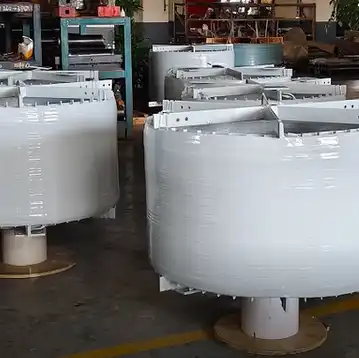
How a Line Reactor Works
What a Line Reactor and a Linear Reactor Are
If you connect a coil wound around an iron core to a power or motor circuit, you have a line reactor. There are a lot of online searches that say "linear reactor," but most drive datasheets say "line reactor." Both terms point to the same family of products in real life. The behavior is "linear" because as the current goes up, the inductance stays almost the same because air gaps keep the core from getting too hot too quickly. When the current peaks, a core that has reached saturation loses its inductance. This is when you need protection the most. Because of this, a linear reactor keeps limiting current even when the load is high or when it switches on and off. I think of the two names as part of the same family and check the electricity values for each one.
How Inductive Reactance Limits Current
When you plug in f (frequency) and L (inductance), you get XL = 2πfL. A 1 mH coil puts off about 0.377 ohms at 60 Hz. The same coil gives off about 1.885 ohms at 300 Hz, which is five times more opposition. It's harder for current to change when it's rising quickly, so waves become smoother and the peaks fall. A resistor would lose a lot more power than the coil, which stores energy in a magnetic field and sends it back. By doing this, abrupt peaks, voltage notching, and some harmonic content are lowered. It's not possible for a reactor to control power or fully cut out harmonics.
Input Reactor, Output Reactor, and Series Reactor
In this case, "a VFD line reactor" refers to the type of input. Between the power source and the VFD is an input reactor. It keeps the rectifier and DC bus safe from problems on the supply side and lowers the amount of harmonic current that is drawn from the grid. Some people also call it a load reactor. It is located between the drive and the motor. When there are long cable runs to the motor, this softens the sharp voltage edges from the inverter. In a power-factor cabinet, a series reactor goes in front of a capacitor stage. It lowers the tuning point of the circuit and stops the harmonics you want to block. In all three cases, the physics are the same. The job depends on the position.
Problems a Line Reactor Solves and the Benefits It Brings
Electrical Problems a Line Reactor Addresses
Drives and rectifiers take short, sharp pulses of electricity. Overcurrent faults, DC-bus instability, and unnecessary trips can be caused by these pulses. On top of that, they add ripple to DC-bus capacitors and load rectifier diodes with a lot of peak current. Sharp voltage edges put stress on the insulation around motor windings. When you turn on a stage in a capacitor cabinet, a lot of current flows at once, and harmonics can cause the capacitors to overheat. All of these effects are lessened by adding resistance. Voltage distortion is seen in weak grids, and sharp current peaks are seen in stiff sources with high short-circuit levels. In either case, a reactor is useful. It's also good for long feeds and big motor loads.
What a Linear Reactor Cannot Replace
It's important to note that a reactor doesn't replace safety devices like fuses, circuit breakers, overflow switches, or grounding. It also can't change the voltage. It is not always the case that a normal linear reactor meets strict harmonic limits by itself. Harmonic limits are set by IEEE 519-2022 at the point of common coupling. This means that compliance depends on the whole installation and may need to be measured. Before suggesting a reactor, I check to see if the problem is caused by harmonics, inrush, or a problem with the wires or grounding. Often, a quick log of fault codes and a harmonic reading are enough to answer that question. It keeps you from wasting money on a part that doesn't fix the real problem.
Benefits for Equipment Life and Uptime
Less electricity stress generally means that parts will last longer. There is less current distortion and less rapid peaks in VFDs, motors, capacitors, and transformers. Less annoying trips mean less downtime, less troubleshooting, and less drive replacements. Stable power also lets a number of nonlinear loads share a single feeder. These include robots, CNC machines, and HVAC drives. At peak current, a linear reactor with steady inductance acts in a way that can be predicted, so the results are the same from one installation to the next. It's important to get the right size for these gains, and I don't think of life extension as a sure thing.
Line Reactor Applications and Alternatives
Where a Linear Reactor for VFD Equipment Fits
VFD-driven pumps, fans, compressors, and conveyors are all common uses. Solar inverters, CNC machines, HVAC equipment, and automation lines are also common. Everybody has different needs. A lot of time is spent running pumps and fans, so scores for temperature rise and constant duty are important. When connected to the grid, inverters need current to be smoothed out. OEM panel builders need parts that are small enough to fit inside small cases. If someone wants to buy a VFD reactor or a linear reactor for VFD service, they still need to make sure that the real voltage, current, and mounting conditions are right before they place their order. If it works well on one drive, it might get too hot on another.
Capacitor Cabinets and Harmonic Reduction
Low-voltage capacitor cabinets are a good example of this. The switching inrush is limited by a series reactor, which also keeps the capacitor branch away from harmonic frequencies. When you divide 1 by the square root of the reactance rate expressed as a decimal, you get the tuning order. A 7% reactor tunes close to the 3.8th harmonic, which is around 227 Hz on a 60 Hz system. This means that it can block wave forms up to the 5th order. One that is 14% tuned to the 2.7th, or 160 Hz, works well for the third order and above. In this case, a linear reactor core is important because saturation would lower the inductance and move the tuning point. When you tune something correctly, the harmonics are reduced without making the capacitor a path for the harmonic current.
Line Reactor vs. Other Power-Quality Solutions
The only thing that a line reactor does is add AC impedance. Voltage is changed by an isolation transformer, which also gives galvanic separation. Either an active or passive harmonic filter aims for certain levels of distortion. Inside the drive's DC bus, there is a DC-link reactor that smooths out the current on the DC side. It can be disappointing to switch one for another because they each solve different problems. It makes sense to use both together when there are long motor cables, strict harmonic limits, sensitive equipment, or complicated grounding. A linear reactor is often enough to make the first step useful in everyday situations. Before adding devices, I think you should take a quick look at the whole system. This is because each new part adds heat, costs money, and takes up room.
CKSG Series Low Voltage Reactor from Xi'an Xikai
CKSG Reactance Rates and Configurations
The CKSG Series is made by Xi'an Xikai for low-voltage capacitors and harmonic circuits. There are three reactance rates in the set. When the rate is 7%, harmonics above the 5th order are blocked. When the rate is 14%, harmonics above the 3rd order are blocked, and when the rate is 27%, harmonics above the 2nd order are blocked. All of these options help keep battery banks and generators from getting too hot. You can order dry iron-core units with three or one phase. The small, light body is designed to fit into cabinets so that installation is as cheap as possible. Industrial plants with CNC machines and assembly lines, substations with renewable inverters, and commercial buildings with old systems are all common places to use them.
Core, Windings, and Assembly of This Linear Reactor
The CKSG core is made of cold-rolled silicon steel laminations that were brought in from other countries. Epoxy-laminated glass spacers divide the core and keep the air gaps stable. This is what gives this linear reactor its steady inductance and low risk of saturation. Flat copper wire that is enamel-coated and tightly wound is used in the windings. The insulation is Class H/C. Class H offers temperature stability up to 180°C, and the winding allows for quiet operation. A common worry about aluminum is also put to rest by copper winding. The parts are held together by non-magnetic connections. The core and windings are joined together by pre-baking, vacuum impregnation, and heat sealing. This helps keep losses low and harmonics strong. Terminals and enclosures don't rust.
Quality Control, Certifications, and Support
Our linear reactor process has 12 quality control steps that check the dielectric strength, reactance accuracy within ±3%, and thermal cycling. It has 3C certification as well as ISO 9001, 45001, and 14001 certificates. Our R&D team has more than 15 patents in reactor technology. We offer technical support 24 hours a day, seven days a week, and lead times are less than 12 weeks. Our plateau-type equipment can be used at heights of up to 4,000 meters and falls into seven main product groups and 34 lines. For U.S. projects, let us know early on what your code and listing needs are, and we'll talk about what works.
Selecting, Installing, and Buying a Linear Reactor
Line Reactor Specifications to Check
Start with the voltage, phase, frequency, and steady current. Then look at the heat rise, impedance or reactance rate, inductance, impedance, insulator class, cooling, and short-circuit resistance. Compare 3% and 5% resistance for use as a drive input. 5% limits current more strongly, but it also adds more voltage drop. Size your motor not just by its horsepower, but also by the drive's input current and excess duty. Check the room temperature, the heating inside the enclosure, and the size of the cabinet as well. The final choice should be confirmed by a blueprint and a technical check that is tailored to the project. The 7%, 14%, and 27% CKSG rates work well for capacitor circuits. Send us your drive data, and we'll make sure it fits for drive input use.
Installation and Commissioning Checks
Between the power source and the VFD, put an input reactor. Between the VFD and the motor, put a load reactor. Find the right phases, make sure the conductors are the right size for the current, tighten the terminals to the right value, and ground the unit. Power leads should not touch signal wires, and there should be space for air to flow. Plug the drive in and check the voltage, current, phase balance, temperature rise, and motor noise. Also, look at the problem history of the drive. Common mistakes include a current value that is too low, too much heat in the panel, putting the reactor in the wrong place, and not having enough overcurrent safety. If you put a linear reactor properly, it should be quiet and stay within its temperature range.
Selection Mistakes and Supplier Checks
Four mistakes happen most of the time. People choose only based on horsepower, let voltage drop happen at 5% without checking, mix up input and output reactors, or use a reactor as a full harmonic filter. Also forgotten are altitude and the temperature of the area. As the buyer, you should ask the supplier for records of the winding, inductance, resistance, dielectric, temperature rise, and final inspection. A good linear reactor maker should also talk about OEM labeling, packaging, changes to the terminals, export packaging, Incoterms, warranty, lead time, and more. That is, don't just look at unit price; also look at technical capability and total cost.

Conclusion
It's also known as a linear reactor. A line reactor adds controlled impedance that slows down sudden changes in current, cuts down on inrush current, and lowers harmonic current. It fights high-frequency current more than the 60 Hz fundamental, which is shown by the formula XL = 2πfL. Different types of versions protect different parts of the system, like the drive, the motor, or the capacitor stage. They all use the same physics. There are some benefits, such as less stress on the equipment, fewer unnecessary trips, and more stable power. However, a reactor does not always meet harmonic limits or replace protective devices. Voltage, current, resistance, temperature rise, and size all play a role in making the right choice. This method is used in the CKSG Series for low-voltage capacitor circuits with reactance rates of 7%, 14%, and 27%.
FAQ
1. Is a linear reactor the same as a line reactor?
Most of the time, yes. The technical name for this type of reactor is "line reactor," while "linear reactor" emphasizes steady inductance at high current. Because suppliers use names that aren't always what they seem to be, I always check the datasheet for voltage, current, and impedance ratings before I think two products are the same.
2. How do I choose between 3% and 5% impedance?
Pick 3% to be safe in general. If you need stronger current limits or more harmonic reduction, pick 5% and be okay with the extra voltage drop. If you want to make the right choice, you need to look at the drive, the supply, and your harmonic limits.
3. Can an input reactor work on the output side?
Not all the time. Higher switching rates and steeper voltage edges are part of output duty. Before you put the reactor between the drive and the motor, make sure that the manufacturer rates it for output use.
4. What should I send for a quotation?
Send the following information: voltage, frequency, phase, continuous current, reactance rate, drive or equipment model, cabinet size, quantity, and delivery date. With that information, the supplier can give you a good quote and suggest a model.
Request a Linear Reactor Quote from Xi'an Xikai
Xi'an Xikai is a company that supplies and makes linear reactors. They have the CKSG Series, which has copper flat-wire windings, 12 stages of quality control, and technical support 24 hours a day, seven days a week. Our team will help you choose the right model by getting your voltage, frequency, phase, current, reactance rate, cabinet dimensions, and quantity to serina@xaxd-electric.com, amber@xaxd-electric.com, or luna@xaxd-electric.com. To find out more, go to xaxd-electric.com.

References
1. IEEE Std 519 Recommended Practice and Requirements for Harmonic Control in Electric Power Systems, 2022
2. IEEE Std 1036 Guide for the Application of Shunt Power Capacitors, 2020
3. NFPA 70 National Electrical Code, 2023
4. IEC 60076-6 Power Transformers – Part 6: Reactors, 2007
5. NEMA MG 1 Motors and Generators, 2018
6. Electrical Power Systems Quality, Third Edition, 2012