
Outdoor SF6 Circuit Breaker: CT14 Spring Mechanism Explained
2026-11-10 17:20:09
An outdoor SF6 circuit breaker uses SF6 gas to extinguish the arc, and the CT14 spring mechanism supplies the mechanical energy that opens and closes the contacts. A motor or hand lever charges the spring, and a trip or close command releases that stored energy on demand. The LW8-40.5 from Xi'an Xikai applies this design to 35kV systems with a highest voltage of 40.5kV. I wrote this guide for project managers and electrical engineers who must judge breaking capacity, mechanism dependability, enclosure protection, and gas leakage before they approve a purchase. Below, I explain how it works, what to check, and where problems start.

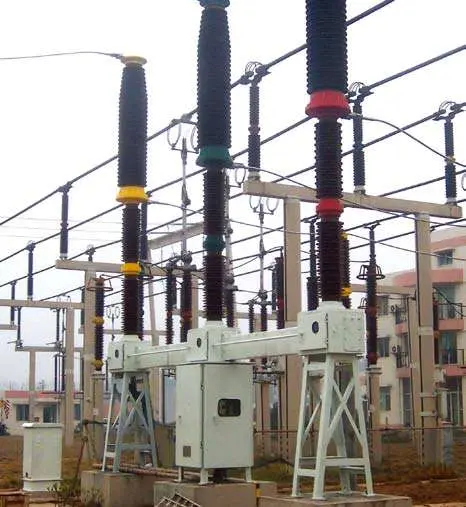
What Is an Outdoor SF6 Circuit Breaker with a CT14 Spring Mechanism?
Basic Definition and Working Principle
The outdoor SF6 circuit breaker has a working device and an SF6-insulated interrupting chamber. Instead of being in a building, it is in a switchyard. As air pressure stays the same, SF6 gas is about 2.5 to 3 times stronger than air. This helps keep the room small. When the contacts come apart, the gas quickly cools the arc column, and the current stops. It moves because of the CT14 spring mechanism. A spring inside it saves energy and lets it out at a controlled rate. This lets it open and close many times. The LW8-40.5's chamber and mechanism work together as a single unit. This is how all of the power ratings in this guide are possible.
Where the LW8-40.5 Fits in a 35kV Substation
You can put up to 40.5kV of voltage on the LW8-40.5 outdoor SF6 circuit breaker. The voltage it can handle is 35kV. It can handle rated currents of 1600A, 2000A, 2500A, or 3150A, so engineers can make sure it's right for the generator job. CNG arc interruption keeps arc times short, and the breaker stops 31.5kA at rated voltage 21 times without having to be serviced or have SF6 replaced. 35kV substations, factories, and improvements to city grids are all popular places to use it. Each unit is already charged with SF6 before it leaves the plant. Crews on-site only need to connect the machines and add more gas. It's good to be between -30°C and +55°C in places where it gets cold in the morning and hot in the afternoon.
Why You Should Evaluate the Breaker as One System
There is a control box, a mechanism, protection switches, and a breaker that all work together. If the coil voltage is different from the station battery or the spring isn't good, it doesn't matter how strong the chamber is or how good the spring is. The density signal must reach the relay. You should ask every company that sells outdoor SF6 circuit breakers to show you how they tested the whole system. IEC 62271-100 tells us how to rate and test AC circuit breakers. The LW8-40.5 is said to meet GB1984-89 and IEC 56 standards and has been approved by IEC 62271-100 and GB/T 11022. That's right—everything from drawings to test records is in one place. This makes it faster for engineering to approve the package.
How Does the CT14 Spring Mechanism Work?
Step One: Charging the Spring
In an outdoor SF6 circuit breaker like the LW8-40.5, the CT14 saves power before it is even used. An electric motor or a handle that you can turn by hand during maintenance turns the gears and shafts that charge the closing spring. One of the parts of the machine can tell if the spring is charged or released. When the spring is fully charged, limit switches stop the motor. It is helpful for substations that are far away because the stored energy can still be used if the backup source goes down after it has been charged. When workers charge by hand, they can also test the system while it's starting up, before the fixed control supply is ready. When workers do an inspection, they should always check the status of the indicator. If the spring is empty, the breaker can't close when told to.
Step Two: Closing and Opening the Contacts
This happens when the outdoor SF6 circuit breaker is told to close. The charged spring lets go and moves the contacts into place with the help of the transmission linkage. When there is a problem, the safety switch sets off the trip coil. The coil opens the mechanism, the contacts quickly separate, and the SF6 chamber puts out the arc. Product data for the LW8-40.5 says that interruptions happen in less than 50ms, even when magnetic and electrostatic loads turn on and off a lot. This machine can do more than 3,000 operations, so it can be used a lot. It's important to keep the contact's speed under control because random or slow motion can put stress on the interrupter and make arc quenching less effective. Time tests are done at the building and on-site because of this.
Safety Functions That Protect the Station
A number of control features keep things from going wrong. When there is still a close signal, anti-pumping stops trying to close onto a fault over and over again. The breaker can open with trip-free even if there is a charge to close it. When it's not safe to do something, interlocks stop it. Operators can choose how to give orders in local, manual, and remote modes. If the density of the SF6 goes too low, low-density shutdown stops the work. I think it would be helpful to write down each function in a cause-and-effect grid during the design review. So, site testers can check each one as it runs and write down what they found for the owner. It also makes it easy to see what the project manager needs to sign off on.
Main Components and Performance of the LW8-40.5
Core Components of an Outdoor SF6 Circuit Breaker
An outdoor SF6 circuit breaker is more than just a box with a device inside it. In the LW8-40.5 system, there are outdoor insulators, bushings, the CT14 mechanism, a control box, extra circuits, and the MKZ density gauge. On top of that, there are set and moving links. You can put up to 12 current transformers in one unit, which is useful for protection and metering projects that need more than one core. It's important to look over CT ratios, accuracy classes, burden, and relay compatibility as soon as possible because changes made later slow down the approval process for drawings. Also, make sure the terminals, heaters, and mechanical signs in the control box are in the right places. This is because any damage to one part shows up in the others as well. This is because they all affect tracking, insulation, switching, or service access.
Performance Ratings That Matter
Setting an outdoor SF6 circuit breaker to 35kV for the rated voltage, 40.5kV for the highest voltage, and 1600, 2000, 2500, or 3150A for the rated current is the first thing you should do. At the rated voltage, the breaking duty is 31.5kA, and it has to be done 21 times without breaking or replacing any SF6. More than 3,000 tasks are possible with this machine. There are more things to look at than just the voltage class. IEC 62271-100 talks about making current, withstand current, working order, and timing. Instead, you should ask for a full table of grades and test records. Air pressure, temperature, and pollution levels are some of the things that IEC 62271-1 lists as normal and abnormal service conditions. One more thing that Xi'an Xikai makes is plateau-type tools that can work at up to 4,000 meters above sea level. This is useful when the site is high up.
MKZ Density Monitoring and Leakage Control
The MKZ-type SF6 density measure always gives correct readings, no matter what the temperature is. It's important to know this about any outdoor SF6 circuit breaker. The weather changes gas pressure, but insulation and arc-quenching strength are based on how dense the gas is. In other words, a density number can help you tell the difference between a real leak and a cold night. Every year, the LW8-40.5 loses less than 0.5% of SF6. It's also good for the environment to stop leaks. According to this study from the IPCC, SF6 can warm the planet 23,500 times more than carbon dioxide can in 100 years, and it stays in the air for 3,200 years. Low leakage keeps the weather out and keeps the breakers working well.
Installation, Harsh-Environment Protection, and Common Risks
Preparing the Site and Foundation
A good place to put an outdoor SF6 circuit breaker starts before it is sent. Take a look at the approved outline models and compare them to the real base size, support bolt sites, equipment weight, clearances, drainage, and upkeep access. At the job site, workers connect extra circuits, grounding conductors, high-voltage terminals, and control cables. They also make sure there is enough signal and phase separation. The right tools should be used by trained professionals to fill, recover, check for purity, confirm density, and test for leaks. For retrofits, the LW8-40.5 can be used instead of older oil breakers like the DW8-35 with a transition base that doesn't need any changes to the civil engineering. This makes it great for updates in cities where room is tight.
Protecting the Mechanism from Humidity, Heat, and Salt
Heat waves, water, and salt fog all put a lot of stress on an outdoor SF6 circuit breaker. It is possible for the LW8-40.5 to work in temperatures between -30°C and +55°C. The building has an IP65 rating and anti-corrosion treatments so it can be used near the coast or in factories. There is a level of seismic resistance of 9. Based on IEC 60529. A 6 means that it is waterproof against dust, and a 5 means that it is waterproof against water jets. When you look over the design, make sure the heater placement and drains are correct. Condensation can still form inside drawers even after the air has cooled overnight. If your project needs a certain corrosion class or salt-fog test, get the test record from the supplier before you place your order.
Common Risks and How to Catch Them
A project can fail if it uses the wrong power for the motor or coil, doesn't have enough linking logic, doesn't protect the environment enough, doesn't test enough, or doesn't handle SF6 properly. Make sure the control circuit works with the site's DC or AC power, voltage range, and battery system before you place your order. If you fill SF6 with something, make sure it is pure and free of moisture. Moisture can react with byproducts of an arc to make an acid that can damage things. Timing, contact resistance, insulation, gas density, controls, and safety functions should all be tested in the factory and on the job site. If there is a space between the two sets of results, it means that something got broken during shipping or was put together wrong. In CIGRE's international dependability probe, SF6 breakers that have failed are grouped by subsystem. This is the reason why I check the controls and the mechanism separately.
Selecting and Buying an Outdoor SF6 Circuit Breaker
Selection Checklist for Project Teams
Start with the electrical duty, which includes the operating sequence, earthing method, voltage, current, frequency, fault level, and fault level. Next, check how the CT14 is set up. This includes the charging method, trip and close coils, interlocks, low-density shutdown, and human override. This safety plan must meet the CT ratios, precision, and load. Check to see what level of grade your bid papers need. IEEE C37.04 sets the rules for how AC high-voltage breakers are rated in North America. In a lot of other places, IEC 62271-100 sets it. If you want to buy an outdoor SF6 circuit breaker, you should read about the type, the warranty terms, the extra parts, and the service support before you place your order.
Comparing SF6 with Vacuum and Other Options
At medium voltages up to 36kV, vacuum circuit breakers are a good way to turn things on and off often. SF6 designs are often used when the voltage is over 36kV or the load is inductive. This is because they have strong dielectric recovery and don't cut the current, which lowers the risk of overvoltage. You can compare both in bids for 40.5kV, so don't just look at the names of the products. Instead, look at their full rates, fault duty, insulation, controls, and lifespan needs. An outdoor SF6 circuit breaker can handle the weather in the switchyard, but SF6 equipment that is inside can only be used in safe buildings. Xi'an Xikai also makes waterproof circuit breakers for indoor and outdoor use, so we can give you quotes for a range of options for the same substation.
Buying a Complete Outdoor SF6 Circuit Breaker Package and Writing the RFQ
When you make it clear that you want quotes, you get the same answers. The highest voltage, rated current, short-circuit capacity, insulation levels, operating sequence, CT data, control voltage, environmental conditions, standards, quantity, destination, and paperwork for the system should all be included. You can look at everything that is for sale, such as CTs, control cabinets, structures, accessories, shipping, setup, and spare parts. The risk of interface between different sources is lower with a full outdoor SF6 circuit breaker package that includes a CT14. This package also lines up mechanism signs with protection and SCADA state. Expert help is available 24 hours a day, seven days a week as part of our support. We also offer plans for preventative maintenance and planning for extra parts, which takes away one of the main worries that EPC contractors have about getting parts in the long term. There are more than 12 quality checks on every LW8-40.5 that comes out of our ISO 9001-certified plant.

Conclusion
An outdoor SF6 circuit breaker has a small SF6 interrupting chamber and a CT14 spring device that saves energy and releases it when it's time. As an added safety measure, it has features that stop pumping, trip-free, interlock, and lockdown. The LW8-40.5 uses this design in 35kV circuits that have a maximum voltage of 40.5kV, a rated current of 1600 to 3150A, and a breaking duty of 31.5kA. With the MKZ gauge for monitoring density, low annual leakage, an IP65-rated enclosure, and coatings that stop corrosion, sites outside don't have to worry about salt, humidity, or temperature. Most project risks can be avoided by installing things correctly, making sure voltages are matched, and writing down tests. Aside from voltage class, engineers can look at other things to decide between SF6 and vacuum designs. Another thing they should do is look at full ratings, standards, and supplier support.
FAQ
1. What does the CT14 spring mechanism do?
A motor or a hand handle puts power into a spring that holds it. When told to, the gadget lets go of that energy, which lets the contacts close or open at a set speed. The level of charge is shown by a mechanical display.
2. What are the main ratings of the LW8-40.5?
Along with 35kV, it can handle 1600, 2000, 2500, and 3150A of current. It works best with 40.5kV. It shuts off 31.5kA at the rated voltage 21 times without needing to be fixed or having SF6 replaced.
3. How does an outdoor SF6 circuit breaker detect gas loss?
There is no difference in the accuracy of the MKZ-type density gauge readings when the gas is hot or cold. The unit stops working if the density drops too low, and it keeps SF6 leaks to less than 0.5% per year.
4. Can the LW8-40.5 replace an oil breaker?
Yes. Since the LW8-40.5 has a transition base, it can be used instead of older oil breakers like the DW8-35 without any changes to the civil engineering.
5. Which documents should I request?
Ask the supplier to make sure that the information they give you matches the requirements for your bid. Information on spare parts, test reports, manuals, packing lists, certificates, and datasheets, outline drawings, and wiring diagrams are some examples of this.
Request a Quotation for an Outdoor SF6 Circuit Breaker with CT14 Mechanism from Xi'an Xikai
The LW8-40.5 is an outdoor SF6 circuit breaker made by Xi'an Xikai. It has a CT14 spring system, possible CTs, and factory test records. Our plateau-style tools can do their job at heights of up to 4,000 meters. Send us your voltage, rated current, fault level, CT needs, and site climate to serina@xaxd-electric.com, amber@xaxd-electric.com, or luna@xaxd-electric.com. We will get back to you with quotes, models, and a plan for when to send the goods. xaxd-electric.com has more information.

References
1. IEC 62271-100: High-voltage switchgear and controlgear – Part 100: Alternating-current circuit-breakers, 2021
2. IEEE C37.04: IEEE Standard for Ratings and Requirements for AC High-Voltage Circuit Breakers with Rated Maximum Voltage Above 1000 V, 2018
3. CIGRE Technical Brochure 510: Final Report of the 2004–2007 International Enquiry on Reliability of High Voltage Equipment, Part 2 – Reliability of High Voltage SF6 Circuit Breakers, 2012
4. IPCC Climate Change 2013: The Physical Science Basis, Working Group I Contribution to the Fifth Assessment Report, 2013
5. IEC 60529: Degrees of Protection Provided by Enclosures (IP Code), 2013
6. IEC 62271-1: High-voltage switchgear and controlgear – Part 1: Common specifications for alternating current switchgear and controlgear, 2017