
The Complete Guide to Automatic Changeover Switches
2026-11-09 17:22:05
An automatic changeover switch moves an electrical load from the main power source to a backup source, such as a diesel generator, when the main supply fails or drifts out of range. It checks voltage and phase conditions, waits a preset time, disconnects the failed source, and connects the standby supply without anyone touching a handle. Once the main power is stable again, it returns the load. This guide explains how the device works, how to wire and choose one, and what U.S. buyers should check before ordering, including standards, ratings, and supplier support. I wrote it for distributors, generator packagers, and project buyers.
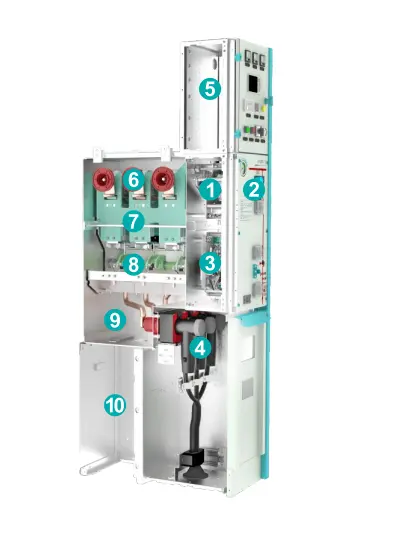

How an Automatic Changeover Switch Works
What Is an Automatic Changeover Switch?
You can move a load between two or more power sources with an automatic changeover switch. These sources could be the main power grid, a backup generator, a converter, or a second feeder. Its main job is to transfer the load safely between available sources while preventing unintended connection between them. Many people believe that an automatic changeover switch and an automatic transfer switch (ATS) are the same thing. However, in different places, the names, construction, and rules for getting certified are different. These are used in homes, companies, hospitals, computer rooms, and places of work. For distributors, less downtime, safer operation, and making it easy to connect to generator sets are all good things. In the US, NEC Article 702 talks about standby systems that can be used if needed and needs transfer equipment that stops connections from happening by accident.
How Does an Automatic Changeover Switch Work?
The processor checks the best source's voltage, frequency, phase order, and phase loss. When it sees a fault, it waits a certain amount of time. This way, a short dip doesn't cause a shift. It then tells the generator to turn on, turns on the main source, and turns off the backup source. There is a pause before the switch moves the load back. Once the grid power comes back on and stays stable, the switch moves the load back. One link is broken in open-transition models before the next one is made. In closed-transition models, sources that are compatible are briefly linked while being closely watched. The generator has time to start up, settle down, and finish its cool-down run with delays that can be changed.
Automatic Changeover Switch vs. Manual Changeover Switch
One type does the work, while the other doesn't. A type that is automatic finds the power loss, turns on the generator when it is safe to do so, moves the load, and turns the power back on. No one needs to be there. When the power goes out, there needs to be a trained person at a manual switch to turn the handle. Automatic units are better for buildings that aren't being watched, pumps, and things that need to be done right away. They cost more up front and have more options, though. These units can be used in places where staff stay close by, short breaks are okay, and generators aren't used very often. A lot of small-site users ask for both, so I think you should keep them both in stock.
Wiring, Types, and Uses of Automatic Changeover Switches
Wiring Diagram and Installation Basics
On a basic level, the power feed and the generator or inverter feed link to different input terminals. The common output is hooked up to the load. You can also wire in a neutral, a protective earth, generator-start contacts, and extra or communication terminals. When there is only one phase, the line and neutral are often flipped. Three-phase devices can have three or four poles and need to use the right phase order. You need to make sure there is upstream protection, proper grounding, tight terminals, insulation testing, and a functional check when you install an automatic changeover switch. Usually, electricians in the area do this job. Make sure they follow the rules in your area and give them the maker's approved wiring plan.
Main Types of Automatic Changeover Switches
A single-phase unit is used in homes, small shops, and backup power systems. Power tools, motors, pumps, HVAC systems, and business buildings all use three-phase types. For some models, you can change how the generator starts, how long delays last, how the skip is isolated, or you can manually cancel it. Simple loads can be handled by cheap models that don't have a bypass. I look at the phase setup, current rate, number of poles, source compatibility, control functions, short-circuit performance, enclosure protection, and any licenses that are needed before deciding which type to buy. If any of these are wrong, they must be checked and sent back or fixed in the field. This takes time and makes the customer lose faith in you.
Automatic Changeover Switch Uses in Backup Power Systems
For the most part, home generators need a small, single-phase unit with controls that are easy to use and a reliable starter output. For business places, you may need more up-to-date equipment, the ability to work with servers, emergency lights, lifts, HVAC, and bypass operation. You may also need to be able to track from away. Companies in the industrial world need to think about a lot of things, such as motor inrush current, phase monitoring, endurance, and short-circuit withstand rating. There are things that need to be checked, like the output pattern, frequency stability, and defense against parallel operation that wasn't supposed to happen. When the application is checked before shipping, it is better for the switch, the engine, and the loads to work together as a single unit. In the United States, NFPA 110 sets the rules for backup and emergency power sources.
Choosing and Buying an Automatic Changeover Switch
How to Choose the Right Automatic Changeover Switch
It's not enough to just match the ampere rating to the generator output as the first step. First, I write down the source setting, phase system, voltage, frequency, and types of loads. Then I look at the steady current, the power needed to start the motor, the planned increase in load, the number of poles, the neutral switching, the short-circuit withstand rating, the transfer time, the temperature, and the connections' size. There are a lot of buyers who want transfer times of about 100 ms and service lives of about 5,000 cycles. Compare those numbers on the data sheet. Finally, make sure the titles are right for the market you want to go to. To use transfer switch gear on a job in the United States, learn about UL 1008.
Ratings, Price Factors, and Procurement
An automatic changeover switch's price depends on how much power it can handle, how many poles it has, what kind of phase it is, what functions the controller has, how the generator is controlled, how to skip, how the casing is designed, how many connections it has, how many licenses it has, and how many orders it gets. Standard current ratings of 63 A, 100 A, 125 A, and 160 A should match real-life loads, not just a budget. Breakers, control wiring, changing the enclosure, commissioning, shipping, duties, and upkeep can all make a project cost more. For big projects or orders, make sure you get datasheets, wiring diagrams, test reports, certificates, warranty terms, lead times, a minimum order quantity, support for spare parts, and the option of OEM or private label. A paper pack that is easy to read speeds up the approval process for the electricians who work for your customers.
How to Evaluate an Automatic Changeover Switch Manufacturer or Supplier
Take a look at more than just the unit price. It is usually easier for technicians to work together, make changes, do OEM/ODM development, and keep supplies steady at a plant. On the other hand, a local wholesaler might have more in stock and be able to get it to you faster. You should ask about the test methods, type-test papers, experience with exporting, output capacity, inspection controls, and warranty terms. Check to see if the controller can be programmed and how the factory makes sure it works in the event of a short circuit. A small reseller can make sure that the configuration is correct and give end users papers they can trust by working directly with a maker with a lot of experience. That's important if your brand is newer than the one next to it.
Testing, Common Mistakes, and Buyer Strategy
Testing, Commissioning, and Maintenance
The automatic changeover switch will work during a real failure because it has been put into service. Pros make sure that the installation follows the approved design, that the grounding and insulation resistance are correct, that the phases are in the right order, and that the mechanical interlocking works before they turn on the power. Then, tests that act like there is no power make sure that the generator starts in the right order, check the manual, automatic, and bypass modes, and time the transfer and re-transfer. In order to keep the machine in good shape, you should regularly check the alarms and event logs, clean the case, test transfers, and repair any worn parts as instructed by the maker. Also, the NFPA 110 says that emergency power systems should be checked often.
Common Selection and Installation Mistakes
Most problems aren't caused by broken hardware; they're caused by not checking the system out completely. When picking a switch, you might not think about voltage, pole count, short-circuit rating, motor inrush, or transfer time if you only look at amps. Grounding and protection can go wrong if you handle the neutral the wrong way. Two sources could join at the same time if the linking isn't strong. This could hurt someone or damage items. A generator must be able to power the enclosure, and the backup voltage must be stable. Installers also forget to check these things. Since some teams think commissioning is simple, they don't do it. Then, during the first blackout, they discover a problem. You can avoid most of these issues by writing down details of the installation, having a professional check it out, and setting up function tests.
Selection Strategy for Different Buyers
A simple single-phase unit that can connect to a reliable generator is what homeowners and small businesses need. Operators in the commercial sector should think about three-phase capacity, bypass, time delays, coordinating emergency systems, and keeping an eye on things from afar. Industrial engineers should think about the loads on the motor, the phase control, how long they last, and how well they work with upstream safety. For distributors and generator packagers, it's important to have a steady range, stable wait times, certificates, packing, and warranty support. OEM and ODM buyers should agree on the electrical design, the enclosure, the controller, the communication protocol, the labeling, the certification goals, and the validation steps before they start mass production. Being aware of the type of buyer you're working with ahead of time will help you give more accurate quotes and cut down on useless emails.
Xi'an Xikai ATS Automatic Transfer Switch and Future Trends
ATS Automatic Transfer Switch Features
This company in Xi'an makes switches, dry-type transformers, vacuum circuit breakers, and other medium and low voltage electrical gear. It has an automatic changeover switch for backup power called the ATS Automatic Transfer Switch. This switch is made up of five main parts: the power input terminals, the switching mechanism, the microprocessor controller, the mechanical and electrical interlocking system, and the enclosure and protection components. Both the main power and the backup power are turned on right away. It checks for phase loss, too much voltage, and too little voltage. Breakers are physically and electrically linked, so they can't close at the same time. Microprocessor-based control makes sure that the voltage is monitored accurately and that swapping happens slowly. A signal output from the generator starts up the backup power source. You can use Modbus, IoT, or dry-contact signals to connect the unit to generators, solar inverters, or smart grids. These methods take care of common issues that resellers have, such as risky paralleling, annoying transfers, and working with generators.
Technical Specifications and Quality Control
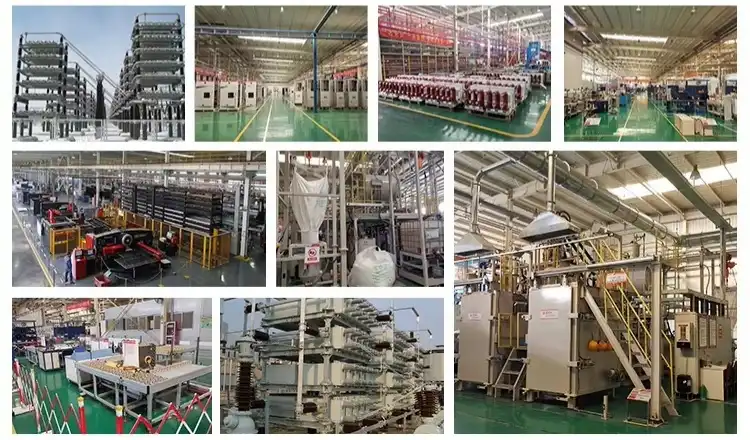
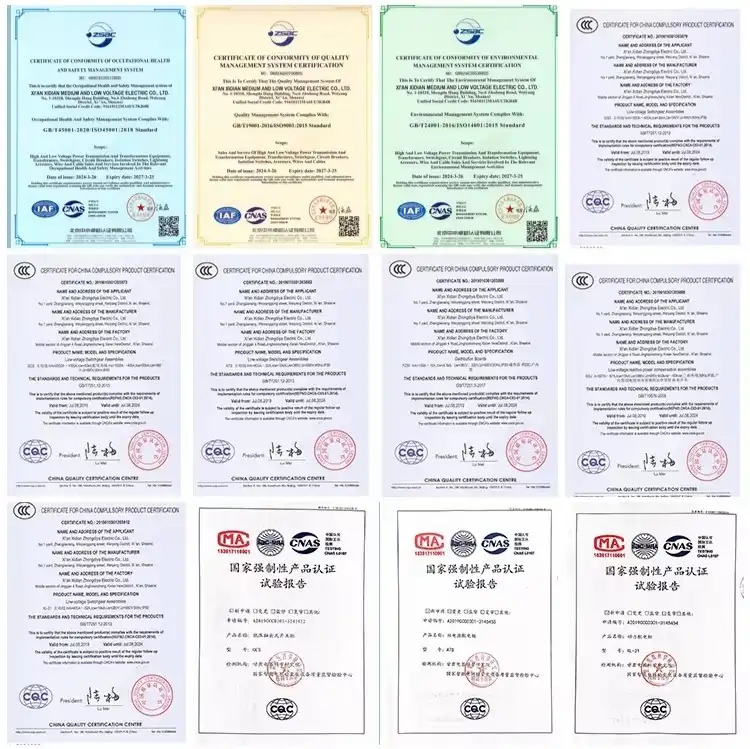
Between 220V and 660V AC at 50/60 Hz, and between 100A and 3200A, the ATS can handle them all. You can also change it to fit your needs. Moving important loads takes less than 20 ms, and moving normal loads takes less than 3 s. This is faster than the goal of 100 ms that many buyers set. It has been used more than 10,000 times, which is twice as many times as the usual 5,000 times. It can be anywhere from -30°C to +70°C, and you don't need IP65 walls. There is a list of approvals, such as UL 1008, IEC 60947-6-1, CE, and RoHS. More than 27 quality checks are done on each unit, such as a 72-hour continuous load simulation. They have ISO 9001, 14001, and 45001 certifications, and their warranty lasts for five years.
Future Trends in Automatic Changeover Switches
Both digital tracking and distributed energy are moving toward technology that can switch between them automatically. Newer products have records of events, cloud notifications, links for building management, status monitoring from afar, and maintenance that is planned ahead of time. It's time for better source-priority logic, defense against "islanding," and timing in solar panel systems with batteries, inverters, and engines. To get ready, procurement teams can make technical specs more consistent, ask for digital test records that can be kept track of, and rate providers based on how good their engineers are and how big their factories are. Maintenance updates, spare parts, and regional certification will become more important for long-term projects. The EIA says that in 2022, the average customer in the U.S. lost power for more than five hours. This shows why people still want extra power.
Conclusion
As long as the voltage, frequency, and phase are correct, an automatic changeover switch will move loads between a main source and a backup source to keep them charged. It's worth more than just the amps it has; it also has to match phase, current rate, poles, transfer time, short-circuit performance, and the real system on which it is certified. For important things that need to be left alone, automatic units work best. On the other hand, manual units are better for occasional use. With good interlocking, commissioning tests, correct wiring by trained electricians, and regular maintenance, you can avoid the most common problems. Buyers should compare more than just the price per unit. They should also look at forms, test records, warranty terms, and the manufacturer's skills. The Xi'an Xikai ATS has safety measures, an interlock, computer control, and a generator start. Mixed-source systems and remote tracking are two things that the business is moving toward.
FAQ
1. Is an automatic changeover switch the same as an ATS?
Most of the time, yes. The two terms mean the same thing, but different places may have different building, control, and licensing rules.
2. Can it work with any generator?
Not all the time. The voltage, frequency, and phase system should all be checked, and the generator should be able to accept the start signal contact.
3. Should I choose single-phase or three-phase?
Fit what you have. Single-phase power is best for home and small shop loads, while three-phase power is best for business and lab loads.
4. Do I need a bypass function?
It helps with important loads that need to be serviced but can't be turned off. For loads that aren't important, a simpler form is often enough.
5. Who should install it?
Only licensed electricians should put it together, following the maker's wiring plan and any rules in your area. A shock, fire, or source paralleling could happen if the wiring isn't done right.
Request an Automatic Changeover Switch Quote from Xi'an Xikai
Your job can be looked over by Xi'an Xikai. They make automatic changeover switches, and they know how to work with both medium and low voltage. Send serina@xaxd-electric.com, amber@xaxd-electric.com, or luna@xaxd-electric.com an email with your voltage, phase, current, generator model, number, and market you want to reach. There are UL 1008 and IEC 60947-6-1 marks on our ATS Automatic Transfer Switch, and it can move important loads in less than 20 ms. It has also been mechanically cycled more than 10,000 times.
References
1. NFPA 70: National Electrical Code, National Fire Protection Association, 2023
2. NFPA 110: Standard for Emergency and Standby Power Systems, National Fire Protection Association, 2022
3. UL 1008: Standard for Transfer Switch Equipment, Underwriters Laboratories, 2014
4. IEC 60947-6-1: Low-voltage Switchgear and Controlgear, Transfer Switching Equipment, International Electrotechnical Commission, 2021
5. Today in Energy: U.S. Electricity Customers Experienced Power Interruptions, U.S. Energy Information Administration, 2023
6. IEEE Std 446: Recommended Practice for Emergency and Standby Power Systems for Industrial and Commercial Applications, Institute of Electrical and Electronics Engineers, 1995