
Outdoor Vacuum Circuit Breaker for Substations: What Matters?
2026-11-19 17:20:12
How well it fits the site is the most important thing about an outdoor vacuum circuit breaker for substations. Start with the insulation level, the breaking current, and the rated current. Then, compare the real climate to the working mechanism and enclosure. Over the years, temperature changes, condensation, ice, dust, and being too far away for service will affect how well the unit works. This book is for project managers and electrical engineers who need to know about 40.5 kV equipment. The ZW7-40.5 from Xi'an Xikai is used as an example.
What Matters Most When You Specify an Outdoor Vacuum Circuit Breaker
Breaking Capacity and Rated Current
The first step is breaking capacity. The fault-level study tells the breaker how much short-circuit current it needs to cut off. One of the best IEC short-circuit ratings for 40.5 kV is 31.5 kA. The breaker must also be able to handle its rated current without getting too hot. You can get the ZW7-40.5 at 1250 A, 1600 A, or 2000 A, so it can work with a lot of different incoming, feeder, and transformer circuits. IEC 62271-100 and IEEE C37.04 say how to declare these ratings, so I tell people who are buying an outdoor vacuum circuit breaker to ask for the rating table and matching type-test reports before they compare prices. It's better to choose the right frame at the beginning than to have to replace a breaker after the power is turned on.
Operating Mechanism: Spring or Permanent Magnet
There is a lot of mechanical risk in the mechanism because it stores the energy that opens and closes the contacts. Designs that use a charged spring to release energy have been used for a long time in substations. Most of the time, permanent magnet designs have fewer moving parts. The better choice will depend on your site and the people who will be doing the maintenance. The ZW7-40.5 has a spring-operated mechanism that is made up of separate parts. This gives it more configuration options. When you look at an outdoor vacuum circuit breaker's mechanism, make sure you ask about the mechanical endurance class, the temperature range of the lubricant, and how to operate it by hand. These three answers tell you more about how people act in the field than the headline of a brochure.
Enclosure, Insulation, and Protection Level
The level of protection tells you how well an enclosure keeps solids and water out. The IP code is set by IEC 60529. The first digit covers solids and dust, and the second digit covers water. Check not only the pole assembly but also the mechanism housing and control cabinet to see what their IP ratings are. It's not just insulation that matters. The ZW7-40.5 has strong anti-fouling properties thanks to its porcelain sleeves with a large creepage distance, and its reinforced bracket column structure makes it very resistant to earthquakes. These features work together to protect against two common risks that happen outside: surface flashover on dirty insulators and mechanical stress on the support structure. If an outdoor vacuum circuit breaker doesn't have written answers for both of these questions, it should be looked at more closely.
How Weather Stresses an Outdoor Vacuum Circuit Breaker
Temperature Swings and Mechanism Lubrication
There is a difference between how thick and thin grease is. A thick lubricant slows down the mechanism, which makes it take longer to open and fix the problem. In remote areas, the day-to-night changes are often big, so the mechanism works for hours at both ends. I think you should ask suppliers for the lubricant's recommended temperature range and records of tests that show it works properly. Then, compare that range to the lowest and highest temperatures that have been recorded at your site. We will check the ZW7-40.5 configuration against the temperatures you send us if your project is in a cold or hot area. Field failures are expensive to fix when crews are far from the nearest service base. This check doesn't take long and saves money from having to pay for a fix.
Condensation and Ice on Insulation
Some of the moisture in the air condenses on cold surfaces inside cabinets and housings when the temperature drops. A thin film of water on the surface lowers the insulation, and ice on insulator sheds can make the leakage path shorter. Both problems can be avoided with good outdoor design that includes sealed housings, drainage, ventilation, and measures to keep condensation from forming. Because each one is made differently, ask each seller to spell out which measurements come with the unit and how they are powered. And don't forget to look at the porcelain profile and the cabinet gaskets. If you put an outdoor vacuum circuit breaker near water, in a humid valley, or in a cold area, these factors often affect how often cleaning and drying crews come to the site.
Pollution, Dust, and Creepage Distance
IEC 60815-1 rates the level of pollution at a site and assigns a specific creepage distance, measured in millimeters per kilovolt, to each level. For a 40.5 kV system, the best value for creepage at the heavy class of 25 mm/kV is about 1,010 mm. Many places, like mines, rail corridors, the coast, and steel plants, make conductive dust or salt that raises the pollution class. When the creepage distance is bigger, contamination has more space to move before it causes flashover. The ZW7-40.5 has porcelain sleeves with a large creepage distance that make it better at keeping dirt from sticking to it. We will check the insulation against the pollution class of your site.
ZW7-40.5 Outdoor Vacuum Circuit Breaker: Product Overview
Core Ratings and Standards
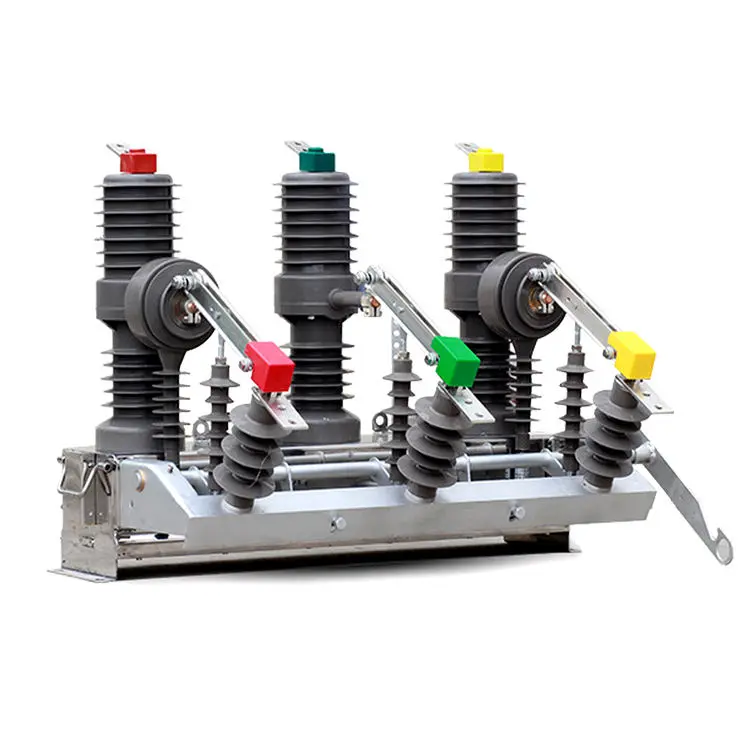
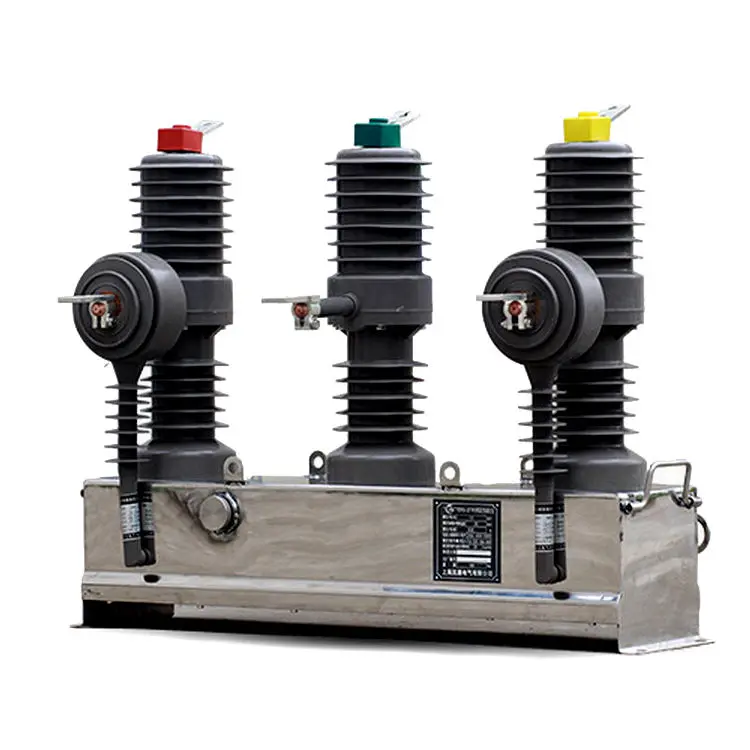
A 40.5 kV unit with a rated frequency of 50 Hz is the ZW7-40.5 Outdoor Vacuum Circuit Breaker. You can choose between 1250 A, 1600 A, and 2000 A for rated current. It is compliant with IEC 62271-100 and IEEE C37.04 and has a modular spring-operated mechanism. The breaker can have either a middle-installed or a side-installed CT for measuring current and protecting it. Please let us know which CT you need when you call. Since the rating is 50 Hz, make sure you know your system's frequency right away. Send the details of your project to our engineers so they can look it over. A clear rating sheet at the beginning also makes it easier to review the design institute and evaluate the bids.
Design Features That Address Site Risks
Here are the main parts of this outdoor vacuum circuit breaker and what they do in real life.
- Modular spring-operated mechanism: The mechanism is developed in a modular way, providing more flexibility across project configurations. The unit may be inspected or replaced one portion at a time without disturbing the whole drive assembly. Units constructed on the same modules have a similar layout, which is convenient when there are numerous breakers at a site. Spare parts planning is simplified.
- Miniaturized structure: The design is compact, with a more concise and reasonable structure. A smaller footprint may make designing brackets and foundations easier, and a tighter shape means there are less spots for damp or dust to settle. This is useful for applications with restricted transit weight and installation area such as mining sites and rail routes.
- Reinforced bracket column: The reinforced bracket column structure gives strong seismic resistance. It keeps the pole assembly stable against ground movement and mechanical stress – an important factor in earthquake-prone locations and near heavy equipment, railroad traffic or blasting at mines. Obtain the support dimensions so that your design institution may verify the foundation loads.
- Porcelain sleeve for big creepage distance: The porcelain sleeve increases the surface path distance between live parts and the ground, therefore providing better anti-fouling performance. In dusty, dirty or humid locations, a longer approach may lessen flashover danger and may reduce how frequently staff must clean insulators at distant sites. Compare the sleeve creepage distance to the pollution class of your location.
These features address the three issues that EPC teams bring up most often: how the mechanism works, how well it protects against contamination, and how stable the structure is. They don't take the place of a site-specific review, so you should still send them your climate data before you confirm the order.
Where the ZW7-40.5 Fits
In the outdoors, this breaker can be used in power grids in cities and rural areas, on trains, at solar and wind substations, and in mining, steel, and chemical plants. A lot of the time, EPC contractors provide more than one unit for a substation and its dedicated line. Making sure that all of the units have the same configuration makes it easy to get spare parts and train new employees. The pollution and vibration points we talked about above are the most important for railroad and mining supply. Because renewable energy substations are often in remote areas, service planning is very important. In all of these situations, the right outdoor vacuum circuit breaker is the one whose ratings, mechanism, and insulation match what was seen on the site.
Selecting and Buying an Outdoor Vacuum Circuit Breaker with Confidence
A Practical Selection Sequence
I think there should be a set order so that nothing is missed. First, use the design-institute drawings to write down the system voltage, fault level, and frequency. Second, set the rated current so that there is room for growth. Third, make a list of the site's minimum and maximum temperatures, elevation, humidity, and pollution level. Fourth, pick CT positions, control voltage, and how to operate the machine by hand. Fifth, compare the documents from each supplier to these inputs. These numbers are often found in tender documents on platforms for buying power, so make a list of them and include it with every inquiry. For price and delivery comparisons to be fair, suppliers can quote the same outdoor vacuum circuit breaker configuration on a single sheet. This cuts down on the review period.
Testing and Documentation to Request
IEC 62271-100 sets the requirements for type tests on AC high-voltage circuit breakers, and IEEE C37.09 describes how to test them. Ask for the type-test reports that go along with your grade. Then ask for routine test records for the units you will get. These should include measurements of the units' mechanical properties, their main circuit resistance, and their power frequency withstand voltage. Each outdoor vacuum circuit breaker should come with its own set of records. These show if the unit was within the limits set by the manufacturer when it left the factory. Also, ask for approval drawings, a list of spare parts, and instructions on how to install the product. Make sure the drawings show where the CTs are, how the terminals are arranged, and the sizes of the brackets. Interfaces that don't match up can slow down site work. Keep every document in the project file so that it can be used for maintenance and to start the project.
Remote Sites and After-Sales Support
Every little problem costs more when you're far away. A problem with a mechanism that a local crew could fix in an hour takes several days to fix when parts have to be shipped from another country. Before you place the order, agree on a list of recommended spare parts, instructions for setting up the machine, and a clear way to get in touch with technical questions. Ask any company that sells outdoor vacuum circuit breakers if they can provide documentation in the format that your design firm and site team use. Also, confirm how the export shipments will be packed and transported. Keep a small set of spare parts for the mechanism on hand for a project with several units so that a normal fault doesn't cut off the power to your line.
Why Project Teams Work with Xi'an Xikai
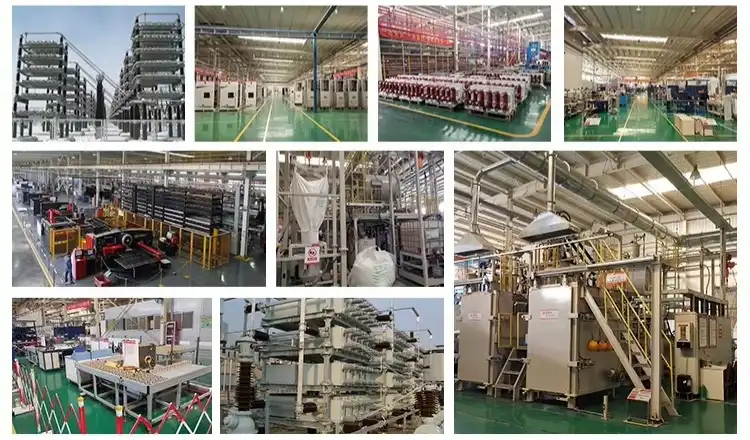
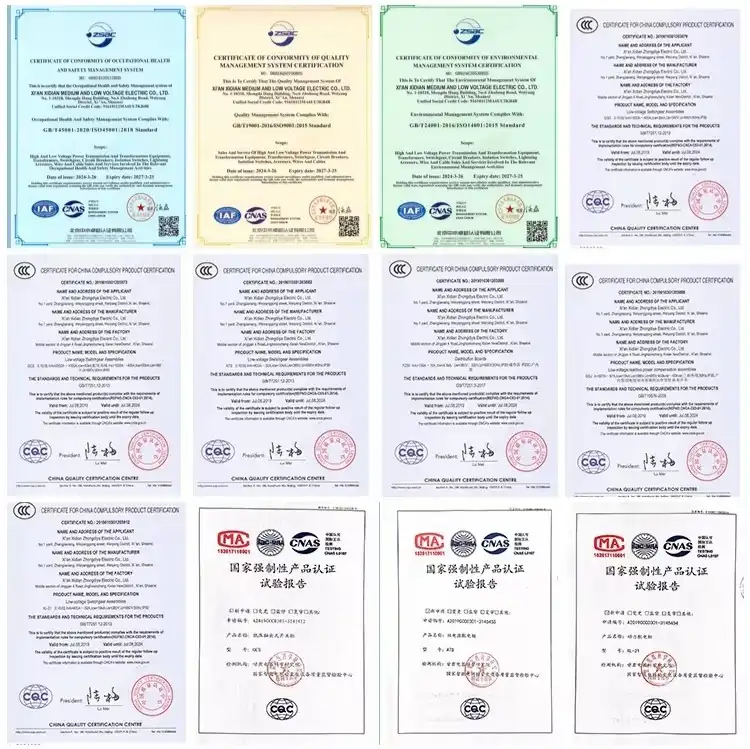
Medium and low-voltage electrical equipment is made by Xi'an Xikai Medium & Low Voltage Electric Co., Ltd. They have 7 product categories, 34 series, and over 100 variants. Their products include high and low-voltage switchgear, dry-type transformers, indoor and outdoor vacuum circuit breakers, instrument transformers, air-insulated switchgear, and prefabricated substations. Our plateau-type equipment can work at elevations of up to 4,000 meters, and our technical specifications meet national and industry standards. Our solutions are used by people in State Grid systems, rail transportation, steel and metallurgy, petrochemicals, and renewable energy. We help them with custom configurations and a number of patented technologies. One team can use that range to control the outdoor vacuum circuit breaker and other equipment in the substation.
Conclusion
To find the right outdoor vacuum circuit breaker for a substation, the ratings must be matched with the known conditions of the site. The electrical base is made up of breaking capacity, rated current, and compliance with standards like IEC 62271-100 and IEEE C37.04. The mechanical base is made up of the type of mechanism and the level of protection in the enclosure. Large changes in temperature can damage lubricants, and pollution requires that a creepage distance be chosen from the IEC 60815-1 classes. The ZW7-40.5 has a modular spring-operated mechanism, a reinforced bracket column, and large creepage distance porcelain sleeves. It can handle 40.5 kV, 50 Hz, and 1250 A, 1600 A, or 2000 A. Technical mismatches and service delays are less likely to happen when buyers stick to a set selection order and check test records, drawings, and spare-parts plans.
FAQ
1. Which rated currents does the ZW7-40.5 offer?
At 1250 A, 1600 A, and 2000 A, the ZW7-40.5 is a 40.5 kV, 50 Hz unit that you can choose from. Pick the rating that comes from your load study and leave some room for growth in the future.
2. Can the ZW7-40.5 include current transformers?
Yes. It can have a CT in the middle or on the side. In your question, please tell us what CT you need so we can confirm the configuration.
3. What information should I send for a recommendation?
Send voltage, frequency, fault level (31.5 kA), rated current, CT requirements, temperature range, altitude, pollution class and quantity of the site. With that information our specialists can validate the outside vacuum circuit breaker is configured correctly.
4. Is the ZW7-40.5 suitable for seismic or polluted sites?
It is particularly resistant to earthquakes because of its reinforced bracket column construction . They are better at keeping dirt off because of its long creepage distance porcelain sleeves . “Send us your sediment and noise data so we can look at the match.
Request an Outdoor Vacuum Circuit Breaker Recommendation from Xi'an Xikai
The Xi'an Xikai company helps project teams that need a reliable outdoor vacuum circuit breaker for dedicated lines and 40.5 kV substations. As a company that makes outdoor vacuum circuit breakers, we can make equipment that works at elevations of up to 4,000 meters and in any way you want. You can email serina@xaxd-electric.com, amber@xaxd-electric.com, or luna@xaxd-electric.com with your fault level, current rating, climate, and quantity. For more information, go to xaxd-electric.com. Our engineers will then suggest a ZW7-40.5 configuration that fits your needs.
References
- IEC 62271-100: High-voltage switchgear and controlgear – Part 100: Alternating-current circuit-breakers, 2021
- IEEE Std C37.04: IEEE Standard for Ratings and Requirements for AC High-Voltage Circuit Breakers with Rated Maximum Voltage Above 1000 V, 2018
- IEEE Std C37.09: IEEE Standard Test Procedure for AC High-Voltage Circuit Breakers with Rated Maximum Voltage Above 1000 V, 2018
- IEC 60815-1: Selection and dimensioning of high-voltage insulators intended for use in polluted conditions – Part 1: Definitions, information and general principles, 2008
- IEC 60529: Degrees of protection provided by enclosures (IP Code), 2013
- IEEE Std 693: IEEE Recommended Practice for Seismic Design of Substations, 2018
