
How Does MKP Film Improve Self-Healing Filter Capacitor Performance?
2026-11-19 17:20:13
By maintaining low dielectric loss, high insulation resistance, and stable capacitance under heat and harmonic current, MKP film enhances the performance of self-healing filter capacitors. At ripple current, polypropylene doesn't give off much heat, so the winding stays cooler and wears out more slowly. A small dielectric fault is surrounded by a thin layer of metal, which evaporates. This keeps the fault isolated and the capacitor working. That means that people who make harmonic filters will be able to control capacitance better and keep the tuning frequency steady over time. I'll explain how the mechanism works, how to quote it, and what you should ask a supplier below.
Introduction: Why MKP Film Matters in Self-Healing Filter Capacitors
What Is a Self-Healing MKP Film Capacitor?
Metalized polypropylene is employed as both dielectric and electrode carrier in a self-healing MKP film capacitor. The film is coated with a vacuum-deposited layer of aluminum-zinc, making a separate foil unnecessary. If it cracks, the metal surrounding a weak place vaporizes and shuts off the fault. Self-healing does not imply it can repair entirely, since each incident takes away a tiny bit of electrode. Engineers choose MKP for its low loss, strong insulation resistance and steady performance at all temperatures and frequencies. Common usage include AC filters, EMI suppression, motor drives, renewable energy converters and three-phase industrial networks. This is the construction of most self-healing filter capacitors for power systems.
How Does the Self-Healing Process Work?
A local breakdown caused by a microscopic flaw, contamination, overvoltage, or getting older is the first step in healing. Within microseconds, the arc energy turns the thin metal around the fault into vapor. This leaves a small area of insulation. The defect stops current from going through it, and the rest of the winding keeps filtering. It doesn't cost much for each event to happen. But events that happen often or are very bad raise losses and internal temperature. How well self-healing filter capacitors recover depends on many things, such as voltage level, dv/dt, humidity, film quality, winding tension, and how consistently the capacitors are made. This is why I tell people who are buying to ask about more than just the type of dielectric.
Why Dielectric Choice Affects Tuned Filter Accuracy
At the heart of a passive harmonic filter is an LC tuned circuit made up of each capacitor and a series reactor. The resonant frequency is equal to 1 divided by 2π times the square root of L times C. This means that it moves in the opposite direction of the square root of capacitance. So, a 3% change in capacitance moves the tuning point by about 1.5%. This can cause the branch to absorb a different harmonic order. The branch stays close to its design point because MKP film keeps capacitance steady. Because of this connection between how the film behaves and how well it tunes, tolerance and loss factor are at the top of the list of requirements for self-healing filter capacitors.
How MKP Film Improves Self-Healing Filter Capacitor Performance
Low Dielectric Loss Keeps the Winding Cool
When it comes to common capacitor films, polypropylene has one of the lowest dissipation factors. A filter capacitor always has harmonic current flowing through it, and the loss is measured as current squared times ESR. This loss is turned into heat. When tan ε is lower, the same current causes less heating. This slows down dielectric aging and keeps more of the temperature range below the limit. In self-healing filter capacitors that are used at close to their rated current, temperature rise is often a major factor in how long they last. For the same reason, our design has low equivalent series resistance. I think you should ask each supplier for measured tan µ at the frequency you use, not just 50 or 60 Hz.
High Insulation Resistance and Stable Capacitance
Because MKP film has a high insulation resistance, leakage current stays low in circuits that are already turned on. It doesn't change much in capacitance with frequency, and polypropylene has a slightly negative temperature coefficient. Polyester, on the other hand, moves in the opposite direction. The surface finish and thickness uniformity of film grades from different sources can be different, which can change thermal drift. Because of this, I think you should ask for capacitance-versus-temperature data on the exact film that was used in the custom part. When the cabinet gets hot in use, not just on the test bench, stable capacitance helps self-healing filter capacitors maintain a 3% tolerance.
Electrode Design Controls Each Healing Event
The layer of metal does more than just carry electricity. How much energy each breakdown gives off and how much area is lost depend on its thickness and pattern. Thinner active areas are better at getting rid of faults, while heavier edge metallization makes contact with the end spray better and can handle higher current. Capacitance loss per event can be limited by segmented patterns. The designers weigh how easy it is to heal against the current capacity. The quality of the testing, wrapping, and encapsulation then determines whether the finished capacitor works the way it was meant to. Controlling the process is just as important as the dielectric.
MKP Self-Healing Capacitors Compared With Other Capacitor Technologies
MKP Versus Foil Film Capacitors
Film capacitors with foil electrodes are made of metal foil and can handle a lot of pulse current. Since they don't fix themselves, a dielectric fault can turn into a permanent short. Metalized MKP construction keeps local faults separate, and its thin electrodes let windings be very close together, though pulse-current limits are different. In IEC 60831-1, performance, testing, and safety rules are laid out for self-healing shunt capacitors used in AC systems up to 1000 V. If there is a lot of extreme peak current, a foil design might still work. Before choosing between foil and self-healing filter capacitors, look at the actual current waveform and compare it to the ratings on the datasheet.
MKP Versus MKT Polyester Film
The film used in MKT capacitors is polyester. They are cheaper and have more capacitance per volume, so they work well in light-duty circuits. Polyester loses more electricity than polypropylene and has a positive temperature coefficient. MKP, on the other hand, has less loss and better high-frequency behavior. Less loss means less self-heating in a filter that carries harmonic current all day. As long as the current stays low and space and cost are taken into account, MKT can still make sense. As long as the specification calls for continuous harmonic current and accurate tuning, I recommend MKP. This is usually the case for self-healing filter capacitors in tuned cabinets.
MKP Versus Aluminum Electrolytic Capacitors
Aluminum electrolytic capacitors are better for bulk DC storage because they can store more capacitance in a smaller space. They are charged, have a higher ESR, and get older as the electrolyte drops out of them. There isn't much leakage and ESR in MKP capacitors, so they're good for AC filtering. AC filter capacitors and DC-link capacitors should not be switched around because they each handle a different amount of voltage and current stress. The rating should match the real waveform, and the app should be able to tell the difference between AC, DC, and both. It's clear from this comparison why self-healing filter capacitors are better for AC harmonic duty and electrolytics are better for something else.
Benefits, Selection, and Failure Prevention for Self-Healing Filter Capacitors
Main Benefits of Self-Healing MKP Filter Capacitors
When rated correctly, MKP capacitors make it less likely that a small flaw will turn into a short circuit. Less loss means less heat buildup, and as something ages, it loses capacitance slowly over time instead of failing all at once. This predictability helps maintenance teams plan when to replace parts in solar, drive, and industrial plant settings. Using epoxy or plastic for the housing also gets rid of the risk of oil leakage, which makes mounting inside cabinets easier. But being able to heal itself is only one way to stay safe. Still needed are voltage derating, ripple-current control, thermal design, and sealing. Include self-healing filter capacitors in your overall reliability strategy.
How to Choose the Right Capacitor
To begin, look at where the circuit is: AC filtering, EMI suppression, drive output, or a tuned branch with a reactor. Then check the target life, tolerance, frequency, RMS current, dv/dt, ambient temperature, and rated voltage. Also look at the peak and repetitive transient voltage. The voltage across the capacitor will be higher than the system voltage when there is a series reactor, so add a safety margin to the rating. Make sure you know the terminals' sizes, vibration limits, and humidity limits. Ask for test reports, drawings, and batch traceability before giving the go-ahead. This method works well for making custom self-healing filter capacitors where the tuning frequency is not what is usually used.
Common Failure Modes and How to Prevent Them
Overvoltage, repeated transients, too much ripple current, thermal overload, moisture intrusion, vibration damage, and bad terminal contact are all common problems. A lot of switching spikes cause a lot of healing events, which slowly lower capacitance. Too much RMS current heats up the winding and makes it age faster. If water gets in through a weak seal, it can eat away at the metalization. To avoid these issues, I suggest that you measure the real voltage and current waveforms, apply derating, add transient protection as needed, and compare resonance to the system's inductance. Failures in the field are reduced even more by good sealing, secure mounting, and regular capacitance checks. An overstressed design cannot be fixed by self-healing filter capacitors.
Xi'an Xikai Self-Healing Low-Voltage Filter Capacitors for Harmonic Filter Cabinets
Ratings and Construction
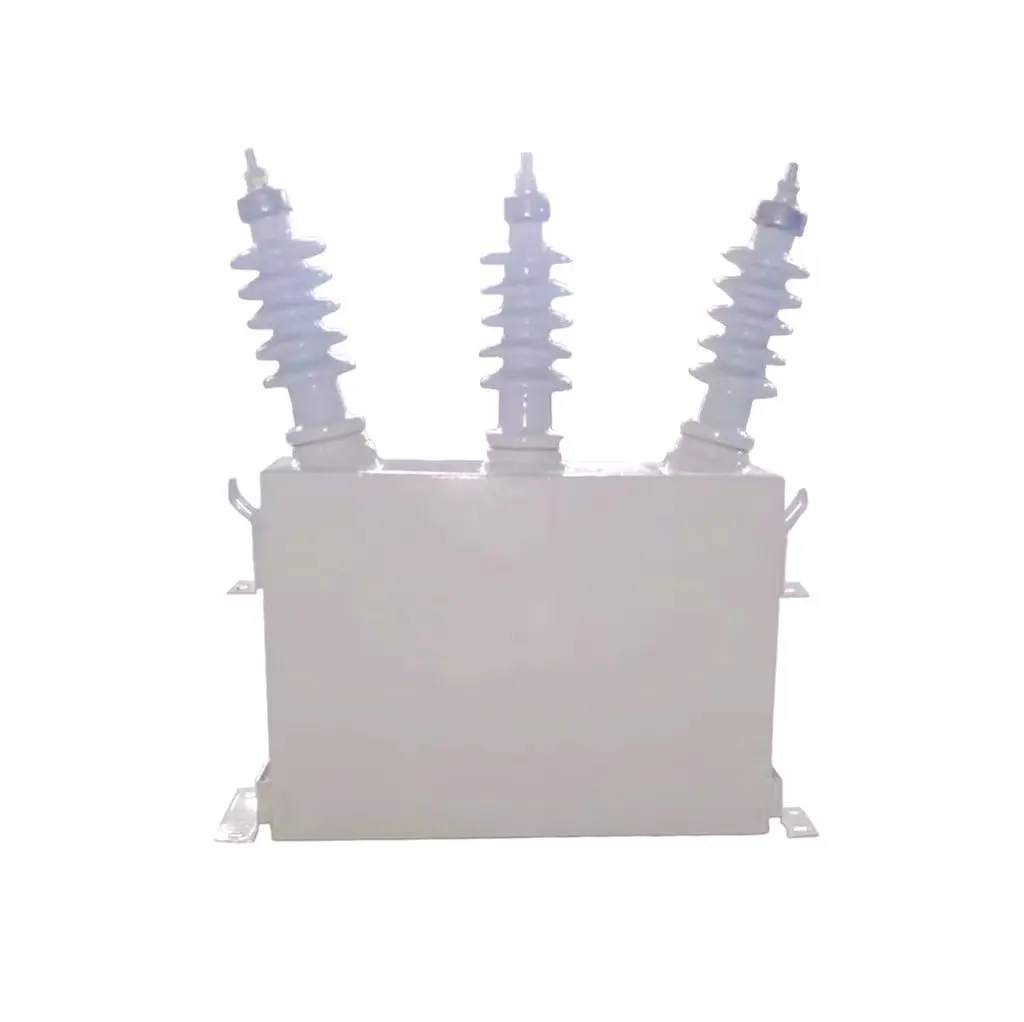
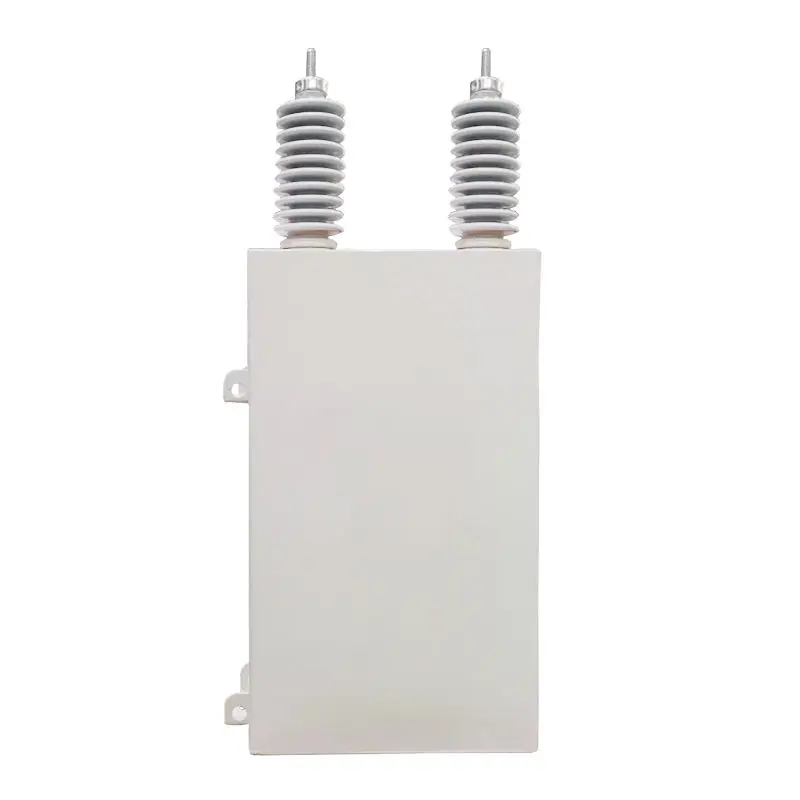
Our Self-Healing Low-Voltage Filter Capacitors contain an electrode layer of aluminum-zinc alloy and an MKP film as a dielectric material. Non-flammable epoxy resin or plastic housing avoids the possibility of oil leaks and complies with environmental regulations. Corrosion free brass terminals make the wire secure. Available in 440V, 480V, 525V and 690V with rated capacity from 5 to 100kV per unit. The filtering frequencies should be between 150 Hz to 2500 Hz and modular solutions may be employed to fulfill varying voltage and frequency requirements. These self-healing filter capacitors may meet many requirements of low voltage tuning filters.
Quality Control and Applications
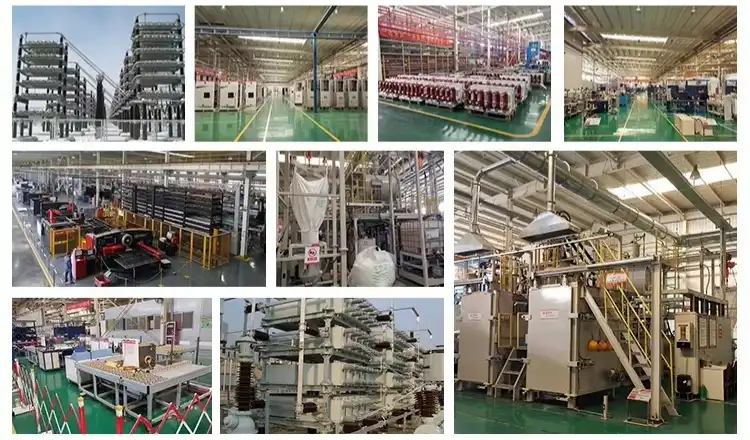
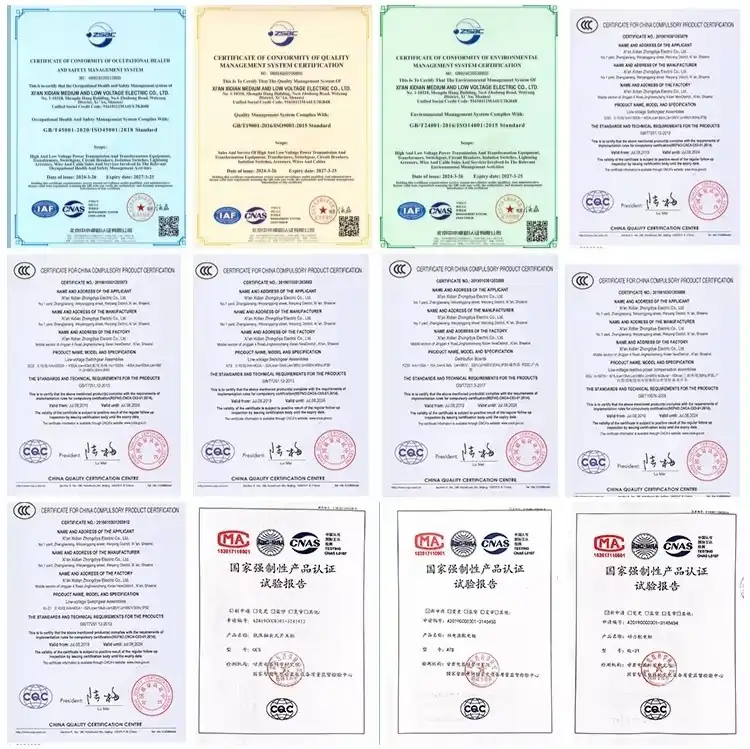
When the specification calls for a 3% tolerance, accuracy is important. We use a laser to cut MKP film with a tolerance of less than 0.01 mm, vacuum metalize for even electrodes, and wind automatically to make sure everything is the same. Every unit goes through a full set of electrical tests, which check for leakage current and capacitance deviations lower than 3%. The units also do IEC 60831-1/2 safety protocols and load simulations that last 72 hours. Our self-healing filter capacitors are used in commercial buildings like malls and hospitals, as well as in substations with harmonics from renewable inverters and factories with CNC machines and assembly lines. There are compliance lists for CE, RoHS, UL in North America, and CCC in China.
Supplier Evaluation and Procurement Checklist
A good supplier goes into great detail about how it does things. What should I ask about film sourcing, metallization, winding control, end-spray quality, encapsulation, final testing, and being able to track each batch? Then look over the business side. This includes the terms for samples and pilots, the minimum order quantity, the lead time, the packaging, the export documents, the warranty, and a rule for telling people when there are changes to the film or process. Don't just look at the unit price; also look at the total cost of ownership, which includes repairs and downtime. Medium- and low-voltage equipment is supplied by Xi'an Xikai to projects in State Grid, steel, petrochemicals, rail, and renewable energy. Our equipment for plateaus can work at heights of up to 4,000 meters. For each order of self-healing filter capacitors, we use the same engineering method.
Conclusion
Low dielectric loss, high insulation resistance, stable capacitance, and controlled fault isolation are all advantages of MKP film over self-healing filter capacitors. Less loss means less heat when there is harmonic current, and stable capacitance keeps the tuning frequency of an LC branch safe, since a 3% change in capacitance moves it by about 1.5%. MKP is better for continuous AC filtering because it has low losses and wears down slowly over time compared to foil film, MKT polyester, and electrolytic capacitors. However, foil designs may be better for extreme pulse current. Self-healing can't take the place of thermal design, sealing, voltage derating, and waveform analysis. These things are still needed to keep damage from overvoltage, overheating, and moisture. So, measured tolerance, tan ε, voltage margin, temperature behavior, test records, and traceability are more important than the dielectric material itself when making the choice.
FAQ
1. How long do self-healing filter capacitors last?
Each healing event takes away a very small piece of electrode area and slightly lowers capacitance. A loss of 3% to 5% capacitance is often seen as the end of life by many manufacturers. Units with the right rating can take a lot of healing events before they reach that limit. The real life is determined by the voltage, ripple current, and temperature.
2. Does self-healing protect against every failure?
No, a capacitor can still die from too much heat, water getting in through a weak seal, or vibrations damaging the internal connections. Self-healing only fixes dielectric breakdown in certain areas, so it's still important to have good sealing, derating, and mounting.
3. Should I compare suppliers by unit price alone?
Replacement, downtime, and rework costs are not included in the unit price alone. You can look at capacitance tolerance, loss factor, voltage margin, test records, and traceability all at the same time. Ask for values that have been measured at the temperature where you will be using them.
4. Can the capacitors match a non-standard tuning frequency?
Yes. Xi'an Xikai has modular designs that can be put together to meet specific voltage and frequency needs. The filtering ranges from 150 Hz to 2500 Hz. Send your reactor value and target frequency so that engineers can look them over. Then, testing the prototype confirms the capacitance and losses.
Request Self-Healing Filter Capacitors With Controlled MKP Film Performance
It is possible for Xi'an Xikai to match the performance of the MKP film to your reactor value, tuning frequency, and voltage margin. We make self-healing filter capacitors and have more than 12 patents. Our ratings range from 440 V to 690 V and 5 to 100 kV per unit. We can also make custom voltage and frequency designs. Email serina@xaxd-electric.com, amber@xaxd-electric.com, or luna@xaxd-electric.com with your needs. You can get samples and technical information about self-healing filter capacitors at xaxd-electric.com.
References
- IEC 60831-1: Shunt Power Capacitors of the Self-Healing Type for AC Systems Having a Rated Voltage up to and Including 1000 V, 2014
- IEC 61071: Capacitors for Power Electronics, 2017
- IEEE Std 18: IEEE Standard for Shunt Power Capacitors, 2012
- IEEE Std 1036: IEEE Guide for the Application of Shunt Power Capacitors, 2010
- IEEE Std 519: IEEE Standard for Harmonic Control in Electric Power Systems, 2022
- Capacitors: Technology and Trends, 2012
