
Porcelain housed Lightning Arrester for Substation Protection
2026-10-14 17:23:23
A porcelain housed lightning arrester is a surge protection device installed in substations to redirect dangerous overvoltages safely to ground before they damage transformers, switchgear, or busbars. Built around zinc oxide (ZnO) varistors enclosed in high-strength ceramic housing, these devices respond within microseconds to lightning strikes and switching transients. The porcelain shell delivers mechanical durability and stable insulation performance across polluted, coastal, and high-altitude environments. For trade distributors supplying substation packages to Africa, Southeast Asia, and South America, selecting the right arrester — one that meets IEC 60099-4 and carries verifiable certifications — directly affects project acceptance and equipment longevity.
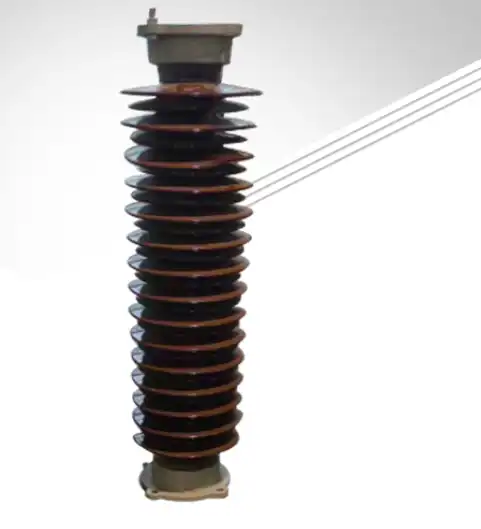
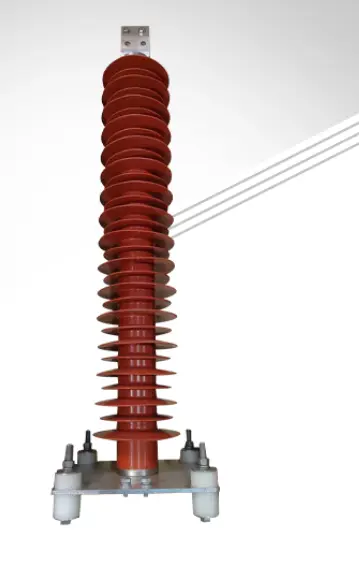
Understanding Porcelain Housed Lightning Arresters
It saves time to deliver a job when you know what you are getting. This part breaks down the construction, how it works, and the specifications so that procurement teams can easily figure out if the product is right for their needs.
Construction and Materials
Lightning arresters that are housed in porcelain are made up of stacked ZnO resistor disks that are sealed inside a glazed porcelain tube. The porcelain has a high dielectric strength, is resistant to UV light, and can handle a lot of weight (up to 8 kN tensile strength). Most end fittings are made of aluminum or hot-dip galvanized steel and are sealed with silicone seals to keep water out.
How It Works
ZnO blocks don't let any current flow when the voltage is normal. They only let microampere-level leaking current flow. When there is a lightning strike or switching surge, the blocks instantly become conductive, sending the surge current to ground. They go back to their protective state as soon as the transient is over. Solid-state physics, with no holes or moving parts.
Key Standards and Ratings
IEC 60099-4 is the main text that sets rules. It describes how to test metal-oxide surge arresters without gaps. For North American grid standards, ANSI/IEEE C62.11 is used. The four specifications that purchase engineers must match to the site conditions are the rated voltage, the constant operating voltage (COV), the nominal discharge current class (10 kA or 20 kA), and the creepage distance.
Benefits and Application Areas in Substation Protection
A lightning arrester with a ceramic housing has clear performance benefits that polymer options don't always have, especially in industrial settings that see a lot of use over time.
Here are the main benefits of buying a transformer that you should think about:
- Aging resistance over 25+ years: The glazed porcelain surface does not degrade from UV exposure or ozone the way some silicone compounds do in equatorial climates. Field data from sub-Saharan African substations shows consistent insulation resistance readings after 20 years of service under IEC 60099-4 test conditions.
- Superior mechanical load tolerance: Porcelain withstands wind loading and conductor tension better than most polymeric housings. For open-air 110–220 kV busbar installations in coastal areas, this structural rigidity reduces the risk of housing fracture during storm events.
- Creepage distance adaptability: Manufacturers can produce custom shed profiles — 25 mm/kV for standard pollution zones and 31 mm/kV for heavy industrial or coastal zones — within the same product family.
Because of these physical traits, porcelain-housed devices are the best choice for high-voltage substation uses where service intervals are long and getting to the site is hard. When wholesalers package full substation kits, the mechanical stability of a ceramic arrester lowers the risk of warranty claims compared to lighter-duty options.
Maintenance that is useful for a porcelain housed lightning arrester is easy to do. The usual procedure includes checking the grounding lead for continuity once a year, visually inspecting the surface for dirt, and measuring leakage current on a regular basis with a handheld milliampmeter. In places with a lot of pollution, cleaning surfaces with deionized water every so often can recover their resistivity.
Comparison and Decision-Making Guide for Procurement
Choosing between polymer and ceramic housings is not just a matter of price; it has to do with material science.
Material Performance Under Stress
When there is cement dust, salt spray, or industrial fumes around, porcelain doesn't wear away or leave marks on the surface. Polymer housings are hydrophobic and can get back to normal after being contaminated, but this trait wears off over time in warm regions with a lot of UV light. The stable surface resistance of porcelain is useful for substations in Africa or Southeast Asia where humidity levels stay above 80% for months at a time.
Lifecycle Cost Analysis
A lightning arrester with a porcelain housing usually costs more up front than one made of polymer that is rated for the same voltage. However, its design life of 25 years or more and the fact that it needs to be replaced less often make for a good total cost of ownership over the asset's lifecycle. This lifecycle argument helps trade distributors negotiate prices with end buyers for multi-year substation projects that use EPC contractors.
Procurement Logistics
For normal porcelain-housed models at 110–220 kV, the lead time is 3–7 days from stock. For custom creepage setups, it's 3–4 weeks. Sea freight usually comes in sealed plastic bags inside wooden boxes to keep out moisture. Shipping humidity in container holds can run from 60% to 95% RH, which will break any weak seal. Make sure that your seller gives you helium leak test certificates for every batch.
Spotlight: Y10W-216/562W Porcelain Housed MOA for AC Systems
The Y10W-216/562W from Xi'an Xikai is a metal-oxide arrester designed for 216 kV AC transmission substations. Its two-unit series setup creates a DC reference voltage of ≥314 kV, which is a strong safety margin for 220 kV grid infrastructure.
The device works in both normal pollution zones (25 mm/kV creepage) and heavy-pollution coastal or industrial sites (31 mm/kV). This means that dealers only need to keep one model on hand to meet the needs of different countries.
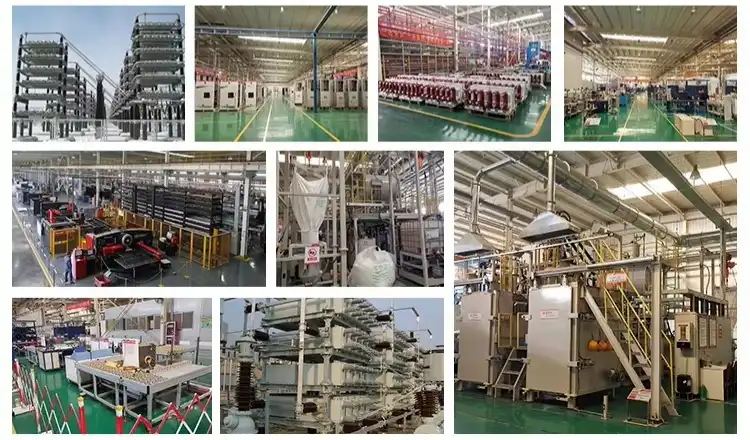
There are four checks that make sure the quality of the manufacturing process is good: X-rays of the ZnO blocks and porcelain bodies are looked at, 100 kA impulse current tests are done, all sealed joints are checked for helium leaks, and the final electrical checks are done in IEC-certified test labs. As a result, the leakage current stays below 1 mA the whole time it's working, which lowers the risk of thermal runaway.
The unit can work in temperatures ranging from -40°C to +85°C, so it can be used in both high-altitude installations in the Andes and deserts in North Africa. Every unit comes with IEC 60099-4 and GB/T compliance paperwork, which meets the needs of customs and project approval in most export markets.
Trusted Suppliers and Sourcing Guidance
Global Benchmark Brands
The top of the porcelain housed lightning arrester market is made up of ABB (now Hitachi Energy), Siemens Energy, and GE Grid Solutions. Their products have been through a lot of type tests and have global field references that meet the strictest utility requirements. Their price points and MOQ levels, on the other hand, are often not right for small-batch foreign purchases.
Chinese Manufacturers with Export Credentials
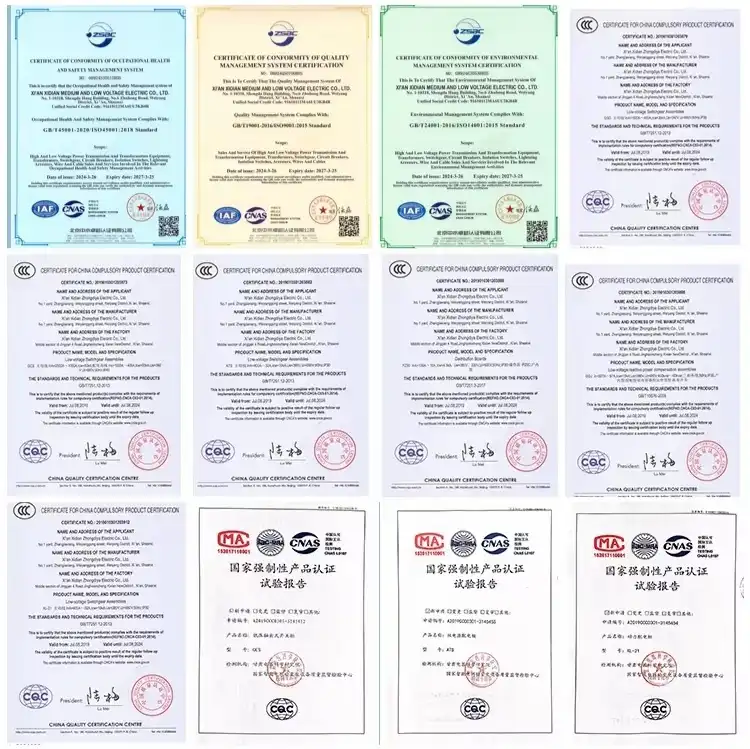
ISO 9001 and ISO 14001 are both held by Xi'an Xikai, and their product lines have been type-tested to IEC 60099-4. The fact that the company took part in China's 863 High-Tech Research Program shows how technically advanced it is in the Chinese power business. The flexible MOQ, English-language paperwork, and export-compliant packing are all benefits for export sellers.
Supplier Verification Checklist
Before you place an order, make sure that any porcelain housed lightning arrester supplier has these four things: valid IEC type test reports that are no more than 5 years old; helium leak test certificates for each batch; traceable ZnO varistor specifications; and a clear warranty statement that covers the integrity of the housing and the electrical performance.
Installation Best Practices
Pre-Installation Site Survey
Write down the level of pollution in the air (IEC 60815 classification), the height, and the highest voltage that can be used continuously before you specify the creepage distance. As per IEC 60099-4 Annex J, a derating factor must be added to the rated voltage for installations above 1,000 meters.
Mounting and Grounding
Using the clamps that came with the arrester, mount it vertically on the busbar frame. Connect the ground terminal to the earth grid of the substation using a conductor that can handle the 20 kA nominal discharge current without heating up. Do not make loops or add extra length to the ground lead's wire.
Post-Installation Testing
Check the power-frequency reference voltage and leakage current before turning the power on. Write down the standard numbers so that you can compare them in the future. Put in a discharge counter at the ground end to keep an eye on the health of idle substations all the time.
Conclusion
If you want to choose the best porcelain housed lightning arrester for your substation project, you should make sure that the rated voltage, creepage distance, and certification status all match the conditions of the site, not just choose the one with the lowest price. The Y10W-216/562W from Xi'an Xikai offers 216 kV protection, has been tested to meet IEC standards, has multiple creepage choices, and comes in packaging that is ready for sea freight. Having a reliable surge protection device that clears customs and meets the needs of local engineers takes away a big factor in project delivery for wholesalers who put together full substation kits for export markets.
FAQ
1.What does the "W" designation mean in Y10W-216/562W?
"W" indicates a gapless metal-oxide arrester design. No series gaps are present inside the housing; the ZnO varistors manage all voltage clamping directly. This simplifies the device and improves response speed compared to older gapped silicon carbide designs.
2.How do I select creepage distance for tropical coastal markets?
IEC 60815 classifies pollution severity into four levels. Coastal and industrial zones typically fall under Class III (heavy) or Class IV (very heavy), requiring creepage of 31 mm/kV or higher. The Y10W-216/562W offers both 25 mm/kV and 31 mm/kV options, covering the majority of African and Southeast Asian site classifications.
3.Can this arrester be used at high altitude?
Yes. The unit operates reliably up to 4,000 meters with appropriate derating applied per IEC 60099-4. Xi'an Xikai's plateau-type product configurations meet this requirement.
4.What certifications does Xi'an Xikai provide for export documentation?
Standard export documentation includes IEC 60099-4 type test reports, GB/T compliance certificates, ISO 9001 factory audit records, and per-batch helium leak test results.
Partner with Xi'an Xikai for Your Next Substation Package
Lightning arresters with ceramic housings can be bought from exporters in Africa, Southeast Asia, and South America by Xi'an Xikai. We offer full IEC 60099-4 paperwork for our Y10W-216/562W porcelain housed lightning arrester, ship it in moisture-proof sea freight packaging, and allow a variable MOQ for mixed substation consignments. You can email our technical sales team at serina@xaxd-electric.com, amber@xaxd-electric.com, or luna@xaxd-electric.com. You can find product datasheets and ask for quotes at xaxd-electric.com.
References
1. IEC 60099-4:2014 — Metal-Oxide Surge Arresters Without Gaps for A.C. Systems, International Electrotechnical Commission, 2014.
2. IEEE Std C62.11-2012 — IEEE Standard for Metal-Oxide Surge Arresters for AC Power Circuits (>1 kV), IEEE Power and Energy Society, 2012.
3. Gorur, R. S., Cherney, E. A., & Burnham, J. T. — Outdoor Insulators, Ravi S. Gorur Inc., 1999.
4. IEC 60815-1:2008 — Selection and Dimensioning of High-Voltage Insulators Intended for Use in Polluted Conditions, International Electrotechnical Commission, 2008.
5. Christodoulou, C. A., Vita, V., Perantzakis, G., et al. — "Adjusting MO Surge Arresters' Thermal Stability Margins," Energies, MDPI, 2017.
6. Cigré Working Group A3.17 — MO Surge Arresters: Stresses and Test Procedures, Cigré Technical Brochure 544, 2013.