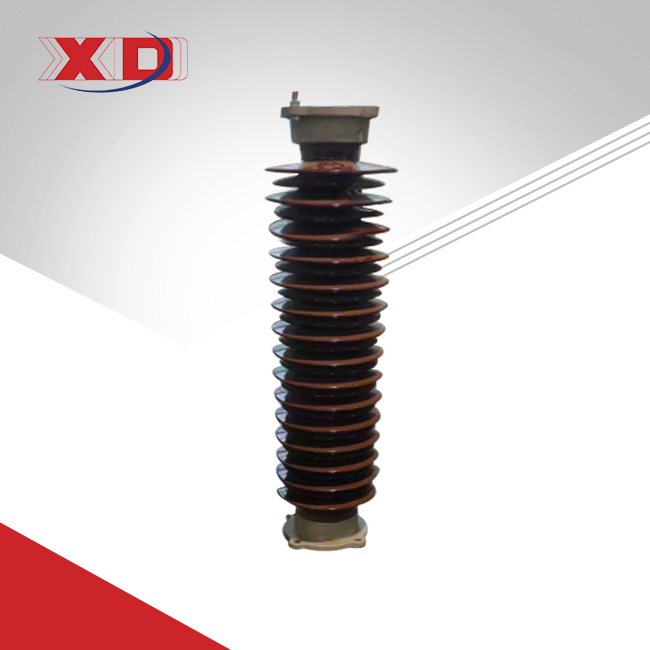
Y10W-102/266W Lightning Arrester Porcelain housed MOA for AC system
Porcelain Type SF6 Circuit Breaker Cost Guide Pricing Factors and Key Features
2026-06-18 09:55:16
When choosing medium-voltage switchgear for factories, substations, or business buildings, it is very important to know about the technical and financial aspects of Porcelain Type SF6 Circuit Breakers. The ceramic insulation and sulfur hexafluoride gas technology in these devices work together to reliably stop faults and keep the devices running smoothly for a long time. Prices vary a lot depending on voltage levels, interrupter design, quality of manufacture, and the system for supporting suppliers. This guide looks at the main things that affect the cost of procurement, focuses on important technical features, and gives useful information to help building managers, utility engineers, and EPC companies make smart buying choices that fit their budgets and performance needs.
Understanding Porcelain Type SF6 Circuit Breakers
What Makes Porcelain Insulation Distinctive?
The main insulation material in these circuit breakers is porcelain, which is strong mechanically and has great thermal strength across a wide temperature range. Porcelain stays strong in tough outdoor conditions and contaminated air, unlike polymer options that can break down after prolonged UV exposure or thermal cycle. The material doesn't track or flash over, so it can be used in places near the coast, in industrial areas with particulate matter in the air, or where the weather changes a lot.
How SF6 Gas Enhances Arc Interruption?
In the interrupter chamber, sulfur hexafluoride gas both puts out arcs and keeps electricity from flowing. When there is a fault, the contact system breaks apart, making an electric spark. Within milliseconds, the SF6 gas cools and deionizes the arc path by quickly absorbing free electrons. Because it is so good at cooling, the breaker can safely stop high short-circuit currents, which keeps equipment from breaking and quickly restores system stability. An SF6 arc-extinguishing chamber, a precision contact system, and other devices that coordinate opening and shutting processes make up the interrupter unit.
Operating Principles and Component Interaction
The working device moves the moving contact system through an insulation rod when there is a fault. Because the fixed arc contact and the nozzle throat work together, there is a blocking effect as the fixed contacts separate from the nozzle. This motion, along with the arc's thermal growth, makes the pressure inside the puffer cylinder rise. The blast pressure that is created improves arc breakdown while lowering the energy needed by the device that does the work. The contact system sets up and breaks the circuit path, and the SF6 gas makes sure that the current stops reliably in a range of load conditions.
Design Lifespan and Maintenance Considerations
Porcelain Type SF6 Circuit Breakers with porcelain housing are made to last a long time. With proper care, they can last more than twenty years. The main things that are checked on a regular basis are the SF6 gas pressure, the amount of contact wear, and the cleaning of mechanical parts. Rated short-circuit breaking operations usually go through twenty cycles, and rated current switching operations can go through two thousand cycles before they need to be replaced. Knowing these operating limits helps procurement teams figure out how much something will cost over its entire life and plan repair windows that don't stop production too much.
Key Advantages of Porcelain Type SF6 Circuit Breakers
Superior Performance Under Electrical Stress
When porcelain insulation is paired with SF6 gas technology, it works very well in high-voltage situations running from 40.5kV to 550kV. Even if the surface is dirty with dust, salt spray, or industrial pollutants, the insulating properties of porcelain keep it from moving. SF6 gas quickly puts out arcs, which lowers the risk of re-ignition during swapping operations. Protecting sensitive equipment like transformers, generators, and important process machinery in factories, data centers, and hospitals is easy with this mix.
Environmental Durability and Safety Features
Extreme changes in temperature, earthquakes, and mechanical impacts can all happen to porcelain housings without damaging the insulation. The material isn't explosive and doesn't give off dangerous fumes, which makes it safer in crowded places or small spaces. Under normal working conditions, SF6 gas stays chemically stable because it is kept in sealed chambers that go through strict leak testing while they are being made. Regular checks of the gas pressure levels make sure that the breaker keeps its ability to stop throughout its useful life.
Comparison with Polymer and Epoxy Alternatives
Polymer-housed circuit breakers are lighter and easier to handle, but Porcelain Type SF6 Circuit Breakers work best in places with a lot of pollution, UV light, or extreme temperatures. Over time, polymer materials can lose their hydrophobicity, wear down mechanically, and have their surfaces worn away. This is especially true in marine or industrial areas. Epoxy-resin breakers come in small sizes, but they may not be as resistant to weathering outside as ceramic breakers. Utility companies that run transmission networks or base equipment often choose porcelain because it has a history of reliability and a reliable way of aging.
Maintenance Best Practices and Troubleshooting
As part of regular maintenance, the ceramic should be looked at for cracks, the terminals should not get too hot, and the bolts should be tight. Every month, the SF6 gas pressure is checked to make sure it stays within the allowed range. Once a year, the contact travel, lube quality, and operation mechanism function are checked. Common troubleshooting looks for problems like the working mechanism not charging, which could be caused by a bad control circuit or a bad power source. Keeping thorough repair logs helps find patterns and plan ahead for part replacements, which cuts down on unplanned downtime and increases the life of equipment.
Critical Pricing Factors Affecting Porcelain Type SF6 Circuit Breakers
Raw Material Costs and Manufacturing Complexity
To make porcelain, you need to fire high-purity kaolin clay, feldspar, and quartz at high temperatures to get the right mechanical strength and insulating qualities. Precision casting, finishing, and quality control testing are all steps in the manufacturing process that add to the cost of materials. SF6 gas has unmatched arc-quenching ability, but it costs a lot to buy and handle because of rules about the environment and purity. To keep gases contained and break behavior uniform, interrupter chambers need to be manufactured with very small errors, which increases the difficulty and cost of production.
Voltage Ratings and Technical Specifications
The price of a Porcelain Type SF6 Circuit Breaker goes up with the maximum voltage because higher voltage classes need bigger porcelain housings, more interrupter breaks, and stronger ways to work. Most of the time, a 40.5kV breaker with a modular design and a spring-operated mechanism will cost less than a 252kV unit with hydraulic mechanisms and more than one interrupter per pole. The rated current capacity also affects the price. For example, breakers made for 4000A uses have heavier conductors, better cooling, and stronger contact systems than breakers made for smaller currents.
Operating Mechanism Type and Customization
Compared to hydraulic or gas systems, spring-operated mechanisms are simpler and cheaper. Motors are used to charge springs that close and open the mechanism. Using disc springs and hydraulic actuation, hydraulic systems offer exact control and high energy output, but they cost more to buy at first. For opening and closing, pneumatic systems use compressed air and springs that work with certain voltage classes. Requests for customization, like specific control voltages, more auxiliary connections, or built-in tracking systems, raise the base price by the cost of engineering time and parts.
Brand Reputation and Warranty Coverage
Established companies with large testing centers, ISO certifications, and broad product ranges charge higher prices. This reflects R&D spending, compliance with IEC 62271/IEEE C37.04, and after-sale support. Warranty terms vary; some cover interrupters and mechanisms longer. Total cost of ownership—including warranty support and spare parts availability—matters more than initial price.
Logistics and Lead Time Considerations
When you buy big porcelain circuit breakers from outside the United States, the shipping costs can add up to a lot of your total purchase price. Lead times depend on how much can be made, how much customization is needed, and the supplier's production plans. There may be discounts for orders that are placed in bulk, but faster shipping choices will cost more. To avoid extra costs and project delays, buyers should make sure that the delivery terms are clear. These terms should include who is responsible for freight, customs paperwork, and on-site installation help.
Buying Guide: Choosing the Right Porcelain Type SF6 Circuit Breaker
Evaluating Technical Parameters and Certifications
People who are in charge of buying things should make sure that any potential circuit breakers meet or go beyond the application's maximum voltage, current, and short-circuit breaking requirements. Check to see if the project meets area standards, such as ANSI, IEC, and local energy needs. Certifications like 3C, CE, and UL show that safety and efficiency standards are being met. Ask for test results from a third party that confirm the gas leakage rates, seismic resistance, and arc-flash safety. For products that are meant to work at up to 4000 meters or in harsh areas, they need to be checked more to make sure they work reliably.
Comparing Alternatives and Total Cost of Ownership
Because they don't use SF6 gas, vacuum circuit breakers are easier to maintain and better for the environment. However, in very high voltage situations, they might not be able to stop as well as Porcelain Type SF6 Circuit Breakers. It takes more money to buy gas-insulated switchgear (GIS), but it has smaller areas and is safer. To compare these options to ceramic SF6 breakers, you have to look at their lifetime costs, which include how often they need to be maintained, how easy it is to get replacement parts, and how much it costs to shut down. Finding the total cost of ownership over twenty years is a better way to compare things than using the original purchase price.
Assessing Supplier Credibility and Support Infrastructure
Evaluate manufacturing skills, quality control systems, and customer recommendations. Visit production sites to observe processes, testing, and material management. Request case studies from similar settings (commercial buildings, utility substations, industrial plants). Verify availability of technical help, training programs, and quick service responses. A supplier's ability to provide custom solutions (voltage ratings, monitoring features, form factors) demonstrates technical depth and customer focus.
Negotiating Pricing and Building Long-Term Partnerships
Market knowledge gives buyers bargaining power. Discuss minimum order quantities, payment terms, and bulk discounts for multi-year supply deals. Clarify warranty coverage: repair of failed parts and field service labor costs. Establish clear communication between engineering and sales teams for smoother future orders and technical questions. Working with experienced suppliers like Xi'an Xikai offers faster production, better pricing, and proactive technology updates.
Future Trends and Innovations in Porcelain Type SF6 Circuit Breakers
Environmental Regulations and Gas Alternatives
Efforts to lower greenhouse gas pollution are pushing scientists to look into options to SF6, such as fluoronitrile-based gas mixtures and vacuum interrupter technologies. Even though SF6 is still the most common medium for high-voltage uses, new mixed designs are coming out that combine less SF6 with other gases. Porcelain housings continue to provide strong protection for these new technologies, making sure they can work with changing environmental standards. Procurement strategies should keep an eye on changes to regulations and work with providers who can help with the shift to solutions with lower emissions.
Smart Monitoring and Predictive Maintenance
Sensors that check gas pressure, contact wear, and the health of the working mechanism in real time are making digital integration a big change in how circuit breakers are managed. Predictive analytics find problems before they happen, which allows condition-based maintenance to cut down on downtime and increase the life of equipment. Facility managers can keep an eye on multiple breakers at different locations using remote tracking tools. This helps them plan maintenance better and get more use out of their assets. By buying smart-enabled Porcelain Type SF6 Circuit Breakers, businesses can take advantage of these operating benefits and lower their total cost of ownership.
Manufacturing Advances and Quality Improvements
New ways of making ceramic, like better coating methods and quality control systems, make the finished product more consistent and long-lasting. Every unit goes through automated testing methods that check its electrical performance, gas leak rates, and accuracy in measurements. Patented interrupter designs improve breaking capacity and operating dependability by making the best use of gas flow and arc extinguishment. Suppliers who work with research centers and follow ISO 9001, 14001, and 45001 standards show that they are dedicated to always getting better and making sure customers are happy.
Conclusion
To get effective, long-lasting performance from Porcelain Type SF6 Circuit Breakers, you have to balance technical requirements, cost, and the supplier's abilities. Knowing how porcelain insulation and SF6 gas technology work to stop faults better helps you decide whether to buy these tried-and-true devices. When you look at price factors like raw materials, voltage ratings, guarantee coverage, and shipping, you can make smart budget planning decisions. Facility managers, utility engineers, and EPC firms can choose circuit breakers that protect important infrastructure, reduce downtime, and support operational excellence across a wide range of uses by comparing options, figuring out how reliable a supplier is, and keeping an eye on industry trends.
FAQ
1. What maintenance routines extend porcelain SF6 breaker lifespan?
Check the SF6 gas pressure once a month to make sure that results stay within the manufacturer's guidelines. Check the contact distance, lubrication quality, and operation of the device once a year. Every year, tighten the bolts and base fastenings and make sure the shaft pins and holding rings are in the right place. Keep an eye out for water building up inside mechanism housings, especially in places that are wet. Schedule full overhauls to check the arc contacts, nozzles, and insulation parts every twenty to two thousand rated short-circuit operations or two thousand rated current operations. This will keep the breaker working at its best for the rest of its useful life.
2. How do porcelain breakers compare economically to polymer alternatives over time?
Polymer-housed breakers may have lower starting prices, but in harsh settings, porcelain units often have a lower total cost of ownership. Porcelain doesn't need to be fixed up very often because it doesn't break down in UV light, tracks dirt, or gets too hot. Less frequent upkeep and longer operating lifespans more than make up for the higher initial investment. When considering options, you should think about the specifics of the spot, like the amount of pollution, the high temperatures, and the chance of earthquakes. Porcelain's durability in tough conditions often makes the extra cost worth it.
3. What safety precautions should procurement teams prioritize?
Check that the safety requirements in your area, IEC 62271, and IEEE C37.04 are being met. Make sure that SF6 gas control systems have pressure monitoring alarms and meet the leak rate requirements. Make sure that the tools that do the work have fail-safe features that stop them from working by chance while they are being maintained. Ask for an arc-flash risk assessment and make sure that the breakers have the right grades and safety coordination. Include training programs for people who will be installing and maintaining the breaker. These should focus on gas handling procedures and lockout-tagout routines to keep workers and tools safe for as long as the breaker is in use.
Partner with Xi'an Xikai for Reliable Porcelain Type SF6 Circuit Breaker Solutions
Xi'an Xikai delivers comprehensive medium and high-voltage electrical equipment, including porcelain type SF6 circuit breakers engineered for demanding industrial and utility applications. Our products comply with IEC and IEEE standards, featuring robust designs suitable for operation at altitudes up to 4000 meters and harsh environmental conditions. With multiple patented technologies and ISO-certified manufacturing processes, we provide customized solutions backed by global technical support. Contact our team at serina@xaxd-electric.com, amber@xaxd-electric.com, or luna@xaxd-electric.com to discuss your project requirements, request detailed specifications, and explore how our porcelain SF6 circuit breaker solutions can enhance your system reliability and operational efficiency.
References
1. IEEE Standard C37.04-2018, "IEEE Standard for Rating Structure for AC High-Voltage Circuit Breakers," Institute of Electrical and Electronics Engineers, 2018.
2. IEC 62271-100:2021, "High-voltage switchgear and controlgear - Part 100: Alternating current circuit-breakers," International Electrotechnical Commission, 2021.
3. Smeets, R.P.P., "SF6 Circuit Breaker Technology: Recent Developments and Future Prospects," Transactions on Power Delivery, vol. 35, no. 2, pp. 812-820, 2020.
4. Boeck, W., "Porcelain and Polymer Insulators for High Voltage Applications: Performance Comparison and Selection Criteria," IEEE Electrical Insulation Magazine, vol. 34, no. 5, pp. 28-37, 2018.
5. Hyrenbach, M., "Alternative Insulation Gases for Medium and High Voltage Switchgear," CIGRE Session Papers, Paris, France, 2019.
6. Naidu, M.S. and Kamaraju, V., "High Voltage Engineering, Fifth Edition," McGraw Hill Education, 2020.