
Self-healing Capacitor Benefits for Safer Power Systems
2026-10-22 17:15:01
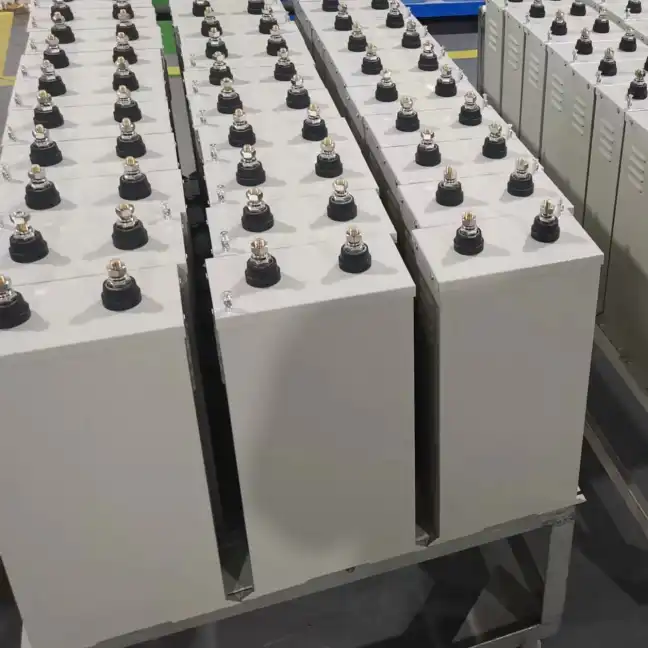
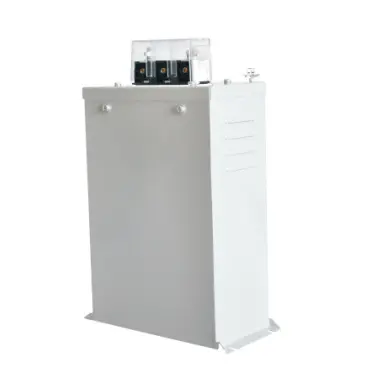
A self-healing capacitor is a metallized film component engineered to automatically repair localized dielectric faults during voltage transients, preventing the kind of catastrophic short circuits that plague conventional foil capacitors. When a weak spot in the polypropylene film breaks down, the thin metal electrode around the fault vaporizes within microseconds, creating a clean insulating barrier. The result is a component that keeps running rather than failing hard. For power factor correction banks, industrial motor drives, and renewable energy inverters, this fault-tolerance directly translates to fewer shutdowns and lower long-term operating costs.
Understanding Self-Healing Capacitor Technology
What "Self-Healing" Actually Means
In a metalized film capacitor, the electrode is a thin layer of metal that is formed in a vacuum. It is only 200 to 500 angstroms thick, which is about 1,000 times thinner than a human hair. When a voltage spike causes a dielectric breakdown at a very small flaw, the arc energy burns up that thin metal zone very quickly. The film around the fault stays intact, the fault is isolated, and the capacitor keeps working with only a small drop in capacitance.
How Construction Enables Recovery
A heavy-edge or gradient metallization profile is used by manufacturers to make sure that the current density is largest near the wound ends. This design focuses the energy for self-healing where it can be controlled best, and it keeps the center insulating layers safe from damage caused by heat. A pressure-sensitive disconnector adds an extra layer of safety: if enough electrode area is worn away over time during healing, the internal gas pressure will trip the disconnector before the case can break.
Factors That Govern Lifespan
Temperature and electricity stress have the most impact on service life. When used at temperatures 10 °C higher than the rated thermal class, the projected life is cut by about half. Too much continuous overvoltage sets off too many healing events, which wears away the metalized layer and lowers the effective capacitance. The BKMJ0.46-30-3 protects against both risks by using PU resin (soft resin) potting to spread heat evenly and a rated voltage range of 250 V–525 V to handle changes in the power grid without putting too much stress on the dielectric.
Comparing Self-Healing Capacitors with Traditional Capacitors
Construction and Failure Modes
In traditional foil capacitors, aluminum or tin foil contacts are kept separate by film or paper. The foil can't vaporize when there is a dielectric fault, so the fault turns into a permanent short circuit. A self-healing capacitor that heals itself turns the same event into a tiny hole. IEC 60252-1 says that designs with an S2/S3 safety rating and a mechanical overpressure disconnector must physically cut the circuit when they fail. Standard foil designs don't have this level of protection.
Performance in High-Voltage and Harmonic-Rich Environments
When voltage waveforms are pushed well above the 50/60 Hz fundamental in substations and industrial plants by harmonics from variable-frequency drives, foil capacitors lose their insulation more quickly. Metalized polypropylene (MKP) film capacitors can handle higher peak voltages and fix small problems caused by harmonic transients. Because of this, they are usually used in low-voltage power factor correction (PFC) banks that work on grids with more than 5% total harmonic distortion.
Procurement Selection Criteria
The sensible selection checklist is easy to use for buying managers who need to buy a lot of the BKMJ0.46-30-3. When there is a lot of B2B sourcing, these are the things that matter the most:
- Rated voltage margin: A 460 V-rated unit on a nominal 400 V grid provides headroom for harmonic voltage rise and supply fluctuations without accelerating electrode wear.
- Capacitance tolerance: Batch-to-batch deviation should stay within ±5% per IEC 61071; tighter lots reduce tuning effort in automatic PFC controllers.
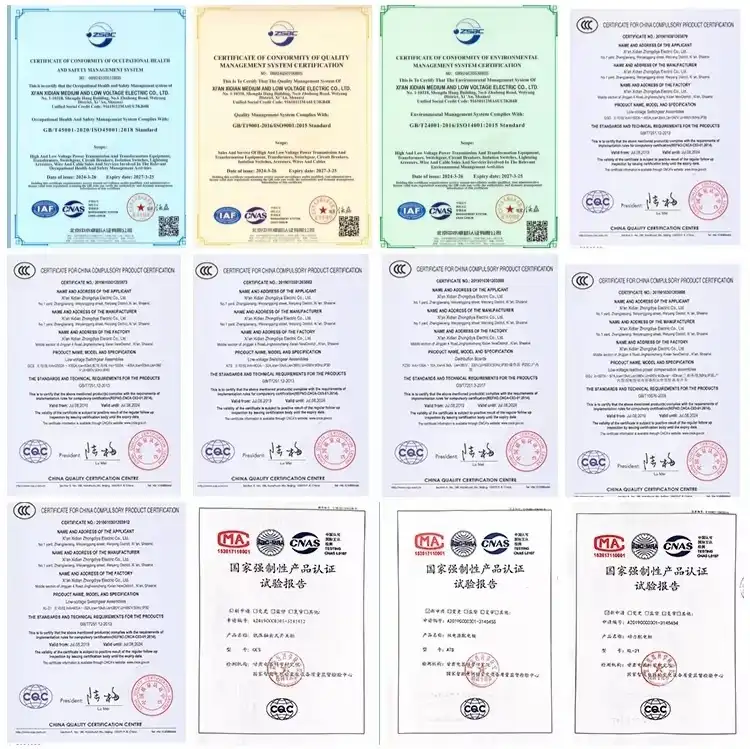
- Certification traceability: IEC, CCC, and ISO 9001 audit records confirm that testing—72-hour load cycling, impulse voltage checks, thermal shock—is repeatable across production batches.
When buyers use these criteria, they can avoid the most common problem with standard-model purchases: capacitance values that change from order to order, which makes it hard to meet reactive power compensation goals.
Core Benefits of Self-Healing Capacitors in Power Systems
Preventing Catastrophic Failure
Because each healing event turns a possible short circuit into a small open area, a well-designed metalized film capacitor fails by slowly losing its capacitance instead of exploding all at once. When observed capacitance drops by more than 5%, it's usually time to change the part, long before there is a safety risk. Because of this expected decline path, managers of utilities and industrial plants like these parts for installations that won't be seen or are far away.
Reduced Maintenance Burden
The BKMJ0.46-30-3 is designed to work for more than 100,000 hours in normal conditions and doesn't need any maintenance. Its small 242 mm cylindrical body comes with a grounding bolt and a wall-mount plate, so only one worker is needed to install it. Checks every three months are enough. These checks should include checking the wire torque, looking for case expansion, and making sure the discharge resistor is still working. On the other hand, oil-filled or foil-type units need to have their dielectric tested and their fluid replaced on a regular basis.
Electrical Efficiency Under Stress
If the dissipation factor is less than 0.2 W/kvar, resistive losses stay low even in systems with a lot of harmonic content. The BKMJ0.46-30-3 works with frequencies between 50 and 60 Hz, so it can be used on both Chinese and Southeast Asian grids without being downrated. PU resin potting and an IP54-rated enclosure keep out wetness and shaking, which are the two main external factors that cause dielectrics to age faster in tropical and marine settings.
Practical Applications and Procurement Considerations
Where These Capacitors Are Deployed
In many fields, self-healing capacitor self-healing film capacitors are used. They fix the missing power factor that CNC machines and motors on assembly lines cause in factories, which gets rid of utility penalty charges. They keep the bus voltage stable in substations by blocking harmonic distortion from green transformers. Their low noise level (less than 45 dB) and flame-resistant housing make them meet NFPA 70 standards in business buildings like shopping malls and hospitals, without the need for any extra noise reduction.
Technical Specifications for Procurement Evaluation
When purchasing engineers look at the BKMJ0.46-30-3, they should compare these important details to application datasheets:
- Rated voltage (Ue): 250 V–525 V standard, scalable to 2,000 V for special orders
- Reactive power: 30 kvar at 400 V; output scales with (V_actual / V_rated)²
- Frequency: 50/60 Hz dual-rated
- ESR and tan δ: below 0.2 W/kvar dissipation factor for low thermal loss
- Enclosure: compact cylindrical body, PU resin potted, grounding bolt included
By comparing these numbers to IEC 60831-1 (shunt power capacitors for AC systems), we can be sure that the unit we choose meets the panel design's reactive compensation goal.
Supplier Qualification in High-Volume Sourcing
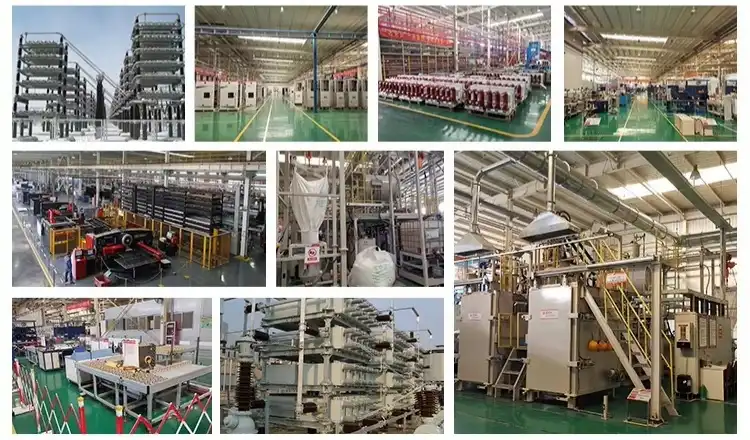
For buyers who buy 200 to 2,000 units a month, the reliability of the supplier is just as important as the price per unit. As part of the qualification process, you should ask for ISO 9001 audit certificates, look over batch test reports for capacitance and tan ε, and check wait times for repeat orders. Xi'an Xikai serves large orders within four weeks and guaranties each item for ten years. This means that buyers don't have to keep as much inventory on hand to cover guarantee replacements.
Future Trends in Metallized Film Capacitor Technology
Advanced Materials and Longer Service Life
Biaxially oriented polypropylene (BOPP) films with better dielectric strength above 650 V/μm are being looked at by research programs, along with zinc-aluminum alloy metallization that is better at resisting oxidation than pure zinc. The goal of these improvements is to increase service life standards beyond 150,000 hours while reducing size. This directly addresses the issue of limited room in modern compact switchgear.
Integration with Industry 4.0 Monitoring
Next-generation capacitor bank processors already have built-in temperature monitors and condition tracking that is linked to the internet of things (IoT). Instead of responding to reactive power alarms, operators can figure out when to replace parts months in advance by keeping track of real-time capacitance drift and temperature history. This data trail also backs up warranty claims and helps procurement managers find the root cause of problems without having to visit the site.
Sustainability and Regulatory Drivers
Pressure around the world to lower SF₆ and oil-based insulation is speeding up the use of dry, film-based reactive compensation in medium and low-voltage networks. Xi'an Xikai uses ISO 14001-certified production methods that cut down on solvent emissions during resin potting and are in line with policies that grade suppliers on how well they take care of the environment. In Europe, Southeast Asia, and the Middle East, the market for metalized film capacitors is growing because of these regulatory factors.
Conclusion
A self-healing capacitor is an important part of any major power factor correction bank because it turns unpredictable dielectric failures into slow degradation that can be handled. This safety is built into the BKMJ0.46-30-3, which is a small, maintenance-free cylindrical unit rated from 250 V to 525 V, potted in PU resin for long-lasting use in harsh environments, and approved by both IEC and CCC. It's a good long-term choice for procurement managers who need to balance price discipline with batch consistency because it fails in a predictable way, has stable capacitance across production lots, and comes with a clearly written 10-year warranty.
FAQ
1.Does the self-healing process reduce capacitance permanently?
Yes. Each healing event vaporizes a small electrode area, causing a gradual, measurable capacitance decline over the component's life. A measured drop exceeding 5% of the rated value is the standard signal that the unit has reached end-of-useful-life per IEC 60831-1.
2.Can the BKMJ0.46-30-3 handle a lightning surge?
Self-healing handles low-energy transients reliably. A massive surge that causes avalanche breakdown can overwhelm the mechanism, leading to a permanent fault. Surge arresters or MOV-based protection upstream of the capacitor bank are the correct mitigation, not reliance on the self-healing film alone.
3.What maintenance does a maintenance-free capacitor still need?
Quarterly visual inspections are advisable: check terminal torque, look for case bulging, verify discharge resistor continuity, and clear dust from ventilation paths. These steps take under five minutes per unit and prevent the two most common failure accelerators—loose connections and thermal buildup.
4.How does moisture affect the metallized electrode?
Moisture oxidizes zinc metallization, causing rapid electrode recession without any healing events. The PU resin potting and IP54 enclosure of the BKMJ0.46-30-3 block moisture ingress, making it suitable for the high-humidity environments common in Southeast Asian coastal installations.
Source Your Next Batch from Xi'an Xikai
The BKMJ0.46-30-3 self-healing capacitor is made by Xi'an Xikai Medium & Low Voltage Electric Co., Ltd., which is certified by ISO 9001 and ISO 14001 and makes sure that every production batch meets IEC and CCC standards. Orders of 200 to 2,000 units can be placed through our self-healing capacitor provider program, and they will be delivered in four weeks with consistent capacitance limits. To get datasheets, batch test results, or a quote, please contact our expert team directly: Email: suna@xaxd-electric.com, amber@xaxd-electric.com, or serina@xaxd-electric.com. For a full list of products, go to xaxd-electric.com.
References
1. IEC 60831-1: Shunt Power Capacitors of the Self-Healing Type for A.C. Systems — Part 1: General — Performance, Testing and Rating — Safety Requirements, International Electrotechnical Commission, 2014.
2. IEC 60252-1: AC Motor Capacitors — Part 1: General — Performance, Testing and Rating — Safety Requirements — Guide for Installation and Operation, International Electrotechnical Commission, 2013.
3. IEC 61071: Capacitors for Power Electronics, International Electrotechnical Commission, 2007.
4. Makdessi, M., Sari, A., & Venet, P. "Metallized Polymer Film Capacitors Ageing Law Based on Capacitance Loss," Microelectronics Reliability, Elsevier, 2014.
5. Wang, H., & Blaabjerg, F. "Reliability of Capacitors for DC-Link Applications in Power Electronic Converters — An Overview," IEEE Transactions on Industry Applications, IEEE, 2014.
6. Schneider Electric. Power Factor Correction and Harmonic Filtering in Electrical Plants, Technical Guide No. 8, Schneider Electric Industries SAS, 2019.