
Self-healing Capacitor-Cylindrical: How it Recover from Dielectric Breakdown
2026-11-13 17:20:05
A self-healing capacitor-cylindrical recovers from dielectric breakdown by isolating the fault instead of failing outright. When a weak spot in the polypropylene film breaks down, the fault current heats and vaporizes the thin metal coating around that point. This creates a small insulating area within milliseconds, and the rest of the winding keeps working. The capacitor does not return to its original condition, because a tiny amount of active area disappears each time. We at Xi'an Xikai build the 400V BKMJ0.46-30-3 on this principle, so this guide explains the mechanism, the testing, and the buying checks that matter.
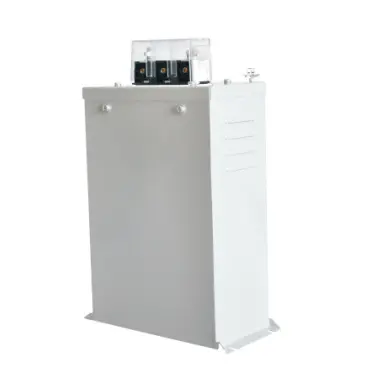
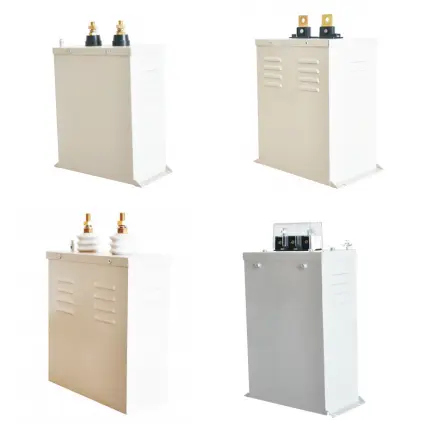
Self-Healing Capacitor-Cylindrical Construction and Core Components
Metallized Film and Winding Quality
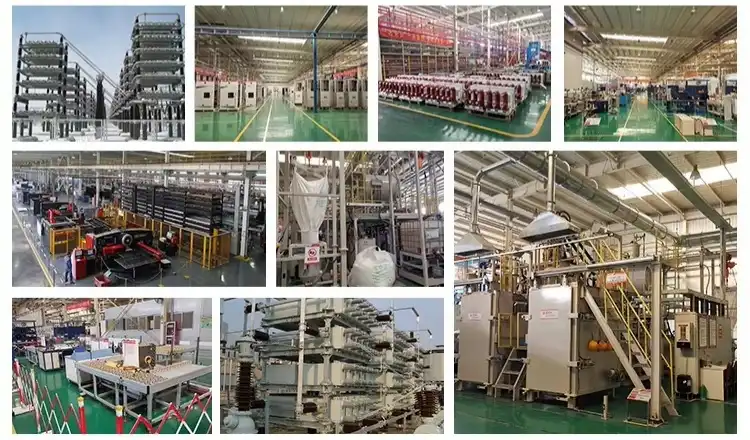
A very thin metal layer sits on top of a polypropylene film that works as the insulator inside a self-healing capacitor-cylindrical. This layer is the electrode. It's rolled up very tight. Uneven tension creates air gaps and weak spots, so the quality of the winding determines how much heat is made, how stable the device is, and how much capacitance it can handle. Sometimes, batch-to-batch capacitance drift starts at the wrapping machine for panel makers who buy a lot of units every month. Automatic tension control in our plant keeps the film layers the same. In other words, the capacitance doesn't change from one lot to the next. A lot of turning also helps cool down local hot spots.
Terminals, Housing, and PU Resin Potting
The wound element is linked to the terminals by internal leads and end spraying. Then it goes into a cylinder-shaped cabinet. A soft resin known as PU resin is used to fill the housing and keep the element from moving when the BKMJ0.46-30-3 is made. Because the small, light body has a grounding bolt built in, it is easy to wire and place, even in cabinets that are already full. The shape of the cylinder also helps the air inside the body spread out evenly. The voltage sign is important, but you should also pay attention to the seals, creepage distance, and terminal temperature. After years of use, these things change how the unit works.
The Pressure-Sensitive Disconnector
Small faults in the area are fixed by self-healing. It can't stop a capacitor that isn't working right and letting gas out of the case. In this case, the 400V self-healing capacitor-cylindrical BKMJ0.46-30-3 has a pressure-sensitive disconnector built in. The unit doesn't break because when the pressure inside goes up, the lid expands and tears the joint inside. This defense works along with self-healing, not instead of it. To make sure it works, manufacturers intentionally short out sample parts and watch how the lid and tear-off fuse react. This is the kind of answer you should ask for because it shows how the unit acts when it's about to die.
Self-Healing Capacitor-Cylindrical Working Principle and Performance Testing
The Five Stages of Recovery
Recovery follows five steps to getting better. The film saves energy and then gives it back with each AC turn. Then, a weakness, a brief spot that is too hot, or both can cause local breakdown. There is a rush of power there. The heat around it turns the metal covering into a gas. When the vaporized zone turns into a shielding gap, the fault path stops. The self-healing capacitor-cylindrical keeps working while the whole thing takes place in microseconds to milliseconds. The same thing could cause a short circuit that won't go away if this trait wasn't there. This type has its own group in IEC 60831-1 for AC systems up to 1000 V.
Limits of Self-Healing
If someone buys something that can heal itself, they should know what the limits are. A small piece of metal is lost with each event, so capacitance slowly decreases over time. It can get too hot inside if there is overvoltage that won't go away, high temperatures, or a lot of harmonic current. There is something that the disconnector has to do when pressure gets up. Thought of a self-healing capacitor-cylindrical as a part that can handle small issues but not abuse. It is better to match the voltage, temperature, and harmonic conditions to the rating than to wait for the film to fix itself. This also keeps the cost of replacing the film low.
Tests That Prove Performance
Not the claims made in ads that show recovery, but test data itself. Professional buyers look at the overpressure damage test, the terminal-to-terminal withstand voltage at 2.15 times the maximum voltage, the terminal-to-case withstand voltage (usually 3000 V AC), and the dissipation factor (tan δ). The tan δ will go up if the electrodes don't touch well or are wet. The BKMJ0.46-30-3 is also put through 72 hours of load cycles, impulse voltage checks, and temperature shock tests. Talk to any self-healing capacitor-cylindrical provider and ask for model-specific information and the ability to track back to the original batch. This lets you see how different lots stack up.
Voltage Rating, kvar, and Application Matching for Self-Healing Capacitor-Cylindrical Units
Reading the BKMJ0.46-30-3 Code
The model number says it has three stages, a rating of 0.46 kV, and an output of 30 kvar. These units work at 50/60 Hz and have voltage ranges from 250 V to 525 V. They also have higher voltages available up to 2000 V. This self-healing capacitor-cylindrical model is often chosen by people who need to buy things for 400 V networks because it has an extra 0.46 kV rating over the nominal voltage. Different voltages and frequencies will give you different kvar values when you use the same unit with different voltages or frequencies. People in the U.S. with 480 V systems should ask us what grade works with 250 V to 525 V.
Matching Ratings to System Conditions
Choose a number based on how the system works, not just the power that should be there. Intense switching, voltage rise at low load, high air temperature, and harmonics all put a lot of stress on the film. It is possible for harmonic current to cause a standard unit to overheat in banks close to variable-frequency drives. Most of the time, higher voltage levels or detuned reactors are used to fix this. IEEE Std 1036 tells us how to use shunt capacitors in these types of circuits. It usually costs less to do a quick harmonic study before you buy than to replace capacitors that break down later, and you can use what you learn to talk to the seller about.
Where the Capacitor Fits
A lot of people use autonomous power factor correction panels, set adjustments at motor terminals, HVAC equipment, pumps, compressors, and green energy transformers. This is something that is talked about in the U.S. motor system sourcebook of Energy as a way to lower reactive current in power plants with lots of motors. It is possible to use the small and light self-healing capacitor-cylindrical in thick panels because it is not too heavy. Because of how it's made, it doesn't need to be repaired very often either. The 242 mm height also makes it possible to fit more capacitors in banks that are already there.
Self-Healing Capacitor-Cylindrical vs. Alternative Capacitor Types
Versus Electrolytic Capacitors
They are useful in DC-link circuits since they can hold a lot of power in a small area and are polarized. For steady AC power, they don't work well. Metalized polypropylene makes up a self-healing capacitor-cylindrical. It doesn't have any polarity and can run on 50 or 60 Hz AC voltage with little loss. Names don't matter; duty cycle, frequency, and temperature are what matter. This is because the two parts do different things. When making a power factor panel, metalized film is often used, and IEC 60831-1 goes into great detail about it.
Versus Non-Self-Healing Film Capacitors
A "film capacitor" can be a lot of different things. Traditional foil designs have metal foil electrodes that are separate from each other. Because the thin coating can't dry out, if one of them breaks, it could cause a short that won't go away. This design gives up some of its ability to handle current in exchange for being able to recover from faults. For low-voltage reactive power adjustment, it is important to get that fixed because a big wire can always get broken after years of use. When you look at prices, make sure the item is a real metalized, self-healing type. Also, read the description to find out what the disc's insulator is.
Fault Behavior and Physical Format
You can tell these types apart by how they act when they make a mistake. A self-healing capacitor-cylindrical keeps problems in one area separate and has a disconnector that it can use if pressure builds up. Because it is shaped like a cylinder, the pressure is spread out evenly, and the pieces can be placed vertically while air flows between them. With resin potting, there is no chance of leaks that come with patterns that are filled with liquid. In addition to voltage and capacitance, you should also look at the drop-in substitute's size, weight, terminals, mounting method, and mounting method. It has to be this way so that it fits the old bank. It might cost a lot to fix a panel that is the wrong height or doesn't have the right layout for the interface.
Self-Healing Capacitor-Cylindrical Selection and Buying Guide for B2B Buyers
Define the Specification First
It saves time to have a clear request. For each item, write down its voltage, frequency, capacitance (or kvar), type of link, use, air temperature, harmonic conditions, switching method, and where it will be put in. Tell us the model number (BKMJ0.46-30-3) of the items you want to order, as well as the type of terminals, their sizes, how they should be packed, and where they should be sent. But price alone doesn't show how different the windings are or how well they were tested. Standard types make it easy to compare prices. All providers can give the same price for the self-healing capacitor-cylindrical because the specs are written down. It's fair to compare these things. Also, I think you should say what type of inspections you plan to do when you get there.
Check Batch Consistency and Supply
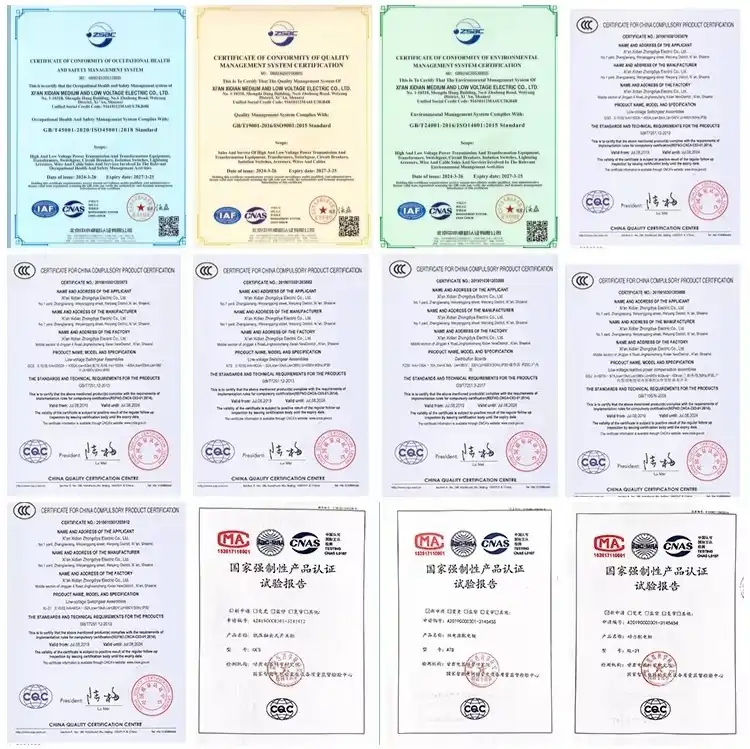
When units aren't matched, it's harder to keep the bank balance, which can cost more than a small price difference in capacitance. Ask each seller how many products they can make, if they have factory test results, if they are certified, and if you can track their products. It is made in a way that meets the conditions of ISO 9001, IEC, and CCC. Once a month, make sure you know how long the waits will be and how to plan for return orders. If your job is in the US, ask your tester if you need a local listing. A direct manufacturer can answer questions about tests and winding right where the products are made. On the other hand, a local distributor may be able to fill small orders more quickly.
Samples, Customization, and Pilot Orders
To avoid making a big mistake, ask for samples and drawings first, and then test a small batch against the agreed-upon standards for acceptance. Capacitance and enclosure can be changed, and there are versions for places with a lot of dust or high humidity. The total value includes the unit cost, the guaranty, the freight, the testing, the minimum order quantity, and the cost of replacement. Xi'an Xikai can meet these needs with model data, and our goods are used in State Grid systems, rail transportation, mining, and projects that use green energy. Compare all of the deals in the same way so that your final choice is based on facts.
Installation, Operation, and Failure Prevention for Self-Healing Capacitor-Cylindrical Banks
Harmonics, Resonance, and Switching
What can't self-heal? It can't fix problems like too much electricity, too much heat, or a harmonic overload that won't go away. Variable-frequency drives, rectifiers, UPS systems, welding tools, and inverters are some of the things that add harmonic currents. It is possible for a bank of capacitors to vibrate with the system's resonance. This can cause the current in the capacitors to rise. The frequency moves away from harmonic frequencies when reactors are detuned. Managers should make sure there is enough time between steps for the current to drain when a self-healing capacitor-cylindrical step is switched on and off. When switching doesn't work well together, it can cause capacitors to get stressed out early. This test can help you figure out which case is best for your site.
Mounting, Ventilation, and Discharge
Give each unit some room around it so air can flow, then tighten the terminals to the right torque and connect the grounding bolt. Make sure the units can't move and keep them away from water and heat sources. A PU resin pot helps with shaking, but you still need to think about the gaps. Over time, dust or wetness can make the insulation less effective. One minute after being disconnected, Article 460 of NFPA 70 says that low-voltage capacitors must have a residue voltage of 50 V or less. Check to see if the discharge devices in your plan follow the rules in your area.
Monitoring for Early Warning
Checks often find slow wear and tear. Once in a while, check the surface temperature, voltage balance across phases, capacitance, and current. Also, make sure that none of the housings are bulging. Get a new disconnector right away if the lid is bulging. This means that the old one has been used. If the fuses keep blowing, it's likely that there is a problem further up the line. When it's working right, a self-healing capacitor-cylindrical doesn't need any attention, but it's better for the rest of the bank if it's checked out regularly. Write down the results so you can see trends right away.
Conclusion
A self-healing capacitor-cylindrical can fix itself after the dielectric breaks down when fault current burns off the metal covering around a weak spot, leaving a space that is not conducting electricity. This means the winding can still work, but it will have a little less capacitance. How well it deals problems depends on how it was put together. It has a pressure-sensitive disconnector, resin potting, metalized polypropylene film, and careful winding. It works as it should, as shown by tests like the overpressure test, the withstand voltage test, and the dissipation factor. For a standard model, the 400 V BKMJ0.46-30-3 shows how these points work. The film doesn't get stressed because the voltage and kvar were chosen correctly, there was a harmonic review, and sound was installed. AC power factor can be fixed better with metalized film than with electrolytic or non-self-healing film. People can learn more about quality than just price when they compare written specs, test results, and batch records.
FAQ
1. What is a self-healing capacitor-cylindrical?
This is an AC capacitor with a metalized polypropylene film inside a case that looks like a cylinder. When there is a local breakdown, the thin metal layer around the crack melts away. This stops the damage and keeps the unit working.
2. Does self-healing restore the film completely?
No, the capacitance slowly goes down as each event takes away a small piece of metal. Overvoltage that lasts for a long time, heavy harmonics, and high temperatures are some of the small problems that a self-healing capacitor-cylindrical can handle. However, these can shorten its life and set off the pressure disconnector.
3. Which voltage suits a 400 V system?
The voltage, range, temperature, and harmonic level of the system can all help you make your choice. The BKMJ0.46-30-3 can handle 0.46 kV at 30 kvar in other systems, and it is part of a series that goes from 250 V to 525 V.
4. What details do you need for a quotation?
Send info about voltage, kvar or capacitance, frequency, use, size, style of terminal, quantity, where it's going, certifications, and anything else that needs to be changed. Once we know what kind it is, we can be sure and charge the same amount for each batch.
Request a Quote for Self-Healing Capacitor-Cylindrical Units from Xi'an Xikai
Xi'an Xikai, a self-healing capacitor-cylindrical manufacturer with more than 20 years of experience and more than 15 patents, welcomes inquiries from distributors and panel builders. Send your voltage, kvar, quantity, destination, certification needs, and monthly schedule to serina@xaxd-electric.com, amber@xaxd-electric.com, or luna@xaxd-electric.com. We will confirm the BKMJ0.46-30-3 or another suitable model, share drawings or samples, and prepare a project quote. Visit xaxd-electric.com for details.
References
1. IEC 60831-1: Shunt Power Capacitors of the Self-Healing Type for AC Systems Having a Rated Voltage up to and Including 1000 V, 2014
2. IEEE Std 18: IEEE Standard for Shunt Power Capacitors, 2012
3. IEEE Std 1036: IEEE Guide for the Application of Shunt Power Capacitors, 2010
4. NFPA 70: National Electrical Code, Article 460, 2023
5. Improving Motor and Drive System Performance: A Sourcebook for Industry, U.S. Department of Energy, 2014
6. Capacitors, IEEE Transactions on Plasma Science, 1998