
The Role of Dry-type Series Reactors in Modern Power Systems
2026-10-21 16:54:38
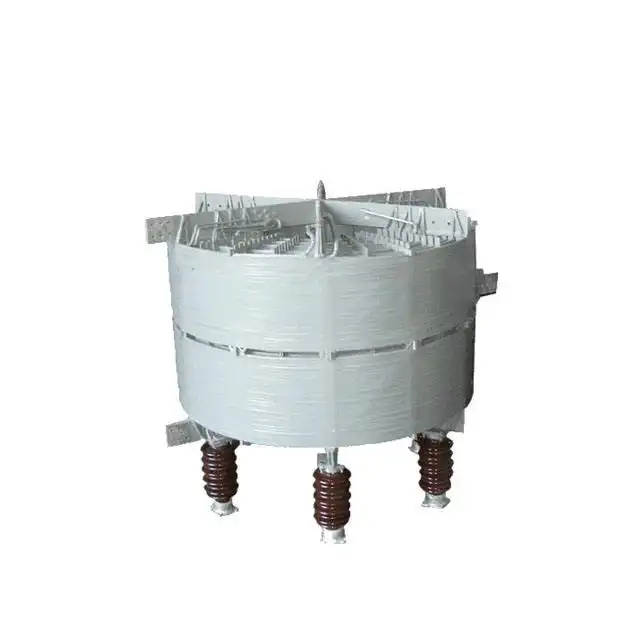
Dry-type series reactors are inductive components connected in series with capacitor banks in power distribution systems. Unlike oil-immersed units, they use solid insulation—typically epoxy resin or fiberglass—to handle dielectric stress and thermal demands without any liquid coolant. In practice, a dry-type series reactor suppresses inrush currents during capacitor switching, detunes the circuit away from resonance frequencies (commonly the 5th and 7th harmonics), and reduces total harmonic distortion (THD). These functions protect downstream equipment, improve power factor, and keep grid voltage stable across industrial, commercial, and utility installations.
Understanding Dry-type Series Reactors: Design, Operation, and Benefits
What Makes Them Different from Oil-Immersed Reactors
Reactors that are submerged in oil pose a big fire and environmental risk, so they need to be checked for dissolved gasses and oil samples on a regular basis. All of that is done away with a dry-type series reactor. Since there is no liquid insulation to leak or break down, maintenance times are greatly reduced, and installation inside closed switchgear rooms is fully in line with fire codes like NFPA 70. This choice of design is common in substations in cities, hospitals, and other places where touching oil is not allowed.
How the Iron-Core Design Works
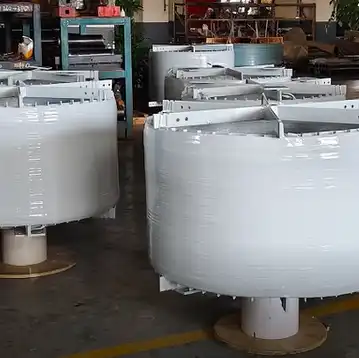
A split air-gap structure is used in the CKSC Dry-type Iron Core Series Reactor from Xi'an Xikai. Because the iron core divides the magnetic flux into parts that are spread out equally, eddy current losses are cut down, and the temperature rise stays below 95°C at full load. The coils are made by vacuum-casting flame-resistant epoxy resin and adding glass fiber to make them stronger. This makes them very resistant to thermal shock and large current impulses. Partially release levels stay below 5 pC, which is a good sign of how well the insulation will hold up over time.
Key Electrical Benefits in Real Applications
When a reactor is set to a certain resonant frequency, like 4.7% or 6% reactance rate, it blocks 5th, 7th, 11th, or 13th order harmonic currents before they hit sensitive equipment. IEEE 519 says that industrial facilities must keep THD within certain limits. It's easy to do this with an iron-core reactor of the right size connected in series with capacitor banks. The CKSC model can handle surge currents up to 100 times its rated capacity and voltage ratings up to 110 kV. This makes it suitable for harsh settings such as CNC cutting floors and arc furnace facilities.
Comparing Dry-type Series Reactors: Making the Right Choice for Your Project
Series vs. Shunt: Understanding the Functional Split
When you put a series reactor in line with the load or capacitor bank, it filters harmonics and limits the inrush current. On the other hand, a shunt reactor is put between a live conductor and ground to soak up extra reactive power on transmission lines that aren't very busy. A dry-type series reactor is the right choice for power factor adjustment cabinets and filter cabinets, which are the main uses for capacitor banks. It is easy to make the costly mistake of mixing these two types when designing panels.
Evaluating Suppliers and Quality Benchmarks
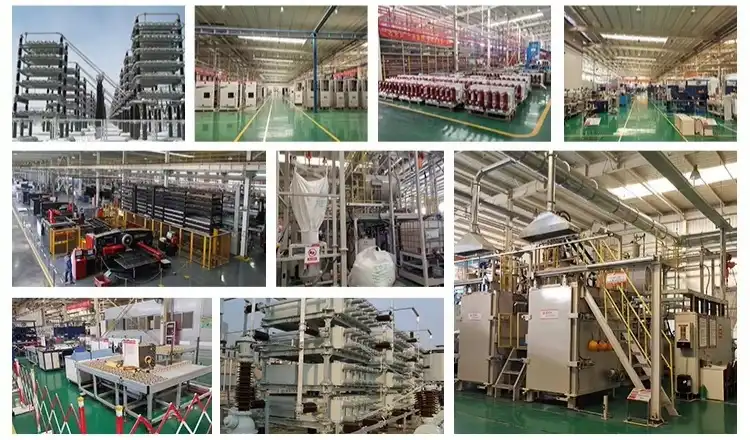
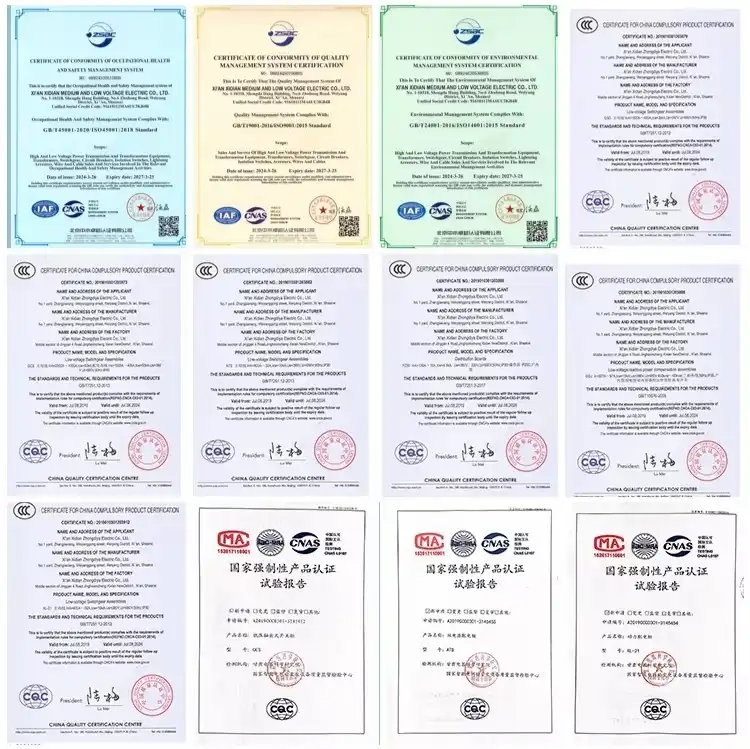
In the reactor market, well-known brands like ABB, Siemens, and Schneider Electric set quality standards, especially when it comes to insulation class and temperature-rise tests. The CKSC line from Xi'an Xikai meets or goes beyond the rules set by IEC 60076-6 for power system reactors. Each unit goes through a 12-step quality process that includes measuring the inductance (within a ±3% error range), testing it with applied voltage, testing it with lightning impulse, and testing it with a temperature-rise type test. You have to do these checks, because they are the bare minimum for a unit that will be kept in a filter box for 10 to 20 years.
Purchasing Factors That Drive Real ROI
Total cost of ownership is affected by three things: the accuracy of the inductance, the amount of noise, and the temperature design. Most electrical engineers need an inductance range of less than ±3% for stable harmonic filter setting, and the CKSC reactor meets that standard. The split air-gap design keeps noise levels below 75 dB at full load, which is a good level for installations in cities. Core losses are 30% lower than in traditional designs, so the energy gains over a 10-year service life are clear. Before choosing a supplier, procurement teams should ask for test reports that cover all three factors.
Maintenance and Troubleshooting of Dry-type Series Reactors
Routine Inspection Practices
Oil-filled reactors need a lot more upkeep work than dry-type reactors. Visual checks should be done every three months to see if dust has gathered on the coil surfaces, if there are any signs of darkening from localized heating, and if the rumbling noise has changed in any way that can be heard. The CKSC coil is vacuum-cast with epoxy glue that doesn't react with water, dust, or chemicals, so dry compressed air is usually enough to clean the surface. Thermal imaging should be done once a year while the system is running to find hot spots before they become problems.
Common Issues and Diagnostic Steps
The most common problem in the field with iron-core reactors is that they make too much noise. This is usually a sign of weak laminations or poor glue bonding in the air-gap segments. If the noise level gets louder between inspections, you should check the inductance value. If it changes by more than ±3% from the nameplate value, it means that the core is moving, which can happen during transport if the unit is not properly supported. Xi'an Xikai directly addresses this issue by using stronger packing and internal core-bracing devices that keep the iron core from moving while it's being shipped.
Warranty Terms and After-Sales Support
A procurement risk is choosing a dry-type series reactor supplier without checking their ability to help with problems after the sale. Xi'an Xikai provides expert support 24 hours a day, seven days a week, on-site commissioning help, and a clear guarantee program. The company has more than 30 patents in noise reduction and thermal management and more than 500 installations in 20 countries. Its service network covers the Chinese market, South Asia, and the Middle East, which are all places where many panel makers and system installers do business.
Procurement Guide: Buying Dry-type Series Reactors with Confidence
Sourcing Channels and Lead Times
When someone buys something for the first time, they usually place a sample order of 1 to 5 units before committing to a production run of 20 to 200 units. Xi'an Xikai can handle small-batch custom orders and doesn't have a minimum order quantity (MOQ) that makes them impossible to meet. For standard configurations, first-sample delivery is usually completed within 4 to 6 weeks. The engineering team responds within 5 business days with a technical answer for voltage ratings or frequency specifications that are not standard. These are common in South Asian and Middle Eastern markets. When a panel job is running behind plan, this responsiveness is important.
Customization Options Worth Requesting
The CKSC series can be customized to have voltage ratings of up to 110 kV, cooling ways of either natural air or forced air, small sizes for cabinet plans with limited room, and high-temperature versions that can handle desert temperatures. You can also choose how the terminal connections are set up to match the wiring layout of the cabinet. This cuts down on the time needed for assembly on the production floor. These choices are especially useful for system designers who are making reactive power compensation screens for power plants or utility substations.
Negotiation and Logistics Considerations
When buying more than 50 units, talk about ways to shorten the wait time and the specifics of the packaging right away. When shipping iron-core reactors, it's important to pay close attention to the crating because the cores can move during ocean or road freight. Ask providers for specific test results or guidelines for shipping vibration that they follow. To meet this need, Xi'an Xikai uses export-grade crating and strengthened interior bracing. This keeps the accuracy of the inductance of every unit that comes on-site.
Future Trends in Dry-type Series Reactor Technology
Compact Designs and Thermal Management
As long as people want switchgear that takes up little room, reactor makers will keep trying to make smaller sizes without lowering performance. Engineers can make parts smaller while keeping their Class F (155°C) or Class H (180°C) insulation ratings thanks to improvements in grain-oriented silicon steel and high-density epoxy formulations. Panel makers who make small filter cabinets will be able to use these better materials to make the layouts of those cabinets more flexible.
Digital Monitoring Integration
Several companies are now putting temperature sensors and monitors for partial discharge into reactor units. These send real-time data to SCADA platforms or building management systems. With this method, maintenance is done based on conditions instead of a calendar, which cuts down on downtime that isn't needed. This data integration makes it much easier for grid operators to see what assets they are managing and much faster to respond to faults.
Renewable Energy Grid Compatibility
As the amount of power generated by solar and wind grows, power devices, especially inverters, add more switching harmonics to distribution networks. At the grid connection point, an iron-core series reactor that is properly described keeps THD within the limits set by IEEE 519 and IEC 61000-3-12. This is required by law for most utility interconnection agreements. When buying reactors for renewable energy projects, procurement teams should check the harmonic filtering performance over a wide frequency range, not just at the 5th and 7th orders.
Conclusion
Modern power systems are safe, efficient, and compliant thanks in large part to dry-type series reactors. With the right iron-core reactor, you can protect expensive equipment and make every part in a filter cabinet last longer by reducing capacitor inrush currents and filtering 5th and 7th order harmonics. The CKSC series from Xi'an Xikai meets the standards of IEC 60076-6, keeps its inductance within ±3%, and comes with packaging that keeps the core from moving during transport. The CKSC line is a tried-and-true choice for panel makers and system designers looking for reactors that strike a good mix between price and accuracy.
FAQ
1.What is the difference between a dry-type series reactor and a shunt reactor?
A capacitor bank is linked to a series reactor to limit the amount of inrush current and screen out noise. To get rid of extra reactive power on long transmission lines, a shunt reactor is put between a phase wire and ground. In a filter box arrangement, they can't be switched out because they do different things.
2.What inductance accuracy should I require from a supplier?
The inductance range should be within ±3% of the nameplate number for the harmonic filter to work reliably. This is the level required by IEC 60076-6, and it's also the level that Xi'an Xikai guaranties for every CKSC unit through regular factory testing.
3.Can dry-type reactors operate in high-humidity or dusty environments?
Yes. The CKSC series is made of epoxy-resin that is vacuum-cast and doesn't react with water, dust, or chemicals. This means it can be used in coastal substations, chemical plants, and outdoor cabinet installations in tropical climates.
4.How do I know when a reactor needs replacement?
Keep an eye out for inductance drift greater than ±3%, an increase in working temperature that lasts longer than the stated rise, a rise in vibration noise that you can hear, or partial discharge readings higher than 10 pC. If you see any of these signs, you should have a professional look at it and probably replace it.
5.What is the minimum order quantity for custom configurations?
Small custom orders are welcome at Xi'an Xikai, and there is no minimum order size that is too low. This lets panel makers make a sample and test it before committing to a full production run.
Partner with Xi'an Xikai for Your Next Reactor Order
The CKSC dry-type series reactor supply team at Xi'an Xikai is ready to help you with your next project for a capacitor cabinet or filter panel. We meet your technical needs from the first sample to the full production run with custom voltage ratings, the ability to work with small batches, and confirmed IEC compliance. Get in touch with us directly to get detailed datasheets or a quote that is tailored to your project:
- Website: xaxd-electric.com
- Email: serina@xaxd-electric.com | amber@xaxd-electric.com | luna@xaxd-electric.com
References
1. IEEE Standards Association. IEEE Std 519-2022: Recommended Practice and Requirements for Harmonic Control in Electric Power Systems. IEEE, 2022.
2. International Electrotechnical Commission. IEC 60076-6: Power Transformers – Part 6: Reactors. IEC, 2007.
3. Hingorani, N. G., & Gyugyi, L. Understanding FACTS: Concepts and Technology of Flexible AC Transmission Systems. IEEE Press, 2000.
4. Wakileh, G. J. Power Systems Harmonics: Fundamentals, Analysis and Filter Design. Springer, 2001.
5. Das, J. C. Power System Harmonics and Passive Filter Designs. Wiley-IEEE Press, 2015.
6. Mohan, N., Undeland, T. M., & Robbins, W. P. Power Electronics: Converters, Applications, and Design. John Wiley & Sons, 2003.