What Are Indoor Current Transformers? A Complete Guide
2026-06-15 15:40:50
Indoor current transformers are important parts of electrical distribution systems because they change high primary currents into lower secondary currents that can be used by meters and safety switches. Technicians can check the flow of electricity without touching high-voltage wires directly because these measuring tools use electromagnetic induction. Many places, from factories to hospitals, depend on these transformers to keep operations visible and keep workers safe. Knowing how they work, what they need to be installed, and how to choose them helps buying teams make smart choices that have a direct effect on system stability and energy management.
Understanding Indoor Current Transformers
Core Operating Principles and Components
An indoor current transformer has three main parts: primary conductor carrying full load current, magnetic core channeling flux, and secondary windings delivering reduced current to instruments. The primary current creates a magnetic field inducing proportional secondary current based on turns ratio. Wound-core designs offer revenue-grade accuracy for metering. Bar-type designs simplify installation via pass-through holes. Split-core versions clamp around existing wires without disconnection, ideal for retrofits.
Accuracy Classifications and Performance Standards
IEC 61869 defines accuracy classes specifying ratio error limits under various load conditions. Class 0.2 transformers enable precise energy billing. Protection-grade units with 5P or 10P ratings ensure accurate fault detection. Operating frequency compatibility—60Hz for US systems, 50Hz for international projects—must be considered. Dual-rated indoor current transformer units handle both frequencies. Burden capacity must match connected instruments for measurement accuracy. Proper classification selection prevents billing errors or protection misoperations.
Application-Specific Design Variations
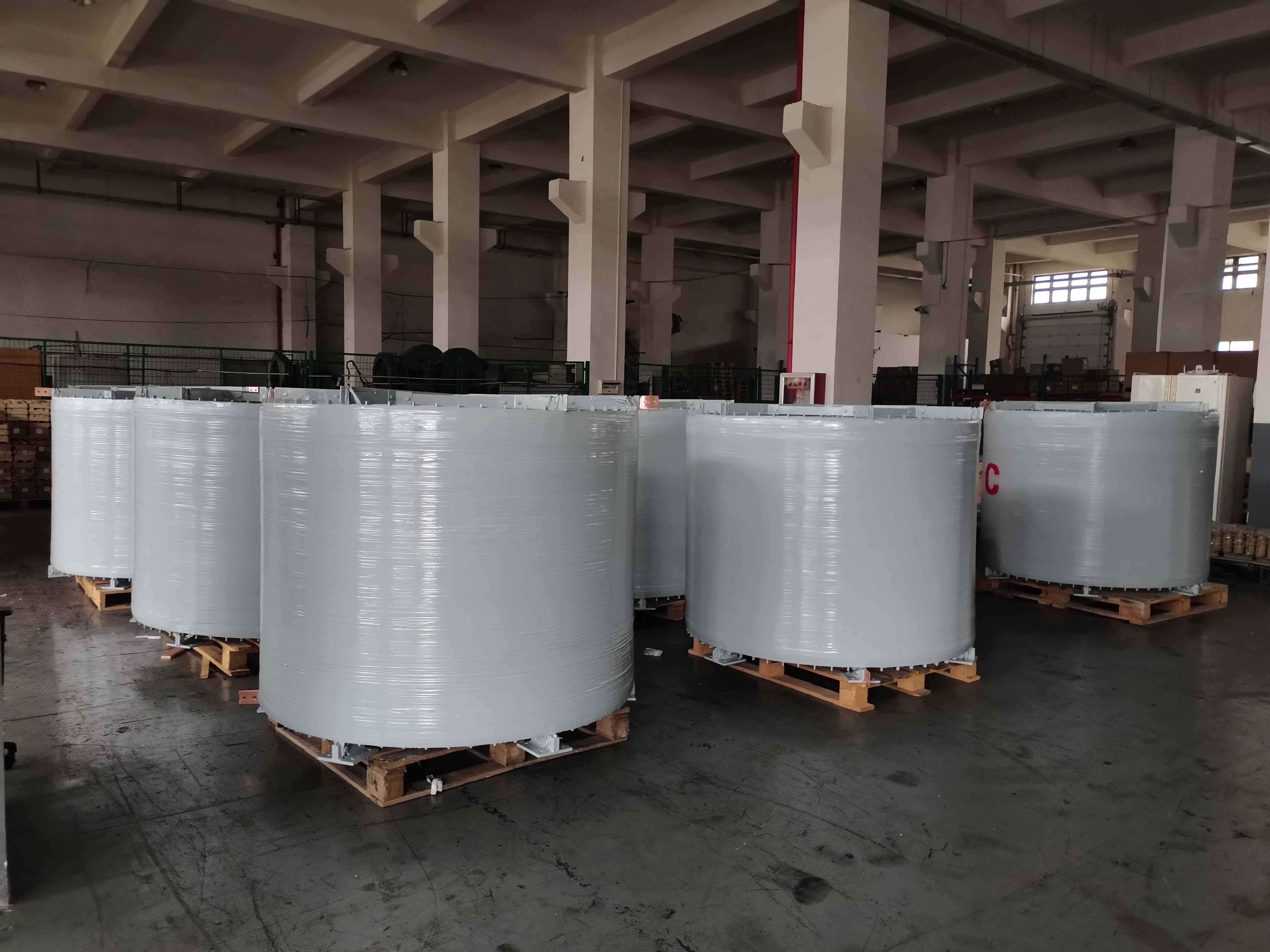
Single-phase indoor current transformer units serve each conductor in three-wire distribution systems. Three-phase versions monitor balanced loads in unified construction. Facilities with heavy motor loads benefit from three-phase monitoring detecting imbalances indicating mechanical or electrical issues. Data centers using redundant power designs require individual phase monitoring. Epoxy resin casting fully encapsulates internal components in 35kV units, providing moisture protection and eliminating exposed live wires, reducing arc flash risk during maintenance.
Installation and Maintenance of Indoor Current Transformers
Pre-Installation Planning and Safety Requirements
Engineering teams must verify voltage, frequency, and current requirements before indoor current transformer purchase. 35kV types operate on 50/60Hz systems with primary currents from 20A to 2500A. Secondary outputs are 1A or 5A—5A preferred for long wire runs minimizing voltage drop. GB 20840.2-2014 and IEC 61869 compliance ensures international code acceptance. Compact designs optimized for limited switchgear space reduce panel footprints while maintaining phase spacing, cutting installation time by 30%.
Step-by-Step Installation Procedures
Technicians must ensure primary conductors pass through core holes without sharp bends stressing wires. Secondary connections require secure terminal attachment verifying polarity marks for correct phase relationships. Reverse polarity causes meter errors or relay misoperations. Proper torque prevents loose connections causing heating. Lockout/tagout procedures prevent accidental energization. Grounding one secondary terminal prevents dangerous voltage buildup if primary insulation fails. Never operate an indoor current transformer with open secondary circuit—voltage spikes can injure personnel.
Routine Maintenance Protocols and Troubleshooting
Visual inspections identify physical damage, burning, or moisture ingress indicating seal failure. Thermal imaging detects temperature rises suggesting loose connections or internal issues before catastrophic failure. Ratio studies compare primary and secondary currents under controlled conditions. Insulation resistance tests using megohm meters verify moisture hasn't altered properties. Partial discharge testing below 10pC finds incipient insulation breakdown. Common failures include ratio drift from aged cores and insulation decay from thermal cycles. Predictive maintenance enables scheduled replacements.
Indoor vs. Outdoor Current Transformers: A Detailed Comparison
Environmental Protection and Structural Differences
The natural stresses that indoor current transformers have to deal with over their working life depend on where they are located. When installed indoors, the conditions are controlled, with little change in temperature, little contact to moisture, and safety from UV rays. These safe conditions make it possible to build things that are lighter and have simpler casings, which lowers the cost of materials. Outdoor units need housings that are resistant to water and UV light, as well as better sealing against rain and snow. The protection grade for the enclosure—usually IP54 or higher for outdoor use—adds weight and cost but is necessary for places that are open to the elements.
The choice of materials is based on what the surroundings needs. Standard epoxy formulas are used in indoor transformers to make them strong and good at conducting electricity. Additives used in outdoor designs protect against UV damage and heat cycling over a wider temperature range. Terminal tanks on outdoor units have drainage holes and breathing systems that keep condensation from building up. When compared to indoor counterparts, these design improvements make production more difficult and raise the cost per unit.
Performance Characteristics and Maintenance Requirements
Indoor and outdoor indoor current transformer units offer different accuracy classes. Class 0.2 precision suits indoor revenue metering. Class 0.5 precision is common for outdoor units due to environmental challenges. Indoor transformers maintain tighter temperature coefficients operating in smaller temperature ranges. Indoor units typically require annual inspection; outdoor units need semi-annual checks for weather-related wear. Indoor devices collect dust requiring occasional wiping; outdoor units accumulate pollutants needing solvent cleaning to prevent insulator tracking.
Cost Analysis and Selection Criteria
Indoor current transformer units cost 20–30% less than outdoor counterparts initially due to simpler construction and standard materials. Indoor units require less installation labor being smaller and easier to handle. Total cost of ownership must consider application fit—installing an indoor transformer outdoors causes premature failure costing far more than initial savings. Site conditions determine selection: covered switchgear rooms require indoor-rated equipment; transmission substations need weather-resistant units. Hybrid facilities need proper generator value matching for each installation location.
Market Insights and Procurement Guide for Indoor Current Transformers
Leading Manufacturers and Product Differentiation
On the global market, there are well-known companies that specialize in different things and have strengths in certain regions. Siemens has a wide range of products, with a focus on European design standards and the ability to integrate digital technologies. ABB has options for both distribution and transmission levels, but their modular switchgear systems are where they really shine. Schneider Electric mainly works with current transformers that work with energy management tools for building automation. With goods that meet IEEE standards, General Electric has a strong foothold in the utility markets in North America.
The Xi'an Xikai Medium & Low Voltage Electric Co., Ltd. has been making indoor current transformers for thirty years. Our product line includes a range of voltage levels, core designs, and levels of accuracy to meet the needs of a wide range of industries. Bus-type transformers in the LMZB line use casting insulation technology to provide reliable performance in substations, factories, and business buildings. National research programs have helped build up technical skills that make it possible to change ratios, additional outputs, and enclosure configurations to fit the needs of a particular project.
Technical Specification Evaluation Criteria
Indoor current transformer primary current ratings should accommodate predicted loads plus future growth—a 1000A transformer handles 600–800A loads with expansion margin. Secondary output choice (1A vs 5A) depends on cable run length; longer runs favor 1A ratings reducing voltage drop losses. Accuracy class balances cost against measurement precision: Class 0.2 or 0.5 required for revenue metering despite higher cost; 5P or 10P classes cost-effectively serve protection applications. Combination units integrate metering and protection cores in single assembly, saving panel space.
Procurement Strategies and Supply Chain Management
Different sourcing methods are used depending on the size and length of the job. Direct communication with the maker, which allows for customization and big savings, is good for large installations. Smaller projects may be able to use distribution networks to get standard goods to them faster. To balance these outlets, you need to know about wait times. In stock items, they ship within weeks, but custom configurations take 8–12 weeks to make.
When you buy something internationally, you have to think about logistics, which can change the total cost. For large sales, container shipping is the most cost-effective way to get them to their destination, while air freight charges more for urgent needs. Different countries have different import taxes and customs clearance processes, which makes things more complicated and needs experienced freight forwarders. When negotiating payment terms, long-term orders should be protected against the risks of currency fluctuations through set prices or trading agreements.
Quality guarantee rules protect buyers from getting broken tools. Having factory testing records with measures of ratio accuracy, insulation resistance, and partial discharge gives us a starting point for understanding how well the product works. Third-party inspection services check the quality of the production process before it is shipped. This is especially helpful for buyers who don't know much about the provider. Warranty terms should cover both problems with the way the product was made and promises of good performance, with clear ways to fix products that don't meet the standards.
Advantages and Future Trends of Indoor Current Transformers
Core Benefits Driving Adoption
The main benefit that indoor current transformers bring to electricity circuits is that they make them safer. By keeping measurement circuits away from high-voltage wires, these devices keep workers from coming into direct contact with the electricity during normal operations. Technicians can get to secondary circuits that are running at safe voltage levels, which greatly lowers the risks of arc flash and electrocution. Modern designs use epoxy resin to make these parts safer by completely enclosing them so that they can't come into touch with other parts by mistake.
The rising prices of switchgear real estate can be dealt with by space management. Instead of spending a lot of money on expensive building upgrades, compact designs allow for more instruments to fit on panels that are already the right size. Integration with digital protective switches and power quality testers combines tracking tasks that used to need several separate tools into one. This makes the wiring simpler, makes troubleshooting easier, and makes the system more reliable by cutting down on the number of link spots.
Emerging Technologies and Innovation Directions
Digital integration is the most important trend that is changing the way current transformer design is evolving. With smart transformers that have computers built in, you don't have to go through any steps to get from analog to digital. The IEC 61850 protocols let these devices talk to each other. These protocols are the new standard for substation automation and allow plug-and-play communication between makers. Digital outputs make measurements more accurate and make it easier to connect to industrial control networks and building management systems.
IoT connection lets tracking go beyond the limits of standard substations. Transformers that are tied to the cloud send performance data to centralized platforms, which let you see what's going on in all of your sites at any time. Using predictive analytics on this data to find trends of degradation that show when something is about to break down allows for proactive repair. Remote tests cut down on the need for site visits, which lowers maintenance costs and speeds up the time it takes to fix problems as they arise. New discoveries in material science point to better performance and longer life. Nanocrystalline core materials cut down on losses while keeping the size of the structure small. This makes energy-efficient designs more effective. End-of-life environmental issues can be addressed with epoxy formulations that can be recycled, and sustainable factors play a role in purchasing choices. Lead-free connector materials are in line with RoHS rules that affect European markets and are being used more and more around the world.
Industry Standards Evolution and Regulatory Compliance
Standards groups are always changing the rules to keep up with new technologies and safety lessons. The IEC 61869 series combines the different standards that were in place before for current and voltage transformers. This makes it easier to check that they are being followed. Harmonization between IEC and IEEE standards cuts down on differences in regional specifications, which makes it easier to buy things from other countries. In upcoming changes, cybersecurity rules that fix weaknesses in digital transformers will be added because connectivity makes attack areas bigger.
Environmental laws affect how products are made and what materials are used. Energy economy rules encourage designs with low loss, which reduces the amount of power that is lost. Limits on dangerous substances get rid of harmful materials from production methods and produced goods. End-of-life disposal laws push design-for-disassembly methods that make it easier to collect parts. Manufacturers who respond quickly to these trends will be in a good situation as rules get stricter.
Conclusion
Indoor current transformers are the measuring backbone that makes sure that electricity is distributed safely and efficiently in businesses and factories. By knowing how they work, how to install them, and how to choose them, buying teams can choose equipment that meets system needs while keeping costs as low as possible. There are differences between indoor and outdoor designs, accuracy classes, and building types that need to be carefully weighed against the conditions of the application. New digital technologies and efforts to be more environmentally friendly are changing the way products work, making them more useful and better over their whole life. Strategic partnerships with suppliers that offer expert support, the ability to make changes, and reliable delivery help make sure that projects are successful and that long-term business goals are met.
FAQ
1. What primary current rating should I specify for my application?
Choose a number that is within a 25% margin of your highest predicted load current. A building that uses 800A peak would benefit from a transformer that can handle 1000A. When the load is low, oversizing makes the system less accurate, and when the load is high, undersizing can cause it to become saturated. This choice should be based on predictions of load growth, since changing transformers is unpleasant and costs a lot of money.
2. How does accuracy class selection affect operational costs?
Higher quality classes cost more at first, but they offer more accurate measurements. For revenue metering, Class 0.2 transformers are necessary because they provide more accurate bills and lower utility complaints. For protection purposes, Class 5P or 10P units are fine for finding faults. The choice weighs the costs of buying tools up front against the benefits of better measurements in the long run.
3. Can transformers be installed without de-energizing circuits?
With split-core designs, work can be done around live wires while following strict safety rules. But circuit de-energization is still needed for terminal links to stop arc flash dangers. When installing standard wound-core and bar-type transformers, the whole circuit must be turned off. De-energization is usually required by safety rules and insurance policies, no matter what kind of generator it is.
Partner with Xi'an Xikai for Reliable Current Transformer Solutions
With 30 years of experience in the field and several unique technologies, Xi'an Xikai is a proven leader in making medium-voltage current transformers. Our 35kV indoor current transformer series is made of epoxy resin and meets the standards set by GB 20840.2-2014 and IEC 61869. It is also accurate to within 0.2 class. The ability to make things means that ratios, extra outputs, and container configurations can be changed to fit the needs of each project. Protocols for quality assurance, such as 100% routine testing, make sure that performance stays the same and meets the needs of difficult industry uses. As a company that makes indoor current transformers for markets around the world, we offer expert support during the planning, installation, and use stages. Get in touch with our engineering team at serina@xaxd-electric.com, amber@xaxd-electric.com, or luna@xaxd-electric.com to talk about your current data needs and get solutions that are tailored to your location.
References
1. International Electrotechnical Commission. "Instrument Transformers - Part 2: Additional Requirements for Current Transformers." IEC 61869-2:2012 Standard Documentation, Geneva, Switzerland.
2. Zhang, Wei and Liu, Xiaoming. "Performance Analysis of Epoxy-Resin Cast Current Transformers in Medium-Voltage Applications." IEEE Transactions on Power Delivery, Vol. 34, No. 3, pp. 1245-1253, 2019.
3. National Electrical Manufacturers Association. "Standards for Instrument Transformers: Performance Characteristics and Testing Procedures." NEMA Publication C93.1-2018, Rosslyn, Virginia.
4. Anderson, Paul M. "Power System Protection." IEEE Press Series on Power Engineering, Wiley-Interscience, Fourth Edition, pp. 287-342, 2022.
5. Chen, David and Kumar, Rajesh. "Smart Grid Integration of Digital Current Transformers: Challenges and Opportunities." Journal of Electrical Engineering & Technology, Vol. 16, No. 4, pp. 1789-1801, 2021.
6. Blackburn, J. Lewis and Domin, Thomas J. "Protective Relaying: Principles and Applications." CRC Press, Taylor & Francis Group, Fourth Edition, Chapter 6: Instrument Transformers, pp. 173-218, 2020.