
What are the applications of dry - type series reactors?
2026-10-13 17:28:03
Dry-type series reactors are inductive elements that are used in series with capacitor banks in power distribution systems. They reduce inrush currents when capacitors are switched, detune circuits from resonance frequencies and suppress harmonics created by rectifiers, variable frequency motors and converters. They use solid insulation, usually epoxy resin or fibreglass, rather than oil, which eliminates the possibility of fire and leaking. They are used in industrial facilities, substations, renewable energy farms, and commercial buildings where power quality and equipment protection are important. If you are dealing with panel assemblies or reactive power compensation systems, knowledge of these applications will directly influence your product dependability and customer satisfaction.
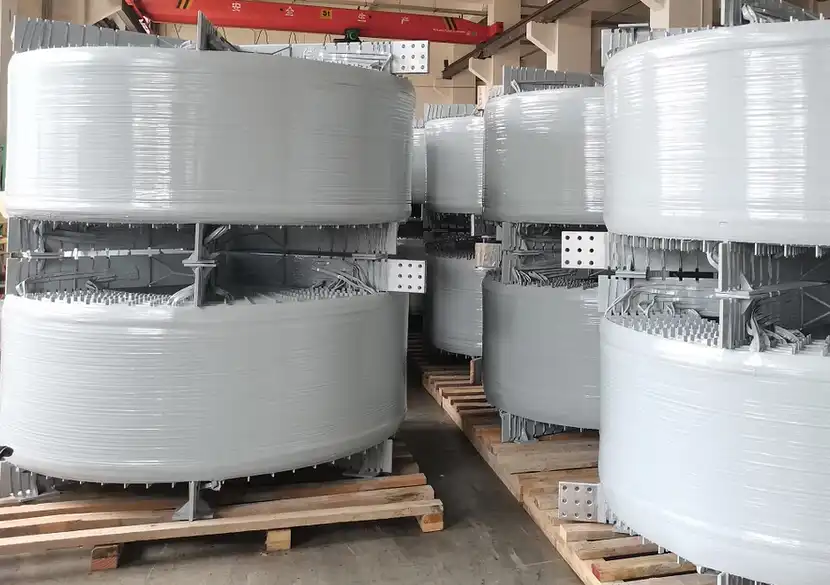
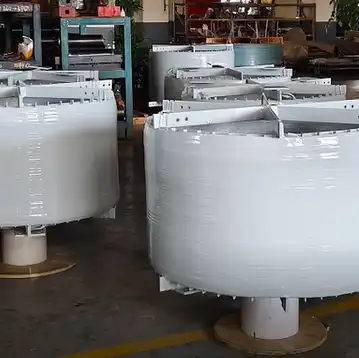
Understanding Dry-Type Series Reactors and Their Working Principle
In order to choose the right part for a capacitor or filter cabinet, it is helpful to know what the part does in the circuit. A capacitor bank and a dry-type series reactor are connected in series. Together, they make a tuned filter that focuses on certain harmonic frequencies.
How the Iron Core Works
The iron core divides the magnetic flux into pieces by putting air gaps in different places. This design cuts down on eddy current losses and keeps the inductance fixed no matter what the working conditions are. High-temperature adhesives hold the air-gap parts together in Xi'an Xikai's CKSC type. This lowers core shaking and keeps acoustic noise below 75 dB, which is a clear benefit in urban substations.
Epoxy-Resin Coil Construction
The coil is made by vacuum casting epoxy resin and then curing it at high temperatures. The glass fiber support gives the structure of the winding the mechanical strength to not crack when large current shocks happen or when temperatures change. It is very resistant to moisture, which is important in places like South Asia and the Middle East where dust and humidity are always a problem.
Inductance Precision and Reactance Rate
It is important to keep the inductance range within ±3%, which is the level that most switchgear engineers set when they build filter circuits for 5th and 7th harmonic rejection. Depending on the goal harmonic order, reactance rates of 6%, 7%, and 13% are possible. The fact that the partial discharge levels stay below 5 pC shows that the cast insulation is still solid.
Key Applications of Dry-Type Series Reactors Across Industries
Each area that the dry-type series reactor works in has a different but related job for it to do. Here are the main places where these gadgets can be used to get measurable results.
Industrial Plants and Manufacturing Facilities
5th and 7th harmonics are made by CNC machines, induction heaters, and variable frequency drives. These harmonics shorten the life of capacitors and mess up the supply voltage. Putting in a dry-type series reactor in series with the power factor adjustment capacitor bank lowers the inrush current, which can be up to 100 times the rated capacity in fault situations, and moves the circuit away from resonance. Because oil-filled units aren't allowed inside because of fire codes, steel mills and smelting operations need dry-type construction.
Renewable Energy Grid Connection
Switching harmonics are added at the grid link point by wind turbines and solar inverters. Grid codes, like IEEE 519, are very strict about how much total harmonic distortion (THD) power that goes into utility networks can have. A dry-type series reactor at the output of the inverter soaks up these switching harmonics before they reach the grid. This helps project developers meet compliance requirements without having to add extra external filter banks.
Substations and Utility Infrastructure
In substations, equipment used to compensate for reactive power must work without creating a parallel resonance between the capacitor bank and the network impedance. This doesn't happen because of the dry-type series reactor detuning feature. This design's low temperature rise (below 95°C at full load) lowers thermal stress on nearby equipment and core losses, which lowers long-term running costs by about 30% compared to traditional designs.
Commercial Buildings and Urban Installations
Power factor adjustment equipment that is up to date is often added to older power systems in places like hospitals, data centers, and shopping malls. Noise makes these places very hard to work in. The segmented air-gap design of the CKSC reactor keeps noise levels during operation within acceptable ranges for buildings that are occupied, and the flame-resistant epoxy shell meets fire safety standards for electrical rooms inside buildings.
Comparing Dry-Type Series Reactors with Alternative Technologies
The choice of reactor type is not only a technical issue, but also a matter of budget, location of the installation, and ability to maintain it. Here’s a one-stop comparison of the key alternatives offered to procurement teams.
Dry-Type vs. Oil-Filled Reactors
In certain high power applications, oil-filled reactors have somewhat more thermal capacity, but need oil sampling, dissolved gas analysis and containment pits. “Dry-type units do away with all that. They are self-extinguishing, maintenance free of oil and appropriate for interior installations with environmental compliance monitoring. When maintenance labour is taken in, the total cost of ownership over the decade often leans in favour of dry-type systems.
Iron-Core vs. Air-Core Variants
Air-core reactors have the benefit that their inductance remains linear in relation to current magnitude, which is beneficial for high fault-current conditions. But they do create stray magnetic fields that have to be kept a certain distance away from metal structures. Iron-core reactors are more compact and keep the magnetic flux inside the core, making them more suitable for switchgear cabinets where space is at a premium. The CKSC iron-core design is optimised for space restrictions prevalent in low-voltage filter cabinet assembly.
Series Reactors vs. Shunt Reactors
A series reactor connected in the main route of the circuit and directly influencing the load current. A shunt reactor is connected between phase and neutral to absorb the extra reactive power on lightly laden transmission lines. They handle separate issues and are not substitutes for one other. The series connection is best used for capacitor bank protection and harmonic filtering in switchgear panels.
Procurement Considerations for Dry-Type Series Reactors
Get the parameters perfect before you purchase and you will save time and money. These are the biggest variables on how well components will operate together and how long they will survive.
Key Technical Parameters to Specify
want to buy something should know the following: the rated inductance, the rated current, the reactance percentage (6%, 7% or 13%), the voltage class, the insulation class (F or H), the cooling method (AN for natural air or AF for forcing air). The physical size and placement of the terminals must also match the box layout. Xi’an is able to handle non-standard voltage ratings and special terminal arrangements, with lead times adaptable to project schedules.
Evaluating Supplier Capability
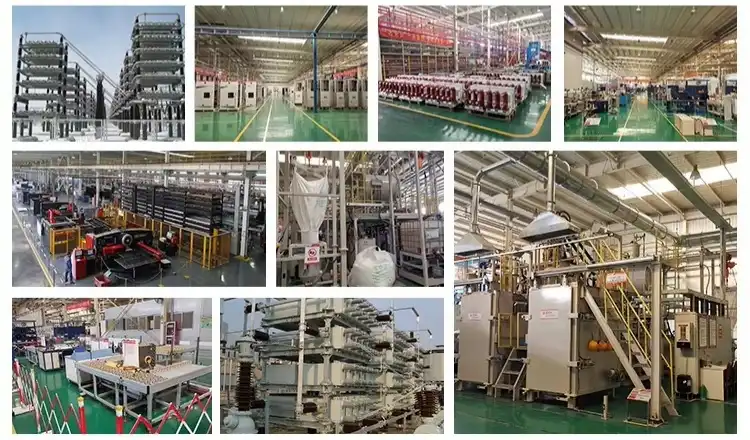
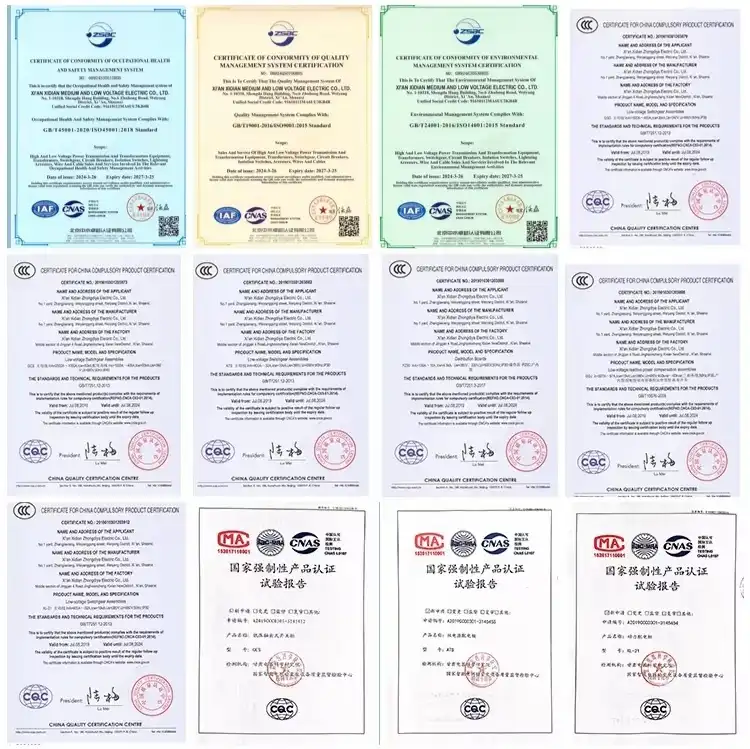
A reliable dry-type series reactor supplier must be able to prove compliance with IEC 60076-6 or equivalent standards, provide type test reports, including temperature rise and impulse test results, and offer sound level measurements at a distance of 2 meters. All these items are quality tested, using the 12-step process of Xi’an Xikai. Each unit is made with annealed silicon steel and Class F insulators, with automated winding and curing at 160°C for 48 hours.
Small-Batch and Custom Orders
A lot of panel makers can’t search for customised reactors since they have to acquire a certain quantity of units. Xi'an Xikai begins with small batches when an order is placed and performs formal technical confirmation for non-standard requirements within the prescribed response time. There will be first-article samples in one-to-two months, to assist engineers in testing the design before full production runs.
Installation, Maintenance, and Troubleshooting Best Practices
Proper installation protects both the reactor and the connected equipment. Following structured procedures also keeps warranty coverage intact.
Installation Guidelines
Mount the reactor on a vibration-dampening base to minimize noise transmission to the cabinet frame. Maintain adequate clearance for air circulation around the coil—especially important for AN-cooled units. Verify that terminal torque values match manufacturer specifications before energizing, and confirm that the inductance measured on-site falls within the ±3% tolerance band specified on the nameplate.
Preventive Maintenance Schedule
Dry-type reactors require minimal but regular attention. Inspect the epoxy surface for cracks or discoloration every 12 months. Check terminal connections for signs of oxidation or thermal discoloration. Measure insulation resistance annually. The absence of oil eliminates the need for fluid sampling, which significantly reduces maintenance workload compared with oil-filled alternatives.
Troubleshooting Common Issues
Excessive noise during operation usually indicates loose air-gap bonding or a compromised mounting base. Elevated temperature readings suggest blocked airflow or sustained overcurrent above 1.35 times rated current. If partial discharge activity increases on monitoring equipment, inspect the epoxy surface for hairline cracks and contact the manufacturer for assessment before the next scheduled maintenance window.
Conclusion
Dry-type series reactors are very important in business buildings, substations, industrial plants, and renewable energy systems. They protect capacitor banks, stop harmonics, and keep the power on the grid stable without the upkeep that comes with designs that use oil. When buying iron-core filter reactors for capacitor cabinets or harmonic filter assemblies, the most important things for procurement teams to look at are the noise level, temperature-rise performance, and the supplier's ability to meet specific needs. The CKSC product line from Xi'an Xikai meets all of these needs with tested manufacturing methods and type-tested performance data.
FAQ
1.What is the difference between a dry-type series reactor and a shunt reactor?
A capacitor bank is linked in series with a dry-type series reactor to cut down on inrush current and remove noise. On long transmission lines, a shunt reactor is put in between the phase and ground to take in reactive power. They are chosen based on the needs of the circuit and do different things.
2.What reactance percentage should I select?
How fast the reactance changes depends on which harmonic order you want to block. A 6% reactor works on 5th harmonic settings, a 7% reactor works on a 5th harmonic filter that is slightly out of tune, and a 13% reactor filters out 3rd harmonics. Before you place your order, your electrical engineer should do a site power quality audit to confirm the dominant harmonic content.
3.Can a dry-type series reactor handle overload conditions?
Yes. Quality units are made to handle overcurrents that are up to 1.35 times the maximum current, which includes both fundamental and harmonic current loads, without breaking down due to heat.
4.How does epoxy casting affect moisture resistance?
Epoxy that is vacuum-cast and reinforced with glass fibers makes a surface that is sealed and can't be porous. This keeps water out, even in places with a lot of humidity, like seaside substations or tropical industrial sites.
5.What standards govern dry-type series reactor testing?
The main standards are IEC 60076-6 and IEEE C57.16. Measurements of inductance, DC resistance, and applied voltage are all common tests. Type tests measure things like temperature rise, impulse, and sound level.
Get a Custom Quote from Xi'an Xikai — Trusted Dry-Type Series Reactor Manufacturer
With more than 100 different types of products, Xi'an Xikai serves switchgear makers and system designers in both local and foreign markets. Our CKSC dry-type series reactor line can be made to order with different voltage values, connection configurations, and batch sizes starting from small amounts. Get in touch with our expert team to talk about your project needs or to ask for a sample:
References
1. IEEE Std C57.16-2011 — IEEE Standard for Requirements, Terminology, and Test Code for Dry-Type Air-Core Series-Connected Reactors. IEEE, 2011.
2. IEC 60076-6:2007 — Power Transformers Part 6: Reactors. International Electrotechnical Commission, 2007.
3. IEEE Std 519-2014 — IEEE Recommended Practice and Requirements for Harmonic Control in Electric Power Systems. IEEE, 2014.
4. Das, J. C. Power System Harmonics and Passive Filter Designs. Wiley-IEEE Press, 2015.
5. Mohan, N., Undeland, T. M., & Robbins, W. P. Power Electronics: Converters, Applications, and Design. John Wiley & Sons, 2003.
6. Arrillaga, J., & Watson, N. R. Power System Harmonics. 2nd ed. John Wiley & Sons, 2003.