
How Do HV AC Filters Work?
2026-10-12 17:31:39
An HV AC filter is a physical or electrostatic barrier installed within a heating, ventilation, and air conditioning system. Its primary job is to intercept airborne contaminants—dust, pollen, mold spores, and fine particulate matter—before they circulate through occupied spaces or settle on heat-transfer surfaces. When air passes through the filter media, particles are captured by one of three mechanisms: mechanical interception, inertial impaction, or electrostatic attraction. The result is cleaner air delivery, better equipment performance, and lower long-term operating costs for any commercial or industrial facility that depends on consistent air quality.
Understanding HV AC Filters: How They Work and Why They Matter
The Core Filtration Principle
A moving airstream is forced through a thin media layer to make an HV AC filter work. The bigger particles (PM10 and up) are stopped by gravity, and the smaller ones (PM2.5 and PM1) are caught by diffusion or electric charge. ASHRAE Standard 52.2 says that, based on its MERV grade, a well-chosen filter can get rid of 20% to 95% of target particles. In industrial buying, where air quality directly affects product standards and machinery uptime, that range is very important.
Why System Protection Matters
When an HV AC filter is clogged or not up to code, it makes the fan motors work harder against the rising static pressure. The U.S. Department of Energy says that HVAC systems that use dirty air handling units can use 15–25% more energy. In addition to wasting energy, dust on evaporator coils works as thermal insulation, which lowers the efficiency of heat exchange and speeds up the wear on the compressor. By choosing the right filter from the start, you can protect your investment and avoid unplanned downtime.
Air Quality and Occupant Health
According to research published by the EPA, high levels of PM2.5 in the air inside are linked to worse cognitive performance and more absences at work. When people work long shifts in industrial facilities like electrolytic aluminum plants or railroad traction substations, keeping particulate levels below ASHRAE 62.1 limits is both the law and good for business. The first and least expensive line of protection is an HV AC filter with the right rating.
Types of HV AC Filters and Their Applications
Fiberglass and Pleated Panel Filters
The MERV 1–4 fiberglass filters have very little resistance but can only catch large particles. Pleated polyester filters (MERV 8–13) have a lot more surface area and can catch particles as small as 1 micron while still letting air move normally. A MERV 11 pleated filter works well in general business places like offices, stores, and light manufacturing, and it only needs to be replaced every 60 to 90 days.
High-Efficiency and HEPA-Grade Filters
Operating rooms in hospitals and clean rooms for pharmaceuticals need H13/H14 HEPA filters that get rid of 99.97% of 0.3-micron particles. To stop bypass leaks completely, these units use gel-seal or knife-edge gasket frames. V-bank rigid box filters rated ePM1 60–80% (ISO 16890) are perfect for gas turbine outlet housings or data center precision cooling units because they can hold a lot of dust and have a low pressure drop.
Industry-Specific Filter Choices
Heavy industrial settings, like CNC cutting floors, assembly lines, and electric power substations, usually use a two-stage system: a coarse pre-filter takes in a lot of dust and makes the more expensive fine filter last longer. By using this system instead of just one high-efficiency stage, the annual cost of filters is cut by as much as 40%.
When and How to Maintain HV AC Filters
Replacement Criteria Based on Performance
As a general rule, filters should be changed when the pressure drops, not when the calendar says so. A panel or pleated HV AC filter needs to be replaced when its resistance doubles, which is usually between 1.0 and 1.5 inches w.g. for industrial grades. Using magnetic gages or building automation system alerts to keep an eye on differential pressure takes away the need to guess and stops changes from happening too soon or too late.
Cleaning Reusable Filters Safely
Metal mesh filters that are washable (MERV 1–4) can be cleaned with low-pressure water and a mild soap. Always make sure the media is fully dry before putting it back in; any wetness left on it will encourage mold growth within 24 to 48 hours. For electrostatic washable panels, don't use high-pressure spraying because it damages the charged threads that help catch small particles for good.
Establishing a Proactive Maintenance Schedule
Places with lots of particles, like foundries, food processing plants, and railroad tunnels, should check the pressure drop every month. Filters are usually checked every three months in standard business buildings. Using a CMMS (Computerized Maintenance Management System) to record replacement dates, pressure readings, and filter part numbers makes an audit trail that meets ISO 9001 quality management standards and makes budgeting for purchases easier.
Comparing HV AC Filter Options for Informed Procurement Decisions
Filters Versus Air Purifiers
An HV AC filter and a stand-alone air purifier both deal with problems that are similar but different. Filters built into the pipes clean all the air that flows through a building's HVAC system. When duct retrofits are too expensive, portable air purifiers are the best option because they can treat a small area. Central duct-mounted filtration is better for large-scale industrial buying because it has better cost-per-cubic-foot-treated measures than distributed purifier networks.
Evaluating Established Suppliers
There are well-known brands in the commercial filter market, such as 3M (Filtrete series), Honeywell, and Aprilaire. All of these have test reports that meet ASHRAE 52.2 and ISO 16890 standards. Ask any supplier for third-party particle-counter test certificates (TSI 8130 or an equivalent), initial pressure drop data at rated airflow, and UL 900 flammability ratings before you choose one. By making sure these papers are correct before you buy them, you protect your building from legal risk and unexpected energy penalties.
Modern Procurement Strategies
Buying in bulk for standard sizes cuts costs by 10–20% per unit and ensures a steady supply. Specialized makers can make filters that are exactly the right size for older air handling units. Lead times are 3–10 business days. When pressure-drop data is linked to subscription replenishment programs, reorder triggers are automatically set off. This lowers the cost of keeping inventory without risking running out.
How to Choose the Best HV AC Filter for Your Business Needs
Choosing a filter isn't just a technical matter; it's also a purchasing choice that has operational and financial effects. Which one is best for you relies on your business, the fan static pressure capacity of your system, and your total cost of ownership goals.
Before choosing a filter, every purchase engineer should make sure of these main criteria:
- Filtration efficiency vs. system capacity: A MERV 13 filter delivers excellent fine-particle removal but generates higher resistance. Confirm your AHU fan curve can sustain rated airflow at the filter's final pressure drop before specifying.
- Dust-holding capacity (DHC): Higher DHC means longer service intervals and fewer labor hours spent on filter changes. For high-dust industrial sites, prioritize DHC over initial efficiency ratings alone.
- Frame and seal material: Galvanized steel frames suit high-humidity environments; beverage board frames work in standard commercial settings. For critical applications requiring zero bypass, only gasket-seal or gel-seal frames are acceptable.
- Compliance documentation: Specify filters with published ASHRAE 52.2 or ISO 16890 test certificates. For healthcare, NFPA 90A fire-resistance compliance is also mandatory.
If you are looking for a standard panel filter for a business building or a high-voltage passive filter capacitor bank for a railroad traction substation, these criteria are the same. You need to use validated technical data, not catalog claims, to make your choice.
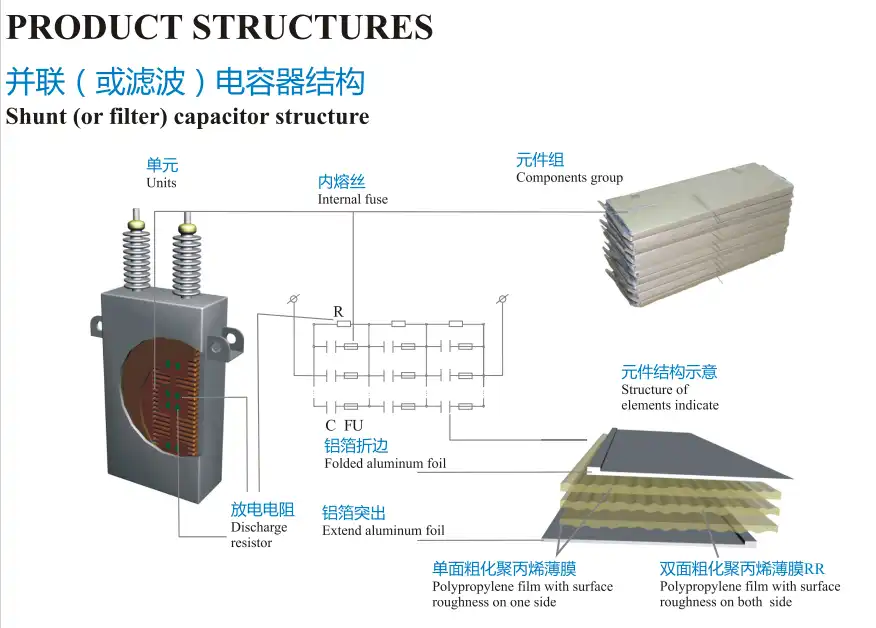
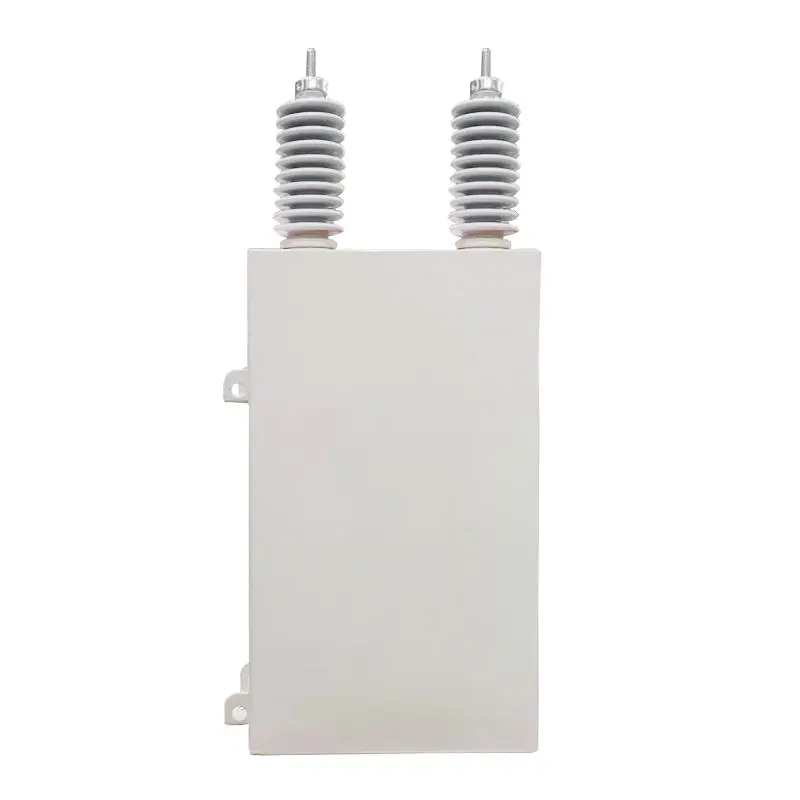
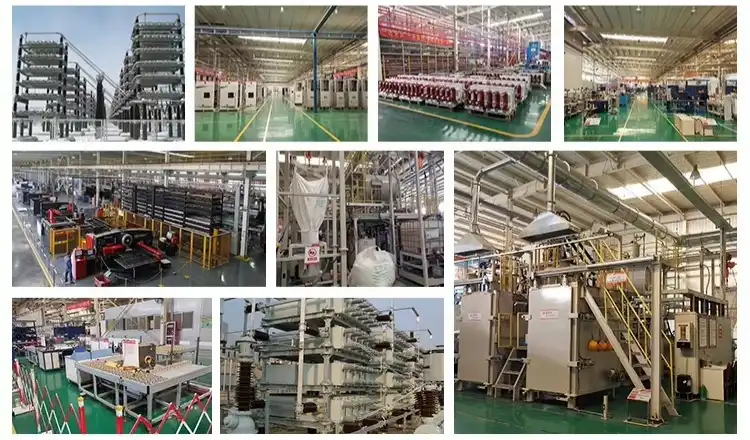
When we talk about high-voltage power quality, facilities that handle rail power or electrolytic aluminum smelting face a similar but separate problem: harmonic distortion at the source level. This need is met by Xi'an Xikai's High Voltage Single Phase Filter Capacitor. This capacitor has a zinc-aluminum alloy coating on a multi-layer polypropylene film, internal fuses that automatically separate bad sections, and argon-arc welded tanks that stop leakage. It lowers voltage distortions by up to 70%. It works with surge currents up to 100 times its rated capacity and meets IEC 60831 and UL 810 standards. Before it is shipped, every unit goes through 72 hours of load cycling, heat shock tests, and impulse voltage tests.
Conclusion
When picking the right HV AC filter, you need to make sure that the filter's filtration efficiency, its ability to handle pressure drops, and its expected service life all fit with your operating setting. The rules are the same whether you're in charge of a commercial office building, an industrial manufacturing floor, or a high-voltage railroad substation: check performance data, keep an eye on differential pressure, and replace media based on condition instead of just the calendar. When you pair precise electrical parts, like a well-specified single-phase filter capacitor, with good air filtration in places where power quality is just as important as air quality, you protect both your equipment and your employees. The most reliable way to ensure long-term system stability is to make purchases based on accurate technical data.
FAQ
1.What MERV rating should a commercial facility use?
MERV 11–13 pleated filters work well in most business buildings. MERV 11 is good for general offices, stores, and light manufacturing because it can catch particles as small as 1 micron. MERV 13 is fine for places that need better air quality, like schools or medical offices, as long as the HVAC fan can keep the air moving even though there is more resistance.
2.Can a higher-efficiency HV AC filter damage my HVAC system?
Yes, if the machine wasn't made to handle the extra static energy. Putting in a MERV 16 filter in a system that only needs a MERV 8 filter can stop enough air from moving to freeze evaporator coils or make heat exchangers too hot. Before raising the efficiency grade, you should always compare the end pressure drop of the filter to the static pressure curve of your fan.
3.How does ISO 16890 differ from the MERV scale?
MERV (ASHRAE 52.2) measures how well particles are captured across three large size ranges. ISO 16890 tests the filter media after an electrostatic discharge and measures its effectiveness against certain particulate mass fractions (ePM1, ePM2.5, and ePM10). This gives a more reasonable and accurate performance number for how things work in the real world.
4.Are washable HV AC filters suitable for commercial use?
No, most of the time. Washable filters only get MERV 1–4, which is not enough for industrial settings to control small particles. Also, there is a real chance that mold will grow on them if they are not dried completely. Disposable pleated filters offer consistent, proven safety for business purchases at reasonable total costs.
Partner with Xi'an Xikai for High-Voltage Power Quality Solutions
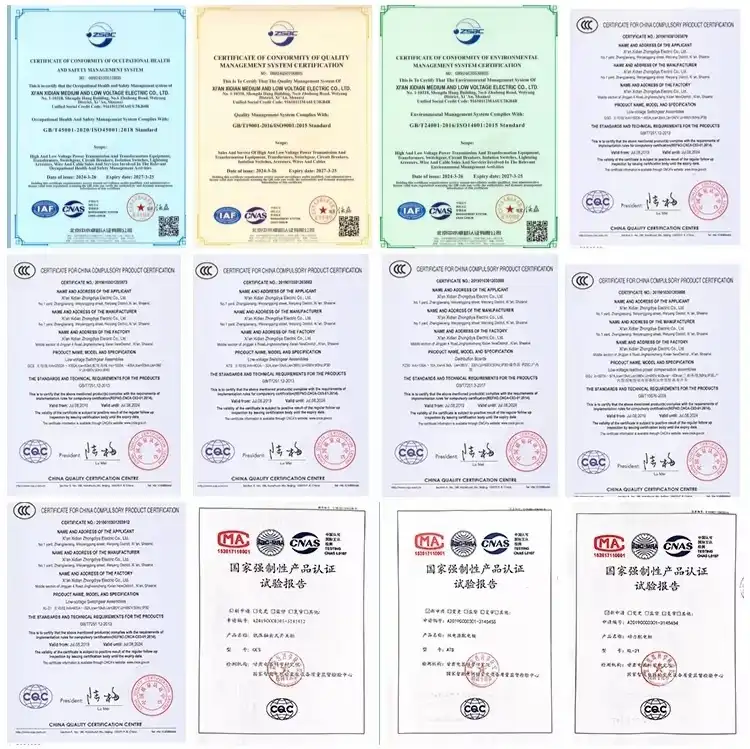
Engineered power equipment from Xi'an Xikai is trusted by State Grid systems, railroad hauling networks, and industry processing facilities. Procurement experts can be sure that our High Voltage Single Phase Filter Capacitor is safe because it is approved to IEC 60831 and UL 810, has internal fuses and discharge resistors, and has been tested thoroughly in the factory. As a verified producer of HV AC filter capacitors, we can handle special orders, testing of prototypes, and large quantities. Get in touch with our tech team right away:
serina@xaxd-electric.com | amber@xaxd-electric.com | luna@xaxd-electric.comThe website for xaxd-electric.com
References
1. ASHRAE. ASHRAE Standard 52.2: Method of Testing General Ventilation Air-Cleaning Devices for Removal Efficiency by Particle Size. American Society of Heating, Refrigerating and Air-Conditioning Engineers, 2017.
2. ISO. ISO 16890: Air Filters for General Ventilation. International Organization for Standardization, 2016.
3. U.S. Environmental Protection Agency. Introduction to Indoor Air Quality. EPA, 2022.
4. U.S. Department of Energy. Energy Efficiency in Commercial Buildings: HVAC Systems and Air Filtration. DOE Office of Energy Efficiency & Renewable Energy, 2021.
5. IEC. IEC 60831: Shunt Power Capacitors of the Self-Healing Type for A.C. Systems. International Electrotechnical Commission, 2014.
6. NFPA. NFPA 90A: Standard for the Installation of Air-Conditioning and Ventilating Systems. National Fire Protection Association, 2021.