
What are the applications of filter reactors?
2026-11-03 17:28:51
Filter reactors are inductive elements linked in line with capacitor banks in low voltage power factor correction (PFC) panels. Their main duty is to pull the resonant frequency of the circuit down below the dominant harmonic order so that the harmonic currents do not overwhelm the capacitors. In reality, the filter reactor preserves switchgear, increases the life of the capacitor, and minimises total harmonic distortion (THD) to tolerable levels. These are used everyday in industries from industrial facilities to commercial buildings, making the filter reactor one of the most specified components in current reactive power compensation equipment.


How a Filter Reactor Works in a Power System
The Role of Inductive Reactance
With each capacitor step, an inductive resistance is added by a filter reactor. If a harmonic current tries to enter the capacitor bank, it meets a path with a high impedance and is stopped. Which harmonic orders are turned off depends on the percentage difference between the impedance of the reactor and the impedance of the capacitor. This is why choosing the right reactance rate is so important during the design phase of any low-voltage capacitor cabinet.
Reactance Rate and Harmonic Targeting
As the harmonic profile changes, so do the reactance rates:
- A 7% reactance rate detunes the LC circuit to approximately 189 Hz on a 50 Hz grid, suppressing the 5th harmonic and above. This is the most common choice for industrial sites with variable-frequency drives (VFDs) and rectifiers.
- A 14% reactance rate tunes the circuit to roughly 134 Hz, addressing 3rd-order harmonics typical in office buildings with heavy single-phase loading.
- A 27% reactance rate pushes the resonant point even lower, blocking harmonics from the 2nd order upward in highly distorted environments.
Panel builders often make the mistake of picking the wrong reactance rate. For example, dielectric failure happens faster when a 6% reactor is paired with capacitors that can't handle the voltage rise that comes from it. The whole correction method is safe if the reactance rate is set correctly from the start.
Inrush Current Suppression During Switching
A surge current spike happens every time a capacitor step turns on. Without series inductance, this spike can last for a few milliseconds and reach several hundred times the rating current. This puts stress on the contactors and shortens their useful life. That inrush is kept to a manageable level by a filter reactor that is properly rated. This cuts down on repair costs and unexpected downtime.
Core Applications of Filter Reactors Across Industries
Filter reactors are used in a multitude of electrical setups. The appropriate reactance rate, winding material and physical dimensions are determined by the application situation.
Industrial Manufacturing Plants
Large 5th and 7th harmonic currents are generated by welding equipment and motor drives in CNC machining centers . These harmonics are sent back into the supply transformer without mitigation, increasing THD-V and leading to utility power factor fines. These currents are effectively stopped using a 7% detuned reactor in series with each capacitor stage. The reactor must also withstand inrush surges of up to 100 times rated capacity without saturation on high demand production lines, a feature provided for by the segmented silicon steel core architecture of the CKSG Series.
Substations and Renewable Energy Integration
Grid-connected inverters of photovoltaic and wind power plants inject non-sinusoidal currents at the point of common connection. With additional renewables connected to a substation bus, the levels of harmonics will grow, as will the possibility of parallel resonance between capacitor banks and transformer inductance. To avoid this state of resonance, filter reactors are installed on each capacitor stage. The reactor also helps stabilise bus voltage during fast load fluctuations due to intermittent generation, thereby improving overall grid power quality.
Commercial Buildings and Public Facilities
Switch mode power supplies, LED drivers and uninterruptible power supply (UPS) are used in hospitals, shopping malls and data centers. Each of these loads adds to the 3rd and 5th harmonic content. In these applications, a 14% filter reactor is commonly provided to manage 3rd-order distortion and make the PFC system quiet enough for populated rooms. For facilities that are required to comply with NFPA 70 or IEC 60364 regulations, the flame-retardant enclosure and low audible noise rating of the reactor is just as significant a procurement criterion.
Low-Voltage Capacitor Cabinet Manufacturing
This is the most straightforward use case for procurement managers acquiring components in quantity. In a low voltage reactive power compensation cabinet, filter reactors are included by panel builders in each compensating stage. The reactor must be designed to fit inside the dimensions environment of the cabinet, to function in an acceptable temperature rise envelope and to generate noise below the requirements for the panel – commonly around 45dB. Cabinet manufacturers often specify 6% or 7% reactors for normal harmonic conditions and jump to 14% when the end customer's site data indicates strong 3rd harmonic content.
Here is a brief description of the main application situations and common reactance requirements:
- Industrial VFD-heavy sites: 7% reactance rate, copper winding, compact cabinet-fit design
- Commercial single-phase dominant loads: 14% reactance rate, low noise, flame-retardant enclosure
- Renewable-connected substations: 7% or 14% depending on harmonic survey results
- High-distortion heavy industry: 27% reactance rate for environments with 2nd and 3rd harmonics
These application types encompass the bulk of use cases encountered in the local Chinese market, Southeast Asia, and the Middle East, where low-voltage capacitor cabinet manufacturers are ramping up production.
CKSG Series Low-Voltage Reactor: Technical Specifications
Xi'an Xikai CKSG Series is a dry type iron core reactor, particularly designed for low voltage PFC applications. It is available in three-phase or single-phase versions.
Here are the core construction features of this product:
- Core: Imported cold-rolled silicon steel laminations, segmented by epoxy-laminated glass spacers that stabilize air gaps and resist vibration-induced noise.
- Windings: Flat copper wire wound tightly with Class H/C enamel insulation, rated to 180°C, ensuring both thermal stability and quiet operation.
- Assembly: Non-magnetic fasteners throughout; the finished unit undergoes pre-baking, vacuum impregnation, and thermal curing to bond core and windings into a single rigid structure with low losses.
- Enclosure: Corrosion-resistant terminals and housings; the compact, lightweight form factor is designed to fit standard cabinet depths without special modification.
These construction options attack the two greatest pain issues for capacitor cabinet manufacturers: dimensional fit and long-term thermal performance. A cool running reactor that fits in the cabinet saves warranty claims and rework at the assembly stage.
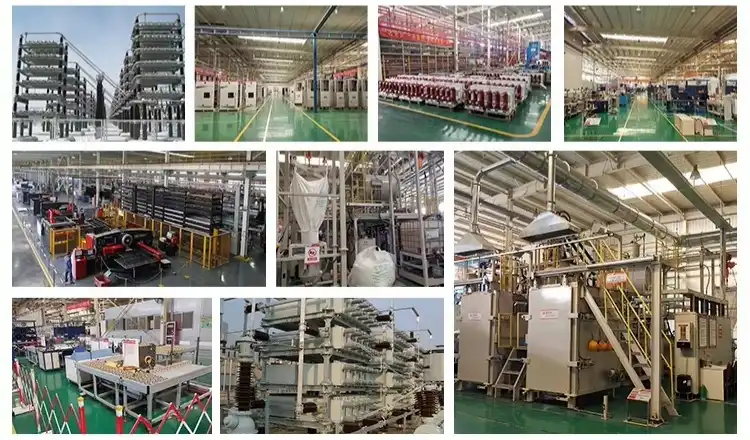
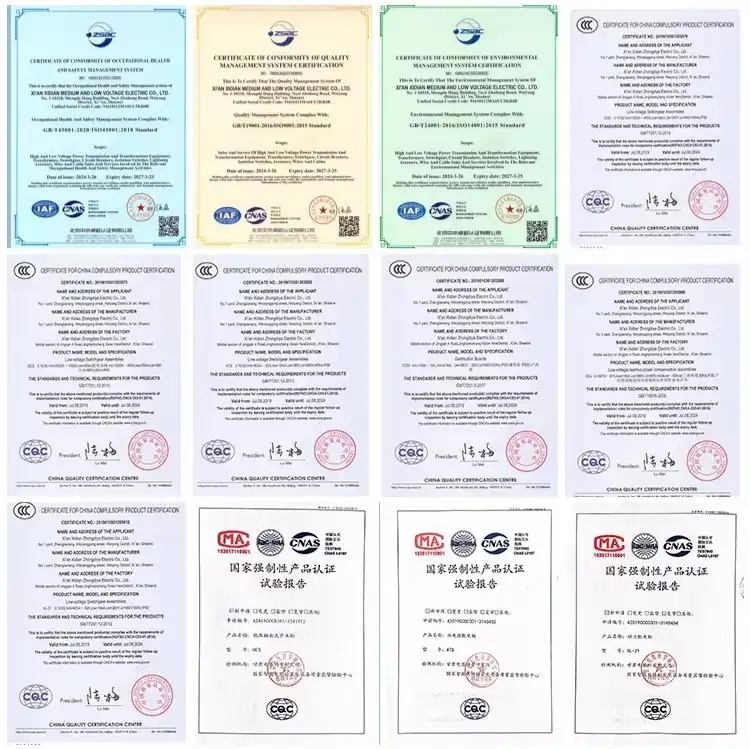
The CKSG Series undergoes a 12-stage quality control procedure, including reactance accuracy verification (tolerance ±3%), thermal cycling tests, AC withstand (hipot) testing at 3 kV for one minute, and audible noise assessment. This testing process follows IEC 60076-6 and EN 61558-2-20 criteria and gives panel makers written proof for their own product certifications.
Conclusion
Filter reactors play an important role in modern power factor correction systems by protecting capacitor banks from harmonic currents, limiting switching inrush, and reducing the risk of resonance. Their effectiveness depends largely on selecting a suitable reactance rate according to the harmonic characteristics and operating conditions of the power system. Industrial facilities with VFDs and rectifiers commonly use 7% reactors, while applications with stronger 3rd-order harmonic content may require 14% reactance. Higher-distortion environments can require 27% solutions. Beyond electrical performance, factors such as thermal stability, cabinet dimensions, winding construction, noise control, and reactance accuracy are also important when selecting a filter reactor. For low-voltage capacitor cabinet manufacturers, a properly designed reactor can therefore support reliable PFC operation while helping protect capacitors and associated switching equipment over long-term service.
FAQ
1.What is the difference between a 6% and a 7% filter reactor?
A 7% reactor resonates at about 189 Hz on a 50 Hz grid, while a 6% reactor vibrates at about 204 Hz. The 6% unit is closer to the 5th harmonic (250 Hz), which means it filters slightly better but has less room for error when capacitance drops over time. Most panel makers like 7% because it gives them more safety.
2.Can I add a filter reactor to an existing capacitor bank?
The voltage across the capacitor connections goes up when a series reactor is added. To safely handle a voltage rise of 6% or 7% on a 400 V grid, the capacitors that are already in place must be rated for 440 V or 525 V. Before upgrading, you should always check the capacitor values.
3.Why does a filter reactor produce noise during operation?
In most cases, noise is caused by magnetostriction in the core laminations. This effect is made worse by loose laminations or harmonic currents that are higher than the design rate. This shaking is kept to a minimum at its source by the CKSG Series' epoxy-bonded, vacuum-impregnated structure.
4.How does a filter reactor extend capacitor service life?
The reactor lowers the high-frequency inrush current during switching and stops harmonic currents from heating the capacitor dielectric by acting as a series impedance. This heat safety is the main reason why capacitor banks with series reactors always last longer than those without them.
5.What reactance rate should I choose for a site with strong 3rd harmonics?
Go with a reactance rate of 14%. It adjusts the frequency of the circuit to about 134 Hz, which keeps the resonant point below the 3rd harmonic (150 Hz on a 50 Hz grid) and stops 3rd-order currents from getting into the capacitor bank.
Get Filter Reactor Pricing and Specs from Xi'an Xikai
Many capacitor cabinet makers in China, Southeast Asia, and the Middle East buy CKSG Series filter reactors from Xi'an Xikai. The CKSG Series is a reliable filter reactor source for orders of 50 to 500 units. It has copper winding construction, small cabinet-compatible measurements, and a reactance tolerance of ±3%. These days, the lead time is two weeks. For datasheets, dimensional drawings, and bulk pricing, please email serina@xaxd-electric.com, amber@xaxd-electric.com, or luna@xaxd-electric.com. Click on xaxd-electric.com to find out more.
References
1. IEC 60076-6 — Power Transformers – Part 6: Reactors, International Electrotechnical Commission, 2007.
2. IEEE Std 519-2014 — Recommended Practice and Requirements for Harmonic Control in Electric Power Systems, IEEE, 2014.
3. EN 61558-2-20 — Safety of Transformers, Reactors, Power Supply Units and Combinations – Particular Requirements for Small Reactors, CENELEC, 2010.
4. Mohan, N., Undeland, T. M., & Robbins, W. P. — Power Electronics: Converters, Applications, and Design, John Wiley & Sons, 2003.
5. Arrillaga, J., & Watson, N. R. — Power System Harmonics, 2nd ed., John Wiley & Sons, 2003.
6. Chapman, S. J. — Electric Machinery Fundamentals, 5th ed., McGraw-Hill, 2012.