
What are the Benefits of an Indoor Current Transformer?
2026-11-12 17:21:48
The main benefits of an indoor current transformer are accurate measurement, dependable protection signals, compact installation, and low maintenance. It steps high primary current down to a safe 1 A or 5 A output for meters, relays, and monitoring devices. Because it sits inside protected switchgear, the design can stay small, and epoxy resin insulation resists dust and moisture. In this guide, I explain how the device works, where it fits, how it compares with other types, and what switchgear builders should check before ordering. I also share the specifications of our 24 kV model.
What Is an Indoor Current Transformer and How Does It Work?
How the Device Converts Current
EMF induction is what makes a current transformer work. Magnetic flux is made in the core when primary current flows through the conductor. A proportional current flows through the secondary winding because of that flux. Meters and switches can read this standard output, which is commonly 1 A or 5 A, without having to touch the high-current circuit. To keep the voltage safe, the secondary side must always be connected to a load or a shorting link. If the secondary is open on an active unit, it can cause voltage. This is also true for an indoor current transformer, but it is made for equipment that is enclosed, like medium-voltage switchgear, ring main units, and distribution cabinets, so it doesn't have to be exposed to weather.
Main Parts Inside the Housing
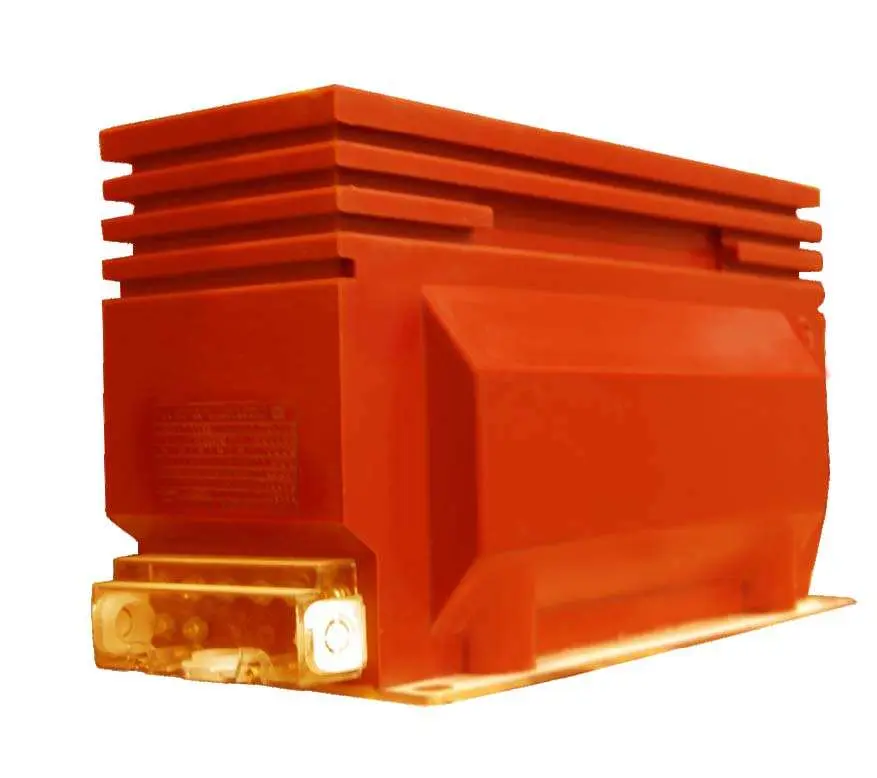
Each unit comes with a magnetic core, terminals, a secondary winding, a primary conductor or winding, and an insulation system. In our 24 kV model, epoxy resin casting makes a body that goes all the way around these parts. The resin fills in the gaps, keeps the windings in place, and protects against electricity flow. The core material is also important. Silicon steel can handle more flux density, which makes protection work better. The high permeability of microcrystalline alloy helps with accuracy when the current is low. Which balance works best for your switchgear depends on how it's made. You should ask your provider what kind of material in each winding, since the ones used for metering and safety cores are often different.
Metering Cores and Protection Cores
Safety cores and metering cores do different things. Near normal load, a measuring core like Class 0.2, 0.2S, or 0.5 has very low mistake rates. With Class 0.2S, that accuracy drops to 1% of the rated current, which is helpful for feeders that aren't very busy. A protection core, like a 5P or 10P, keeps the total error to less than 5% or 10% at the accuracy limit current. This way, relays can still see a signal that they can use when there is a fault. Both types of cores are often found in the same switchgear panel. When it comes to the US, IEEE C57.13 has different names, like 0.3 metering classes and C-class relaying, but the separation between metering and protection is the same.
What Are the Main Benefits of an Indoor Current Transformer?
Accurate Measurement and Dependable Protection Signals
First and foremost, accuracy. Power quality analyzers, energy meters, and monitoring tools all need a clean copy of the main current to work. Ratio and phase errors stay within the class limits with an indoor current transformer that is well-matched. This helps with fair billing, fewer disputes, and clear load data. For safety reasons, overcurrent, earth-fault, and differential relays need a signal that doesn't change when there is a fault. A protection core that is the right size sends that signal without oversaturating it too soon. With multi-core designs, one assembly can do tracking, protection, and income metering all at the same time. This saves room and cuts down on the number of different devices that need to be kept in the cabinet.
Compact Epoxy Resin Construction and Low Maintenance
When used indoors, there is no need for rain covers, housings that don't get damaged by the sun, or the long insulation lengths that are needed when used outside. That is why an indoor current transformer is usually less big and easier to store than an outdoor one. Epoxy resin casting makes things stronger, better at conducting electricity, and more resistant to dust and water. A dry-type epoxy design doesn't have any oil that could leak and is less likely to catch fire than an oil-filled unit, so it only needs to be inspected and checked at the terminals on a regular basis. It's not maintenance-free just because it's dry-type, but the work stays light.
Core Advantages of Our 24 kV Indoor Current Transformer
Please find below a list of the main benefits of our 24 kV indoor current transformer:
- Wide current range: It can handle primary currents of 20 A to 3150 A and secondary currents of 5 A or 1 A at 50/60 Hz. So, one series can handle both small feeders and large incoming panels. This means that your team can use the same product line for a range of cabinet sizes and ratings.
- Accuracy and capacity: The unit has a strong capacity and a high level of precision; the 24 kV design includes 0.2 and 0.5 accuracy classes. Send us your needs for other classes, like 0.2S, 5P, or 10P, or for layouts with more than one winding, and our engineers will let you know what the design can do before sampling starts.
- Sealed, standard-based build: This is because epoxy resin casting makes a body that is completely sealed. This keeps performance fixed in switches, where dust and moisture could otherwise get to the windings. The design is in line with GB 20840.2-2014 and IEC 61869-1 and 61869-2. This gives your technical team a clear standard to use for drawings, type documents, and getting approval from the end customer.
How Does an Indoor Current Transformer Compare with Other CT Solutions?
Indoor Versus Outdoor Designs
Current transformers that are outside have to deal with rain, sun, pollution, and big changes in temperature. That means housings that are shut against the weather, longer insulation distances, and heavier building. These needs aren't met by an indoor current transformer because the switchgear cover protects it. This makes it lighter, smaller, and cheaper in general. The downside is that an indoor unit needs to be put inside a building or cabinet. Conditions on the site, like dust, humidity, or being high up, still matter, so share them early. Xi'an Xikai has tools for hill projects that can work at heights of up to 4,000 meters, and our engineers can look over your site data.
Epoxy Resin Versus Oil-Immersed Units
Oil is used to cool and insulate oil-immersed current transformers. They work well in many high-voltage situations, but you have to check for leaks, take oil samples, and be careful of fires. An indoor dry-type epoxy resin current transformer gets rid of the need for oil in the design. The cast body keeps the windings in place, which helps the unit handle the mechanical forces of short-circuit current and means it doesn't need as much regular maintenance. Medium-voltage panels used indoors, where fire safety and floor space are important, often use cast-resin designs. Outdoor tools with higher power still uses oil-filled designs more often. Dry insulation makes shipping, storing, and testing in the factory easier for a switchgear OEM because they don't have to deal with oil.
Fixed-Core Versus Split-Core Types
Split-core current transformers can be put around a wire without having to separate it because they open up like a clamp. That works for temporary tracking and adding meters after the fact. Most of the time, they are less accurate and aren't as good at protecting at medium voltage. For new switchgear, a fixed-core indoor current transformer is made. During the design stage, the conductor path, insulation level, and mounting points are all known. It gives better accuracy control and stronger mechanical integration, which is why switchgear builders use it in production panels. Split-core units can be used for upgrades in the field, and fixed-core units can be used for cabinets that were built in the factory.
How to Choose the Right Indoor Current Transformer
Match Ratings, Accuracy, and Burden
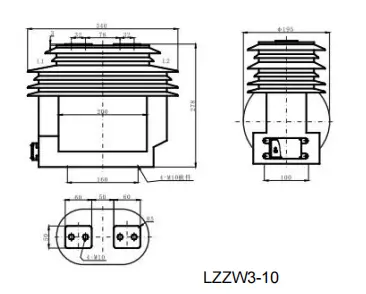
Rate of voltage, frequency, main current, secondary current, insulation level, and short-time tolerate current are the first things you should look at. After that, pick the level of accuracy for each core of the indoor current transformer. Protection cores use 5P or 10P with an accuracy limit factor, like 5P10, and metering cores use 0.2S or 0.5. Next, add up the two other loads: the resistance of the lead wire and the loads on the switch and meter. If you use the same cable, a 5 A secondary will lose about 25 times as much lead as a 1 A secondary, so 1 A is better for long runs. If the load is higher than the rated value, errors get worse and the core may reach full capacity sooner.
Check Mechanical Fit and Core Material
For an OEM switchboard, size is just as important as electrical data when it comes to fit. Check the outside measurements, opening for the window or bushing, terminal position, polarity marks, creepage distance, and clearance against the cabinet drawing. The core stuff needs the same care. For protection cores, silicon steel is usually the safer choice because it can handle more flux. Microcrystalline alloy has a high permeability, which can make things more accurate when the current is low. However, at low flux densities, it reaches its limit. Check the supplier's excitation curves or test records instead of just going by the names of the materials. You should also check the number of windings because orders for multiple windings may have minimum order quantities. Finally, you should agree on a sampling schedule for new specifications before the cabinet building begins.
Avoid Common Selection and Installation Mistakes
When people buy an indoor current transformer, they keep making the same mistakes. If you only look at main current, you don't look at voltage, insulation, or load. If you use a metering core for protection, it could get too full and make the wrong choice during a fault. If you choose an accuracy class that doesn't match the meter, the energy data might not be accurate. If you leave an active secondary open, high voltage will build up and harm insulation and staff. To avoid this, make sure there are shorting provisions in place before commissioning. In differential schemes, skipping polarity checks can make relays not work right. Most of these problems can be found without leaving the site by quickly going over the drawings, test procedures, and clearances before shipping.
Indoor Current Transformer Applications Across B2B Power Systems
Medium-Voltage Switchgear and Substations
Medium-voltage switchgear is where an indoor current transformer is most often found. In 10 kV, 11 kV, 24 kV, and 33 kV class systems, units are placed on going feeders, coming feeders, bus sections, and transformer safety circuits. They are used to power energy meters, numerical relays, and SCADA systems in ring main units and substations. We have a 24 kV model that can handle this job. Its primary current ranges from 20 A to 3150 A. It's helpful for OEM buyers to know that Xi'an Xikai goods are used in State Grid systems and power engineering projects when they are making shortlists. Tell us what kind of panel you have, and we'll make sure the rating matches.
Industrial and Commercial Facilities
An indoor current transformer is used to manage energy, keep an eye on loads, and find problems in places like factories, mines, data centers, commercial buildings, and transportation hubs. The CT output powers safety switches, PLCs, and metering systems that keep track of how much power is being used by line or process. Accurate readings help managers figure out how to spend money on energy and find overloads early on. It's best for commercial and data centers that need to sub-meter by tenant, floor, or circuit. The equipment made by Xi'an Xikai is used in projects related to rail transportation, energy and water conservation, construction, environmental protection, and renewable energy. Our engineers get real-world training with a wide range of load profiles and site conditions through these different fields.
OEM Supply and Supplier Evaluation
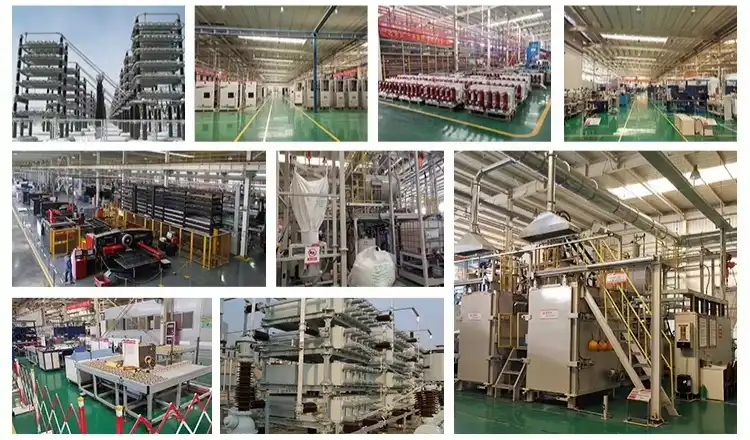
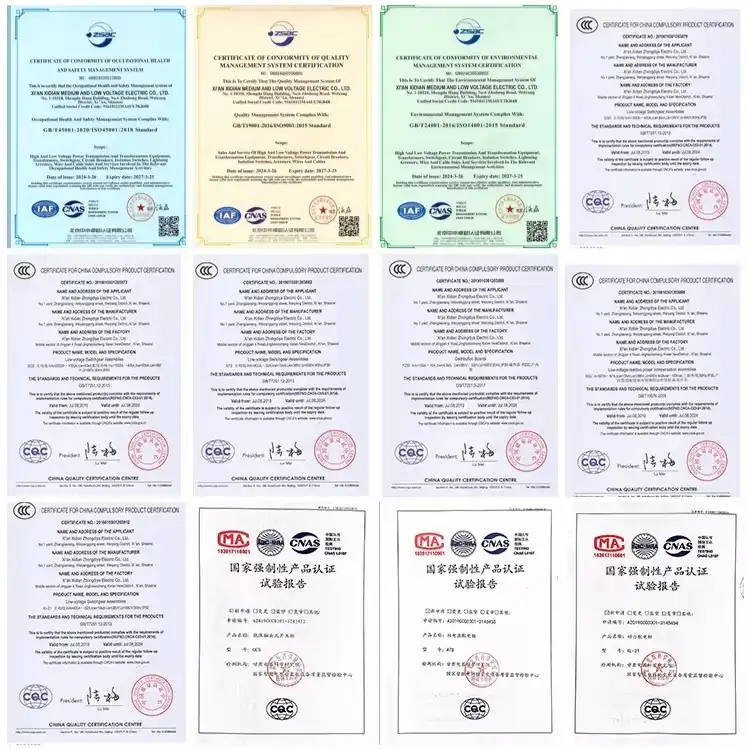
OEM switchgear makers often need custom holes, more than one core, unique connections, and clear levels of insulation. When looking for an indoor current transformer, you should find out if the company is a manufacturer or a trader. You should also ask for drawings, type test records, routine test reports, and sample lead times. Price should be based on total cost, not unit price, because a bad CT can lead to extra work, wrong data, downtime, or issues with compliance. Rhythm of delivery is also important. In this business, it's normal to have annual supply agreements with monthly buy orders. Make sure that your supplier can keep up with your cabinet plan. Xi'an Xikai has seven product groups, 34 models, and more than 100 variants. One of these is instrument transformers, which lets us match CTs with the switchgear that goes around them.
Conclusion
An indoor current transformer inside a building changes a strong primary current into a safe 1 A or 5 A signal that meters and relays can use. Its main benefits are accurate measurements, reliable protection signals, a small size, and low maintenance. Casting in epoxy resin improves insulation and strength, and dry-type building stays away from the oil and fire risks of oil-immersed units. When it comes to new switchgear, a fixed-core indoor unit works better than an outdoor or split-core type. To make a good choice, you need to match the voltage, current ratio, accuracy class, burden, core material, and physical dimensions. You also need to make sure you don't make mistakes like using a metering core for protection or opening an energized secondary. This 24 kV model follows GB 20840.2-2014 and IEC 61869-1 and 61869-2 and can handle 20–3150 A at 50/60 Hz. The total cost, the paperwork, and the ability of the supplier are more important than the unit price.
FAQ
1. What is the difference between Class 0.5 and 5P10?
You can use Class 0.5 to read meters. It keeps current error to 0.5% at rated current, which is good for monitoring and billing. 5P10 is a class of safety. It keeps the total error to 5% at ten times the rated current, which means that even when there is a fault, a relay can still get a signal that it can use. A lot of panels have one of each type of core.
2. Should I choose a 1 A or 5 A secondary?
First, check the inputs to the switch and the meter. It works well for long cable runs between the CT and the receiver because the 1 A output cuts down on lead-wire loss. Most places with short wires have a 5 A outlet. There are two rated secondary currents for our 24 kV unit: 5 A and 1 A. This means you can use either design.
3. Is an epoxy resin CT maintenance-free?
No. A machine that is filled with oil needs more service, but this one doesn't need any. Check the body for dust, cracks, or heat marks, and make sure the terminals aren't loose. Do regular tests that are part of your site maintenance plan. Dry-type design makes the work easier, but it doesn't get rid of it.
Request an Indoor Current Transformer Quotation from Xi'an Xikai
Need a company that makes indoor current transformers and knows what equipment OEMs need? You can get 24 kV epoxy resin cast units, custom designs, and plateau-type options from Xi'an Xikai at heights of up to 4,000 meters. To serina@xaxd-electric.com, amber@xaxd-electric.com, or luna@xaxd-electric.com, send your ratio, accuracy class, load, drawings, and quantity. Our engineers will look over the request and get back to you with a good idea. To find out more, go to xaxd-electric.com.
References
1. IEC 61869-2 Instrument Transformers – Part 2: Additional Requirements for Current Transformers, International Electrotechnical Commission, 2012.
2. IEC 61869-1 Instrument Transformers – Part 1: General Requirements, International Electrotechnical Commission, 2007.
3. GB 20840.2-2014 Instrument Transformers – Part 2: Additional Requirements for Current Transformers, Standardization Administration of China, 2014.
4. IEEE C57.13 Standard Requirements for Instrument Transformers, Institute of Electrical and Electronics Engineers, 2016.
5. IEEE C37.110 Guide for the Application of Current Transformers Used for Protective Relaying Purposes, Institute of Electrical and Electronics Engineers, 2007.
6. Protective Relaying: Principles and Applications, Fourth Edition, CRC Press, 2014.