What is a Current Transformer and How Does It Benefit Your System?
2026-01-29 15:36:18
How Does a Current Transformer Help Your System? A product is essential for measuring high power system currents by stepping them down to safe, manageable levels for monitoring and protection equipment. This essential component converts dangerous high currents into safe low-current signals for relays, meters, and control systems. System safety, precise power measurement, operational efficiency, and electrical fault protection are the main benefits. Current transformers ensure power quality and equipment safety in industrial, utility, and commercial facilities.

Understanding Current Transformers and Their Essential Role
Current Transformers' Importance in Electrical Systems
Modern electrical systems depend on the product, but many facility operators don't realize their importance until a power quality issue occurs. These devices monitor current flow and provide vital data to keep electrical infrastructure running smoothly.
Current Transformer Function
Electromagnetic induction powers products. When alternating current flows through a primary conductor, a magnetic field induces a proportional secondary winding current. This conversion reduces high primary currents to 5 or 1 ampere secondary values, making them safe for measurement and protective equipment.
Current Transformer Technology Improvements
Precision and reliability are improved by modern product materials and manufacturing methods. High-permeability silicon steel cores minimize losses and maintain linearity over wide operating ranges. Secondary windings use precision-wound copper conductors for consistent turns ratios and low temperature drift.
Installation Matters for Different Applications
Installation depends on application. Window-type products fit over existing conductors for retrofits. For new installations that require precise measurement, wound primary types are best. Split-core designs reduce upgrade downtime by installing without disconnecting circuits.
Integrating Monitoring and Protection Systems
Standards output signals from products allow integration with monitoring and protection systems. These accurate current measurements enable real-time power system operation decisions by digital relays, energy management systems, and SCADA networks. Modern smart grid applications require current transformers' integration.
Critical Problems Current Transformers Solve in Power Systems
Challenges in Electrical Systems
Numerous challenges threaten electrical system safety, efficiency, and reliability. Measurement accuracy and protective responses to dangerous conditions are addressed by current transformers.
Overcurrent Protection Role
Overcurrent protection is vital to products. Current transformers instantly signal protective relays to isolate circuits when equipment draws excessive current due to faults or overloads. This quick response shields equipment, reduces fire risks, and stabilizes systems.
Power Quality Monitoring Importance
As sensitive electronics proliferate in industrial and commercial facilities, power quality monitoring becomes more important. Current transformers monitor harmonic distortion, power factor variations, and load imbalances that can disrupt equipment performance or cause premature failures. Facility operators can detect and resolve power quality issues before they affect operations with this monitoring.
Improving Energy and Cost Management
Cost optimization and energy management require accurate current measurement to calculate power consumption, demand charges, and efficiency metrics. Current transformers provide precise data for energy billing, load forecasting, and consumption reduction suggestions. Energy management improvements enabled by product monitoring save many facilities money.
Predictive Maintenance Support
Current signature analysis detects equipment issues before failures in predictive maintenance programs. Current transformers provide detailed current waveforms of motor and rotating equipment bearing wear, rotor issues, and insulation deterioration. Early detection reduces downtime and extends equipment life.
Maintaining High-Voltage Safety
Current transformer applications are driven by safety, especially in high-voltage environments where direct current measurement is dangerous. Current transformers' galvanic isolation protects personnel and equipment from dangerous voltages while monitoring high-current circuits.
Core Features and Advanced Functionality
Transformer design evolution
Transformer design has changed to meet industrial and utility needs. Operators can choose the best solutions for their needs by understanding these advanced features.
Value of Accuracy Class Specifications
Measurement precision across operating conditions is defined by accuracy class. Class 0.2 current transformers are laboratory-grade for revenue metering, while Class 5P devices are sufficient for general protection. The choice depends on application and cost.
Assessment of Burden
Burden capacity determines a current transformer's accurate load capacity. Modern designs support multiple devices without compromising performance with oversized cores and optimized winding configurations. We can connect meters, relays, and monitoring equipment to one product.
Critical saturation traits
Fault conditions can cause currents to exceed normal levels by 20 or more, making saturation critical. Due to their core materials and gap designs, advanced products maintain proportional output under severe overload. This ensures protective systems receive accurate signals when needed.
Temperature Control
Precision and reliability depend on temperature stability. Well-designed products are temperature-compensated and perform consistently across wide temperatures. This stability is crucial for outdoor installations or industrial environments with extreme temperatures.
Frequency Response Enhancement
Frequency response has increased for power quality monitoring. Measure harmonic content and transient phenomena that affect sensitive electronic equipment with modern products from DC to several kilohertz. A wide bandwidth supports advanced power quality analysis.
Manufacturing Excellence and Quality Assurance
Making High-Quality Current Transformers
The manufacturing of high-quality products uses advanced methods to ensure performance and reliability. Buyers can evaluate suppliers and choose products that meet demanding application requirements by understanding these processes.
Advanced Vacuum Casting
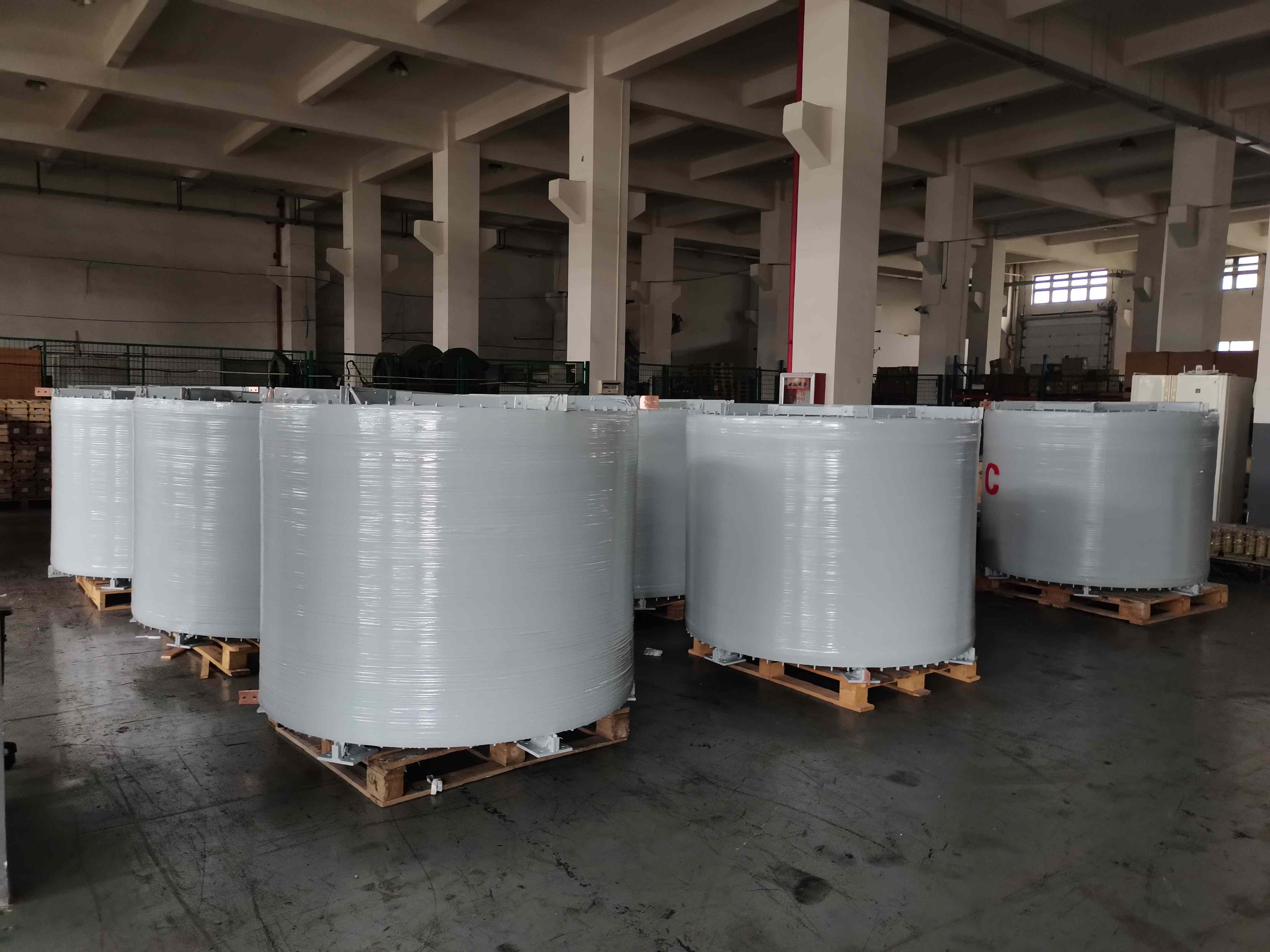
Vacuum casting eliminates air pockets that could compromise insulation. Injecting epoxy compounds under controlled pressure into vacuum chambers with assembled product cores and windings. Superior moisture resistance and mechanical strength are achieved with solid insulation over impregnation.
Precision Winding
Computer-controlled machinery ensures precise turn counts and secondary winding spacing in precision winding. This consistency minimizes unit variations and ensures accurate turns ratios. Auto-winding reduces human error and boosts production.
Prepare Core and Treat Magnetic Material
Selecting and treating magnetic materials is key to core preparation. To improve magnetic properties and reduce losses, silicon steel laminations undergo stress-relief annealing. Core assembly minimises air gaps and ensures magnetic flux uniformity across the product operating range.
Tests for complete quality
Production-wide quality control testing includes multiple verification steps. Tests for ratio accuracy verify turns ratios and performance across the operating range. Safety margins and dielectric strength are verified by insulation tests under high voltage. Burden tests verify loads can be driven without accuracy loss.
Environmentally rigorous testing
Environmental testing mimics temperature cycling, humidity exposure, and vibration resistance. These tests find weaknesses and verify long-term reliability under difficult installation conditions. Current transformers in seismically active areas are tested for earthquake resistance.
Key Advantages and Performance Benefits
Essential Current Transformer Benefits
Current transformers' many benefits make them essential in modern electrical systems. The benefits go beyond current measurement to safety, efficiency, and operational optimization.
Electrical System Safety Improvement
The main benefit of the product technology is safety. Primary and secondary circuits are galvanically isolated to protect personnel from high voltage while monitoring electrical systems. The isolation also eliminates ground loops and interference that could damage sensitive electronics.
Reducing costs
Low maintenance, longer equipment life, and energy efficiency reduce costs. Current transformers support predictive maintenance to avoid costly emergency repairs and downtime. Optimization of power consumption and utility costs are possible with energy management.
Increasing Reliability
Advanced manufacturing and rugged designs improve reliability in harsh operating environments. With minimal maintenance, modern products can last over 20 years. LONGEVITY reduces replacement costs and maintains system performance.
Flexibility for Upgrades
Retrofitting existing installations without major changes increases flexibility. Current transformers with different conductor sizes and mounting configurations simplify upgrades and expansions. Changes in system requirements are easy with modular designs.
Modern System Integration Support
Integration allows modern monitoring and control systems to work seamlessly. Standards output signals work with digital relays, energy management systems, and SCADA networks. Integration supports advanced automation and optimization strategies that boost system performance.
Potential Limitations and Important Considerations
Understanding Current Transformer Limitations
Even though products have many benefits, knowing their limitations helps optimize their use. These considerations during selection and installation prevent issues and maximize ROI.
Knowing Accuracy Limits
Select operating conditions reveal accuracy limitations. Below 10% of rated capacity, products lose accuracy. Applications requiring precise light load or standby current measurement are affected. By shifting normal operating points into less accurate regions, oversizing products can worsen this issue.
Coping with Saturation
Primary currents exceeding design limits, usually during faults, cause saturation effects. High-magnitude currents cannot be accurately reproduced by saturated products, affecting protective relay performance. Careful coordination between product specifications and protective system requirements is needed.
Burden Sensitivity
When loads exceed transformer capacity, burden sensitivity affects accuracy. Each device increases the load, which degrades accuracy or eliminates proportionality. Preventing these issues requires accurate knowledge of all connected equipment during burden calculation during design.
Managing Installation Limitations
Space, mounting, and maintenance access are installation constraints. Existing facilities may struggle to install large products due to clearances and structural support. Avoid costly changes by planning these requirements early in the design process.
Environmental Considerations
Environment influences product selection and installation. While maintaining accuracy and safety, outdoor installations must withstand UV radiation, temperature extremes, and contamination. Maintaining reliability requires proper enclosure and mounting.
Target Applications and Ideal Use Cases
Diverse Current Transformer Applications
Multiple industries use products, each with unique design and selection requirements. Knowing these applications helps find best solutions for use cases.
Useful Things
Utility substations, distribution systems, and renewable energy installations use the product most. This application requires accuracy, reliability, and long service life in harsh environments. Revenue metering drives accuracy specifications, while protection functions determine burden and saturation.
Industry Uses
Manufacturers, refineries, and data centers use products for energy management, equipment protection, and power quality monitoring. Extreme temperatures, vibration, and chemicals are common in these applications. These conditions require robust enclosures and specialized materials for reliable operation.
Use of Commercial Buildings
Current transformers manage energy, tenant billing, and equipment in commercial buildings. As accuracy requirements are lower than in utility applications, cost can be optimized while performance is maintained. Electric rooms often have limited space, so compact designs are chosen.
Needs for Transportation System
Railways, airports, and marine facilities face vibration, shock, and environmental exposure. To withstand dynamic loads and perform reliably, these products need special mounting systems and mechanical strength.
System Integration of Renewable Energy
For monitoring and control, renewable energy systems increasingly use products. For optimal performance and grid integration, solar inverters, wind turbines, and energy storage systems need accurate current measurement. Current transformer designs struggle with wide temperature ranges and rapid current variations in these applications.
Conclusion and Future Outlook
Our power systems run safely and efficiently thanks to current transformers' accurate measurement and protection capabilities. As smart grid technologies and renewable energy integration accelerate, products adapt to new challenges and opportunities. New technologies like digital products with fiber optic outputs, power quality monitoring, and predictive maintenance using artificial intelligence are coming. These advances will boost system reliability and lower operational costs and emissions.
Frequently Asked Questions
Q1: How do I determine the correct current transformer ratio for my application?
A: Calculate maximum expected primary current and choose a ratio that places normal operating current between 25-100% of the transformer rating. Think about future load growth and make sure the ratio has enough resolution for monitoring without overloading.
Q2: What's the difference between metering and protection class current transformers?
A: Metering class current transformers prioritize accuracy at normal currents and may saturate to protect connected meters during faults. Overload protection class devices maintain proportionality to provide accurate fault current information to protective relays.
Q3: Can current transformers be installed on existing electrical systems without shutting down power?
A: Solid-core current transformers must be shut down, but split-core ones can be installed safely. With proper planning and safety, window-type products can be installed.
Partner with Xi'an Xidian for Superior Current Transformer Solutions
As a reliable current transformer manufacturer, Xi'an Xidian Medium & Low Voltage Electric Co., Ltd. provides well-thought-out solutions that meet the strict needs of industrial facilities, utilities, and commercial installations all over the United States. Our modern transformers use advanced vacuum casting technology, precise winding methods, and strict quality control to make sure they are accurate to within ±0.2% and last for 20 years or more. Our products are certified by ISO and meet global compliance standards. They are used in important places like data centers and power substations and come with full technical support and the ability to be quickly customized. For expert advice and custom solutions, email us at serina@xaxd-electric.com, amber@xaxd-electric.com, and luna@xaxd-electric.com.
References
1. IEEE Standard C57.13-2016: IEEE Standard Requirements for Instrument Transformers, Institute of Electrical and Electronics Engineers, 2016.
2. Smith, J.R. and Johnson, M.K., "Current Transformer Technology and Applications in Modern Power Systems," Electric Power Engineering Quarterly, Vol. 45, No. 3, 2023.
3. Anderson, P.L., "Protective Relaying and Current Transformer Performance," Power System Protection Handbook, 4th Edition, McGraw-Hill Professional, 2022.
4. International Electrotechnical Commission, "IEC 61869-2: Instrument Transformers - Additional Requirements for Current Transformers," Geneva, Switzerland, 2021.
5. Williams, S.T., "Smart Grid Integration and Current Transformer Requirements," IEEE Transactions on Power Delivery, Vol. 38, No. 2, April 2023.
6. Brown, R.E. and Davis, C.H., "Current Transformer Applications in Industrial Power Systems," Industrial Power Systems Engineering Manual, 3rd Edition, Butterworth-Heinemann, 2022.