
What Is an Outdoor Vacuum Circuit Breaker? Key Features and Applications
2026-09-30 16:51:28
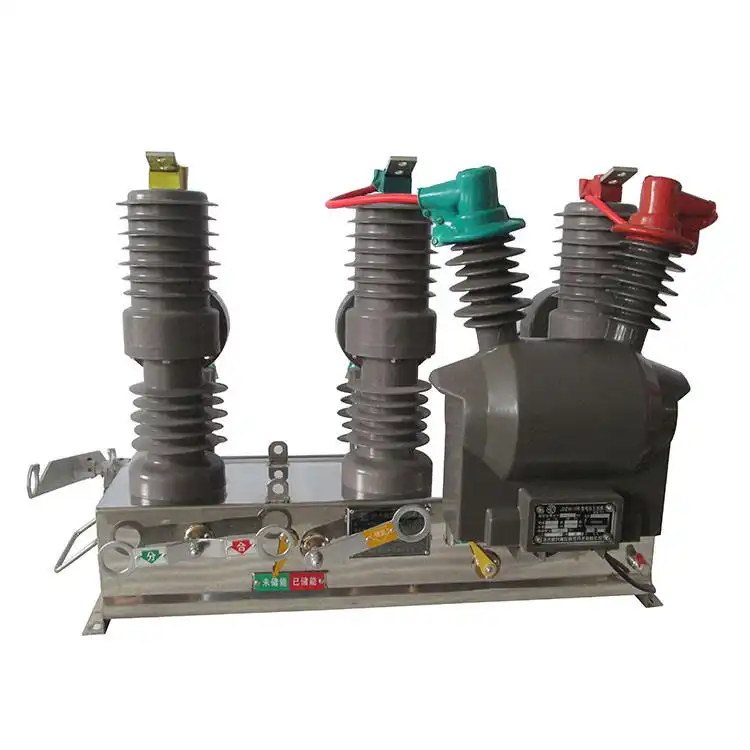
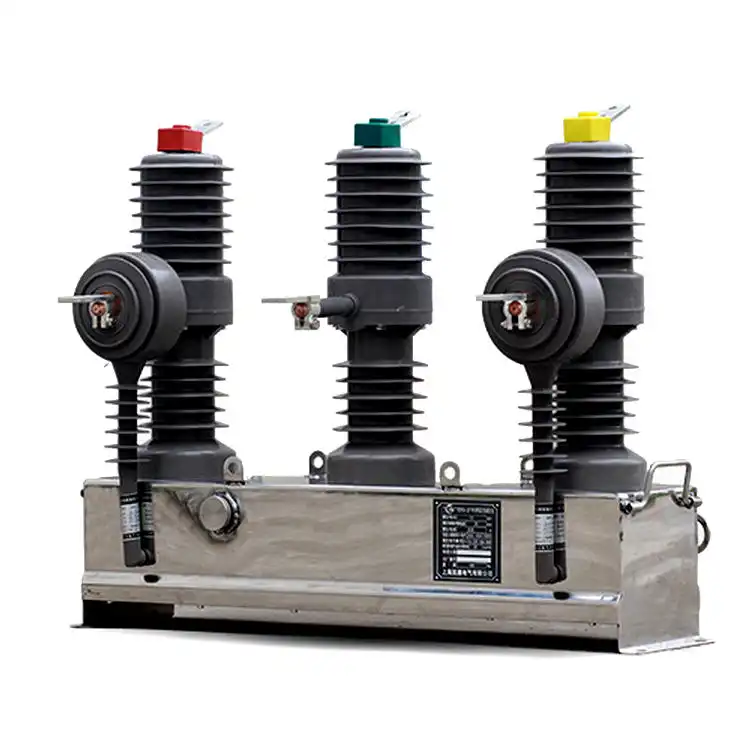
An outdoor vacuum circuit breaker (OVCB) is a medium voltage switching device for interrupting fault currents and protecting power distribution networks in open-air conditions. It employs a sealed vacuum interrupter to instantly kill electrical sparks and does not need oil, gas or air as an insulating medium. The devices are rated from 12 kV to 40.5 kV and are often found in substations, mines, railroads and renewable energy projects, where exposure to the elements and the need for grid stability necessitate equipment that can function under duress.
Understanding Outdoor Vacuum Circuit Breakers: Definition and Working Principle
What Exactly Is a Vacuum Circuit Breaker?
A vacuum circuit breaker stops the flow of electricity by separating contacts inside a room that is shut off and kept at a pressure of less than 10⁻³ Pa. Any spark that forms between the contacts goes out almost quickly because there aren't any gas molecules to keep the ionization going. Because of this physical principle, vacuum interrupters are much better at controlling arcs than older systems that use oil or air breaks.
How the Interruption Process Works
It's either a spring-charged actuator or a permanent magnet actuator that moves the moving contact very quickly away from the fixed contact when there is a fault. The metal vapor collector around the contacts cools the arc plasma that forms for a short time, and it falls apart in milliseconds. From the trip signal to the end of the arc, the whole process usually takes less than 50 ms.
Key Internal Components
There are three main parts of an outdoor vacuum circuit breaker: the vacuum interrupter, the mechanism for operation, and the weatherproof housing. The contact mechanism is inside the vacuum interrupter. The working part stores mechanical energy and releases it when needed. The cover, which is usually made of IP67-rated steel or glass-fiber-reinforced polymer, keeps all the moving parts dry and protects them from dust, water, and temperature changes that would hurt performance in outdoor setups.
Key Features and Advantages of Outdoor Vacuum Circuit Breakers
For outdoor vacuum circuit breakers, procurement engineers usually look at three things: how well they break, how long they last in the environment, and how much they cost over their whole life. One of the goods that Xi'an Xikai makes, the ZW32-40.5, shows how current designs deal with each axis by using measurable data.
Technically, these are the main things that make this type of gadget better than others:
- High breaking capacity with a compact footprint. With a rated voltage of 12 kV (upgradable to 40.5 kV max) and a rated current of 630 A, the ZW32-40.5 can break up to 25 kA. It has an IP67-rated steel body. This makes placement possible in substations with limited room or on poles without lowering the performance of clearing faults.
- Modular spring mechanism for reliable actuation. The spring-loaded actuator holds energy that is not affected by the source voltage. In this case, the breaker can trip during a blackout, which is exactly when fault protection is most needed. Technicians can also fix the mechanism without taking the whole unit out of the circuit because it is made up of separate modules.
- Temperature resilience from -40 °C to +60 °C. Extreme operating temperatures are a common reason why outdoor switchgear breaks. The ZW32-40.5 has been tested across this range using heaters inside the mechanism box that are controlled by a timer to keep the grease's thickness stable during cold starts and stop condensation.
- SF6-free construction. The ZW32-40.5 doesn't produce any greenhouse gases like gas-insulated breakers do, so buying it is in line with corporate sustainability reporting requirements and regional environmental laws.
It's hard for EPC project managers to choose the right equipment for rural substations in Africa or Southeast Asia because of the changing temperatures, high humidity, and limited access for upkeep. These benefits directly address those problems. The small, low-maintenance design lowers the total cost of ownership over the mechanical life of more than 10,000 actions.
Applications and Industry Use Cases of Outdoor Vacuum Circuit Breakers
35 kV Rural and Urban Distribution Networks
In 35 kV substations, outdoor vacuum circuit breakers are used as the main line safety switches. Because they can handle reopening operations often, they work well for upgrading the grid in rural areas where line problems are common and field crews aren't always available within hours.
Mining and Heavy Industry
Explosives and mines often have conductive dust and vibrations that can damage the insulation on switchgear. An outdoor vacuum circuit breaker has a vacuum chamber that is hermetically sealed to keep out outside contaminants. On the outside, silicone rubber insulation stops tracking that is caused by surface deposits. Because of this, OVCBs are a good choice for pit substations and power distribution boards at mine heads.
Renewable Energy Grid Integration
An outdoor vacuum circuit breaker keeps expensive inverters and step-up transformers safe from harmonic-induced faults and voltage changes at 35 kV collection points in wind and solar farms. IoT devices can be added to the ZW32-40.5 as an option to measure load and temperature in real time. This helps with planning preventative maintenance, which cuts down on unplanned downtime at remote power plants.
Outdoor Vacuum Circuit Breaker vs. Other Circuit Breakers: Making the Right Choice
Vacuum vs. SF6 Circuit Breakers
SF6 breakers have great insulating strength, but they are bad for the environment. SF6 is a strong greenhouse gas that can warm the Earth 23,500 times more than CO2 (IEC Technical Report, 2017). This risk is completely eliminated by vacuum technology, which matches the interruption speed of SF6 for voltages up to 40.5 kV.
Vacuum vs. Oil Circuit Breakers
Oil-filled breakers are cheaper up front, but they put you at risk of fire and need to be checked for oil and replaced regularly. For outdoor sites near people or woods, the risk of fire is often enough to keep oil breakers out of the project. Vacuum interrupters don't carry anything dangerous and don't need any fluid upkeep while they're working.
Indoor vs. Outdoor Variants
Indoor vacuum breakers work best in controlled settings like those found in metal-clad switchgear panels. Outdoor vacuum circuit breakers, like the ZW32-40.5, have housings that are waterproof up to IP67, heaters that stop condensation, and UV-resistant insulation coats. One of the most common and expensive mistakes made during the procurement process for EPC projects is choosing an indoor unit for an outdoor use.
Procurement Guide: How to Buy Outdoor Vacuum Circuit Breakers for Your Business
Define Technical Requirements First
Check the rated voltage, rated current, short-circuit breaking capacity, and installation height of any outdoor vacuum circuit breaker supplier before calling them. For projects above 1,000 m, dielectric resist numbers need to be adjusted for altitude. The tools that Xi'an Xikai uses can do their jobs at heights of up to 4,000 meters.
Verify Quality and Certification
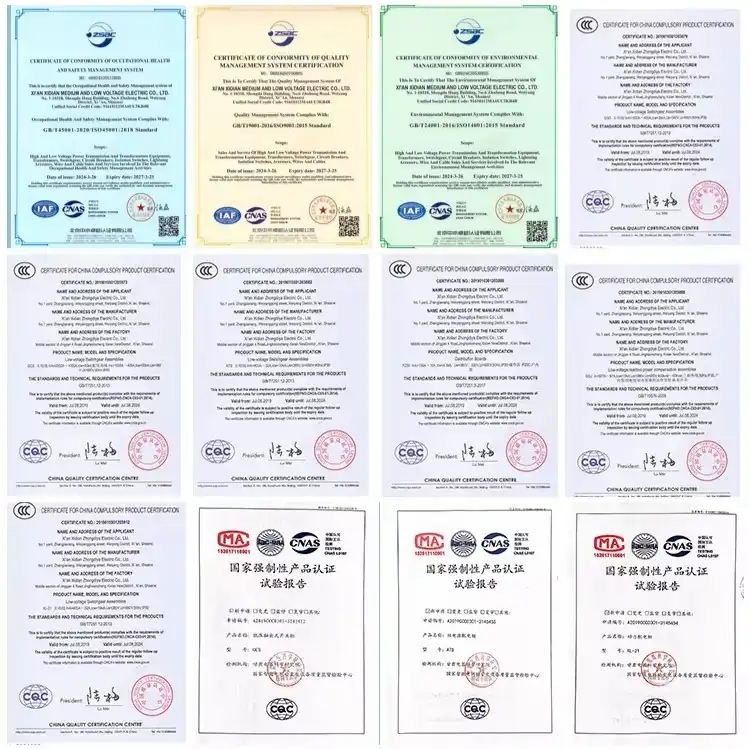
You can ask for test results that include measurements of the power frequency withstand voltage (80 kV/1 min for 40.5 kV class), the lightning impulse withstand voltage (185 kV peak), and the loop resistance measurement (usually less than 60 μΩ). It is necessary to have ISO 9001 approval and follow IEC 62271-100. This business is certified by ISO 9001, ISO 14001, 3C, and IECEx.
Plan for After-Sales Support
When working on projects in remote areas, logistics after the sale are just as important as the quality of the product. Make sure that the company you choose to make your outdoor vacuum circuit breaker keeps spare parts for contacts, mechanism springs, and secondary terminals in stock. Before you sign a purchase agreement, find out if the supplier offers on-site commissioning support or remote diagnostic help.

Conclusion
Outdoor vacuum circuit breakers are now the usual way to protect medium-voltage faults in power plants, substations, and renewable energy sites. Because they are safe for the environment, don't need much maintenance, and can stop an arc quickly, they are clearly better than oil and SF6 alternatives in most outdoor settings. Products like the ZW32-40.5 from Xi'an Xikai show how careful engineering, such as sealed vacuum interrupters, spring-operated mechanisms, and IP67 steel enclosures, directly leads to grid reliability in harsh environments. When EPC teams are buying things for projects in Africa, Southeast Asia, or China's country grid, one of the most important things they have to do is choose the right outdoor vacuum circuit breaker from a reputable maker.
FAQ
1.How often does an outdoor vacuum circuit breaker need maintenance?
Every one to three years, based on how often the machine is used and the weather, routine checks should be done. The vacuum interrupter doesn't need much maintenance, but the mechanism that makes it work should be checked for lubrication, spring tension, and contact over-travel. If the over-travel drops below 3 mm, the interrupter is almost broken and needs to be changed.
2.What factors most affect the lifespan of a vacuum interrupter?
Wear and tear on the actuator connection and contact erosion from multiple fault interruptions are the two main causes. A good interrupter should last 10,000 mechanical operations and 100 full-load breaking operations under normal operating conditions (E2 class, IEC 62271-100) before it needs to be inspected.
3.Can an outdoor vacuum circuit breaker retrofit into an existing substation?
Most of the time, yes. But the space between the poles, the size of the mounting frame, and the layout of the secondary terminals must be the same as the original equipment. Before putting a refit unit into service, you should always compare the three-phase synchronization error (<2 ms) and loop resistance to the original specifications.
4.Is the ZW32-40.5 suitable for high-altitude projects?
Xi'an Xikai's equipment is approved for use at elevations of up to 4,000 m, which means the outdoor vacuum circuit breaker ZW32-40.5 can be used in plateau substations in western China and similar mountain areas in Africa or Southeast Asia.
Get a Quote from Xi'an Xikai — Trusted Outdoor Vacuum Circuit Breaker Manufacturer
Xi'an Xikai Medium & Low Voltage Electric Co., Ltd. designs and makes outdoor vacuum circuit breakers that are tough enough to handle tough conditions in the real world. The ZW32-40.5 has more than 40 patents, is certified by ISO 9001, and has been tested to last 10,000 actions. Get in touch with our engineering team to get project-specific configurations, technical documentation, or a quote from other companies. Or, you can go to xaxd-electric.com or email serina@xaxd-electric.com, amber@xaxd-electric.com, or luna@xaxd-electric.com.
References
1. International Electrotechnical Commission. IEC 62271-100: High-Voltage Switchgear and Controlgear — Alternating-Current Circuit-Breakers. IEC, 2021.
2. IEEE Power and Energy Society. IEEE C37.04: Standard Rating Structure for AC High-Voltage Circuit Breakers. IEEE, 2018.
3. CIGRÉ Working Group A3.27. SF6 Reduction and Alternatives for High-Voltage Equipment. CIGRÉ Technical Brochure, 2017.
4. Greenwood, A. Electrical Transients in Power Systems. 2nd ed. Wiley-Interscience, 1991.
5. Flurscheim, C. H. (Ed.). Power Circuit Breaker Theory and Design. IET Press, 1982.
6. National Energy Administration of China. Technical Specification for 35 kV Outdoor Vacuum Circuit Breakers in Distribution Networks. NEA Standard DL/T 402, 2017.
