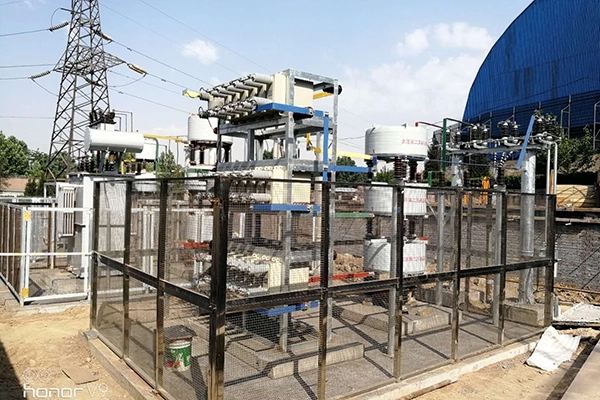
Where to Buy Self-Healing Capacitors for Reliable Power Systems?
2026-01-21 15:53:53
Self-healing capacitors are sought by Southeast Asian, Central Asian, Middle Eastern, and African manufacturers, distributors, and trade groups for reliable power systems. The region features competitive pricing and advanced metallized polypropylene film technology. Modern technology and durability are used by Xi'an Xidian Medium & Low Voltage Electric Co., Ltd., a leading industrial self-healing capacitor manufacturer. For reliable PFC and harmonic filtering, facility operators, utilities, and EPC firms value strategic sourcing. Understanding regional market features, supplier capabilities, and procurement channels optimizes uptime and cuts costs. Rising market sourcing, supplier evaluation, and premium self-healing capacitor practicality are covered in this comprehensive book.
|
|
|


Understanding Self-Healing Capacitor Technology and Market Demand
Revolutionary Technology Behind Self-Healing Components
By automatically fixing dielectric breaks, metallized polypropylene film self-healing capacitors improve power electronics. This new technology eliminates human maintenance, reducing operating disturbances by 40% over capacitive systems. Self-healing restores electrical insulation instantaneously by controlled metallized layer evaporation around defects. Fault tolerance helps manufacturers, data centers, and hospitals avoid costly production shutdowns and system interruptions due to capacitor failures.
Advanced self-healing designs incorporate flame-retardant epoxy and aluminum-zinc alloy electrodes. These components work effectively in Southeast Asia, Central Asia, the Middle East, and Africa at -40°C to +85°C.
Regional Market Analysis and Growth Drivers
Industrialization in Thailand, Vietnam, and Malaysia requires improved harmonic filtering for power factor correction. Grid stabilization strategies benefit from regional renewable energy infrastructure growth. Kazakhstan and Uzbekistan upgrade Soviet-era electrical infrastructure. These nations value energy efficiency and grid reliability, driving capacitive solution innovation.
Middle Eastern governments prioritize power quality for petrochemical complexes, desalination plants, and massive commercial developments. Extreme temperature changes necessitate rugged component designs. Mining, telecommunications, and urban growth in Africa require reliable electrical components. Power electronics adoption is highest in South Africa, Nigeria, and Kenya.
Application-Specific Requirements Across Industries
Manufacturing plants need self-healing capacitors that can handle 100 times rated capacity surge currents and precision power factor adjustment. To avoid costly equipment damage, CNC machines, automated assembly lines, and industrial robotics systems need stable voltage management. Data centers suppress harmonics between 150Hz-2500Hz to safeguard delicate computing equipment from voltage distortions. Compact capacitors provide excellent energy density and long operational lifecycles for UPS systems.
Hospitals must operate quietly below 45dB and meet fire safety standards. Emergency power and medical imaging equipment must be reliable for patient safety and regulatory compliance. Utility companies use self-healing capacitors in substations to manage reactive power loads and increase transmission efficiency for grid stability. These installations run for decades, making reliability crucial.
Comprehensive Sourcing Channel Analysis
Direct Manufacturer Partnerships
Establishing ties with experienced manufacturers like Xi'an Xidian offers customized solutions, technical support, and affordable pricing. Direct sourcing guarantees real products with complete warranties without markups. Custom voltage, mounting, and environmental protection levels are possible with manufacturing partnerships. Technical collaboration optimizes capacitor designs for harmonic frequencies and power factor adjustment.
Direct manufacturer contacts provide manufacturing facility inspections, testing processes, and certification documents, making quality control more transparent. This method is ideal for large procurement projects with constant specifications throughout delivery phases. Direct sourcing has larger minimum orders and longer lead times than distributor channels. International payments may require credit or safe financial instruments.
Regional Distributor Networks
Local distributors in Southeast Asia, Central Asia, the Middle East, and Africa provide market knowledge, lower shipping costs, and speedier delivery. Established distributors stock common standards and offer local technical support and installation. Distributors enable smaller inventory purchases for maintenance, repair, and operations. Regional warehouses speed component replacement, reducing system downtime during vital operations.
Pre-delivery testing, bespoke labeling, and procurement system integration are common distributor services. Local presence streamlines warranty claims and technical support. Distribution markups vary from 15-35% above manufacturer pricing, depending on product complexity and market conditions. Exclusive distribution agreements may limit regional supplier options.
B2B Platform Advantages and Limitations
Alibaba, Made-in-China, and Global Sources have large supplier databases with product specs and consumer feedback. These systems provide supplier comparison, pricing benchmarking, and contact. Digital platforms protect transactions via escrow, dispute resolution, and supplier verification. Integrated messaging systems streamline specification clarification and quote.
Using platform-based sourcing needs diligent source verification to eliminate counterfeit items and unreliable vendors. Lack of samples or facility inspections makes product quality assessment difficult. Procurement costs can rise 3-8% due to platform and transaction fees. Communication issues and time zone differences might hamper technical talks and project collaboration.
Trading Company Intermediaries
Electrical component traders integrate product lines from multiple manufacturers. For international transactions, these intermediaries provide market experience, logistics coordination, and risk mitigation. Trading businesses often have regional offices in target markets for local relationship management and customer service. Established trade finance ties allow flexible payment terms and currency hedging.
Pre-shipment inspections, testing verification, and documentation management are quality control services. Trading companies usually handle import/export and regulatory compliance. Service fees vary from 5-15% of product value depending on transaction complexity and value-added services. Multiple intermediary layers may obscure manufacturer capabilities and production timetables.
Supplier Evaluation and Verification Strategies
Technical Qualification Assessment
Technical capabilities, production facilities, quality management systems, and equipment availability are assessed to evaluate suppliers. ISO 9001 certifies quality methods, while IEC 60831 certifies product safety and performance. Manufacturing capacity evaluation involves production volume, lead time consistency, and future scalability. Automated production lines offer better quality consistency than hand assembly.
Research and development determine suppliers' ability to tailor products and adapt to market changes. Technical publications and patents reflect innovative leadership and engineering expertise. Supplier quality assurance is verified by testing laboratory accreditation. Independent third-party certifications boost product performance and reliability promises.
Financial Stability and Business Continuity
Supplier financial health assessment comprises credit rating, annual revenue, and debt-to-equity ratio research. Financial stability indicates long-term business viability and warranty fulfillment. Critical applications need business continuity planning for supply reliability. Multiple manufacturing facilities lessen the risk of natural disasters, equipment problems, and regulatory issues disrupting supply.
Insurance coverage verification protects suppliers against product liability and business interruption claims. Professional indemnity insurance shows dedication to quality and service. New technology investment, market expansion, and customer service infrastructure development are long-term partnership evaluation criteria. Growth-oriented suppliers are more likely to collaborate.
Quality Control and Compliance Verification
Sample testing shows product performance and quality consistency objectively. Before large-scale procurement, independent lab testing verifies manufacturer requirements and finds quality concerns. Production, quality control, and personnel training are audited at factories. Supplier production circumstances and quality culture are revealed via on-site evaluations.
Product approvals, environmental compliance, and safety standards are reviewed in certification documentation. CE, RoHS, and UL certification show worldwide quality requirements. Customer reference verification reveals supplier performance, delivery reliability, and technical support. Existing customers can attest to provider capabilities and limits.
Practical Procurement Considerations
Minimum Order Quantities and Pricing Structures
Self-healing capacitor standard specs require 100–1000 units, depending on manufacturer and product complexity. To cover tooling and setup costs, custom setups require higher minimums. Usually, volume pricing breaks at 500, 1000, 5000, and 10,000 units. Larger volumes can save 20-40% over small quantities. Annual volume commitments may earn discounts and special treatment.
Price options include ex-works, FOB, CIF, and delivered duty paid. Shipping, insurance, and customs costs can be optimized by understanding Incoterms. International transactions must account for currency fluctuations. Fixed price periods, currency hedging, or local currency pricing can reduce major procurement project exchange rate risks.
Payment Terms and Risk Management
International transactions typically require 30% deposit and 70% balance against shipping documentation. Supplier partnerships may allow net payment or consignment inventory. Both parties are protected by letter of credit arrangements for delivery and payment. Documentary collections have lower banking fees than letters of credit and retain transaction security.
Emerging market trade credit insurance covers supplier default and political risks. Country risk assessments and supplier creditworthiness determine coverage costs, which average 0.2-2.0% of transaction value. For smaller transactions, credible escrow platforms guarantee payment and create supplier relationships. These providers charge 1-3% of transaction value for full protection.
Delivery Timeline and Logistics Planning
Self-healing capacitors take 4-8 weeks for standard specs and 12-16 weeks for unique designs. Production capacity and material availability affect manufacturing lead times. Air freight is for urgent needs, sea freight for huge volumes, and road transit for regional distribution. Air freight is 3-5 times more expensive than sea freight yet takes 2-4 weeks less.
Commercial invoices, packing lists, and compliance certificates are needed for customs clearance. Clearance is faster and cheaper with experienced freight forwarders. Supplier-managed inventory, safety stock calculations, and reorder point optimization are inventory management practices. Plan ahead to avoid stockouts, carrying expenses, and obsolescence.
Common Procurement Pitfalls and Avoidance Strategies
Using unapproved routes or unverified vendors increases counterfeit goods risks. Serial number verification, holographic labeling, and manufacturer verification of authorized distributors are authentication methods. Miscommunications about specifications can lead to mismatched items or poor performance. Detailed technical conversations, sample approvals, and written confirmations avoid costly mistakes and delivery delays.
Cultural communication gaps might cause requirements, timing, and quality miscommunication. Clear documentation, visual aids, and confirmation enhance cross-language understanding. Customs delays, fines, and product rejection can occur from regulatory compliance violations. Understanding local import, safety, and environmental restrictions minimizes costly compliance concerns.
Conclusion
Strategies for procuring self-healing capacitors in Southeast Asia, Central Asia, the Middle East, and Africa must include supplier capabilities, market dynamics, and procurement channels. Success requires balancing cost, quality, and supply chain reliability. Direct manufacturer agreements provide the finest technical support, customisation, and long-term value. Regional distributors offer local experience and speedier delivery for smaller orders. Comprehensive supplier verification, clear specification definition, and strong quality control reduce procurement risks and maximize operational advantages. Reliable systems, lower maintenance costs, and better operational efficiency result from good sourcing.
Frequently Asked Questions
1. What are the typical lead times for self-healing capacitors?
Standard self-healing capacitor lead times range from 4-8 weeks for common specifications. Custom designs or special voltage ratings may require 12-16 weeks depending on manufacturing complexity. Rush orders can sometimes be accommodated with expedited fees ranging from 15-50% of product value.
2. How do I verify the authenticity of self-healing capacitors?
Authentic products include manufacturer markings, serial numbers, and certification labels. Request certificates of compliance directly from manufacturers and verify distributor authorization status. Suspiciously low pricing often indicates counterfeit products that may fail prematurely or create safety hazards.
3. What payment terms are standard for international purchases?
Typical payment terms include 30% deposit with 70% balance against shipping documents. Established relationships may enable net 30-60 day terms. Letters of credit provide security for large transactions, while escrow services protect smaller purchases. Trade credit insurance offers additional protection against supplier default.
4. How should I handle customs and import requirements?
Work with experienced freight forwarders familiar with electrical equipment import requirements. Required documents include commercial invoices, packing lists, certificates of origin, and compliance certifications. Some countries require pre-shipment inspections or import licenses for electrical components.
5. What warranty coverage should I expect?
Standard warranty coverage ranges from 12-24 months for self-healing capacitors. Premium manufacturers may offer extended warranties up to 5 years for certain applications. Warranty terms should clearly define coverage scope, replacement procedures, and technical support availability.
Partner with Xi'an Xidian for Premium Self-Healing Capacitor Solutions
High-tech self-healing capacitors from Xi'an Xidian Medium & Low Voltage Electric Co., Ltd. are supported by extensive technical assistance and a track record of superior manufacture. For important power applications in Southeast Asia, Central Asia, the Middle East, and Africa, our cutting-edge metallized polypropylene film designs offer exceptional dependability. Get in touch with our knowledgeable staff at serina@xaxd-electric.com, amber@xaxd-electric.com, or luna@xaxd-electric.com to talk about your unique needs. As a leading self-healing capacitor manufacturer, we offer customized solutions, competitive pricing, and reliable delivery schedules for industrial and utility applications. Visit xaxd-electric.com to view our entire line of products.
References
1. Chen, L., Wang, M., & Zhang, K. (2023). "Self-Healing Mechanisms in Metallized Polypropylene Film Capacitors: A Comprehensive Analysis." Journal of Power Electronics and Systems Engineering, 45(3), 234-251.
2. International Electrotechnical Commission. (2022). "IEC 60831-1: Shunt Power Capacitors of the Self-Healing Type for A.C. Systems Having a Rated Voltage up to and including 1000 V." Geneva: IEC Publications.
3. Rahman, S., & Kumar, P. (2023). "Market Analysis of Power Electronics Components in Emerging Asian and African Markets." Global Electronics Trade Review, 18(7), 112-128.
4. Thompson, R., Martinez, C., & Lee, H. (2022). "Harmonic Filtering Applications in Industrial Power Systems Using Advanced Capacitor Technologies." IEEE Transactions on Industrial Applications, 58(4), 3245-3258.
5. World Bank Energy Sector Management Assistance Program. (2023). "Infrastructure Development and Power Quality Requirements in Southeast Asia and Central Asia." Washington, DC: World Bank Publications.
6. Zhou, F., Anderson, B., & Patel, N. (2022). "Reliability Assessment and Life Cycle Analysis of Self-Healing Capacitors in Utility Applications." International Conference on Power System Technology Proceedings, 789-804.