Why Power Factor Matters for Your Factory’s Bottom Line
2026-05-22 16:05:33
Power factor directly impacts your factory's profitability by determining how efficiently electrical energy converts into useful work. When your facility operates with a low power factor—typically below 0.90—utility companies charge penalty fees because your system demands excessive reactive power, which strains the grid without performing productive work. Installing a Power Factor Correction Capacitor solves this issue by compensating for reactive energy, reducing kVA demand, and cutting monthly electricity costs significantly while extending equipment lifespan.
Understanding Power Factor and Its Impact on Industrial Efficiency
Power factor is the ratio between the amount of real power (in kilowatts) that does work and the amount of perceived power (in kilovolt-amperes) that companies have to provide. When you have motor-driven equipment, transformers, and magnetic loads in an industrial building, the current naturally lags behind the voltage. This causes a phase shift between the voltage and current waves. Because of this imbalance, your electrical system has to carry more power without producing the same amount of output.
The Hidden Costs of Poor Power Factor
When a manufacturing plant's power factor falls below what was agreed upon by the energy company, they often have to pay extra fees. Depending on where you live and how your energy company sets their rates, these fines can raise your annual costs by 10 to 30 percent. A low power factor has effects on more than just bills. The high current flow speeds up the wear and tear on switches, wires, and protection devices.
When multiple magnetic loads are running at the same time during peak production hours, voltage drops become noticeable. Sensitive machines like CNCs and programmable logic controllers act in strange ways, which can cause problems with the quality of the work and unplanned downtime. The heat puts more stress on the wires and bus bars, which makes fires more likely and calls for more frequent checks.
Quantifying Operational Impact
With a 500 kW load, a data center running at 0.75 power factor needs 667 kVA from the grid. But when the power factor is corrected to 0.95, the demand drops to just 526 kVA. This 141 kVA cut frees up capacity on transformers, slows changes to infrastructure, and lowers distribution losses. Getting rid of reactive power use in HVAC systems and lighting ballasts has similar benefits for hospitals and business buildings.
According to research from the Department of Energy, sites that raise the power factor from 0.80 to 0.95 cut line losses by about 18%. This means that distribution networks can actually save money. Utility companies gain from more stable grids because they can put off making big investments in production and transportation capability.
How Power Factor Correction Capacitors Work to Optimize Your Facility
When inductive loads produce lagging current, reactive power adjustment devices produce leading current that cancels it out. When put correctly in your electrical system, these parts bring back the proper phase relationship between voltage and current, which makes the flow of energy more efficient.
Technical Operation Principles
A Power Factor Correction Capacitor stores electricity in an electric field and sends it out during the AC cycle when loads that need magnetizing current need it. This nearby source of reactive power makes upstream transformers and utility lines less busy. Since the capacitor's resistance drops with frequency, it is very important to get the right size to avoid resonance with equipment that makes harmonics, such as variable frequency drives.
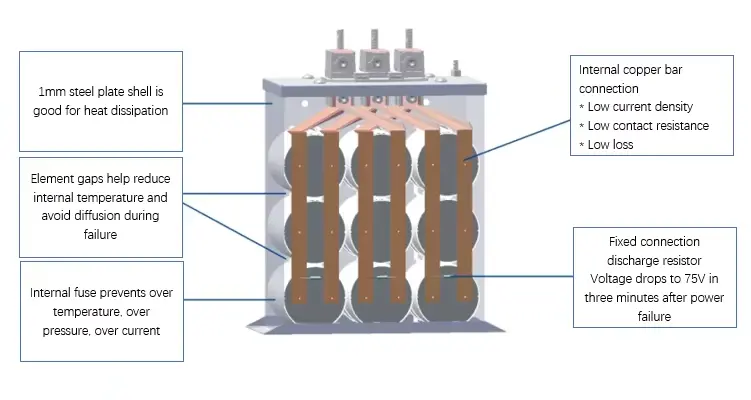
These days, modern units use metallized polyethylene film insulator, which can fix itself. When tiny holes appear in the dielectric layer, the metalized coating vaporizes around them, sealing off the damaged area while the capacitor keeps working. When compared to traditional paper-oil forms, this technology greatly increases the service life.
Comparison with Alternative Solutions
Synchronous condensers let you control reactive power, but they take up a lot of floor room, need regular upkeep, and cost more to buy. Through contactor-switched stages, automatic capacitor banks respond dynamically to changes in load. This makes them perfect for facilities with very changeable demand rates. Static VAR compensators offer immediate reaction, but they come at a high cost that is only justifiable in certain situations, like arc furnaces.
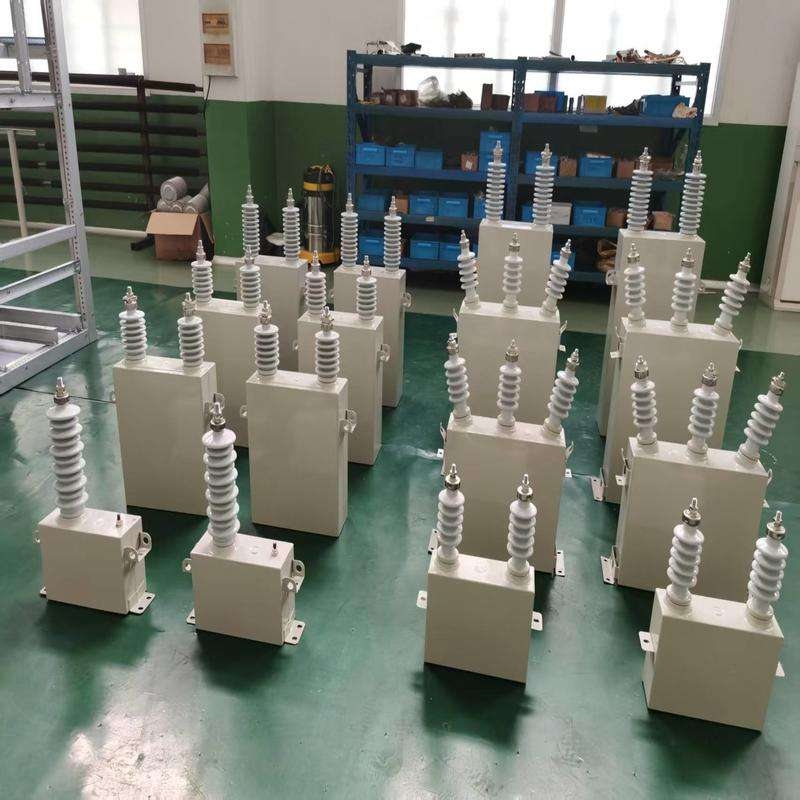
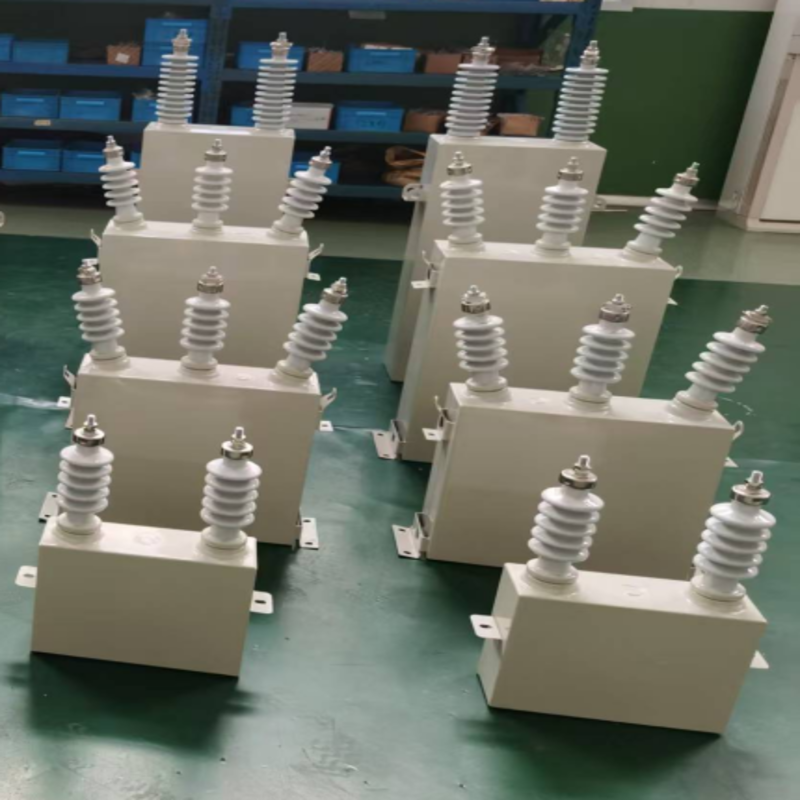
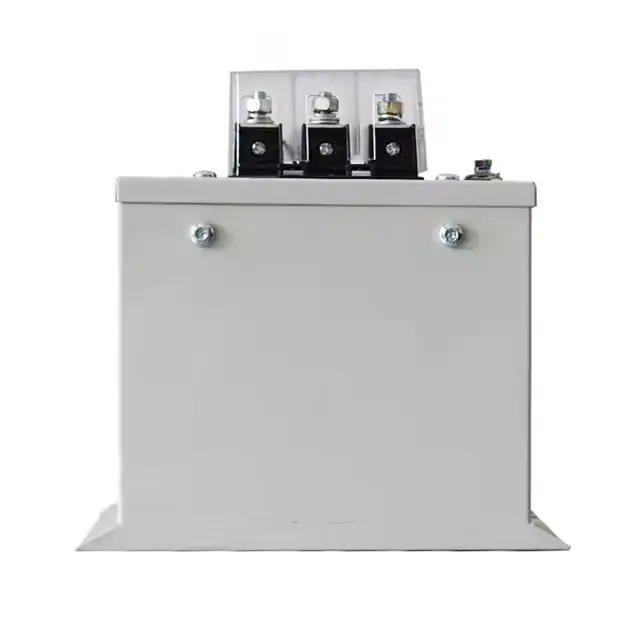
Capacitors are the most cost-effective way to power steady industry loads where the demand for reactive power stays pretty steady. This method is shown by the 50kVAR Self-healing Capacitor for PFC-Square BKMJ, which provides stable correction with low upkeep needs. It is made of stainless steel, which is strong enough to survive tough industrial settings. The customizable terminal blocks (M6, M8, M10) allow for a variety of fitting situations.
The device works with voltages from 100V to 1000V and at either 50Hz or 60Hz, so it can be used for projects in different countries. There are different ways to connect, such as delta, wye, wye-neutral, and independent layouts. This gives builders and people who are remodeling a lot of options.
 |
 |
Selecting and Sizing the Right Power Factor Correction Capacitor for Your Factory
To choose the right Power Factor Correction Capacitors, you should first measure your facility's power factor under normal working conditions. Power quality monitors record real-time information that displays trends of kW, kVAR, and kVA demand during production processes.
Calculation Methodology
The needed capacitive reactive power (kVAR) is equal to the difference between the current reactive demand and the goal reactive demand, which has been taken into account. To find the formula, multiply the actual power load of your building by the slope of the phase angle difference between the current and targeted power factors. Most facilities aim for 0.95 to 0.98 to find the best mix between the benefits of adjustment and the risks of leading power factor.
When you don't choose the right size, you may have to pay extra for utilities and not save as much energy as you could. On the other hand, when you choose the wrong size, you may experience problems with voltage rise and new utility fees. With a capacitance variance of -5% to +10%, the BKMJ series' output runs from 10 to 100 kVAR, making it easy to match exact needs.
Environmental and Installation Considerations
The temperature around a capacitor affects how well it works and how long it lasts. The square BKMJ form works steadily from -25°C to 50°C, which is most industry indoor settings. Installations higher than 2000 meters need derating or special versions to make up for the lower air density that makes it harder for heat to escape.
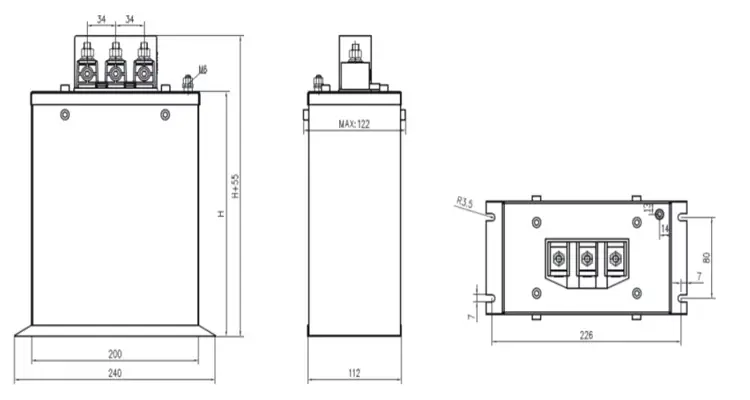
To make sure there is enough air flow, physical placement needs to be at least 50 mm away from walls and equipment next to it. The stainless steel case protects against mechanical damage and electromagnetic interference, which keeps nearby control systems from being affected. When mounted indoors, internal parts are kept safe from water and dirt that can damage dielectric materials.
Vendor Selection Criteria
Professionals in charge of buying things should check that manufacturers have the right certifications, such as ISO 9001 for quality management and ISO 14001 for environmental compliance. The test results should show that the dielectric strength is correct, that it can withstand changes in temperature, and that the capacitance stays stable across the recommended voltage range.
The strict quality standards at Xi'an Xikai are upheld by thorough testing methods that put each unit through voltage withstand tests and loss angle measures. Their production methods use unique new ideas that were created through joint study, which makes sure that their goods meet both national and foreign standards.
Installation, Maintenance, and Troubleshooting Best Practices
To properly install reactive power adjustment equipment, you need to plan ahead and follow electrical rules. Site surveys should find the best link places that balance the benefits of localized repair with the ease of centralized control.
Installation Protocols
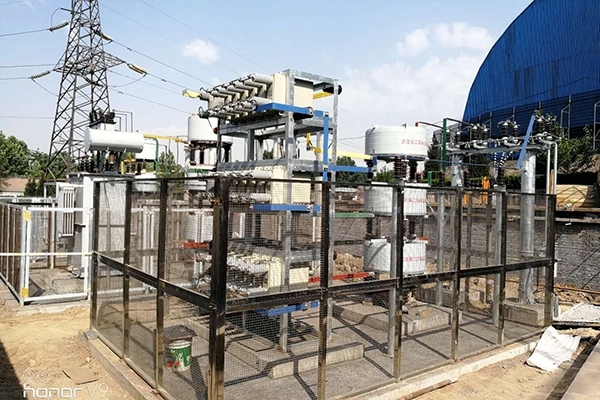
Capacitors can be put in at the main distribution switch to fix the problem across the whole building, or they can be put next to specific motor loads to fix just those. Fixed correction ties capacitors to certain equipment permanently and starts working automatically when the load turns on. Centralized banks with automatic switching can adapt to different load situations, but they need control switches and contactors to do so.
Terminal links need to be able to handle the expected current levels. The BKMJ series has connectors that are the right size based on their kVAR grade. Specifications for torque make sure that links are safe and don't boil or arc. Discharge resistors must be checked to make sure they lose any remaining charge within three minutes of being turned off. This keeps repair workers from getting shocked.
Preventive Maintenance Schedule
Inspections should be done every three months to look for physical damage, make sure cooling airflow isn't blocked, and use special test tools to measure capacitance degradation. Thermal imaging can find growing hot spots that mean there are problems with the link or inside the device before they cause a major failure.
Modern units require less care than older ones because they have self-healing technology, but they still need to be watched over. Power factor trends should be tracked by operators through building management systems. Unexpected declines should be seen as signs of capacitor failure or changes in load patterns that need to be recalculated.
Common Issues and Solutions
Electronic drives can cause harmonic distortion, which can make capacitors boil and fail before they should. Series reactors, also known as detuned filters, stop higher frequencies but let current pass at the basic frequency. When the square BKMJ is used in moderately harmonic settings, its low dissipation factor (tanδ<0.001) keeps internal losses to a minimum.
When switching processes or lightning hits cause too much energy, it can damage capacitors. When safety devices like fuses and surge arresters work together properly, they keep capacitor banks from being overloaded. Testing safety systems on a regular basis makes sure they work right when there is a fault.
Making the Investment: Comparing Solutions and Understanding ROI
When making decisions about capital allocation, you have to look at a lot of technical and financial factors to find the best reactive power compensation methods for your building, including selecting the right Power Factor Correction Capacitor solutions.
Economic Analysis Framework
Figure out the basic costs, which should include fines from the energy company, charges for high demand caused by reactive power, and machine losses. Create post-correction situations that show fines being dropped, kVA billing demand going down, and less energy being wasted. Payback times are usually between 12 and 36 months, but they rely on the current power factor levels and energy rates.
If a production company that uses 0.82 power factor and spends $500,000 a year on electricity is fined $45,000. If you change the value to 0.96, these fees go away and distribution costs go down by about $18,000 per year, saving you $63,000 per year. The cost of installing a capacitor bank is about $75,000. The money is returned within 14 months.
Technology Comparison Matrix
When looking at replacement solutions, these are the main things you should think about:
- Static Capacitors: Lowest initial cost, minimal maintenance, suitable for steady loads, require manual or automatic switching for load variation response
- Synchronous Condensers: Continuous reactive power adjustment, inherent short-circuit current contribution, significant floor space and maintenance requirements
- Static VAR Compensators: Instantaneous response without mechanical switching, highest capital cost, justified for rapidly fluctuating industrial processes
- Hybrid Systems: Combine capacitor banks for steady compensation with dynamic devices for rapid response, optimized cost-performance balance
The 50kVAR self-healing capacitor represents proven technology delivering reliable performance with straightforward integration into existing systems. Its compact footprint and robust construction make it practical for space-constrained installations, while the self-healing mechanism extends operational life beyond conventional designs.
Real-World Performance Data
A hospital complex in the Midwest United States installed reactive compensation at main distribution panels and large motor loads, improving power factor from 0.79 to 0.94. Monthly electricity costs decreased by $3,200, with transformer loading reduced by 15%. The freed capacity supported adding medical imaging equipment without upgrading service entrance infrastructure, avoiding $180,000 in construction costs.Distribution utilities benefit from reduced reactive power flow through transmission networks. One regional operator documented 8% capacity increase on constrained feeders after industrial customers implemented correction programs, deferring substation expansion projects valued at $2.3 million.
Conclusion
Power factor correction delivers measurable financial benefits while enhancing electrical system reliability and equipment longevity. Industrial facilities, utility operators, and engineering firms all gain advantages from properly implemented reactive compensation strategies using Power Factor Correction Capacitor systems. Modern capacitor technology with self-healing capabilities provides cost-effective solutions requiring minimal maintenance intervention. Accurate sizing based on actual load characteristics ensures optimal performance without over-compensation risks. When integrated with comprehensive facility electrical management, power factor improvement becomes a foundational element of operational excellence.
FAQ
1. What industries commonly use the 50KVAR Self-healing Capacitor for PFC?
A lot of different places use the capacitor, like steel and metalworking facilities, business buildings, green energy systems, industrial plants, and power engineering projects that need to reliably balance reactive power.
2. What are the available voltage and output ranges for this capacitor?
The capacitor can handle maximum voltages between 100V and 1000V and has an output range of 10kV to 100kV, so it can be used in a number of low- and medium-voltage situations.
3. What makes the self-healing technology important?
The self-healing system fixes small electrical breaks inside the capacitor itself. This helps the equipment stay stable, cuts down on downtime, and lasts longer.
Upgrade Power Efficiency Today
Want to save energy waste and stabilize your manufacturing or commercial electrical system? Advanced power distribution solutions from Xi'an Xikai Medium & Low Voltage Electric Co., Ltd. are trusted in power engineering, steel, petrochemical, rail transportation, renewable energy, and industrial manufacture. Xi'an Xikai, one of China's top medium and low-voltage electrical equipment manufacturers, provides dependable and tailored solutions globally using patented technology, strong R&D, and international manufacturing standards.
Our recommended Power Factor Correction Capacitor — the 50KVAR Self-healing Capacitor for PFC (Square BKMJ) — is designed to optimize reactive power compensation while lowering electricity costs and extending equipment lifespan. Featuring self-healing technology, durable galvanized steel housing, flexible connection configurations, and excellent thermal performance, it ensures stable long-term operation in demanding industrial environments. With ISO-certified manufacturing, strict quality testing, and customizable options, Xi’an Xikai provides dependable products backed by responsive technical support and fast delivery.
Contact our sales team today for pricing, technical consultation, or bulk order inquiries at serina@xaxd-electric.com or amber@xaxd-electric.com or luna@xaxd-electric.com.

References
1. Sankaran, C. (2017). Power Quality Management in Industrial Electrical Systems. Industrial Press Inc.
2. Dugan, R.C., McGranaghan, M.F., Santoso, S., & Beaty, H.W. (2012). Electrical Power Systems Quality, Third Edition. McGraw-Hill Education.
3. Institute of Electrical and Electronics Engineers. (2014). IEEE Recommended Practice for Monitoring Electric Power Quality (IEEE Standard 1159-2009). IEEE Standards Association.
4. Baggini, A. (Ed.). (2008). Handbook of Power Quality. John Wiley & Sons Ltd.
5. Chapman, D. (2018). The Cost of Poor Power Quality: A Report to the European Copper Institute. Leonardo Energy Initiative.
6. U.S. Department of Energy, Office of Energy Efficiency & Renewable Energy. (2016). Improving Motor and Drive System Performance: A Sourcebook for Industry. Advanced Manufacturing Office Publications.