Applications of Dry-type Iron Core Reactors in Renewable Energy Integration
2026-05-22 16:05:36
Dry-type Iron Core Reactors are an important part of integrating green energy because they solve important problems that purchasing managers, system designers, and utility workers face every day. As the number of wind farms and solar systems grows in the US, the need for effective equipment for voltage control, reactive power adjustment, and harmonic filters has grown. These reactors don't have the fire risks that come with oil-immersed options, and their iron cores make them better at controlling magnetic flux. This detailed guide looks at how these devices make the grid more stable, keep sensitive equipment safe in data centers and factories, and help utilities keep the quality of the power even when green sources produce power at irregular times. We base our conversation on practical buying factors, technical details, and success data from real-life situations that help people make smart financial choices. When planning a new solar farm link or updating an old substation, it's important to know what modern filter reactors can do. This will help you meet strict environmental rules and run a great business.
 |
 |
Understanding Dry-type Iron Core Reactors in Renewable Energy
Core Construction and Operating Principles
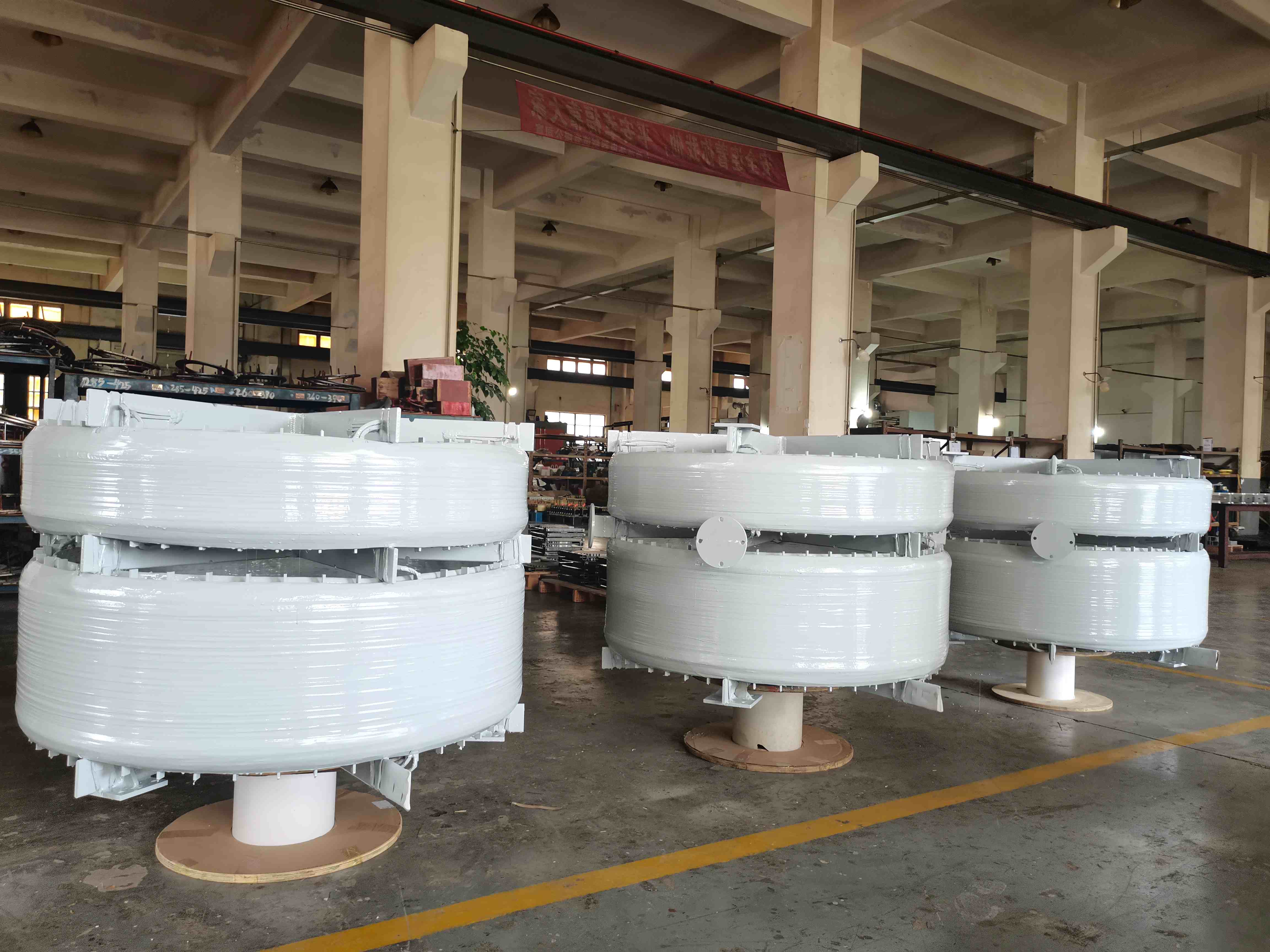
A Dry-type Iron Core Reactor has copper or aluminum coils around a divided silicon steel core. It cools itself with air flow instead of liquid dielectrics. The iron core design focuses the magnetic flux along a clear path, which lowers the amount of unwanted electromagnetic fields that can mess up instruments nearby. Unlike air-core types that need a lot of space between them, these small units fit perfectly into metal switchgear boxes. This is a huge benefit in green energy substations that are short on space. The segmented air-gap design keeps the linear inductance even when the circuit is overloaded. This keeps the magnetic field from becoming saturated during the high inrush currents that happen when capacitor banks switch on or when inverters turn on. This regularity makes sure that harmonic filtering works the same way even when the load changes. This is very important for wind mills that get sudden gusts of wind or solar panels that get cloud cover.
Technical Specifications Driving Renewable Energy Adoption
Voltage levels usually range from 480V for low-voltage uses on business rooftops to 35kV for medium-voltage uses at utility-scale wind farms. The reactance ratios—which are usually 6%, 7%, 12%, or 14%—are chosen based on the harmonic frequencies that need to be blocked. A 7% reactor set with capacitors makes a resonant frequency below the 5th harmonic, which stops the errors from spreading through the grid. Another important condition is noise output. Operational noise levels stay below 75 dB thanks to advanced production methods like vacuum pressure impregnation of epoxy glue and precise core stacking. This low noise level lets them be put in urban substations close to hospitals and office buildings, where regular oil-cooled transformers would be too loud and break the law. The non-flammable building meets NFPA 70 fire codes without the need for expensive control systems. This saves facility owners money on both capital costs and insurance rates.
Role of Dry-type Iron Core Reactors in Renewable Energy Systems
Harmonic Mitigation in Inverter-Heavy Environments
Power processors that change DC to AC or change the frequency to match the needs of the grid are needed for solar photovoltaic systems and wind mills. These inverters make high-order harmonics, especially the 5th, 7th, 11th, and 13th ones. These can cause transformers to overheat, safety relays to stop working, and capacitor banks to lose their effectiveness over time. Dry-type Iron Core Reactors make tuned circuits with low resistance routes for certain harmonic frequencies when they are linked in series with filter capacitors. This keeps these currents away from important infrastructure. A manufacturing plant in Texas recently added a 2 MW solar array to the roof, but its CNC machine centers kept having VFD problems. Putting in detuned reactors with capacitor banks cut overall harmonic distortion from 8.3% to 2.1%. This stopped annoying trips and increased the life of motor insulation by about 40%. This case shows how choosing the right reactive components can protect both new green energy tools and old industry loads that share the same power grid.
Protection of Sensitive Equipment
Equipment that is sensitive to even small changes in power quality can be found in data centers, hospitals, and factories that make semiconductors. A power surge that lasts only milliseconds can damage computer data or stop systems that keep people alive. When these facilities add solar panels to their own property, they add possible harmonic sources directly to their local power grid. As the first line of defense, reactors smooth out the current pattern sent by inverters and stop harmonic resonance with power factor adjustment capacitors that are already in place. Epoxy-resin enclosed coil design can handle temperature cycling without breaking, so the dielectric stays strong even after many charge-discharge cycles. Adding glass fiber support gives the material the mechanical strength it needs to withstand electromagnetic forces during short-circuits, which happen very quickly and cause currents to spike to 100 times their maximum capacity. This tough construction keeps things safe even when they're working in strange ways that would damage less durable parts.
Comparing Dry-type Iron Core Reactors with Other Reactor Types
Safety and Environmental Advantages Over Oil-Immersed Models
Dry-type Iron Core Reactors that are filled with oil have risks that are incompatible with today's standards for viability. Mineral oil can leak and pollute the groundwater and land. It can also start fires that need special tools to put out. Environmental laws are making it harder to use dielectrics made from gasoline near waterways or in places with lots of people. With dry-type construction, these worries are completely taken away because solid insulation materials don't leak and stay stable at temperatures ranging from -40°C to +95°C. Not having to use liquid cooling also makes assembly easier. Bundling oil-immersed units to limit spills, regular dielectric testing, and eventually dumping as toxic trash are all things that these units need. Dry-type reactors come ready to be turned on; all that needs to be done is to place them mechanically and connect the electricity. This faster permitting cuts project timelines by weeks, which is a big help for EPC firms that have to work with tight building plans at green energy sites.
Evaluating Manufacturer Expertise and Product Reliability
Companies that have been around for a long time have decades of experience with core lamination, spinning with precision, and protection systems. Their engineering teams know how to deal with the unique stresses that come with using green energy, like sudden changes in load, high temperatures in the desert for solar systems, and salt mist that breaks down metals at coastal wind farms. Reliable providers do a lot of testing that goes above and beyond what is required by the industry. For example, they do earthquake approval for sites in California or Alaska and altitude derating estimates for wind farms in the mountains. When making a purchase choice, you should look at more than just the specs of the parts. You should also look at how well the seller can make unique solutions. To keep critical computers from being affected by electromagnetic fields, a data center manager might need reactors with very low partial discharge levels of less than 5 pC. A company that connects several wind farms needs to coordinate harmonic filtering across different types of inverters made by different turbine makers. Manufacturers that offer full application engineering support help customers through these tricky situations, lowering the risks of starting and improving long-term performance.
Procurement Considerations for Dry-type Iron Core Reactors in Renewable Energy
Aligning Technical Parameters with Project Requirements
To choose the right reactance numbers, you need to do a full harmonic study of the electrical system. A lot of the time, buying teams start with general requirements and don't do frequency scans to find possible resonance spots. If the resistance features of the system aren't described correctly, a reactor-capacitor pair that is set to get rid of 5th harmonics might instead boost 7th harmonics. Hiring providers who offer modeling services using software like ETAP or SKM PowerTools is a good way to make sure that design choices are correct before the equipment is built. Ratings for voltage must take into account both steady-state situations and short-term overvoltages that happen when switching things on and off or when a problem happens. When transformers disconnect from the grid during problems, voltage spikes happen in renewable energy systems. These surges can be more than 1.5 times the normal voltage. Dry-type Iron Core Reactors with the right Basic Impulse Level (BIL) ratings—usually 95 kV for a 15 kV system—will keep their insulation in good shape for the 30-year design life of the equipment.
Supplier Qualification and Service Capabilities
Check the supplier's ability to help you with your project during the installation, testing, and operating steps, not just the product specs. Manufacturers who give on-site technical support during energization are very helpful for fixing any resonance problems that come up out of the blue. The location of a supplier's service centers affects how quickly they can handle guarantee claims or emergency fixes, which is very important when a plant failure could cut off megawatts of green energy. Getting certified to foreign standards shows that you care about quality management. ISO 9001 approval makes sure that production processes are uniform, and IEC 60076-6 compliance for reactors makes sure that goods meet performance and safety standards that are known around the world. Testing by a third party, like Intertek or TÜV, confirms the stated specs in a reliable way. This lowers the risk of buying from a maker that the buyer doesn't know much about.
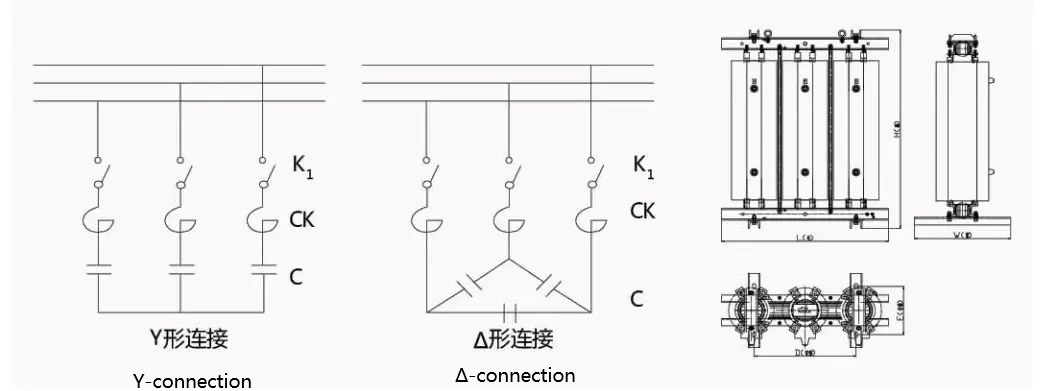
Maximizing Performance: The CKSC Dry-type Iron Core Series Reactor
Advanced Manufacturing for Renewable Energy Demands
Through unique design and strict quality control, our CKSC line solves the special problems that green energy installers face. Epoxy resin vacuum casting is used for the coil building, and it is then cured at 160°C for 48 hours. This process gets rid of any gaps that could be home to partial discharge activity. This results in insulation that can handle the voltage loads that come with grid-tied inverter systems. Adding glass fiber support to the structure of the winding gives it great mechanical strength. When short-circuit currents create electromagnetic forces that are 100 times stronger than regular working levels, these strengthened coils keep their shape and don't crack or bend. The finished epoxy doesn't break down when it comes to wetness, so it can be used in humid seaside areas where offshore wind farms are installed or in farming areas where solar farms use a lot of watering.
Engineering for Operational Excellence
Noise levels below 75 dB are good for urban substations because nearby living areas are protected by laws against sound pollution. Precision core stacking and high-temperature glue keep magnetostriction noises to a minimum, which is a problem with most designs. When putting substations in place for community solar projects or on top of buildings that are already occupied, utility companies like how quiet this process is. Metrics for measuring energy economy show that we care about the environment. Core losses 30% lower than normal options in the industry, meaning measurable practical savings. For example, when losses drop from 0.5% to 0.35%, a 1 MVAR reactor that runs constantly saves about $2,600 a year at standard industrial energy rates. Over the course of 25 years, these savings add up to more than $65,000 per unit, which more than covers the higher cost of purchase. Customization choices meet the needs of a wide range of projects. When replacing old infrastructure, compact-sized types can be used with existing power lines. Desert solar systems in Arizona and Nevada use high-temperature versions that can handle temperatures up to 55°C. Our engineering team works with EPC companies to make sure that the reactor specs are perfect for each green energy application. This way, they can be easily integrated with current control and safety systems.
Maintenance and Operational Tips for Maximizing Reactor Efficiency
Routine Inspection Protocols
Thermal image scans should be done every three months for the first year, for Dry-type Iron Core Reactors, and once a year after that for maintenance plans to work. Infrared cameras find hot spots that mean links are loose, or there are problems inside the windings before they break. Temperature differences between stages of more than 10°C should be looked into right away, since balanced temperature curves mean the system is working properly. Visual checks show that the environment is getting worse, which is a threat to long-term dependability. If the epoxy is being used outside, check the surfaces for cracks that could be caused by changes in temperature or UV light. Even though the material doesn't let water in, dust and other debris can make electrical paths when it's damp. Cleaning the insulation every so often with compressed air keeps it in good shape. This is especially important at coastal wind farms, where salt deposits speed up rusting on uncovered hardware.
Preventive Measures for Common Issues
Over time, mechanical movements from nearby equipment can loosen mounting hardware, which can lead to noise and alignment issues. During regular repair breaks, check the torque specs on the base nuts and busbar links. Reactive forces during switching operations put a lot of stress on the machinery. For example, a Dry-type Iron Core Reactor that goes through 50 switching cycles every day will wear in different ways than one that is always on. Monitoring the environment makes tools last a lot longer. Even though it's designed to work in temperatures up to 40°C, operating above 35°C for a long time speeds up the insulation's breakdown. Installing temperature sensors that can record data helps building managers improve HVAC systems in indoor substations or change the settings for forced air cooling. By keeping an eye on these temperature trends, you can spot cooling fans that are wearing out before they break, which stops unplanned power outages.
Optimizing Performance in Renewable Energy Contexts
When it comes to operation, renewable energy systems have their own problems that regular repair programs might miss. When solar inverters turn on and off with the sun, they cause repeated inrush currents that put different kinds of stress on reactor windings than steady-state industrial loads. Using partial discharge tracking to plan preventative maintenance finds insulation degradation early, allowing planned replacements during planned breaks instead of emergency fixes during times of high generation. Harmonic spectrum analysis should be done once a year to make sure that the filter's performance stays at its best as the linked load profile changes. If a factory that used to work two shifts decides to work 24 hours a day, the harmonic content will change, and the reactor will need to be retuned. Portable power quality testers record voltage and current patterns, making sure that the total harmonic distortion stays within the design limits and that the reactor-capacitor combo stays at its intended resonance frequency.
Conclusion
These days, Dry-type Iron Core Reactors are an important part of modern renewable energy infrastructure. They provide the harmonic filtering, voltage control, and reactive power correction that are needed for safe grid integration. Their small size, lack of flammability, and low upkeep needs make them perfect for the problems that procurement managers, utility operators, and system designers face when putting in large-scale wind and solar power plants. If you know the technical specs that set good products apart, like how much noise they make and how efficient the core is at reducing loss, you can make smart choices that save you money on both the initial investment and the costs of running the product over its lifetime. As the use of green energy grows in power lines, choosing reactor technology that has been tried and tested by reputable companies will ensure that your vital infrastructure works reliably for many years to come.

FAQ
1. How do these reactors improve grid stability in renewable energy systems?
When you put Dry-type Iron Core Reactors in series with capacitor banks, you get tuned filters that soak up certain harmonic frequencies that are made by transformers and power electronics. This harmonic reduction stops resonance situations that could make distortions worse and hurt equipment. They also provide dynamic reactive power correction, which smooths out voltage changes caused by solar and wind power trends that come and go.
2. What distinguishes iron core designs from air-core alternatives?
The iron core design keeps the magnetic flux inside the layered steel core. This lowers the amount of stray electromagnetic fields and makes it possible to place the device close to other equipment. This design takes up about a third of the room of similar air-core types while still being straight enough for use in green energy applications. The smaller size is very important in substations that don't have a lot of room and on rooftops where solar panels are installed.
3. What procurement factors deserve the closest attention?
Look at more than just the basic specs when comparing providers. Check out their application tech help, testing certifications, and service areas they cover. Costs over the course of a product's life, like energy loss and repairs, usually outweigh differences in the original price. Ask for specific information about the product's temperature performance, its partial discharge test results, and its earthquake approval paperwork that is important to the place where it will be installed. Commissioning risks are lower when suppliers have worked on similar green energy projects before.
Partner with Xi'an Xikai for Your Renewable Energy Integration Needs
Xi'an Xikai Medium & Low Voltage Electric Co., Ltd. has been making Dry-type Iron Core Reactors for decades and works with green energy projects all over North America. Our CKSC line gives utility companies and EPC firms the dependability, efficiency, and customization choices they need to successfully combine wind and solar power. We offer complete solutions backed by strict testing methods. Our production skills cover seven product categories, and we have achieved improvements in noise reduction and heat management. If you need help with harmonic analysis, optimizing specifications, or on-site testing, our expert team is ready to help. Email our experts at serina@xaxd-electric.com, amber@xaxd-electric.com, or luna@xaxd-electric.com to talk about the needs of your project.
References
1. Chapman, D. (2019). How harmonic filtering works in renewable energy systems: basic ideas and real-world examples. Power Press for Industry.
2. International Commission for Electrotechnical Standards. (2021). Part 6 of IEC 60076-6 is about reactors and power transformers. Geneva: Publications of the IEC.
3. Singh, S., & Martinez, R. (2020). The Journal of Electrical Power Systems Engineering (45(3)) has an article called "Performance Analysis of Dry-Type Reactors in Wind Farm Grid Integration." It has pages 187–203.
4. National Association for Fire Protection. (2020). There is a National Electrical Code® (NFPA 70). Publications of the NFPA, Quincy, MA.
5. Khan, K., Singh, B., & Chandra, A. (2018). "Reactive Power Compensation Technologies for Grid-Connected Renewable Energy Systems." IEEE Transactions on Industrial Electronics, 65(2), 1582–1595.
6. The U.S. Government of Energy. (2022). Technical Needs and Best Practices for Adding Renewable Energy to the Grid. The Office of Energy Efficiency and Renewable Energy is in Washington, DC.