
Why Use a Dry-type Air Core Shunt Reactor in Substations?
2026-10-30 17:36:19
Why use a dry-type air core shunt reactor in substations? Long lines and cables create extra capacitive reactive power, and that raises voltage when load is light. A dry-type air core shunt reactor absorbs the surplus, holds voltage in range, and does it without insulating oil. The air core cannot saturate, so inductance stays steady during faults, and maintenance stays light. I wrote this guide for design institutes, EPC contractors, and utility engineers who select, specify, and install these units. It also covers which checks matter most before you place an order.
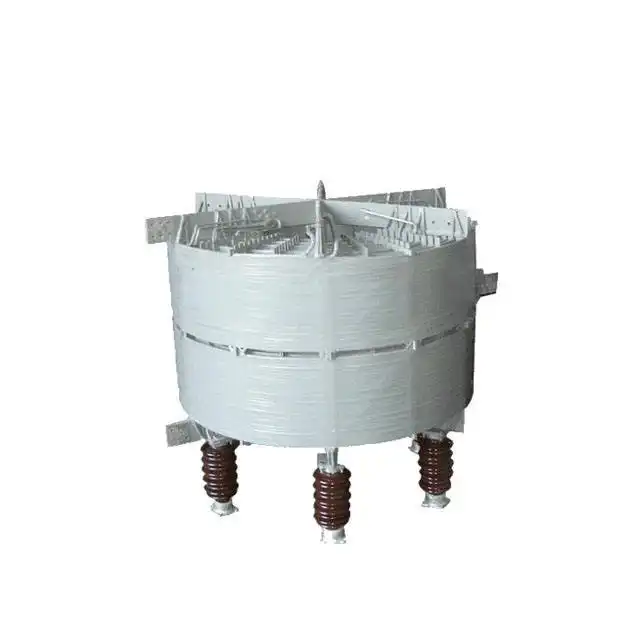
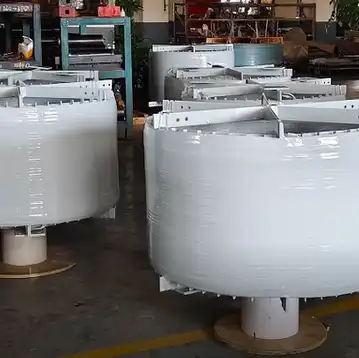
Why Substations Need a Dry-type Air Core Shunt Reactor
Why Shunt Reactors Are Needed in Modern Substations
Because there are so many renewable energy plants and long power lines buried in the ground, the grid has more capacitance. Sometimes when the load goes down, reactive power is added by capacitance. This makes the voltage go up. The end that gets a lightly loaded long line has a higher voltage than the end that sends it. This is called the Ferranti effect. The shielding is put under more stress when the voltage is high, and the switching overvoltage goes up. It keeps the voltage in the right range by taking in the extra reactive power. When project teams look at Mvar, I tell them to look at more than just that. Some of the things that affect the choice are the voltage class, the level of insulation, the losses, the noise, the space, the site conditions, and the cost over the lifetime.
What Is a Dry-type Air Core Shunt Reactor?
A dry-type air core shunt reactor is an electrical device that is connected to the power source in parallel to get reactive power. The core is not iron, but air, and the insulation is not oil, but dry. There are no coolers, pumps, or oil monitors in that design, so there is no core saturation or oil. They have to keep an eye on the shape of the windings, the space between them, the insulation, and the mechanical forces because the magnetic field is open. It has always been safe to be far away from nearby metal parts because the field is open. Some common uses are to control the voltage on busbars, balance the charging current of cables, work in transmission systems, renewable energy substations, and do some harmonic filtering.
How Does a Dry-type Air Core Shunt Reactor Work?
If you connect the reactor to the network it will suck in delayed reactive current. This is compensated by the negative power of the capacitor and the voltage remains constant. Knowing the voltage ( V ) and the inductive reactance ( X L ) allows you to figure out the reactive power ( Q ) . When genuine designs are developed they additionally consider things like standards, harmonics, frequency, phase arrangement, current and so forth. The coil width, wire layout, wire spacing and supports all influence the losses, noise, temperature increase and mechanical strength. Inductance remains relatively stable with current in the absence of an iron core. This means the reactor can maintain a predictable impedance over its operating range. Once you have the voltage and Mvar the size is straightforward to figure out. Natural air cooling, forced air cooling or a combination of the two may be used. This is dependent on the Mvar grade, the temperature, the altitude and the work cycle.
Construction, Advantages, and Technology Comparison
Key Construction and Technical Specifications
An air core shunt reactor that works is made up of many parts that work together to do its job. These include the supports, terminals, cooling paths, base frame, winding, insulation, and any silencing or shelters. Some of the things that are listed in a full specification are the frequency, Mvar, current, inductance, insulation levels, temperature rise, losses, noise, noise reduction method, short-time current, altitude, and environment. More care needs to be taken with lightning impulse withstand (BIL) and insulation coordination when the voltage is 110 kV or higher. The impulse test shows how well the wire can handle lightning-caused changes in the grid. Before they place an order, I also tell them to check that the product meets noise levels, short-circuit performance, mechanical support, and short-circuit performance standards set by IEC, IEEE, or their own country. A type test should also be asked for.
Why Choose a Dry-type Air Core Shunt Reactor for Substations?
One good thing about a dry-type air core shunt reactor is that it can be built without oil. When there isn't any insulating oil, you don't have to think about leaks, fire safety, spill control, or taking oil samples. Since there is no iron core in the second one, it should behave inductively. These advantages are useful in green energy projects, cities, indoor substations, containerized systems, and retrofits. It may also be easier to set up and move dry units because they are lighter than oil-immersed units. There are still things in the design that need to be thought about, like noise, air, fault forces, and space. I think the lifetime review should look at more than just the cost of buying it. It should also look at the costs of losses, cooling energy, civil works, maintenance, and the chance of an outage.
Dry-type Air Core Shunt Reactor Compared With Other Reactor Technologies
The project might adopt iron core design, or oil immersed reactor or dry type air core reactor according to the demands of the project. Dry-type air core units are free from insulating oil, so they avoid oil leakage and oil-related maintenance. They also maintain relatively stable reactance without an iron core and should pay greater attention to sound management, the supports, the footprint and the outside magnetic fields. Various iron core reactors will have different losses, saturation characteristics and harmonic behavior, while different oil-immersed units will have different cooling and installation requirements. If you are doing a comparison, it is appropriate to compare voltage class, Mvar, efficiency, success rate in brief circuits, site circumstances, safety, maintenance and total cost of ownership. If you have to worry about things like oil, fire codes or inspection times, the dry variety could be more economical.
Selection, Installation, and Procurement of a Dry-type Air Core Shunt Reactor
How to Select the Right Dry-type Air Core Shunt Reactor
First, you need to evaluate how much reactive power a dry-type air core shunt reactor can absorb in the idle state and in the emergency state. Now check the system’s voltage, frequency, Mvar, charging lines or cables, voltage-control targets, switching duty, redundancy and grid-code tasks. Know the reactor’s fault current rating, temperature increase, harmonic capability, overvoltage withstand capability, maximum current and reactance tolerance and insulation level. It is highly necessary to consider about elements like height, humidity, pollution, noise, air, size, transit and lifting while designing a site. The US undertakes a lot of seismic testing after IEEE 693. If you expect to use it outside, you should check how well the moving surface will stand up to dirt and rain and ask for a copy of the test done while it was wet. See whether they can test, customize, record, deliver, issue a guarantee and service clients after sale for each supplier.
Installation, Commissioning, and Maintenance Requirements
Good installation of a dry type air core shunt reactor is not just about building a robust basis. List foundation loads, clearances, lifting access, drainage, grounding, ventilation, and distance to control and communications gear. Induced eddy currents may heat metal near the winding, therefore set up the magnetic field to travel around steel structures, cables, fences, and rebar. There are several things to verify before turning on the circuit. Visual inspection, inspection of connections, insulation and winding testing, inductance or impedance tests, grounding tests and protection tests are included. Look for corrosion, noise and vibration and ensure sure the surface does not track. Check connections for torque and clean insulators also. Always have spare monitors and equipment on available in case anything goes wrong.
Procurement Guide: Price Factors, Quotation, Delivery, and Supplier Selection
The pricing depends on voltage class, Mvar, phase arrangement, insulation level, wire material, loss targets, cooling, noise treatment, outside protection, testing, packaging, service scope and kind of service. The RFQ should include information on the site of the project, climate, voltages, frequencies, short circuit level, type of installation, noise limit, height, pollution, standards, FAT requirements, destination, warranty and completion date of the work. It is crucial to compare the estimates on all technical and commercial criteria including what is not included, paperwork, logistics, replacement parts, call back time and so on. A firm that offers dry-type air core shunt reactors must be able to provide engineering assistance, test results, expertise of exporting and long-lasting customer service. Leave time for design approval and manufacturing testing so everyone can agree on the shipment date.
Applications, Selection Mistakes, and Final Decision
Project Scenarios: Where Dry-type Air Core Shunt Reactors Deliver the Most Value
The best way to deal with extra capacitive reactive power without using oil-filled gear is to use a dry-type air core shunt reactor. In transfer substations, the power is controlled on long, lightly loaded overhead wires. It keeps the big charging currents in underground and underwater cable systems in check. It helps keep the power steady and makes sure that solar and wind farms follow the grid's rules. In SVC and STATCOM systems, the inductive branch is made up of a generator that handles fast switches and harmonic currents. Oil-free gear can also be used in retrofits, mobile substations, and small facilities that need special plans. It can also be used in cities that care about fire safety and the environment. You should look at the load-flow, voltage, switching, and protection for each case to make sure they are valid before setting the rating.
Common Selection Mistakes and How to Avoid Them
That is where most people go wrong, they simply look at the rated Mvar and forget about the voltage class, frequency, insulation alignment, operating profile, losses or fault situations. Other errors include to suppose that all dry-type reactors are designed the same, to not pay attention to the limitations of magnetic fields and noise and to not think about how severe short-circuit forces may be. The geometry of the windings, the insulation systems, the supports, the cooling, the testing and the quality of production all influence the service life and life cycle cost. Ensure that designs, calculations, type and frequent testing, FAT procedures, certifications, instructions and spare parts are all agreed before production begins. The design institute, the EPC team and the owner’s engineer should cooperate to undertake a complete examination to uncover these concerns soon. This can reduce the need to reconsider the design, wait for additional approvals, or deal with complications during construction.
Final Decision Guide: Is a Dry-type Air Core Shunt Reactor Right for Your Substation?
If you need to create anything without oil, a dry type air core shunt reactor is a suitable option. It should be reliable, simple to install and less maintenance consuming than oil based reactors. “This is something that everyone working with renewable energy, indoor or urban substations, environmentally sensitive areas, and retrofits should watch closely.” The final selection should be made considering load flow, voltage, reactive power, switches, coordinated shielding and grid code. You don't want to look at just what you spent for anything. You want to look at the overall value. That's stuff like maintenance, upkeep, safety, the danger of downtime and the expense of cooling. If these examinations demonstrate that the equipment does not need oil and there is enough space on site, the dry approach is a reasonable alternative. Then a qualified manufacturer may adjust the ratings, layout, cooling, documentation, testing and aid with activation.
BKGKL Dry-type Air Core Shunt Reactor from Xi'an Xikai
BKGKL Dry-type Air Core Shunt Reactor: Product Overview
You can get the BKGKL Dry-type air core shunt reactor from Xi'an Xikai. This is used to keep the voltage stable and even out reactive power in high-voltage substations. They are linked together in a chain on the low-voltage side of substations with 500 kV, 200 kV, and 110 kV. Long-distance transmission lines have capacitive reactive power that needs to be balanced. They also keep the voltage stable at both the transmission and distribution levels. It keeps the voltage safe by adding inductive reactance to the system. This balances out the reactive current that comes from long wires or overhead lines. And because it's flexible, it's easy to add more space. Its air-core design keeps it from getting too hot. It also keeps the voltage stable in substations, even when green transformers send out power that isn't stable all the time.
Key Features and Benefits
Here are the core advantages of the BKGKL reactor for substation projects:
- Overheating protection: The aluminum windings are epoxy coated, making them resistant to corrosion and thermal stress even during prolonged operation. This creates an outdoor substation winding system that can withstand lengthy duty cycles in sun, rain and airborne contaminants and reduces the likelihood of heat related insulation degradation during the life of the unit.
- Low maintenance cost: Dry type design minimizes oil leakage and decreases the possibility of insulation deterioration. No need for oil sampling, dissolved gas analysis or oil-leak repair, thus regular work is reduced to visual inspection, torque checks on terminals and cleaning of insulators in contaminated areas. Crews spend less time and less money each unit.
- Custom setups & compliance: Opt for desert-rated IP55, seismic-resistant Zone 4, or IoT-enabled versions for real-time monitoring. The reactor is pre-engineered to regional standards: CE for EU, UL/cUL for North America and GOST-R for CIS. Construction without SF6 and use of recyclable materials also meet environmental targets stated by utilities and developers.
These benefits address the issues of overheating, maintenance and standards that most delay a review of a project.
Manufacturing and Quality Assurance for the BKGKL Reactor
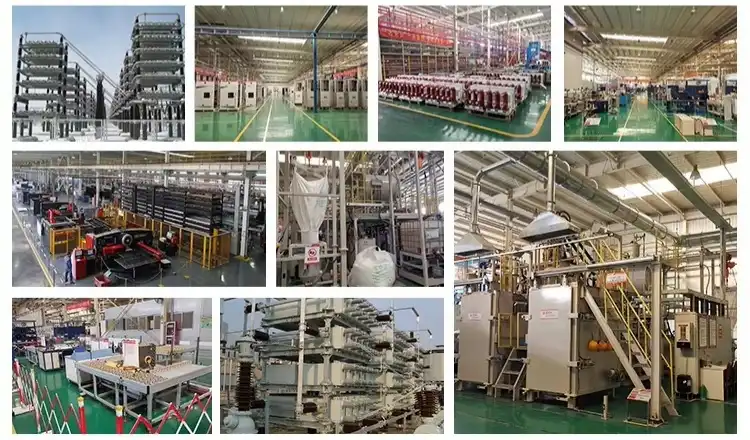
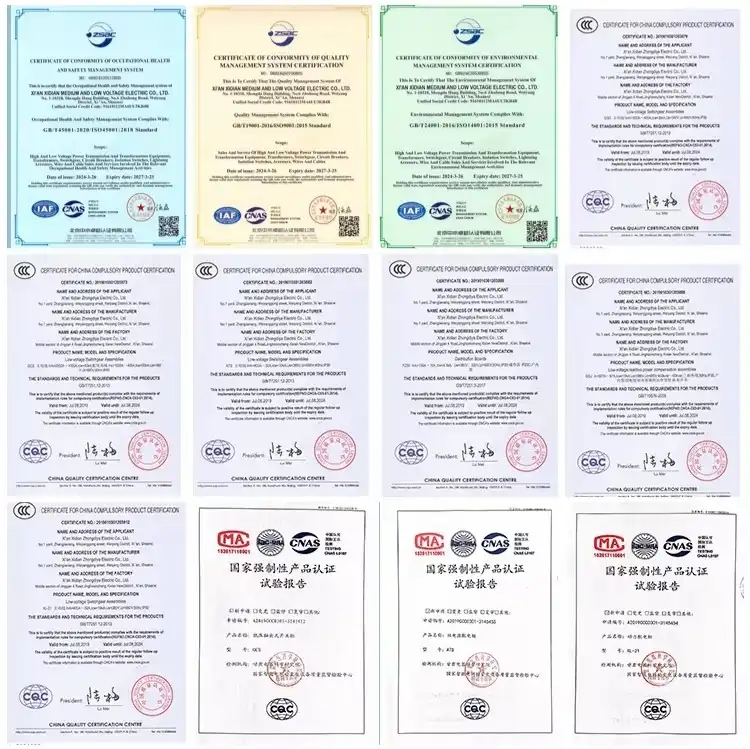
The best metal and epoxy materials from Tier-1 are used to begin with. When machines are used to wind wires, each unit is wound with the same level of accuracy. Every BKGKL reactor goes through tests to make sure it has 100% resistance and a short-term discharge limit of less than 10 pC. This business has been approved by a third party for ISO 9001, ISO 14001, and 3C. People who want to buy something should search for the type test list that works with their project. This list should have tests for temperature rise, lightning strikes, sound levels, and whether the unit is wet or rainy for outdoor units. When you agree to the design, ask for the test plan so that the owner's engineer can sign off on it before it is made.
Why Work with Xi'an Xikai
From Xi'an Xikai Medium & Low Voltage Electric Co., Ltd., you can choose from 7 groups, 34 lines, and more than 100 different types of medium and low voltage electrical equipment. Power delivery systems are also built by the company. Our products are used in rail transportation, petrochemicals, power engineering, State Grid systems, and projects that use renewable energy. Our plateau-type gear can be used up to 4,000 meters above sea level. We've worked with research centers all over the world for more than 25 years to come up with the BKGKL line. More than 30 countries have received more than 10,000 units. The business is called a High-Tech Enterprise in China. We also provide full support 24 hours a day, seven days a week, including technical design and maintenance.
Conclusion
To fix a clear grid problem, a dry-type air core shunt reactor is needed. When there isn't enough load on the line, the voltage goes up because of extra capacitive reactive power from long lines, wires, and green plants. This is because the air core keeps the inductance straight, and the dry insulation stops oil leaks, sampling, and fire risks. This makes maintenance easier. You have to deal with noise, an open magnetic field, and a big space, so you need to plan ahead for air flow, doors, and holes. In order to say which is better, voltage class, Mvar, site conditions, short-circuit duty, and cost over the life of the product must all be taken into account. Full RFQ data, type and routine testing, and careful installation are used to put these benefits to use.
FAQ
1. What does a dry-type air core shunt reactor do?
It takes in capacitive reactive power from long lines and wires. When there isn't much load, this keeps the voltage rise low. It helps keep the power in check in things that use natural, cable, or transfer energy. It's good for high-voltage substations that need to plan for space.
2. How does it differ from oil-immersed and iron-core units?
It doesn't have any oil or core filling because it's made of air and dry insulation. Designs with an iron core or an oil-immersed core are not the same when it comes to losses, cooling, and harmonic behavior. You can choose based on the voltage class, the Mvar, and the factors at the spot.
3. What maintenance does it need?
Clean the insulators and look for tracking on the surface. Also, make sure the connection torque is right. You don't need to get oil samples or fix leaks. Inside the magnetic safety zone, don't put anything metal.
4. What should an RFQ include?
The system's voltage, frequency, Mvar, altitude, pollution, short-circuit level, noise limit, standards, FAT scope, goal, and guaranty should all be written down. These facts help the company that makes the unit be sure it's the right size.
Contact Xi'an Xikai for Your Dry-type Air Core Shunt Reactor Project
Xi'an Xikai can look at the data from your center and tell you how to set up BKGKL. We can help with utility, EPC, and export projects because we make dry-type air core shunt reactors and can offer them a range of options, drawings, test plans, and support. Our hill tools can be used at heights of up to 4,000 meters. Please send an email to serina@xaxd-electric.com, amber@xaxd-electric.com, or luna@xaxd-electric.com if you have any questions or worries. Visit xaxd-electric.com to find out more.
References
1. IEC 60076-6: Power Transformers, Part 6: Reactors, 2007
2. IEEE C57.21: Standard Requirements, Terminology, and Test Code for Shunt Reactors Rated Over 500 kVA, 2008
3. IEEE 693: Recommended Practice for Seismic Design of Substations, 2018
4. Power System Stability and Control, 1994
5. Power System Analysis, 1994
6. J&P Transformer Book, 2007