
Dry-type Air Core Shunt Reactor: Benefits and Applications
2026-10-30 17:36:16
A dry-type air core shunt reactor is an oil free inductive device connected parallel with a power supply. It absorbs extra capacitive reactive power and maintains the voltage within acceptable limits. The advantages include no insulating oil, no magnetic saturation, predictable inductance and minimal regular maintenance. Utility and EPC contractors use it for lengthy transmission lines, substations of 110 kV to 500 kV, renewable energy plants and industrial networks. This article will tell you how it works, where it fits, which specs are important and how to purchase one with confidence.
This guidance has been written for design institute engineers, EPC project managers and electrical experts on the owner’s side. Before approval of a dry type air core shunt reactor, short circuit withstand, inductance linearity, impulse insulation and test records have to be checked. Each part addresses those questions explicitly.
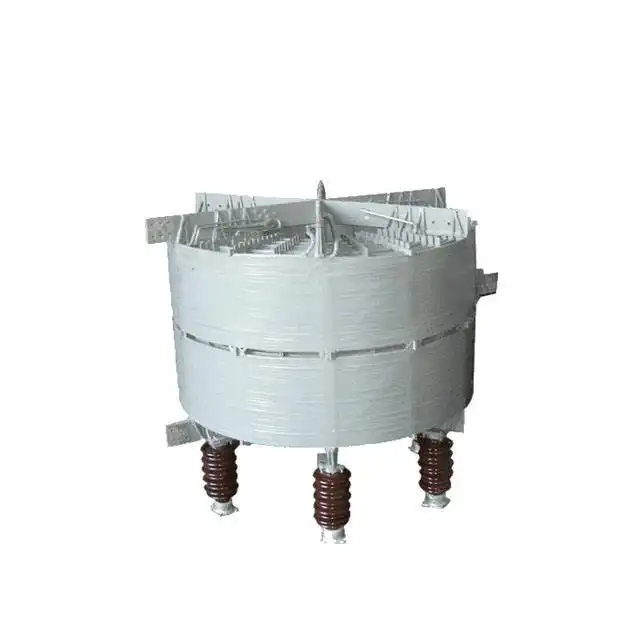
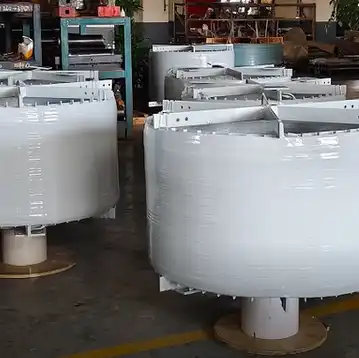
How a Dry-Type Air Core Shunt Reactor Works
Working Principle and Reactive Power Balance
In particular, low load gives rise to capacitive charging current in long overhead lines and cables. This causes voltage to increase at the receiving end. This is called the Ferranti effect. A shunt reactor is connected between the phase and ground that pulls inductive current to compensate for charging current. The absorbed reactive power is Q = V² / X_L where X_L = 2πfL is the inductive reactance. The coil has no iron core so that its inductance is consistent across the current range. The BKGKL Dry-type Air Core Shunt Reactor uses this approach for stabilizing the transmission and distribution voltage. Its modular architecture allows engineers to expand capacity as the system develops.
Construction and Insulation System
The aluminum conductor of a common dry type air core shunt reactor is wound in concentric layers and the coil is bonded with epoxy and fiberglass. Support insulators support the solid coil off the ground and heat is dissipated by natural air cooling via the open spaces between layers. The BKGKL design employs aluminum windings coated with epoxy for resistance to corrosion and heat stress during prolonged operation. The insulation should be compatible with the voltage class, impulse level, pollution, altitude and humidity of the location. The winding shape also defines inductance, temperature increase, mechanical force, noise and stray field surrounding the coil.
Shunt Reactors vs. Series Reactors
Sometimes buyers get the two gadgets mixed up. A shunt reactor is connected in parallel to the system to absorb capacitive reactive power for voltage regulation. Series reactors are connected in series with a feeder or load to restrict fault current, filter harmonics, or regulate inrush current. They perform separate electrical tasks. You can not just switch one for the other. IEEE C57.21 covers shunt reactors rated above 500 kVA, while IEEE C57.16 covers dry-type air-core series-connected reactors. After checking whatever function your single-line diagram asks for, the specification should be written.
Key Benefits of the BKGKL Dry-Type Air Core Shunt Reactor
Oil-Free Design and Lower Maintenance Cost
Dry air core shunt reactor has no oil leakage, no oil sampling, no filtering, no oil fire danger. Routine work includes visual inspections, connection tests, cleaning, temperature monitoring and insulation testing. That’s important at distant substations where each service call is a matter of time and money. The dry design also decreases the danger of insulation damage caused by oil aging. The BKGKL design is free from SF6 and contains recyclable materials, aligning with environmental ideals. The service life is still determined by the quality of the insulation, thermal design, installation work and the working environment. I would suggest that you record the baseline test data upon commissioning.
Linear Inductance and Short-Circuit Strength
Design institutions normally look into three things first: inductance linearity, short circuit withstand, impulse insulation. Because air-core coils have no magnetic core to saturate, their inductance is constant at high current or overvoltage. That delivers a predicted impedance to protection engineers. The robust epoxy-fiberglass housing resists the radial and axial forces produced by fault current. These forces should be included in the manufacturer’s calculations. Your unit also has to satisfy the lightning impulse level (BIL) that your insulation coordination study recommends. Get the type test report in early, since this is frequently what determines whether a design is accepted.
BKGKL Features for Outdoor and Special Sites
Outdoor projects are subject to rain, dust, salt, sun and earthquake stress. The BKGKL series may be customized to be desert-rated (IP55), seismic-resistant (Zone 4) and IoT-enabled for real-time monitoring. The units are pre-engineered to meet regional requirements (CE for the EU, UL/cUL for North America and GOST-R for the CIS). Xikai’s plateau-type equipment in Xi’an also operates in compliance with specifications at elevations of up to 4,000 meters. All projects still need site data. During design confirmation, provide our engineers with the pollution level, altitude, temperature range and seismic class.
Applications of Dry-Type Air Core Shunt Reactors in Power Systems
Long-Distance Transmission and Substations
The BKGKL dry type air core shunt reactor is connected in parallel on the low-voltage side of substations of 500kV, 200kV and 110kV. It offers capacitive reactive power adjustment for long distance transmission lines and maintains the transmission and distribution voltage stability. When the load is low, the line charging current is high in relation to the load and there is a greater danger of overvoltage. A correctly sized reactor will absorb this surplus and safeguard transformers, breakers and insulators from voltage stress. Also, the design is aimed at reducing transmission losses. Engineers deal regularly with capacitor banks, SVCs, STATCOMs, and transformer tap changers.
Renewable Energy and Industrial Plants
Solar and wind plants have long collector cables and those cables generate capacitive current. In addition, inverter-based production varies from minute to minute, making voltage regulation more difficult. A dry-type air core shunt reactor at a substation provides voltage stability against swings from intermittent renewable energy. Engineers combine it with capacitor banks or SVC equipment so the system can both absorb and provide reactive power as circumstances change. Reactors are also used in industrial operations with lengthy wire lines or big capacitor banks to balance extra capacitive current. Size should be a function of a system study, not a rule of thumb.
Commercial Buildings and Urban Sites
The oil-free dry type air core shunt reactor is suitable for interior substations, underground grids, hospitals, malls and locations near water sources where fire safety and spill laws are severe. Retrofit projects also benefit as these units are often lighter than oil-immersed reactors and eliminate the requirement for containment. It also has to be ventilated to remove heat and kept at a distance from steel buildings, since it generates a stray magnetic field, even if it is installed inside. Look for local fire laws. In the US it means NFPA 70 wherever the National Electric Code applies. Also consider the owner's insurance needs.
Specifications, Testing, and Comparison for a Dry-Type Air Core Shunt Reactor
Core Specifications to Define
Clear specification avoids redesign. For a dry type air core shunt reactor specification, provide rated voltage, maximum system voltage, frequency, MVAr or kVAr rating, phase arrangement and inductance with tolerance. In three-phase systems reactive power, line voltage and line current are related by Q = √3 × V × I. Add the insulation level (BIL), temperature rise limit, noise limit, harmonic content and the appropriate standard such as IEC 60076-6 or IEEE C57.21. Environmental data are equally important: altitude, ambient temperature range, humidity, pollution class and seismic zone. Also include the earthing configuration and the clearance your site plan provides around the coil.
Type Tests, Routine Tests, and Quality Control
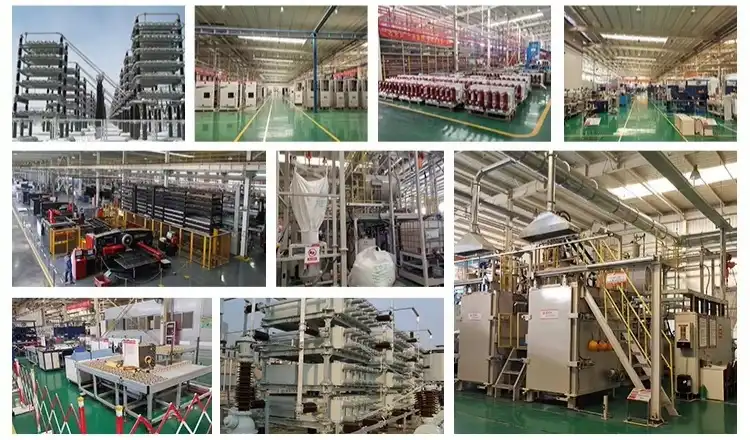
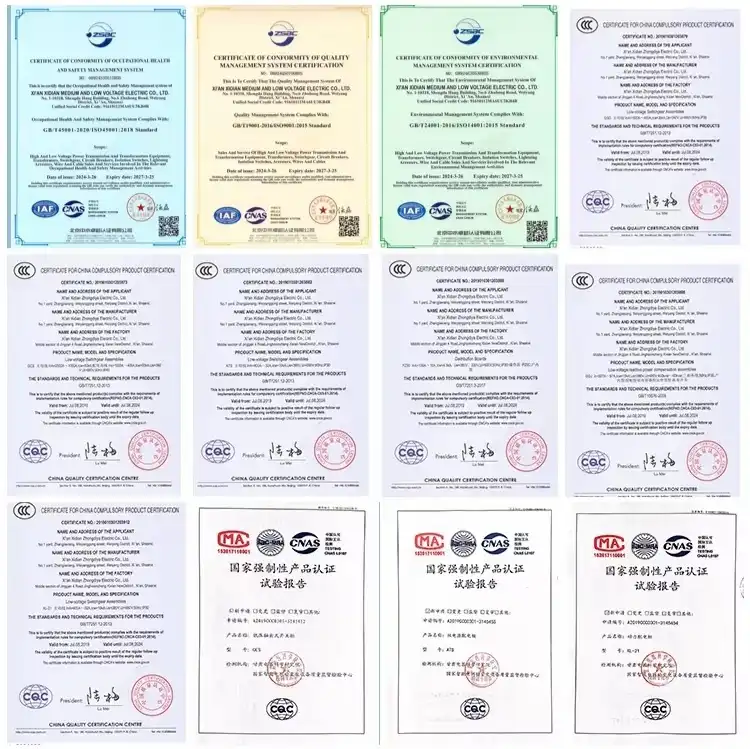
All tests must be properly listed on your clearance package. The routine testing normally consists of inductance measurements, loss measurements and winding resistance. Type and special testing usually include temperature increase, lightning impulse and sound level. Outdoor equipment may need a wet or rain test. The final list is determined by the contract and the appropriate standard. BKGKL manufacture is based on Tier-1 aluminum and epoxy resins, automated winding machines, 100% impedance verification and partial discharge testing under 10 pC. The product range is certified to ISO 9001, ISO 14001 and 3C (China Compulsory Certification). Before you finalize the design, ask for test results.
Comparison with Oil-Immersed and Iron-Core Reactors
Oil immersed shunt reactors may be suitable for certain high capacity or space restricted systems but they do need oil handling, fire prevention and containment. Iron-core reactors may be small, but the core can saturate under overvoltage, and contribute harmonics. A dry-type air-core shunt reactor is unsaturated and oil-free. In exchange it requires magnetic clearance and extra support space, since its field is not contained in a core. Don’t just compare the purchase price – compare the whole cost of ownership. Maintenance labor, spill control, fire protection, land usage, and downtime must be included in that estimate.
Buying Guide for a Dry-Type Air Core Shunt Reactor
How to Choose the Right Rating
Start with the application: line compensation, cable compensation, renewable interconnection or industrial network control. Then collect system voltage, frequency, needed MVAr, insulation level, harmonics, earthing and environmental information. Perform a system analysis to determine the reactive power excess at minimal load, since an undersized reactor does not alleviate the overvoltage problem. Verify layout constraints like as clearances, ventilation, access and maintenance space. Often one project requires as little as 3 or as many as 15 units. Make sure that your dry-type air core shunt reactor provider can supply matching units on one schedule, including design validation and manufacturing testing within the timetable.
Magnetic Clearance, Installation, and Maintenance
The fundamental designing consideration for any dry type air core shunt reactor is stray magnetic field. The field causes eddy currents in adjacent metal, such as fences, concrete rebar and control cables. The currents cause heating. Get the manufacturer to provide magnetic field plots and clearance drawings and keep metallic constructions away of that area. Ensure enough ventilation. Add animal guards in areas with common fauna. The yearly inspections in service are: surface tracking, tightness of connections, cleaning in contaminated regions, thermographic scans. Record insulating resistance, winding resistance and reactance at commissioning for a baseline for subsequent measurements.
What a Qualified Supplier Provides
A good manufacturer does not send only a quote. Verify design evaluation of your system parameters, insulation coordination and clearances. Request traceable supplies, documented factory testing, export packaging, manuals and certifications, warranty conditions and reference projects. Xi’an Xikai has 7 main product categories, 34 series, more than 100 variations, and our equipment has been used in State Grid systems, power engineering, steel, petrochemical, rail and renewable energy projects. We provide technical design and 24/7 maintenance for the dry-type air core shunt reactor BKGKL. With experience spanning over 25 years and deployments of more than 10,000 units across 30+ countries, we have also collaborated with worldwide research institutions.
Conclusion
A dry-type air core shunt reactor absorbs excess capacitive reactive power and stabilizes voltage on long lines, at substations, at renewable facilities and at industrial or urban areas. Oil-free construction, linear inductance and solid coil structure minimize maintenance and eliminate saturation problems. Careful planning for clearance and insulation is still necessary due to the stray magnetic field and the outside environment. The right selection relies on the exact system data, a specified insulation level and recorded type and regular testing according to the relevant standard. The air-core design gives up some clearance for easier maintenance and more predictable reactance than oil-immersed or iron-core designs. Total ownership cost and verified technical guaranties provide a sounder foundation for choosing than purchase price.
FAQ
1. What does a dry-type air core shunt reactor do?
It absorbs capacitive reactive power from long wires and cables. This minimizes overvoltage and maintains the system voltage steady.
2. How far should metal objects sit from the coil?
The distance varies upon design and current. Prevent eddy-current heating by using the manufacturer’s magnetic clearance charts and keeping fences, rebar and control wires out of that zone.
3. What should an RFQ include?
An RFQ should include the system voltage, frequency, MVAr rating, insulation level, site conditions, applicable standards, test requirements, delivery location, timeline, and a single-line diagram. Our engineers evaluate this data to help ensure the correct reactor specification.
4. Does it need regular maintenance?
Yes. Plan a yearly visual examination, connection checks, cleaning in regions of pollution, and temperature checks. No oil sampling or filtering is necessary because the dry-type design does not use insulating oil.
Request a Dry-Type Air Core Shunt Reactor Quotation from Xi'an Xikai
Xi'an Xikai is a dry-type air core shunt reactor manufacturer with plateau-type equipment rated for altitudes up to 4,000 meters and solutions built around each project. Send your system voltage, MVAr rating, site conditions, and standards to serina@xaxd-electric.com, amber@xaxd-electric.com, or luna@xaxd-electric.com. Visit xaxd-electric.com for details, and our team will reply with a project-specific proposal.
References
1. IEEE Std C57.21, IEEE Standard Requirements, Terminology, and Test Code for Shunt Reactors Rated Over 500 kVA, 2008.
2. IEC 60076-6, Power Transformers – Part 6: Reactors, 2007.
3. IEEE Std C57.16, IEEE Standard Requirements, Terminology, and Test Code for Dry-Type Air-Core Series-Connected Reactors, 2011.
4. IEEE Std C62.82.1, IEEE Standard for Insulation Coordination – Definitions, Principles, and Rules, 2010.
5. Power System Stability and Control (Prabha Kundur, McGraw-Hill), 1994.
6. IEEE Std 693, IEEE Recommended Practice for Seismic Design of Substations, 2018.