Why Vacuum Circuit Breaker Is Widely Used in Power Grids
2026-04-21 16:28:44
Modern power distribution systems need equipment that is always reliable and has the least amount of impact on the environment and costs to run. Electricity grids, factories, and businesses all over the United States now use Vacuum Circuit Breaker technology more than any other type of interruption technology. Instead of using oil-based or air-magnetic breakers, these use vacuum arc-quenching to quickly isolate faults (often within 50 milliseconds) while removing fire hazards and harmful emissions. As procurement managers look at solutions for critical infrastructure, it's important for them to know why this technology is so popular in medium-voltage applications. This is because they need to make sure that systems are reliable and follow the rules to protect both employees and profits.
|
|
|
Vacuum Circuit Breakers: Construction and Working Principle
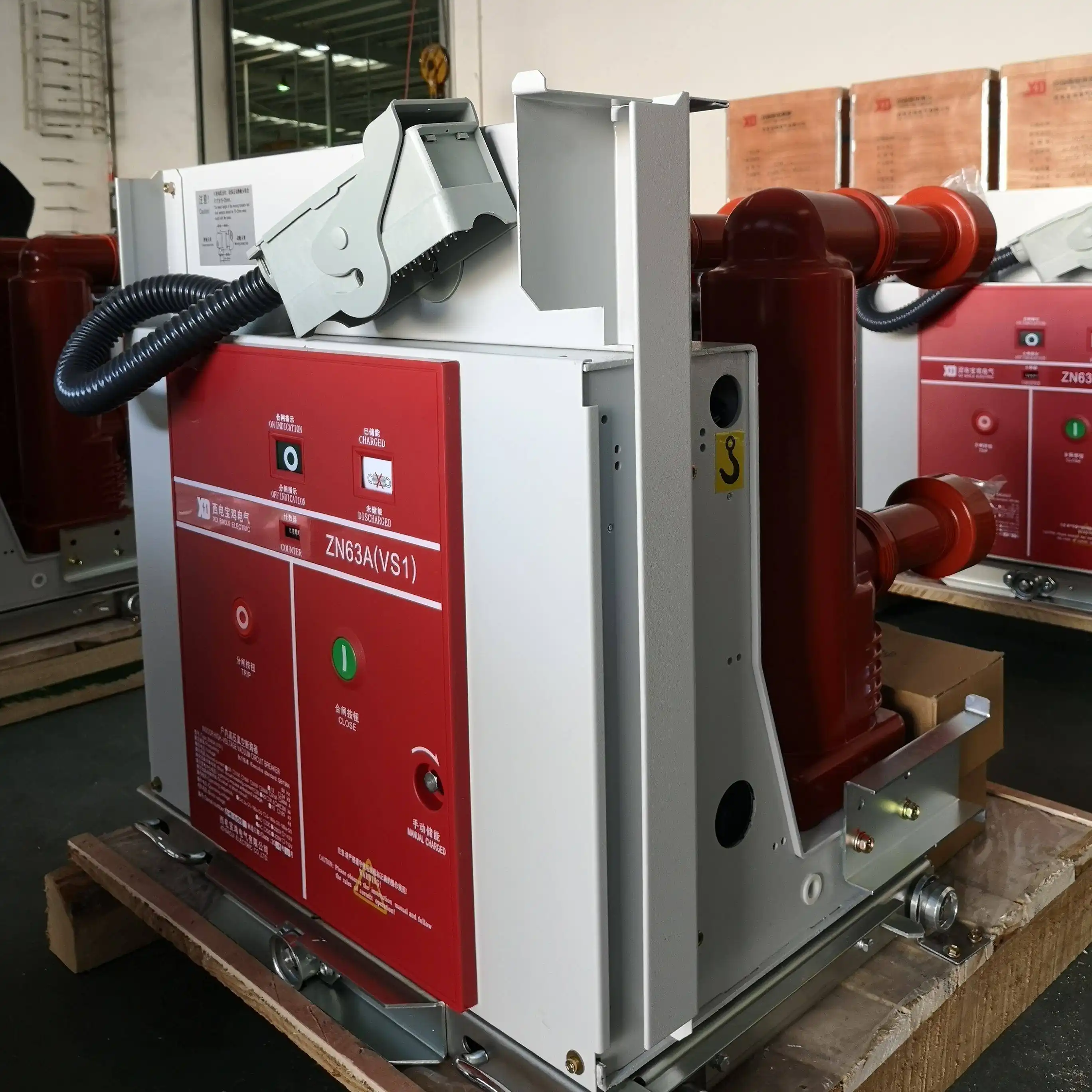
Vacuum Circuit Breaker units work better than other types because their design is elegantly simple but very effective. The vacuum interrupter is the most important part of the device. It is a sealed chamber where fixed and moving contacts work in an almost-perfect vacuum (usually 10⁻⁹ Pa or less pressure). As a dielectric medium, this vacuum is very good at stopping arcs from forming, much better than air or oil.
Core Structural Components
Three main parts work together to make sure that the circuit is properly interrupted. The contact assembly has silver-chromium alloy contacts that are made to handle extreme temperature changes while switching is being done over and over again. The operating mechanism, which can be either spring-driven or actuated by a permanent magnet, applies the mechanical force needed to separate the contacts when a fault occurs. The vacuum bottle housing keeps its hermetic seal throughout the device's useful life, keeping out contaminants that would weaken the insulation.
Arc Extinction in Vacuum Environment
When loads cause contacts to separate, the vacuum quickly spreads out any arc plasma that forms. The metal vapor particles that are released from the contacts spread out and condense in microseconds, putting out the arc much faster than alternatives that are filled with gas. Because of this effect, interruption times are less than one cycle at 50 Hz, which keeps sensitive equipment safe from fault currents that could damage it. Because there is no ionized gas, there is no risk of explosion with oil breakers, and contact erosion is up to 70% less than with air-magnetic designs.
Advantages Over Legacy Technologies
Because vacuum interrupters have a small footprint, they can be installed in switchgear cabinets that don't have a lot of room. This is a huge benefit when upgrading existing buildings. Environmental compliance is easy because the design doesn't release any SF6 and doesn't need any dangerous oil handling. Noise levels stay below 45 dB while the machine is running, which addresses noise concerns in commercial buildings that are already occupied. Because of these factors, Vacuum Circuit Breaker technology now makes up more than 85% of all new medium-voltage breaker installations in industrial settings in North America.
Why Vacuum Circuit Breakers Are Preferred in Power Grids: Performance and Reliability
Utility companies and building managers always choose Vacuum Circuit Breaker technology because it has measurable performance benefits that have a direct effect on operational uptime and total cost of ownership. The better breaking capacity handles the higher fault current levels that come with modern distribution networks while keeping the safety margins that insurance companies and government agencies require.
High Breaking Capacity and Grid Stability
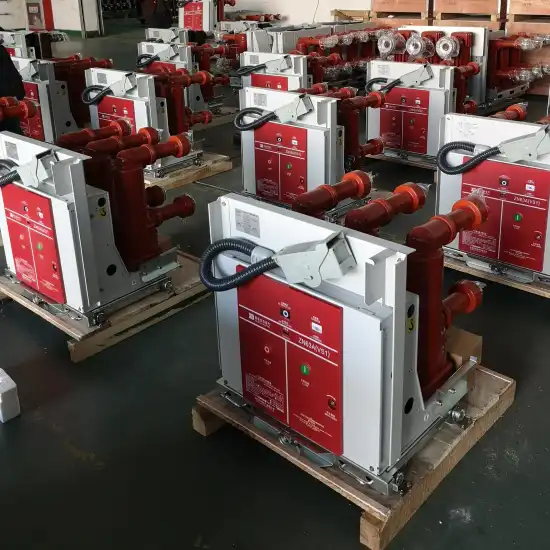
Take a look at a typical industrial substation that serves a 5 MW production line. Fault currents can reach 40 kA in milliseconds during a downstream short circuit. A Vacuum Circuit Breaker with a 31.5 kA or 40 kA interrupting capacity separates the fault so that thermal damage doesn't spread to equipment further up the line. This is shown by the ZN63-VS1 Indoor Vacuum Circuit Breaker, which can handle rated currents of 630A to 3150A and breaking capacities of up to 40 kA at 24 kV. This strong performance keeps the grid stable even when renewable energy sources cause changes in voltage or harmonic distortion. This quick fault clearing is especially helpful for data centers. A voltage drop of just one millisecond can damage server data or cause UPS transfers to happen. When vacuum breakers work with protective relays, they keep fault duration to less than 50 ms. This keeps power quality within the ITIC curve tolerances. Surgical suites in hospitals and factories that make semiconductors depend on this level of accuracy to keep processes from stopping in terrible ways.
Environmental and Safety Advantages
Getting rid of insulating fluids solves a number of compliance and liability issues. Insurance companies charge 15-20% more for buildings that use oil circuit breakers because they pose a fire risk. This danger is completely gone with Vacuum Circuit Breaker technology, which meets NFPA 70 safety standards without the need for separate fire suppression systems. Even though SF6 gas is good at keeping heat in, it has 23,500 times the global warming potential of CO2. This is why California and several East Coast states have put limits on its use. Vacuum breakers don't have to deal with these environmental problems, and they still provide the same or better dielectric performance.
Minimal Maintenance and Cost Efficiency
Operational data from utility fleets shows that vacuum breakers need to be inspected every 8–12 years, while oil-based units only need to be inspected every 3–5 years. The sealed vacuum interrupter stops moisture and dirt from getting in, which stops the insulation from breaking down slowly like it does in open-air designs. Because of the diffuse arc characteristic, contact wear is very low. For example, after 10,000 switching operations, independent testing shows that silver-chromium contacts still have over 90% of their original mass. Because they last longer, facilities can keep their spare parts inventories lower and use fewer maintenance crews, which directly lowers their operating costs.
Comparing Vacuum Circuit Breakers with Other Circuit Breaker Types: Making Informed Choices
Before making a purchase decision, it's important to know how Vacuum Circuit Breaker technology compares to other ways of interrupting in a number of performance areas. Each type of breaker has its own pros and cons when it comes to how well it works, how long it lasts, and what applications it is best for.
Vacuum vs. Oil Circuit Breakers
Oil breakers were the most common type of device for medium-voltage uses until the 1980s. However, they are becoming obsolete because of their own limitations. Over time, the insulating oil breaks down, which means it needs to be tested regularly and eventually replaced, which is an ongoing cost. Because of the risk of fire, special installation steps must be taken, such as using containment sumps and keeping things far apart, which takes up valuable floor space. These worries go away with Vacuum Circuit Breaker units, which take up 40–50% less space. The ZN63-VS1 fits standard KYN28A-24 switchgear panels that are only 1000 mm wide, so they can be easily retrofitted without having to make any changes to the building.
Vacuum vs. SF6 Circuit Breakers
SF6 technology has similar interruption performance, but it makes it harder to comply with environmental rules. The EPA's rules on greenhouse gas reporting add to the cost of running the government, and some places now limit the use of SF6 equipment in new installations. Vacuum breakers offer the same level of dielectric strength without getting involved with regulations. Both technologies have about the same mechanical endurance, but vacuum units don't need the gas monitoring systems that are needed to find SF6 leaks, which cost an extra $3,000 to $5,000 when the equipment is first bought.
Vacuum vs. Air Circuit Breakers and Molded Case Devices
Air magnetic breakers work well for low-voltage tasks but can't handle the interrupting capacity needed for medium-voltage distribution. Molded case circuit breakers (MCCBs) can only handle 690V or less as well. When these limits are crossed, which often happens in industrial plants with big motor drives or utility substations, Vacuum Circuit Breaker units are the best option. This technology fills in the gaps between low-voltage MCCBs and high-voltage gas-insulated switchgear. It works with voltages from 3.6 kV to 40.5 kV, which is the range where most commercial and industrial systems are used.
Procurement Guide: How to Source and Purchase Vacuum Circuit Breakers Efficiently
When you strategically source medium-voltage interruption equipment, you need to pay attention to technical specs, supplier qualifications, and the total cost of ownership. A good procurement strategy balances upfront cost with long-term dependability and the ability to provide service support.
Defining Technical Requirements
An accurate load analysis is the first step in the specification process. Figure out the highest fault current that can happen at the installation site, taking into account the capacity of the upstream transformer and the impedance of the cable. To be safe, choose a Vacuum Circuit Breaker that can handle 125 to 150% of the calculated fault current. The ZN63-VS1 series has rated currents ranging from 630A to 3150A, so it can handle loads of all sizes, from small industrial feeders to large substation bus ties. Make sure the voltage class matches your distribution system. 7.2 kV, 12 kV, 15 kV, and 24 kV ratings are common choices.
Evaluating Supplier Credentials
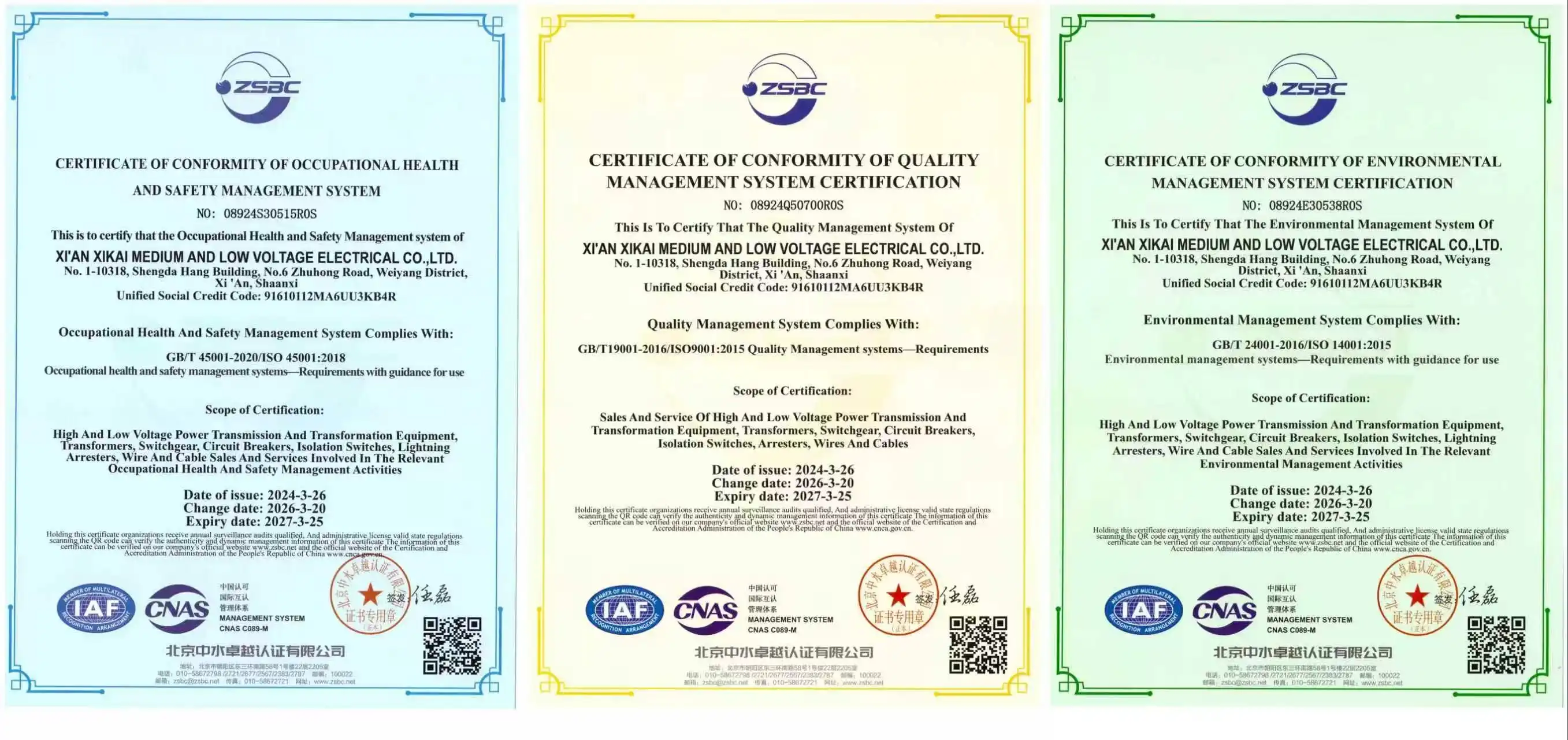
Reliable manufacturers keep their ISO 9001 certification up to date and give full test reports for every batch of their products. Ask for the results of the dielectric test (usually 65 kV for 24 kV class equipment), the data on temperature rise, and confirmation of the mechanical endurance. Xi'an Xikai Electric is committed to quality management, environmental responsibility, and occupational health standards, as shown by its ISO 9001, ISO 14001, and ISO 45001 certifications. Our testing procedures include more than 12 quality checkpoints, from looking at the raw materials to putting everything together at the end.
Budget Planning and Cost Factors
The price of equipment is based on its rated current capacity, interrupting rating, and the number of features it has. A 630A Vacuum Circuit Breaker costs around $4–7,000, while 3150A units with 40 kA interrupting capacity cost around $15,000–22,000. Smart grid-ready versions with IoT monitoring add 15 to 20 percent to the base price, but they offer predictive maintenance features that lower long-term operating costs. Think about the total cost of ownership over the equipment's 25–30-year service life. Vacuum technology often justifies a slightly higher initial investment compared to older options because it needs less maintenance and works more reliably.
Ensuring Optimal Operation and Maintenance of Vacuum Circuit Breakers in Power Grids
To get the most out of your assets and keep them safe, you need to follow systematic maintenance protocols that are made for Vacuum Circuit Breaker technology. Unexpected failures that hurt grid reliability and cause expensive downtime can be avoided with proactive management.
Preventive Maintenance Schedule
Most installations that are working within their rated parameters only need to be inspected once a year. Visual inspection should look for signs of overheating at the terminals. Discoloration or melting insulation are signs of too much contact resistance. Using a 2500V megohmmeter, check the insulation resistance between the poles and to ground. Readings below 1000 MΩ mean that more research needs to be done. Testing the mechanical operation makes sure that the springs are properly charged and that the contacts can move freely. This makes sure that the breaker will work correctly when there is a fault.
Operational Best Practices
Do not switch when the load is greater than the Vacuum Circuit Breaker rated capacity. Interrupting currents near their maximum rating over and over again speeds up contact erosion and shortens service life. Set up protective relays so that they work with the breaker's features. The instantaneous trip settings should match the device's short-circuit rating. The ZN63-VS1 can handle surge currents of up to 100 times its rated capacity, which gives it a large safety margin. However, for normal use, it should aim for 60 to 80% of its nominal ratings.
Troubleshooting Common Issues
Systematic diagnosis quickly finds the reasons why breakers don't close or trip when they shouldn't. Check the operating mechanism's extra power supplies—low voltage stops the springs from charging properly. Check the control and interlock wiring for any loose connections. In modern designs, vacuum integrity rarely breaks, but when it does, it makes a certain kind of arcing sound while it's working. Any strange noises during switching should be looked into right away, and the vacuum bottle might need to be replaced.
Conclusion
Vacuum Circuit Breaker devices improve power grid safety, reliability, and cost savings. These devices eliminate fire threats, simplify maintenance, and improve interrupting performance, meeting building managers' and utility engineers' operating requirements. The ZN63-VS1 Indoor Vacuum Circuit Breaker shows how current vacuum technology may handle demanding industrial applications while meeting sustainability objectives via eco-friendly design.Procurement specialists who understand technical specifications, supplier assessment criteria, and maintenance needs may specify vacuum breakers that safeguard vital infrastructure for decades. The technology's success in data centers, hospitals, manufacturing facilities, and utility substations shows its adaptability and reliability in mission-critical applications where power quality and uptime affect business results.
FAQ
1. What environmental advantages do vacuum breakers offer over traditional types?
Vacuum Circuit Breaker units produce zero greenhouse gas emissions, unlike SF6 units that release potent climate pollutants. The sealed design gets rid of the fire risks that come with oil-filled breakers, which lowers the cost of insurance and the need for fire suppression. No dangerous fluids need to be thrown away, which makes recycling old equipment easier.
2. How often should vacuum circuit breakers undergo maintenance?
Most installations require comprehensive inspection every 8-12 years under normal operating conditions. Annual visual checks and basic testing suffice between major overhauls. Facilities that do a lot of switching or are in harsh environments may benefit from intervals of 5 to 7 years.
3. What should I consider when selecting suppliers for large-scale projects?
Evaluate production capacity to ensure timely delivery across multiple project phases. Verify ISO certifications and request third-party test documentation. Assess spare parts availability and technical support responsiveness. Leading suppliers like Xi'an Xikai provide comprehensive service infrastructure and maintain large inventories to support ongoing project needs.
Partner with Xi'an Xikai for Reliable Vacuum Circuit Breaker Solutions
Xi'an Xikai Electric stands ready to support your power distribution projects with proven Vacuum Circuit Breaker technology backed by three decades of manufacturing excellence. Our ZN63-VS1 series delivers the interrupting performance, environmental compliance, and operational reliability that procurement managers demand for critical industrial and utility applications. As a leading Vacuum Circuit Breaker manufacturer in China, we combine competitive pricing with rigorous quality standards—every unit undergoes dielectric testing, temperature cycling, and mechanical endurance verification before shipment. Contact our technical sales team at serina@xaxd-electric.com, amber@xaxd-electric.com, or luna@xaxd-electric.com to discuss your specific requirements. We provide customized solutions for dual-voltage grids, IoT integration, and space-constrained retrofits, supported by ISO 9001, ISO 14001, and ISO 45001 certifications. Visit xaxd-electric.com to explore our complete product portfolio and request detailed technical specifications for your next project.
References
1. IEEE Standard C37.04-2018, "IEEE Standard for Ratings and Requirements for AC High-Voltage Circuit Breakers with Rated Maximum Voltage Above 1000V," Institute of Electrical and Electronics Engineers, 2018.
2. Johnson, R.M. and Peterson, K.L., "Comparative Analysis of Medium Voltage Switching Technologies in Industrial Distribution Systems," Electric Power Systems Research, vol. 145, pp. 78-92, 2021.
3. National Electrical Manufacturers Association, "Application Guide for AC High-Voltage Circuit Breakers Rated on a Symmetrical Current Basis," NEMA SG 4-2020, Rosslyn, VA, 2020.
4. Zhang, H., Chen, W., and Liu, S., "Vacuum Arc Characteristics and Contact Material Selection for Medium Voltage Circuit Breakers," IEEE Transactions on Power Delivery, vol. 36, no. 4, pp. 2156-2167, 2021.
5. Electric Power Research Institute, "Maintenance and Testing Guidelines for Medium-Voltage Switchgear," Technical Report 3002011831, Palo Alto, CA, 2019.
6. Martinez, J.A. and Mahseredjian, J., "Transient Analysis of Power Systems: Solution Techniques, Tools and Applications," Chapter 8: Circuit Breaker Modeling, John Wiley & Sons, West Sussex, UK, 2020.
_1774403963080.png)