
2026 Best Outdoor Disconnect Switch Options for Global Buyers
2026-10-23 16:39:10
For a procurement professional working on substation EPC projects, sourcing the proper outdoor disconnect switch for 110kV or 220kV installations is one of the most important choices you will make. The improper decision might delay grid commissioning, cause expensive rework or lead to failing international grid-entry examinations. In this tutorial we look at what makes a good high voltage isolating switch, how to assess manufacturers and what the Xi’an Xikai GW5 series provides to consumers who seek verified performance supported by certified test results.
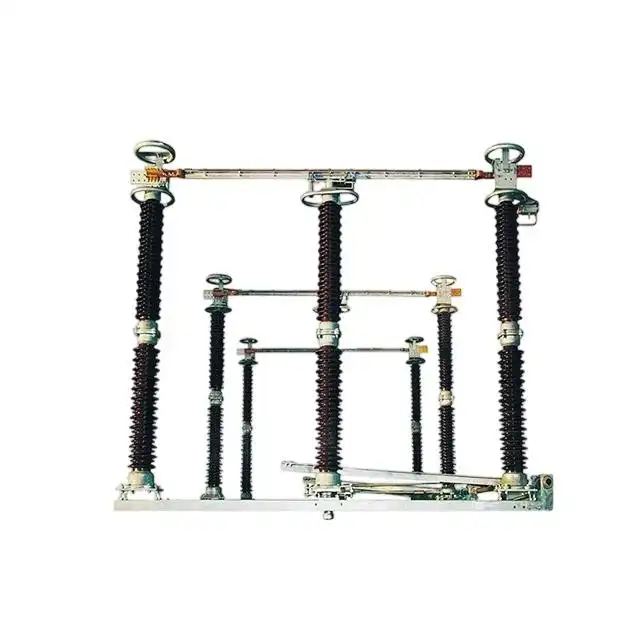
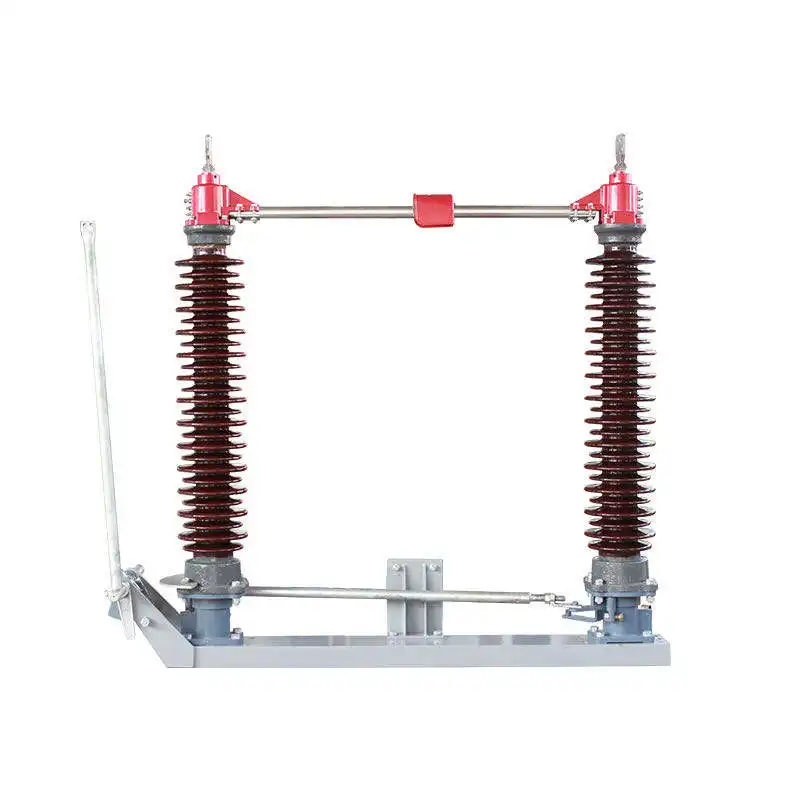
Understanding Outdoor Disconnect Switches: Purpose and Functionality
The primary purpose for an outdoor disconnect switch is to provide a visible disconnect on a high voltage circuit so that personnel may safely operate on equipment downstream on the line. That simplicity is a deception. In a 110kV or 220kV substation, the safety of the whole bay relies on the quality of insulation, the manufacturing quality and the mechanical precision of each isolated switch.
Key Components That Matter
They’re all working together. The blade that changes, the group of contacts, the post insulators and the motor that operates the switch. If even one element fails, such as corrosion, a stiff gearbox, or dirty insulators, the switch may not fully open, or it may halt in a halfway position, both of which are exceedingly hazardous.
Fusible vs. Non-Fusible Designs
In transmission-level substations, where circuit breakers and relays provide safety, the standard is non-fusible outdoor disconnect switches. Most of the time, you will see fusible patterns on industrial or distribution level feeds. Almost of the EPC standards at voltages over 72.5kV need non-fusible isolating switches that are actuated by motor or by hand and have clear spacing between them.
Enclosure and Insulation Standards
High-voltage AC disconnectors and earthing switches are covered by IEC 62271-102. IEEE C37.32 discusses the market in North America. And it is significantly simpler to get grid-entry permission in other countries for items with both certifications. This is a very essential aspect for EPC contractors working in many states.
Comprehensive Guide to Selecting the Best Outdoor Disconnect Switch in 2026
Selecting a high voltage isolating switch for a substation work is not as simple as matching voltage and current rates. Such factors as creepage distance, altitude and the reliability of the operating system impact the long-term field performance.
Voltage, Current, and Environmental Ratings
A 126kV rated switch, rated for continuous current up to 2000A, will cover all 110kV and most 220kV bay layouts. Buyers must look beyond nameplate rates. They should also check the predicted short-time withstand current, the peak withstand current and the temperature class of the contact materials. In regions where there's a lot of pollution or high humidity, the needed creepage distance is much larger.
High-Altitude and High-Pollution Customization
EPC projects in mountain locations or coastal industrial zones usually demand non-standard creepage lengths and altitude derating. Equipment designed to IEC standards may require more insulation above 3,000 meters and higher, even at sea level. Look for vendors that can provide altitude-specific type testing from credible laboratories such as the Xi'an High-Voltage Apparatus Research Institute (XIHARI), the most famous reference lab in Chinese grid procurement.
Mechanism Reliability: The Hidden Risk
Outdoor disconnect switches are the most prevalent difficulty that individuals experience with gearbox stiffness. Power is lost without notice when pins, bushings and linkage joints corrode or freeze up after many years of operation. Of course there is a little increase in initial cost for stainless steel pins, bushings and joints rather than zinc plated steel, but this will eliminate most service calls on the mechanism throughout the life of the switch.
Top Outdoor Disconnect Switch Brands and Product Overview
There are well-known European and American brands in the global market for transmission-class outdoor disconnect switches. There are also strong Chinese brands that have built a strong reputation through large-scale grid deployments in China and overseas EPC projects.
GW5 High-Voltage Disconnect Switch by Xi'an Xikai
The GW5 series can handle continuous currents of up to 2000A and rated voltages between 72.5kV and 126kV. It works well in 110kV substations and can also be used in 220kV situations when the project requirements allow it. Here are some of the most important technical benefits of this device:
- Hot-dip galvanized steel frame resists corrosion in coastal and high-humidity environments without requiring protective coatings after installation.
- Full stainless steel transmission system — pins, bushings, and linkage joints — eliminates the seizure risk that plagues conventional zinc-plated mechanisms, particularly after five or more years of outdoor exposure.
- Externally compressed stainless contact springs maintain consistent contact force throughout the switch's service life; because they sit outside the main conductor path, replacement does not require a full blade teardown.
- Aluminum alloy conductor profile keeps the current-carrying parts light while delivering effective heat dissipation under high continuous load.
- Bent copper contact plates can be swapped individually during scheduled maintenance without replacing the entire blade assembly, reducing both parts cost and downtime.
- Minimal-friction pantograph travel during opening and closing reduces wear on the mechanism and provides positive tactile confirmation of full isolation.
- Optional dual-side base installation gives site engineers flexibility when working with existing foundation layouts, which is a practical advantage on retrofit projects.
Three problems that EPC procurement managers often have are mechanism seizure, insulation performance in harsh environments, and the ability to be maintained in the field. These benefits directly address these problems. Contact resistance below 75ohms keeps thermal losses within acceptable limits, even at full rated current. The dual-break open gap gives the visual proof of separation that most safety rules require.
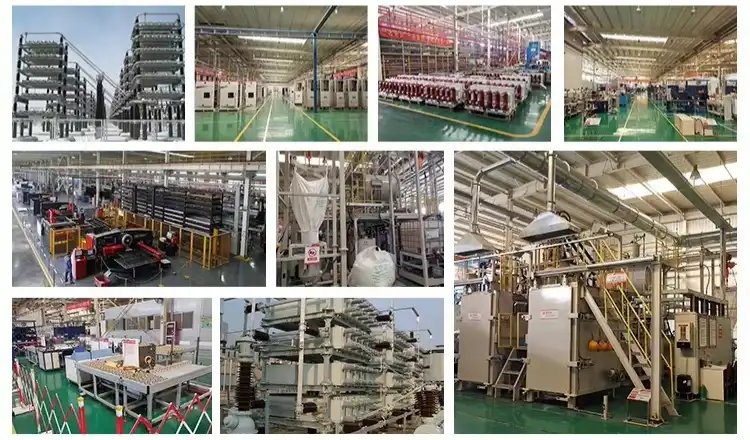
Before GW5 units leave the plant, they are tested for dielectric loss at a 230kV power frequency for one minute and then put through mechanical age tests that make them work for twenty years. Material traceability paperwork shows the whole supply chain, from raw steel to finished assembly. This makes it easier for third parties to check on projects that are funded by foreign governments.
Other Market Options
Square D, Siemens, and ABB all make outdoor isolation switches for the transmission market. People in North America and Europe who buy utilities know and trust their goods. Western makers, on the other hand, can take 20 to 30 weeks to make customized versions with creepage or altitude ratings, and the prices reflect that. For EPC contractors with tight project schedules and budgets that are based on competitive bid prices, Chinese makers with accredited type test results are showing up on qualified source lists more and more, along with well-known Western brands.
Installation, Maintenance, and Troubleshooting of Outdoor Disconnect Switches
Performance in the field depends just as much on how well the product is installed as on how well it works. If the base frame isn't leveled right before the insulators are put in, contact resistance problems will happen in even the best outdoor disconnect switch.
Installation Essentials
Before putting the three-phase base frame on the support structure, make sure it is level. If the base is out of alignment by even a few millimeters, the blade will be out of alignment at the contact point. This makes the contact more resistant and can lead to arcing while the machine is running. Follow the torque values given by IEC and the project for all screws, and make sure the auxiliary switch can move before turning on the bay.
Routine Maintenance Protocol
Check the contact surfaces every five years when everything is working normally or right away after a serious short-circuit. Use alcohol to clean conductive surfaces, put new conductive lubricant on blade contacts and sliding surfaces, and make sure that none of the pins or fasteners are loose. If you see surface tracking or cracks in a post insulation, you should replace it right away. Do not use temporary treatments instead.
Common Troubleshooting Scenarios
Blades that won't move or only move partially may have pins in the drive linkage that have seized. When infrared screening, a high contact temperature means that the contact areas are oxidized or not lined up correctly. First, cleaning and lubricating are used to fix both problems. If cleaning doesn't bring back normal performance, old parts are replaced next. If a switch stops in the middle of its travel, do not try to operate it. Instead, treat it as if it were locked open and contact the manufacturer's support team.
Procurement Strategies for Buying Outdoor Disconnect Switches Globally
It takes more than just comparing prices to buy 10 to 50 sets of high-voltage isolation switches for a single substation job. Whether a project keeps on schedule depends on the delivery schedule, how full the documentation is, and the help provided after the sale.
Verifying Supplier Qualifications
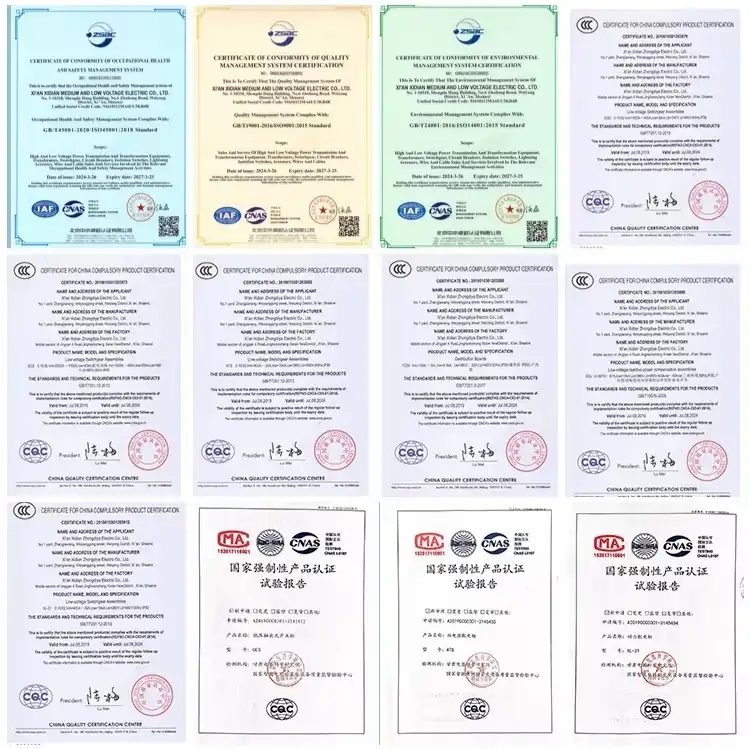
Ask for type test results from approved labs, a list of similar projects that have been done in the last three years, and information on the scope of ISO 9001 certification. If the project is being paid for by a multilateral development bank, make sure that the manufacturer is on the bank's list of approved vendors or can show proof that they are.
Negotiating for Large-Volume Orders
When buyers buy 20 or more switch sets at once, they can really save money on wait time and extra parts packages. Add a factory acceptance test (FAT) language to the purchase order so that testing can be seen by a project engineer or a third-party tester before the goods are shipped. This step finds holes in the paperwork before the tools get to the job site.
Total Cost of Ownership
Over the course of 25 years, a lower-priced unit that needs regular mechanism servicing or early insulator replacement will cost more than a reasonably priced switch with stainless steel internals that doesn't need any care. Before making a purchase choice, you should think about how much expected upkeep will cost, whether spare parts are available in the target country, and what the manufacturer's warranty terms say.
Conclusion
To choose the correct outdoor disconnect switch for a 110kV or 220kV substation project, you need to make sure that the technical specs match the site conditions, check the certification credentials, and make sure that the manufacturer can support the project throughout its entire lifecycle. The GW5 series from Xi'an Xikai addresses the main issues that EPC procurement teams bring up: the dependability of the mechanism, its ability to last in harsh environments, and the paperwork needed for international grid-entry approval. With 40 years of operation experience in the United States and other countries, accredited type test results, and stainless steel internals, this product is worth putting on your shortlist for projects in 2026.
FAQ
1.What certifications should a high-voltage outdoor disconnect switch carry for overseas projects?
You should at least look for IEC 62271-102 approval from a lab that has been approved. North American projects will also need to be in line with IEEE C37.32. CE marking is required for all grid links in Europe. Some markets in Eastern Europe and Central Asia need GOST-R certification. Having more than one license makes it easier to get grid-entry approved documents.
2.How do I specify the right creepage distance for a polluted environment?
IEC 60815 divides the level of pollution into four groups and sets minimum specific creepage distances for each group. A coastal industrial site is usually in Class III or IV and needs 25–31 mm/kV of creepage. During the inquiry stage, you should always tell the manufacturer what kind of pollution the site is so they can tell you if the standard product meets your needs or if you need a custom insulator stack.
3.What is the typical lead time for a customized high-altitude variant?
It takes 8–12 weeks for standard items to ship. High-altitude or heavy-pollution versions with non-standard insulation usually take 12 to 16 weeks from the time the order is confirmed. Include this in the plan for buying things for the project, especially if the design needs type test results that are specific to altitude derating.
4.How often should an outdoor isolating switch be serviced?
Most manufacturers and IEC guidelines say that a full inspection should be done every five years if the equipment is used normally. If there is a problem current event that is higher than the switch's rated short-time withstand current, you should check it right away before putting it back into service.
Get in Touch with Xi'an Xikai for Your Next Substation Project
Xi'an Xikai sells outdoor disconnect switch products with full paperwork for foreign purchase. Their products cover voltage classes from 72.5kV to 363kV. Within three business days, our engineering team can make project-specific suggestions that include changes to the amount of pollution and altitude. Get in touch with our sales team:
Get in touch with us right away to get type test results, project references, or a formal quote for your needs as an outdoor disconnect switch provider.
References
1. IEC 62271-102: High-Voltage Switchgear and Controlgear — Part 102: Alternating Current Disconnectors and Earthing Switches. International Electrotechnical Commission, 2018.
2. IEEE C37.32: IEEE Standard for AC High-Voltage Disconnect Switches, Interrupter Switches, Fault Initiators, and Accessories. IEEE, 2015.
3. IEC 60815-1: Selection and Dimensioning of High-Voltage Insulators Intended for Use in Polluted Conditions. International Electrotechnical Commission, 2008.
4. Electrical Power Transmission and Distribution Engineering. Glover, J. D., Sarma, M. S., & Overbye, T. J. Cengage Learning, 2022.
5. IEEE Power and Energy Magazine: Substation Equipment Reliability and Maintenance Practices. IEEE, 2023.
6. CIGRÉ Technical Brochure 631: Disconnectors — Design and Application in HV and EHV Substations. CIGRÉ, 2015.