
All You Need to Know About Disconnect Switches
2026-10-23 16:39:12
The disconnect switch is a device used to disconnect electrical circuits from the source of power for safety during maintenance, inspections or emergency shutdowns. You may find these devices all around substations, industrial facilities, commercial buildings and renewable energy systems. This book includes everything procurement professionals and electrical engineers need to know – from understanding how disconnect switches function and how they vary from circuit breakers, to choosing the proper model, installation best practices and sourcing methods. By the conclusion, you’ll have a clear road map for making smart purchase choices.
Understanding Disconnect Switches: Definition, Function, and Types
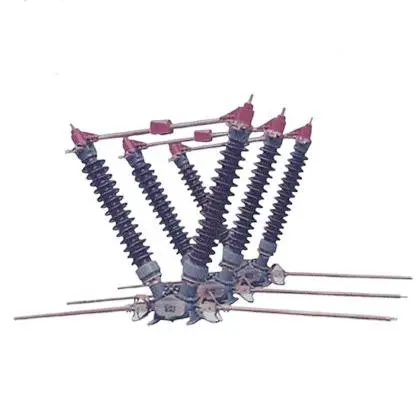
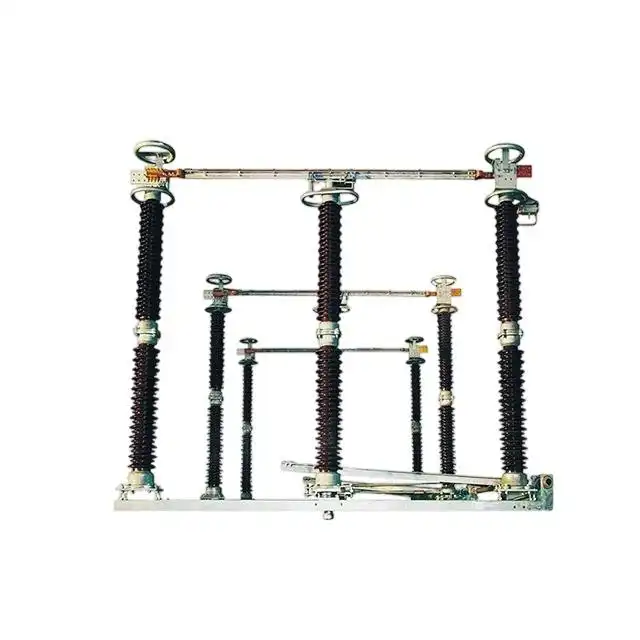
A disconnect switch breaks an electrical circuit literally, leaving a gap of air that can be seen to show that the circuit is no longer active. To meet NFPA 70 (National Electrical Code) and IEC guidelines for safety, this obvious isolation is a must. A disconnect switch is not like a protective device in that it doesn't automatically react to flaws. Its job is to allow safe human isolation.
Fusible vs. Non-Fusible Types
Fusible disconnect switches have fuses built right into the assembly, which adds another level of protection against overcurrent. Versions that aren't fusible only isolate and are usually paired with different safety devices. Non-fusible designs like the GN19 are often used for 12kV high-voltage residential switchgear because safety is taken care of upstream.
Manual vs. Automatic Operation
To open or close the circuit on a manual disconnect switch, the operator has to physically move a lever or handle. Automatic models can be controlled from a distance by motor-driven or solenoid systems. Xi'an Xikai's GN19 High Voltage Disconnect switch has a manual lever mechanism that keeps the design simple, lowers the number of places where the mechanism can break, and lowers the cost of long-term maintenance.
Indoor vs. Outdoor and Pole Configurations
Disconnect switches for indoor use are put in metal-enclosed electrical boxes. Outdoor switches, on the other hand, are made to withstand the weather. Three-pole switches break all three stages of an AC system at the same time, while single-pole switches only control one wire. Three-pole layouts are used in most substations and switchgear to make sure that all parts of the circuit are completely isolated.
Disconnect Switch vs. Circuit Breaker: Key Differences and When to Use Each
A lot of buying teams want to know if a stop switch can be used instead of a circuit breaker. The short answer is no, because they are used for very different things in an electrical system.
Core Functional Difference
When there is an overflow, a short circuit, or a ground fault, a circuit breaker cuts off the current instantly. It is not activated by fault conditions; instead, it is manually controlled and is only used when the circuit is already turned off or when stopping load currents that are within its rated capacity. When these two jobs are mixed up, there are major safety risks.
Load Break vs. No-Load Disconnect
There are disconnect switches that have a "load break" rating, which means they can stop current up to their rated amperage. Others can only switch when there is no load, so they can't be opened when there is a load. Before choosing a switch for a certain job, you should always check the product document for the load break rate.
When to Specify a Disconnect Switch
When a clear, lockable isolation point is required for maintenance access, disconnect switches are the best option. Motor control centers, transformer feeders, switchgear cabinets, and outdoor substations all come with them. Disconnect switches separate circuits from each other, while circuit breakers protect them. In many installations, both parts are connected in series in the same circuit.
How to Choose the Right Disconnect Switch for Your Application
To pick the right switch, you need to make sure that the technical specs match your system's needs. If you do this wrong, it could damage equipment, fail inspections, or lead to a safety incident on the job site.
Voltage and Current Ratings
Always choose a switch that is rated at least as high as the voltage and current of the load. There are four current choices on the GN19 High Voltage Disconnect switch: 400A, 630A, 1000A, and 1250A. It is designed for 12kV systems. This range includes most indoor switchgear needs, from small distribution panels to big substation bays.
Environmental Adaptation Options
In polluted industrial places, along the coast, or at high elevations, standard tools might not work right. The GN19 directly solves these issues with choices set up at the factory:
- Pollution-resistant coating — designed for industrial environments with airborne contaminants or salt spray.
- High-altitude configuration — rated for operation at elevations up to 4,000 meters above sea level, where reduced air density affects insulation performance.
- Integrated voltage indicators — allow operators to visually confirm circuit status before touching equipment, adding a critical safety layer.
There is less need for changes to be made in the field with these plant choices, and it's easier to keep track of compliance paperwork during project commissioning.
Dimensional Compatibility with Switchgear Cabinets
When EPC contractors and electrical experts choose tools for indoor switchgear, the way it fits is often the most important thing. A project will be held up because of a switch that has the right voltage and current ratings but the wrong mounting dimensions. The GN19 from Xi'an Xikai is made with switchgear-compatible footprints, and there is technical paperwork that can be used to check the dimensions are suitable before buying.
Installation, Maintenance, and Safety Best Practices
Even a well-specified switch will not perform well if it is not installed correctly or maintained frequently. This is how it is generally utilised, most of interior high voltage isolation devices.
Installation Location and Mounting
Locate disconnect switches in accessible, well-lighted locations where position indication is readily visible to operator. Verify that the mounting base is level before putting a unit in a switchgear box. An uneven foundation might cause misalignment of the insulators and increase the contact resistance over time. Read the product instructions and make sure all of the screws satisfy the torque requirements.
Routine Maintenance Schedule
Contact resistance increases with time due to oxidation and mechanical wear. In normal settings, the maintenance of indoor high voltage disconnect switches is often done every 12 to 24 months. Some important checks include.
- Inspect contact surfaces for discolouration, pitting or carbon deposits which indicate arcing.
- Mechanical operation test – Trip switch to open and shut positions to check smooth and full travel.
- Clean insulators – wipe down post insulators to reduce dust build-up that might lead to tracking failures.
Regular maintenance prevents costly break-downs when you can least afford them and considerably extends the life of your equipment.
Safety Protocols During Servicing
Follow lockout/tagout (LOTO) procedures as described in OSHA 29 CFR 1910.147 before working on any circuit controlled by a break switch. Ensure the isolation gap is visibly open and use a calibrated voltage indicator to confirm that there is no voltage. The GN19 has a built-in voltage indication option that allows you to conduct this stage of evidence at the switch.
Procurement Insights: Buying, Pricing, and Supplier Guide
There's more to finding disconnect switches for EPC projects than just looking at prices in catalogs. The total cost of a job is affected by lead times, help with documentation, and expert service after delivery.
Evaluating Supplier Credibility
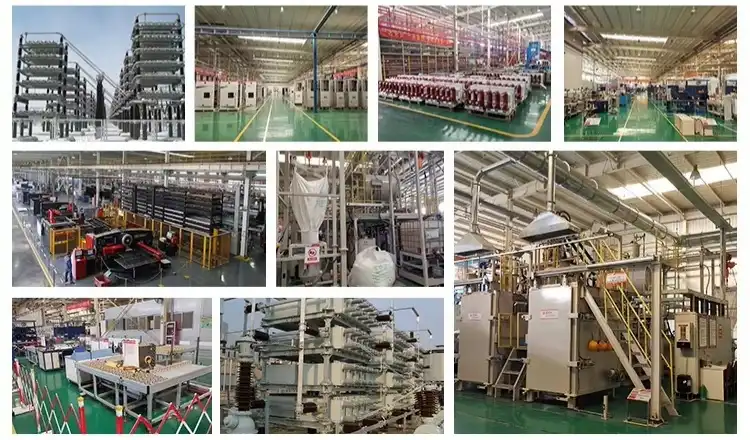
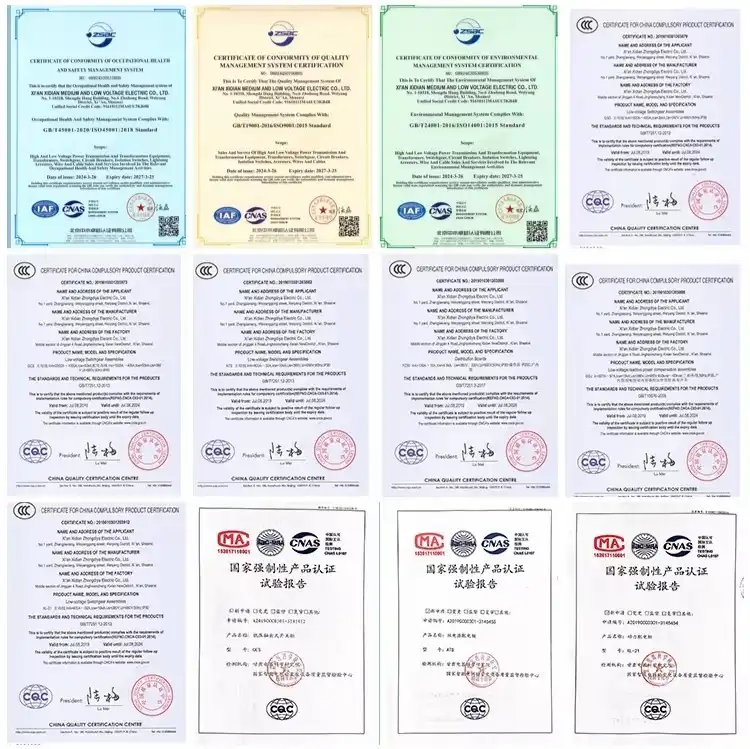
Look for companies that have quality management certifications like ISO 9001 and goods that are approved to IEC 62271 or national standards that are similar. The GN19 from Xi'an Xikai is made in a factory that is ISO 9001-certified. It has been tested for dielectric strength up to 42kV and mechanical durability over 10,000 working cycles. Before being sent out, every unit goes through salt fog tests according to IEC 60068-2-52.
Bulk Order Considerations for EPC Projects
It is important to coordinate delivery times with your switchgear cabinet supplier for EPC contracts for substations that need 5 to 50 units per project. Ask for engineering models early on in the planning process to make sure the dimensions fit. Ask your supplier for test reports and paperwork for the factory acceptance test (FAT). These will help get the project up and running faster and meet the standards of the design institute review.
Channels and Lead Times
Buying directly from the manufacturer can often save you money and give you more customization options. If you need something right away, make sure that the stock is available for normal current rates. Custom configurations, like high-altitude or pollution-resistant versions, usually need more time to be set up in the factory.
Conclusion
A break switch isn't just any old thing. The device's voltage grade, current capacity, weather setup, and size requirements must all be exactly right for the job. The GN19 High Voltage Disconnect switch can handle currents from 400A to 1250A and comes with choices for pollution, altitude, and voltage signaling that are already set up at the factory. It is used for indoor 12kV switchgear projects. If the specifications are correct during the design phase, there will be no need for expensive changes in the field or delays during commissioning.
FAQ
1.What is the primary function of a disconnect switch?
A disconnect switch is a visible break in an electrical circuit. This is to ensure that the circuit is isolated from everything else before starting maintenance work. This section of the system is not designed to prevent failures, circuit breakers or fuses are used elsewhere for this purpose.
2.Can a disconnect switch replace a circuit breaker?
They are not the same thing. An electric breaker and a stop button. A circuit breaker automatically interrupts fault currents . A disconnect switch allows you to manually interrupt fault currents . Most of the time, both devices are used in conjunction.
3.What current ratings are available for the GN19?
There are four current rates for the GN19 High Voltage Disconnect switch: 400A, 630A, 1000A, and 1250A. All of them have a rated voltage of 12kV.
4.Is the GN19 suitable for high-altitude installations?
Yes, Xi'an Xikai has a high-altitude configuration for the GN19 that lets it work at altitudes of up to 4,000 meters above sea level.
5.How often should indoor high-voltage disconnect switches be maintained?
In normal working settings, inspections are usually done every 12 to 24 months. Places with a lot of pollution or a lot of humidity may need to be inspected more often.
Contact Xi'an Xikai for Your Disconnect Switch Requirements
The GN19 disconnect switch is sold by Xi'an Xikai to substation EPC builders and switchgear integrators in many different businesses. Our engineering team can help your project move along quickly by giving you dimensional models, test results, and application support. Getting a price from a reliable disconnect switch maker is easy. Just email serina@xaxd-electric.com, amber@xaxd-electric.com, or luna@xaxd-electric.com, or go to xaxd-electric.com.
References
1. IEEE Std C37.30.1 — Standard for Definitions for AC High-Voltage Air Switches Rated Above 1000V, IEEE, 2011.
2. IEC 62271-102: High-Voltage Switchgear and Controlgear — Alternating Current Disconnectors and Earthing Switches, International Electrotechnical Commission, 2018.
3. NFPA 70: National Electrical Code, National Fire Protection Association, 2023.
4. OSHA Standard 29 CFR 1910.147 — The Control of Hazardous Energy (Lockout/Tagout), U.S. Occupational Safety and Health Administration, 2019.
5. IEC 60068-2-52: Environmental Testing — Test Kb: Salt Mist, Cyclic, International Electrotechnical Commission, 2017.
6. Switchgear and Substations: Technical Manual for High-Voltage Equipment, Siemens AG Energy Sector, 2011.