
2026 Best Porcelain housed Lightning Arrester Options for Your Home?
2026-10-16 17:23:56
Choosing the correct porcelain housed lightning arrester in 2026 matters more than ever if you are sourcing surge protection equipment for substation projects in Africa, Southeast Asia or South America. These devices employ zinc oxide (ZnO) varistors encased in a high-strength ceramic shell to protect transformers, switch gear, and circuit breakers against transient overvoltages. With IEC 60099-4 compliance criteria becoming more stringent and project demand increasing in emerging countries, the choice of a certified, field-proven metal oxide arrester directly impacts project safety, grid uptime and your overall procurement cost.
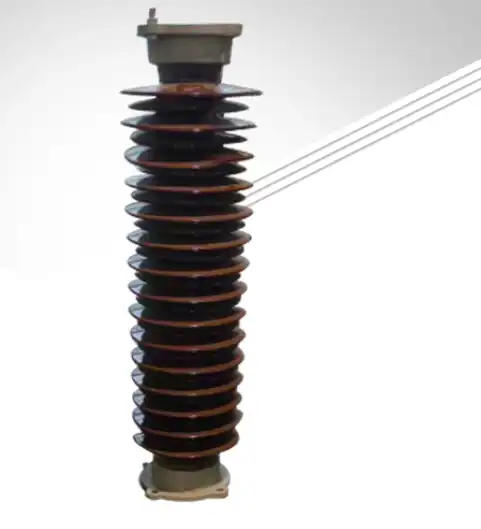
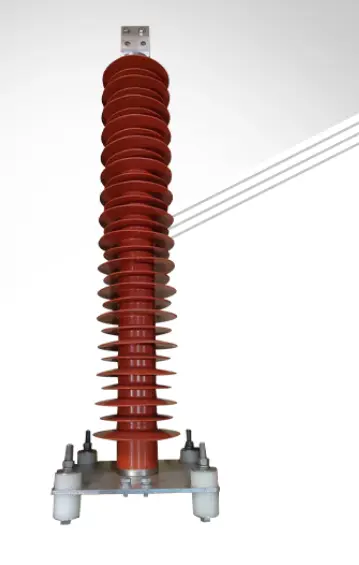
Understanding Porcelain Housed Lightning Arresters: Features, Functions & Benefits
How a Metal Oxide Arrester Works
Some lightning arresters are made of porcelain and have a tube of painted clay inside it that holds a stack of ZnO blocks. When there is no power, the ZnO blocks don't conduct electricity. As soon as lightning or a switching spike hits them, their resistance drops sharply. This quickly sends the extra energy to ground. The blocks go back to their high-resistance state without any gap firing once the surge is over. This means there is no follow current and very little wear.
Why Porcelain Housing Matters
High-strength porcelain has a mechanical tensile strength of up to 8 kN, is resistant to UV light, and doesn't rust. In highly polluted coastal or desert substations, polymer options don't always measure up. In places where there is salt fog or industrial pollution, the glazed surface gets rid of pollution deposits better. For procurement managers who move equipment over long sea lines, porcelain housing also holds up better against the physical stress of moving freight.
Key Performance Specifications to Check
Before you place a large order, check with your provider about the following: the rated voltage (kV), the DC reference voltage, the creepage distance (mm/kV), the energy absorption capacity (kJ/kV), and agreement with standards. A lightning arrester with a ceramic housing and a creepage distance rating of 25 mm/kV works well in normal settings. One with a rating of 31 mm/kV is better for places with a lot of pollution or that are high up. When leakage current stays below 1 mA, service life is usually more than 25 years.
Comparing Porcelain Housed Lightning Arresters with Other Technologies
Porcelain vs. Polymer Housing
Polymer-housed (silicone rubber) arresters are lighter and don't break easily when they fail, which lowers the risk of fragmentation. However, porcelain building has better long-term mechanical rigidity, which is important in earthquake zones or for big outdoor substations. For high-voltage classes (110 kV and above), porcelain is still the standard choice for many grid providers in South America and Africa. This is because it has been used for decades and has worked well.
Porcelain MOA vs. Legacy Silicon Carbide Gap Arresters
Older silicon carbide arresters have spark gaps that need to be serviced every so often and create follow current after each use. Modern metal oxide arresters (MOA) with ceramic housings don't have any gaps. This means they have no follow current, respond faster, and need much less upkeep. There is a lot of evidence from IEC-certified test results that gapless MOAs hold residual power better, which means that the whole system is better insulated.
Cost and Environmental Fit
Exporters who work with mixed-voltage projects in different countries can choose from a wider range of certified porcelain housed lightning arrester that can be used with different voltage levels and pollution levels. At low voltages, polymer units may be cheaper, but for projects with 110 kV to 220 kV cable, porcelain MOAs often have a lower total cost of ownership over the course of 20 years, especially when inspection rounds are lowered.
Step-by-Step Guide to Buying Porcelain Housed Lightning Arresters in 2026
Step 1 — Define Voltage and Environmental Class
First, lock down the site pollution class and the system power. According to IEC 60071-2, projects that are higher than 1,000 meters need a bigger creepage distance factor. Coastal substations in Africa need seals that can handle salt fog. Check to see if the local grid authority uses IEC, ANSI, or a national standard that comes from either one. This will affect the paperwork needed for approval.
Step 2 — Evaluate Supplier Certifications and Lead Times
Ask for test reports of type IEC 60099-4 and, if the market you're going to needs it, ANSI C62.11 paperwork. For export traders, checking the quality of the seals is very important. Ask for records of helium leak detection tests, because ocean freight in humid shipping containers puts moisture entry at the top of the list of things that could go wrong. Check to see if the product is in stock; most good companies can ship normal voltage classes within 3–7 days if they have enough in stock.
Step 3 — Compare Creepage Distance Options and Custom Configurations
Traders who send goods to more than one country often need two or three different types of creepage distance for the same voltage class. Choose suppliers that can offer options for both 25 mm/kV and 31 mm/kV, as well as those that can add custom coatings or monitoring ports without having to go through long re-engineering cycles. Locking in a provider that can do variable setup cuts down on SKU management problems in a variety of project locations.
5 Best Porcelain Housed Lightning Arrester Models in 2026
The following five models represent strong options for export-oriented procurement across transmission and distribution voltage classes. Each is evaluated on technical performance, certifications, and suitability for the developing-market project environments most commonly served by export traders.
Y10W-216/562W — 216 kV AC Transmission Class (Xi'an Xikai)
This is the flagship high-voltage unit from Xi'an Xikai. Its rated voltage is 216 kV, DC reference voltage is ≥314 kV, energy absorption is 562 kJ/kV, and creepage distance options are 25 or 31 mm/kV. The two-unit assembly suits large outdoor substations paired with 220 kV power transformers. Helium leak detection sealing, ZnO X-ray inspection, and IEC/ANSI/GB/T compliance make it one of the most thoroughly verified porcelain housed lightning arresters available for export projects in 2026. Thermal stability from -40°C to +85°C covers the climate range of most African and South American project sites.
Y10W-108/281 — 110 kV Class Porcelain MOA
Designed for 110 kV substation incoming protection, this model pairs well with 110 kV vacuum circuit breakers and isolating switches in packaged substation exports. Its compact two-unit stack fits standard gantry designs used across East African and Southeast Asian grid expansion programs.
Y5WZ-17/45 — 15 kV Distribution Class
A lightweight, cost-effective MOA for 10–15 kV distribution feeders. This model is a high-volume SKU in mixed container loads destined for rural electrification projects. It carries IEC 60099-4 certification and ships in standard pallet quantities from stock.
HY5WZ-51/134 — 35 kV Power Station Type
This polymeric-housed option from Xi'an Xikai suits indoor switchgear bays where explosion-free failure mode is required. It is IEC-compliant and designed for high-pollution mining and metallurgy environments.
Y10W-42/105 — 35 kV Outdoor Porcelain MOA
For outdoor 35 kV substations, this model's porcelain shell withstands Class III pollution conditions and provides a creepage distance suitable for tropical humid environments. Its gapless design eliminates gap maintenance entirely, reducing total cost of ownership across a 20-year service life.
Trusted Brands and After-Sales Service: Ensuring Reliability and Support
Xi'an Xikai: Verified Manufacturing Credentials
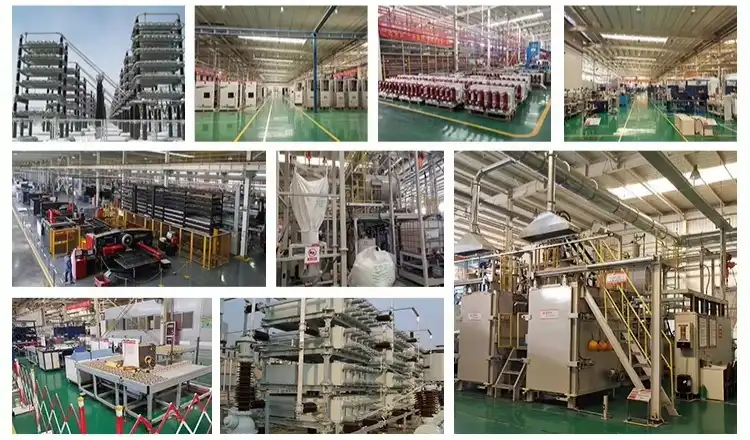
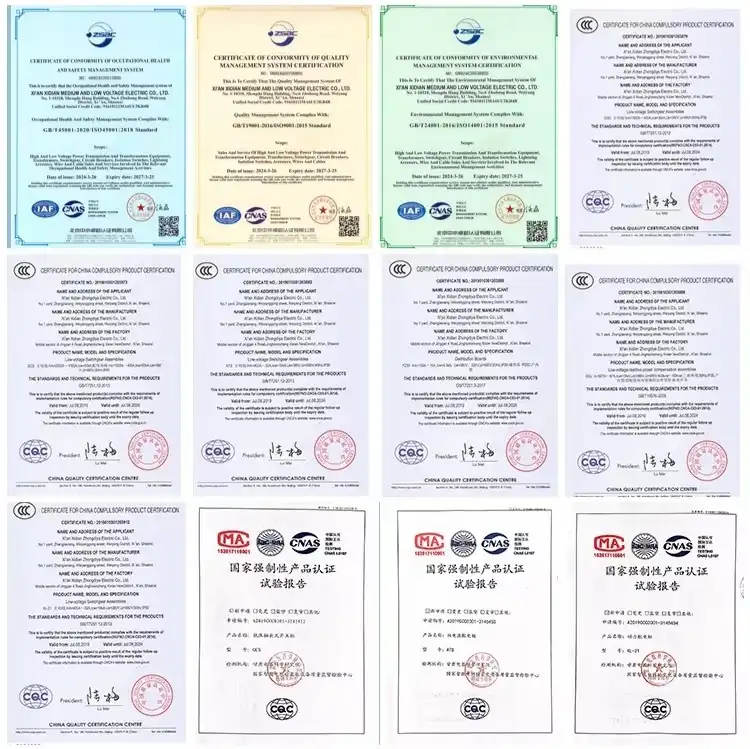
The Xi'an Xikai Medium & Low Voltage Electric Co., Ltd. has been making things for more than 20 years and is a National High-Tech Enterprise. It is made using processes that are controlled by ISO 9001 and tested in labs that are IEC-certified. Every porcelain-housed lightning arrester leaves the factory with impulse current test records (up to 100 kA), power-frequency withstand data, and helium leak detection certificates. These are the kinds of papers that export traders need to get their goods through customs or meet the inspection requirements of a final client.
Warranty Terms and Supply Chain Support
Standard warranty terms cover flaws in the materials and the work for a time period that matches the IEC service life expectations. Xi'an Xikai offers expert support 24 hours a day, seven days a week, and operations that are in line with ISO 14001 standards. This lowers the chance of mistakes in paperwork or bad packing during ocean freight. A real supply chain benefit for traders who handle mixed shipments of different voltage classes is having a single plant contact who can combine orders and send out combined test reports.
How to Verify a Supplier Before Ordering
Find IEC 60099-4 test results from a third-party lab and ask for copies of them. Check to see if the ISO 9001 quality system of the maker has been checked. Check the product's markings to see the rated voltage, the creepage distance class, and the compliance with standards. For your first order, ask a third-party agency to do a pre-shipment review. They should check the seal's integrity and make sure the dimensions match the stated creepage distance.
Conclusion
For 2026 substation projects, choosing the right porcelain housed lightning arrester comes down to three things: making sure it has the right voltage and creepage distance for the site, making sure it has verified IEC certification from a manufacturer that has been audited, and making sure it has a seal that can withstand ocean freight. For transmission-class uses, the Y10W-216/562W from Xi'an Xikai can handle all three. When putting together a full switchgear package for a 220 kV substation in West Africa or looking for distribution-class units for a Southeast Asian rural electrification tender, it is important to make sure that the arrester specification fits the local standard and environment. This protects both the grid and the reputation of your supply chain.
FAQ
1.How long does a porcelain housed lightning arrester typically last?
A well-made gapless metal oxide arrester in a porcelain case is expected to last at least 25 years when used within its stated voltage range. When the leaking current stays below 1 mA, it means that the ZnO blocks are good. Visual checks of the porcelain surface and grounding connections once a year are usually enough for maintenance.
2.Can these arresters handle high-altitude substation sites?
Yes. IEC 60071-2 says that the creepage distance needs to be longer for sites above 1,000 meters to make up for the lower air density. There are two creepage distance choices for the Y10W-216/562W: 25 mm/kV and 31 mm/kV. Xi'an Xikai's plateau-type tools can work at heights of up to 4,000 meters.
3.How does porcelain housing compare to polymer in coastal humid environments?
If you keep the glazed surface of porcelain clean, it will work well in salt-fog environments. Polymer (silicone rubber) housing is slippery and can clean itself in places with a lot of waste. For most standard outdoor substation settings, lightning arresters with porcelain housing and proper sealing have been shown to work well for a long time at a price that is competitive.
4.What certifications should I require for export projects?
The starting point is an IEC 60099-4 type test record from a recognized facility. Ask for ANSI C62.11 documentation for projects in markets that use ANSI standards. GB/T compliance is normal for goods made in China, and many grid officials in developing markets accept it.
Get Certified Porcelain Housed Lightning Arresters from Xi'an Xikai
Xi'an Xikai offers a verified range of porcelain housed lightning arrester models from distribution to transmission class, all backed by IEC 60099-4 type test reports and ISO 9001-controlled manufacturing. Stock availability supports 3–7 day shipment on standard voltage classes. Contact our team directly to request technical datasheets, creepage distance configuration options, or bulk pricing for your next substation package export:
- Website: xaxd-electric.com
- Email: serina@xaxd-electric.com| amber@xaxd-electric.com | luna@xaxd-electric.com
References
1. International Electrotechnical Commission. IEC 60099-4: Metal-Oxide Surge Arresters Without Gaps for A.C. Systems. IEC, 2014.
2. IEEE Standards Association. ANSI/IEEE C62.11: Standard for Metal-Oxide Surge Arresters for AC Power Circuits. IEEE, 2020.
3. CIGRE Working Group A3.17. Metal Oxide Surge Arresters in AC Systems: Characteristics and Service Experience. CIGRE Technical Brochure, 2013.
4. IEC 60071-2. Insulation Co-ordination — Part 2: Application Guidelines. International Electrotechnical Commission, 2023.
5. Hinrichsen, V. Metal-Oxide Surge Arresters: Fundamentals. Siemens AG Energy Sector, 2011.
6. World Bank Group. Electricity Access in Sub-Saharan Africa: Uptake, Reliability, and Complementary Factors for Economic Impact. World Bank, 2019.