
Exploring the Benefits of Vacuum Circuit Breakers
2026-10-16 17:19:01
If you work in power distribution, switchgear manufacturing, or industrial electrical procurement, you already know how much depends on selecting the right protection device. A vacuum circuit breaker (VCB) is one of the most widely adopted medium-voltage switching devices in modern electrical systems—and for good reason. Across substations, industrial plants, and OEM switchgear applications, vacuum circuit breakers offer a combination of arc-quenching speed, mechanical endurance, and environmental safety that older technologies simply cannot match. This guide walks through working principles, key advantages, procurement factors, and real applications to help your team make a well-informed sourcing decision.
Understanding Vacuum Circuit Breakers: Working Principles and Key Components
How Arc Interruption Works in a Vacuum
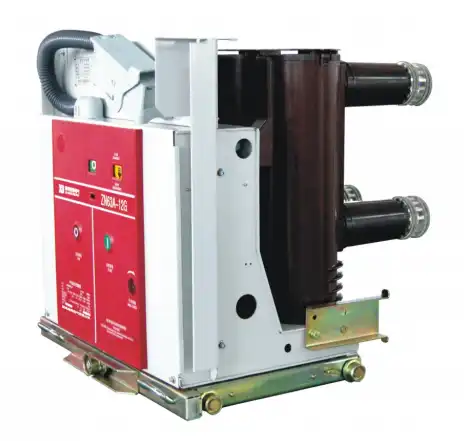
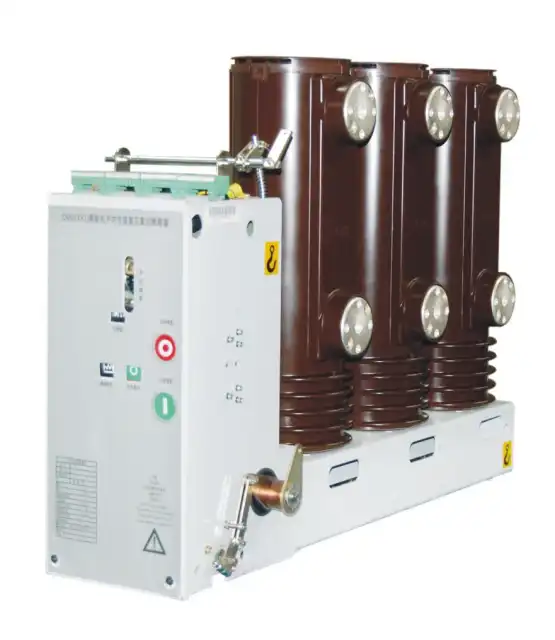
In a vacuum circuit breaker, the arc that forms when contacts move apart is put out by a vacuum interrupter room that is shut off. The arc falls apart quickly at the first current zero crossing—often in 15 milliseconds or less—because there aren't many gas molecules left to keep the ionization going. This physical feature is what makes vacuum-based switching so good at protecting circuits with medium voltages up to 40.5 kV.
Key Internal Components
The vacuum interrupter is what makes the thing work. It has two contacts, which are usually made of copper-chromium alloys, that are enclosed in a ceramic or glass shell that keeps a vacuum pressure of around 10⁻³ to 10⁻⁃ Pa. A spring-operated mechanism moves the contacts. In well-thought-out designs, like the ZN39, this mechanism is modular, which means that only certain parts need to be removed and replaced.
How VCBs Compare to SF6 and Oil Types
Oil circuit breakers need to be checked for oil regularly and can catch fire. SF6 breakers use a gas that is 23,500 times more likely to cause climate change than CO₂. This gas is now being phased out in many places because of these concerns. Vacuum circuit breakers don't have any dangerous materials inside and don't need to have their gas refilled. This difference is very important for OEM switchgear makers who want to sell their products in South Asia, Southeast Asia, and the Middle East, where environmental rules are becoming stricter.
Key Benefits of Vacuum Circuit Breakers for Industrial Use
Many times, procurement teams wonder why vacuum-based switching technology has become the norm for 6 kV to 40.5 kV medium-voltage uses. The answer comes in a mix of safe operations, consistent performance, and low ownership costs.
For switchgear OEM uses, these are the main benefits that matter:
- Extended Mechanical Life: The ZN39 Indoor Vacuum Circuit Breaker is rated for ≥20,000 mechanical operations. For high-cycle applications such as motor control or capacitor bank switching, this endurance significantly reduces unplanned replacement events. Comparable grades in the VS1 and ZN12 product families also offer M2-class mechanical life exceeding 30,000 operations for demanding scenarios.
- Fast Breaking Speed: A breaking time of ≤15 ms limits fault current exposure to downstream equipment. This is especially important in switchgear configurations where short-circuit withstand ratings are tight.
- No Greenhouse Gas Emissions: Unlike SF6 equipment, vacuum interrupters produce no regulated emissions. This simplifies compliance documentation for export to regulated markets.
- Reduced Maintenance Intervals: Because the vacuum interrupter is a sealed unit, it does not require field servicing. The spring mechanism needs inspection roughly every 2,000 operations or every three to five years, depending on duty cycle.
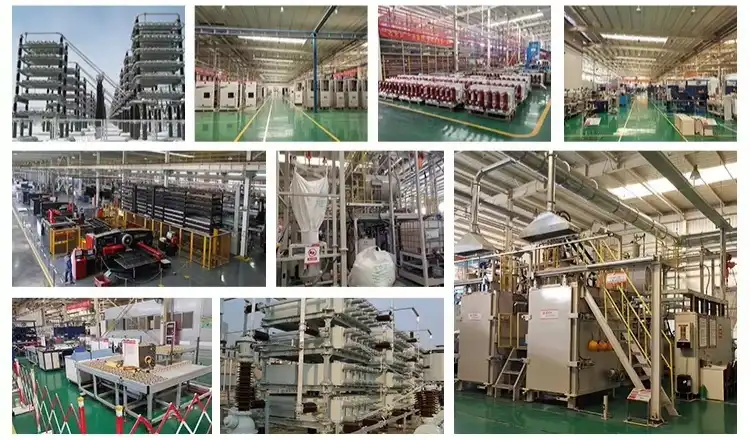
These benefits directly address the two main concerns of switchgear OEM buyers: the loss of pressure in the interrupter chamber and the dependability of the drive mechanism. Before any unit ships from Xi'an Xikai, it goes through three stages of tests that mimic more than 20 years of use. This is done to make sure that the vacuum integrity and mechanism performance will hold up over time.
Comparing Vacuum Circuit Breakers with Other Circuit Breaker Types
Vacuum vs. Air Circuit Breakers
In low-voltage systems below 1 kV, air circuit breakers (ACBs) are popular. However, they are not useful for medium-voltage distribution. At 12 kV or higher, the arc energy in open air would need a lot of space and a complicated design for the arc tube. A vacuum circuit breaker can stop power just as well or better than a regular circuit breaker, but it takes up much less space. This directly helps the design of compact electrical cabinets.
Vacuum vs. Oil Circuit Breakers
Oil-filled breakers used to be common in medium-voltage networks, but they pose a fire and explosion risk, need to have their oil changed on a regular basis, and produce carbon byproducts when they arc. Over the past 20 years, utilities and business owners in South Asia and the Middle East have been replacing oil-based units with vacuum interrupter-based ones. Over ten years, there is a big change in the upkeep costs.
Vacuum vs. MCCBs
Molded case circuit breakers work best with low-voltage panels and can handle up to 1,000 V AC at their most. They aren't made to protect against medium-voltage problems. Vacuum circuit breakers are still the most common way for switchgear OEMs to make 12 kV or 40.5 kV systems switch them on and off.
Procurement Considerations: How to Choose the Best Vacuum Circuit Breaker for Your Needs
Match Technical Ratings to Your Application
Start with current that breaks short circuits. Either 31.5 kA or 40 kA is required for most home grid and industrial substation applications. It's also important to know the mechanical life class. IEC 62271-100 sets the M1 (2,000 operations) and M2 (10,000 operations) categories, and some goods go beyond these numbers. For example, the ZN39's ≥20,000-cycle grade is higher than the M2 level.
Verify Handcart and Cabinet Compatibility
Switchgear OEMs need to be able to exchange handcarts in order to buy things, it's not a nice-to-have. It's important that the fixed contacts and secondary connections on your vacuum circuit breaker truck match up with the design of your cabinet (KYN28, XGN15, or something similar).
Evaluate Supplier Documentation and Compliance
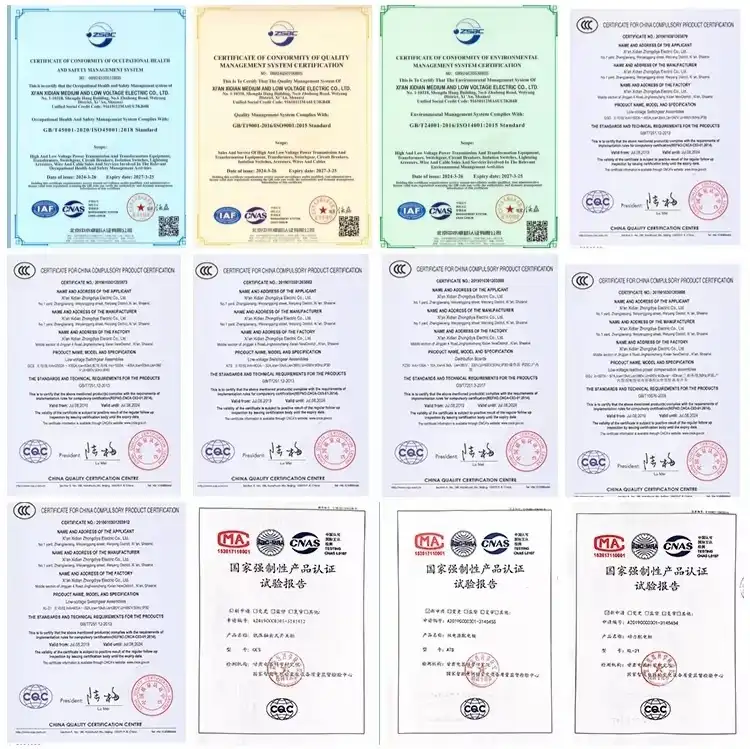
Make sure the seller has up-to-date type-test certificates to IEC 62271-100 or GB 1984 during the prototype phase, which lasts two to three months. Asking for dimensional models and test-fit samples during this phase will save you a lot of money when it comes time to make the real thing. For the ZN39, Xi'an Xikai offers CE certification and full technical documents, such as CAD files and instructions written in multiple languages. If a buyer is looking for qualified suppliers for State Grid or Southern Grid, they should make sure that the product is on approved seller records that have been made public.
Practical Applications and Troubleshooting of Vacuum Circuit Breakers
Common Industrial and OEM Use Cases
In a variety of medium-voltage situations, vacuum circuit breakers are used. To keep industrial plants safe, they guard motor feeders, transformer primaries, and bus-tie positions. They offer main safety at 12 kV and 40.5 kV bus levels in substation settings. For companies that make OEM switchgear, they are the main switching part inside air-insulated assemblies like KYN28-12 cabinets. The ZN39-S line includes condition tracking that works with the Internet of Things (IoT), which is being asked for more and more in smart grid and data center power infrastructure projects.
Diagnosing Common Operating Issues
In field service reports, two problems come up a lot. If a vacuum circuit breaker won't close, first make sure that the closing spring is fully charged, that the control voltage is between 85 and 110% of its rated value, and that the earthing switch's mechanical lockout is not engaged. Second, if the mechanism feels stiff when the truck is inserted, check the handcart guide rails and grease the contact arms. This is the "racking mechanism stiffness" problem that switchgear OEM buyers always complain about.
Preventive Maintenance Priorities
By keeping an eye on operation count records, you can keep contact wear within the manufacturer's acceptable range. Check the vacuum interrupter for any darkening or surface contamination on the ceramic envelope. These can be signs that the vacuum integrity has been compromised. For high-cycle uses like capacitor bank switching, you should choose a C2-class unit according to IEC 62271-100 to keep the overvoltage from starting up again.
Conclusion
Vacuum circuit breakers are now the standard way to protect medium-voltage switches because they are small, stop arcs quickly, last a long time, and don't give off any harmful fumes. If switchgear OEM makers and buying teams are looking for core parts for 12 kV and 40.5 kV assemblies, they need to make sure that the vacuum circuit breaker they choose has the right short-circuit ratings, mechanical life class, handcart interchangeability, and good source documentation. Xi'an Xikai makes products like the ZN39 Indoor Vacuum circuit breaker that are made to meet these needs on a large scale.
FAQ
1.Are vacuum circuit breakers better than SF6 breakers environmentally?
Yes, SF6 is a strong greenhouse gas that has the ability to warm the Earth 23,500 times over 100 years compared to CO2. There is no SF6 or any other regulated gas in vacuum interrupters. Many countries and project owners now require that new setups have equipment that doesn't use SF6. This means that vacuum circuit breakers are the best choice for new purchase requirements.
2.What maintenance does a vacuum circuit breaker require?
The vacuum interrupter is sealed and doesn't need to be serviced when it's working properly. About every 2,000 actions, or three to five years, the spring operating system needs to be oiled and the fasteners checked. Checking the contact stroke and resistance should be done on a regular basis, especially in high-cycle situations.
3.How do I determine the correct rated breaking current?
Set the short-circuit level to the same level as where it will be installed. Medium-voltage circuits usually need 25 kA, 31.5 kA, or 40 kA.
Partner with Xi'an Xikai for Your Vacuum Circuit Breaker Supply
Xi'an Xikai Medium & Low Voltage Electric Co., Ltd. makes vacuum circuit breakers for OEM switchgear partners in markets in China and other countries. Our ZN39 series has been type-tested to IEC 62271-100 and can withstand up to 20,000 mechanical actions, 12 kV of rated voltage, and 15 ms of breaking time. These are the specs that make it a stable long-term OEM supply. As a verified maker of vacuum circuit breakers whose goods are listed on State Grid's approved vendor registers, we can support yearly framework orders with call-offs every month and prototype lead times of two to three months for new requirements. Send an email to serina@xaxd-electric.com, amber@xaxd-electric.com, or luna@xaxd-electric.com to get in touch with our team. You can get technical information or a quote for your project by going to xaxd-electric.com.
References
1. International Electrotechnical Commission. IEC 62271-100: High-Voltage Switchgear and Controlgear – Part 100: Alternating-Current Circuit Breakers. IEC, 2021.
2. Flurscheim, C. H. (Ed.). Power Circuit Breaker Theory and Design. Institution of Engineering and Technology, 1982.
3. Smeets, R. A. A., et al. "Vacuum Circuit Breaker Technology and Applications." IEEE Transactions on Power Delivery, 2015.
4. CIGRE Working Group A3.27. The Impact of the Application of Vacuum Switchgear at Transmission Voltages. CIGRE Technical Brochure 589, 2014.
5. Lafferty, J. M. (Ed.). Vacuum Arcs: Theory and Application. Wiley-Interscience, 1980.
6. IEEE Standard C37.04. IEEE Standard for Rating Structure for AC High-Voltage Circuit Breakers. IEEE, 2018.