
Voltage Transformer Applications in Power Distribution
2026-10-16 17:23:58
In power distribution systems, voltage transformers are precision devices that reduce high primary voltages to standard secondary voltage levels for accurate measurement and system safety. These devices are the cross-roads of metering accuracy, equipment safety and grid reliability for medium voltage applications (particularly 24kV). Whether you are selecting instrument transformers for a new switchgear panel, or replacing ageing units in an existing substation, understanding the way a voltage transformer works, and where it fits in your distribution architecture, is the first step in making a smart procurement decision.
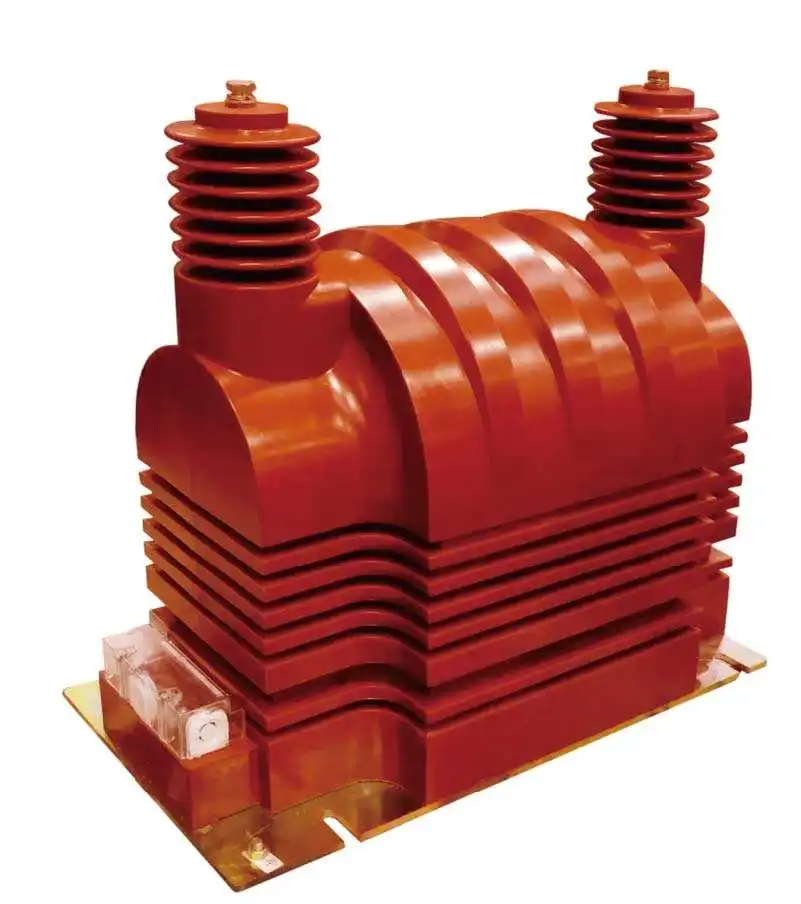
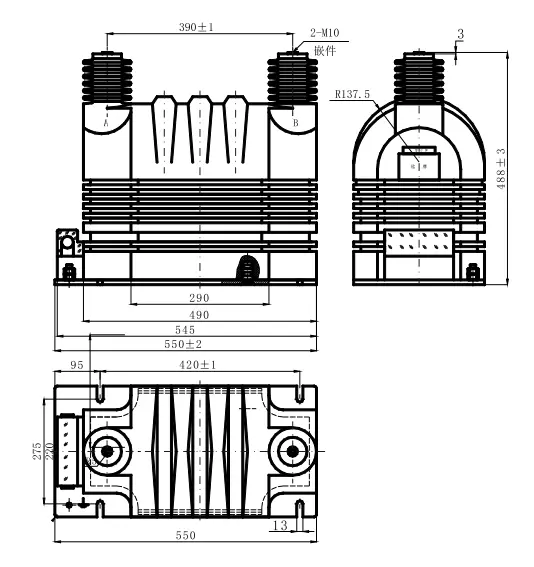
Understanding Voltage Transformers in Power Distribution
What a Voltage Transformer Actually Does
Voltage transformers (sometimes called potential transformers, or PTs) employ electromagnetic induction to step down a high primary voltage to a low secondary voltage (often 100V or 110V) that may be used by meters, relays and control systems. The line-to-line or line-to-ground voltage is checked using a voltage transformer and the line current is checked by a current transformer with minimum stress on the connection. Protection engineers need to know the difference between the two values to determine apparent power or to discover defects.
Types Commonly Used in Medium-Voltage Systems
There are two main types: those that are immersed in oil and those that are dry (cast-resin). If you're outside or the temperature is high, oil-immersed units will work well with the heat. On the other hand, dry-type units, like the epoxy resin-cast types used in indoor 24kV switchgear, will work better with water and partial discharge in small areas. Most of the time, single-phase units are found in switchgear sections. Three-phase setups are found in open-bus substations, where location restrictions are less strict.
Core Technical Parameters You Cannot Overlook
Metering income and relay success are both directly affected by accuracy class. IEC 61869-2 lists classes 0.1, 0.2, 0.5, 1, 3, and 3P. Class 0.2 is needed for revenue metering, and Class 3P is needed for protection circuits. The insulation level, which is shown as the lightning impulse withstand / power-frequency withstand ratio, needs to be right for the system. The recommended insulation level for 24kV networks is usually 17.5/55/105 kV, which means the unit can handle 55 kV at power frequency for one minute and 105 kV on impulse.
Key Applications of Voltage Transformers in Power Distribution Systems
Voltage Measurement and Grid Stability
To operate the grid efficiently, energy management and SCADA systems need real-time voltage data from instrument transformers. A voltage transformer supplying a digital transducer may transmit sampled values directly to a safety IED (Intelligent Electronic Device), making fault identification quicker than with typical electromechanical switches. The IEC 61850 states that instrument transformer sampled analogue values may be sent via a station bus at a rate of up to 80 samples per cycle. This can only be achieved if the upstream potential transformer maintains phase shift within 30 minutes.
Protection and Automated Switchgear Control
Overvoltage and undervoltage relays require correct secondary voltage signals to properly trip breakers or switch on voltage regulators at the appropriate moment. When a 24kV switchgear panel is equipped with a voltage transformer and vacuum circuit breaker, the relay is capable of sensing a voltage dip as low as 10% and initiating transfer to the backup feeder within one cycle. In isolated-neutral systems, ferroresonance is a recognised danger that may lead to the secondary output being unstable. The danger may be removed by adding a dedicated ferroresonance suppressor to the potential generator that stops the oscillations before they can damage the relay logic.
Energy Metering and Billing Accuracy
Commercial and industrial energy bills for medium voltage are class 0.2 or class 0.5 accuracy. With a 10 MW industrial load, a 0.5%+ ratio mistake might create a billing variation that will be noticed after a year. In certain Southeast Asian markets including Vietnam, Indonesia and the Philippines, IEC 61869-compliant metering transformers are necessary for grid-connected installations exceeding 1 MW. Choose a voltage transformer that meets both IEC 61869-2 and GB 20840.2-2014, allowing manufacturers to export switchgear panels to other locations.
Choosing the Right Voltage Transformer for Your Power Distribution Needs
The F-1 Criteria Screening Approach
The tiered screening process supports procurement teams exporting 24kV switchgear into markets beyond the country of origin. First, find out what weight you’ll have to carry. Secondary output ratings of 30VA, 80VA or 200VA are for various relay and metering loads. Before choosing a unit, make sure you have the right load for your connected devices. Then, ensure the level of insulation is up to the norms of the market you're looking at. The South and Southeast Asian lines have to operate at 24kV according to IEC rules, hence the right starting point is 17.5/55/105kV insulation level.
The important aspects to consider for 24kV switchgear applications are:
- Accuracy class 0.2 for revenue metering panels, 0.5 for general measurement and 3P for protection only circuits where metering grade is not required.
- Secondary Burden: Total VA of all connected meters and relays should not exceed rated output (30/80/200 VA). Otherwise accuracy class can not be assured.
- Physical fit: Check mounting dimensions and primary terminal spacing to your switchgear compartment design -- Wrong clearances create insulation hazards.
- Ferroresonance hazard: For ungrounded or high impedance grounded systems, use a voltage transformer that has or is equipped with a suppressor.
- Standards conformance IEC 61869-1/2 most export markets IEEE C57.13 North American end consumers
These are kind of like a checklist to make sure you don't have to spend a lot of money changing specifications after the samples are already made. This allows them to be used earlier in the design cycle, eliminating the conventional one to two month re-sample period.
Evaluating Supplier Reliability for Annual Frame Contracts
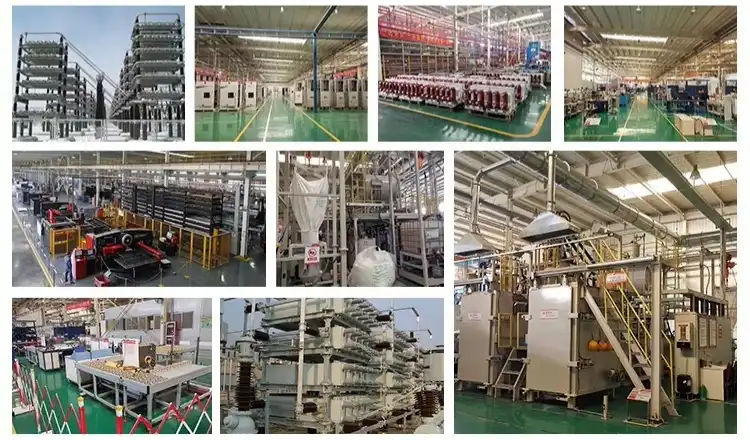
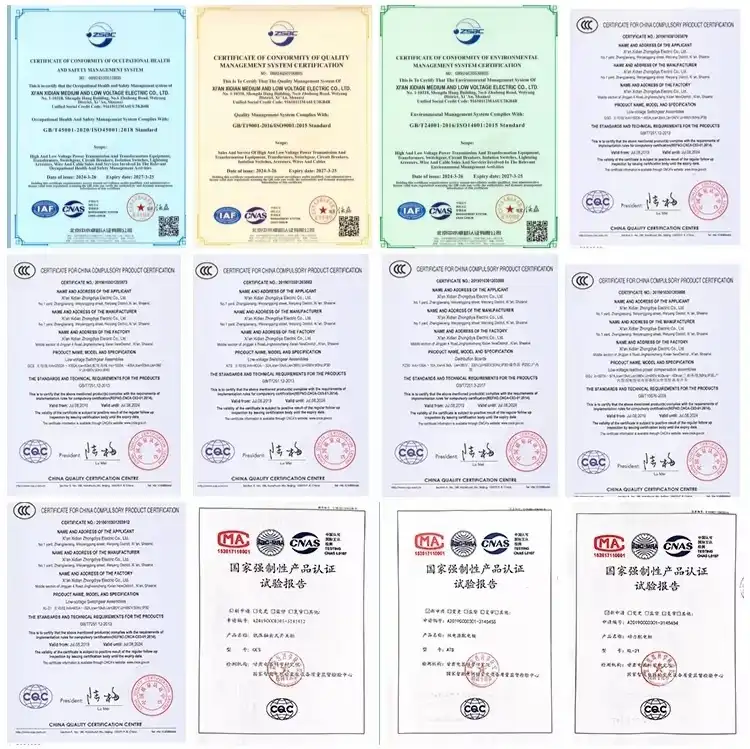
For switchgear manufacturers with yearly procurement frameworks and monthly buy orders, product specification is as critical as supplier consistency. Some crucial signals are whether the manufacturer has ISO 9001 certification (which ensures the process is consistent), if frequent testing is 100% (not just samples) and if the seller stores supplies in the area in case of an emergency. A three-week lead time for big orders is acceptable for well-known businesses that have automatic winding lines and vacuum casting equipment.
Best Practices for Installation, Testing, and Maintenance
Safe Installation Protocols
Before installing a voltage transformer in a switchgear cubicle, ensure that the main terminals are de-energised and grounded as required by OSHA 1910.269 live-work exclusion zones. Epoxy resin units must not be subjected to mechanical shocks. If you do, microscopic fissures may occur in the cast body which subsequently can become sites where partial discharges originate.
Testing Procedures That Confirm Accuracy
Each unit must be tested prior to leaving the factory. These are a partial discharge below 10 pC at 1.2 times the maximum voltage, a power frequency withstand at 55 kV for one minute and an impulse withstand at 105 kV. The ratio tests performed at 80% and 120% of rated voltage, on site, demonstrate that the unit is operating across the complete working range and not just at standard voltage.
Preventive Maintenance to Prevent Insulation Drift
The major cause of the loss of accuracy of epoxy resin potential transformers with the time is changing of the temperature of the insulation. We perform infrared thermography on an annual basis to identify hot areas before they fail. Measuring the insulating resistance on an annual basis and comparing it to the factory standard will allow you to observe the early stages of wear and tear. If the insulating resistance of a unit reduces more than 20% from what it was when it was initially constructed, it should be replaced, not utilised.
Future Trends in Voltage Transformer Technology
Digital and IEC 61850-Ready Designs
With the proliferation of digital substations, voltage transformers are projected to be more and more connected to the process bus topologies. IEC 61850-9-2 LE (Light Edition) merging units may take the analogue outputs of normal potential transformers and convert them into sampled values. This preserves backward compatibility, and also makes digital security systems possible.
Predictive Maintenance Through IoT Integration
The solution is to install temperature and partial discharge sensors within the transformer enclosure and transmit data to the cloud. This means maintenance crews can monitor the condition of the insulation in real time, rather than once a year. This approach is increasingly popular with utility-scale switchgear operators in Southeast Asia who are responsible for large groupings of 24kV panels across several feeder networks.
Supply Chain Implications for Switchgear OEMs
Switchgear manufacturers want voltage transformer providers to be more flexible in their requirements because of shorter product cycles and a greater variety of export destinations. In this industry, manufacturers who can provide unique secondary ratios (e.g. 24kV/120V for export panels built to North American standards) and fast re-tooling timeframes have a distinct advantage.
Conclusion
Selecting a voltage transformer for a 24kV switchgear application is a decision that touches accuracy, protection reliability, regulatory compliance, and long-term operational cost. The right unit—properly specified by accuracy class, secondary burden, insulation level, and physical dimensions—keeps metering systems honest, protection relays fast, and insulation healthy for decades of service. Pairing it with proper installation practices, factory-verified testing, and a preventive maintenance schedule closes the loop on performance assurance. For switchgear OEMs supplying South Asian and Southeast Asian markets, aligning with a supplier who holds both IEC and GB certifications removes the need for dual-sourcing.
FAQ
1.What is the difference between a voltage transformer and a current transformer?
A current transformer is connected in series and steps down the line current so that it can be measured. Both are instrument transformers, but they are not meant to be switched between them because they do different monitoring and safety jobs.
2.Which accuracy class should I specify for revenue metering at 24kV?
For revenue measuring uses, IEC 61869-2 calls for class 0.2. Class 0.5 is fine for showing voltage in general. Class 3P is only for safety systems that don't have to be accurate with their meters. It is conservative to set class 0.2 for all panels, but it costs more. When billing is not involved, it is more cost-effective to use class 0.5.
3.How does ferroresonance affect a 24kV potential transformer?
In 24kV systems that are isolated-neutral or have a high impedance grounded network, the capacitance of the cable network can resonate with the magnetizing inductance of the voltage transformer. This can cause prolonged overvoltages that damage shielding and mess up secondary readings. An open delta secondary winding is attached to a ferroresonance suppressor as the usual way to reduce the problem.
4.Can the secondary output ratio be customized?
Yes. The standard secondary output is either 100V or 110V, but export panels going to North America can have rates like 24kV/120V. For custom ratios, you usually need to allow one to two months for samples and agree on a minimum order number in the frame contract.
5.What routine tests confirm a unit meets IEC 61869-2?
Measurement of ratio and phase displacement, partial discharge testing (acceptance limit: below 10 pC), power-frequency withstand at 55 kV for one minute, and verification of terminal marking are all tests that are done regularly in the factory. These tests are for the whole unit, not just a random group.
Partner with Xi'an Xikai for Your Next Voltage Transformer Order
The 24kV Indoor Voltage transformer from Xi'an Xikai is a fully enclosed, epoxy resin-cast potential transformer that was made according to IEC 61869-1/2 and GB 20840.2-2014. It has class 0.2 and class 0.5 accuracy, 30/80/200 VA secondary outputs, and insulation level 17.5/55/105 kV. We are a top manufacturer of voltage transformers and have been providing national grids in over 30 countries for over 25 years. We offer annual frame contracts with three-week bulk lead times and custom ratio specs. Get in touch with our team right away to ask for a sample or talk about your switchgear OEM needs:
References
1. IEC 61869-2: Instrument Transformers – Additional Requirements for Current Transformers, International Electrotechnical Commission, 2012.
2. IEC 61869-1: Instrument Transformers – General Requirements, International Electrotechnical Commission, 2007.
3. GB 20840.2-2014: Instrument Transformers – Part 2: Additional Requirements for Current Transformers, Standardization Administration of China, 2014.
4. IEEE C57.13: Standard Requirements for Instrument Transformers, Institute of Electrical and Electronics Engineers, 2016.
5. Blackburn, J.L., & Domin, T.J., Protective Relaying: Principles and Applications, CRC Press, 2014.
6. McDonald, J.D. (Ed.), Electric Power Substations Engineering, CRC Press, 2012.