
24kV Vacuum Circuit Breaker: How to Match Current Ratings
2026-11-18 17:19:39
To match current ratings on a 24kV vacuum circuit breaker, start with the maximum expected load current. Then choose the next standard rated current above it, such as 630, 1250, or 2500 A. Next, size the short-circuit breaking current from a fault study, and confirm short-time withstand current, peak making current, and site conditions. Continuous current and breaking current are separate ratings, so state both in every quotation request. At Xi'an Xikai, we find that settling these numbers before sampling keeps supplier quotations easy to compare. This guide shows you how.
Why Correct Current Matching Matters in a 24kV Vacuum Circuit Breaker?
Voltage Class Alone Does Not Define Fit
Selecting a 24kV vacuum circuit breaker takes more than confirming the voltage class. Rated continuous current, actual load current, short-circuit breaking current, and short-time withstand current each cover a different operating condition. A wrong choice can cause overheating, nuisance tripping, poor protection coordination, or unsafe fault interruption. Oversizing has a cost too: it raises equipment spending and can reduce relay sensitivity. When I talk with switchgear builders, the most common gap is a request that lists only "24 kV, 1250 A." That leaves breaking capacity, withstand time, and site conditions open to guesswork, so suppliers answer different questions and the quotes cannot be compared fairly.
The Main Ratings to Read on a Rating Schedule
A vacuum circuit breaker should be judged by a full rating schedule. It covers rated voltage, insulation level, frequency, continuous current, short-circuit breaking current, peak making current, short-time withstand current, and operating endurance. IEC 62271-100 and IEEE C37.04 both define how these ratings are stated and tested. Rated current must match the thermal limits of the whole switchgear assembly, not only the breaker. Under IEC 62271-1, the peak withstand current is 2.5 times the short-circuit current at 50 Hz and 2.6 times at 60 Hz, so frequency changes this number. Control voltage, auxiliary contacts, and mechanism type belong on the schedule as well.
Questions to Answer Before You Request Quotations
Before you send a vacuum circuit breaker inquiry, collect six answers: system voltage, maximum load, prospective fault level, application type, installation environment, and the governing standard. Add the single-line diagram if you have one. This small step keeps procurement and technical teams working from the same data. A technical manager can then check the ratings, while the purchasing team compares like for like instead of choosing by voltage or price alone. In my experience, a request with these six items gets a faster and more accurate reply, because the supplier can confirm the rating, spot derating needs, and quote the right accessories in one pass.
Calculate Load Current and Match Your Vacuum Circuit Breaker to the Application
Calculate Load Current from Maximum Demand
Base continuous current on the maximum expected operating condition, not on average demand. For a three-phase feeder, divide apparent power in kVA by 1.732 times the line voltage in kV. A 25 MVA incomer at 24 kV draws about 601 A. Add a margin of about 20 percent for growth and uncertainty, and you reach roughly 721 A. That points to the 1250 A standard step rather than 630 A. For a 10 MVA transformer feeder, the same math gives about 241 A, so a 630 A rating covers it with room to spare. A margin helps, but it never replaces a protection study.
Match Ratings to Transformers, Motors, and Capacitors
Each load type stresses the vacuum circuit breaker differently. Transformer feeders face magnetizing inrush, which commonly reaches eight to twelve times rated current for a short time, so protection settings must coordinate with it. Motor feeders see starting current often five to seven times full-load current, along with frequent switching and vacuum switching transients. Capacitor banks bring inrush and restrike risks, so request a breaker tested for capacitive switching, such as IEC Class C2. For utility incomers and substation feeders, prioritize high continuous current, strong fault performance, and remote operation. Tell the supplier the load type up front, because it changes the mechanism and test requirements.
Account for Renewable and Distributed Power
Solar plants, battery storage, and standby generators change how current flows through a feeder. Power may move in both directions, and inverters limit fault current differently from rotating machines. When you size a vacuum circuit breaker for these systems, check normal and emergency operating modes, not only peak load. Include planned expansion, such as added transformers or storage units, so the continuous rating still fits in five years. Parallel transformers also raise fault levels at the busbar, which can push the breaking capacity requirement up a step. Share these scenarios with your supplier early. They are easier to handle at the design stage than after sampling.
Select the Right Current and Breaking-Capacity Combination for a 24kV Vacuum Circuit Breaker
Choose Continuous Current First, Then Breaking Capacity
Work in two steps. First, set the minimum continuous current from maximum load. Second, set the breaking capacity from a fault-current study. The standard current series runs 630, 800, 1000, 1250, 1600, 2000, 2500, and 3150 A. IEC breaking classes include 16, 20, 25, 31.5, and 40 kA. Fault current at 24 kV equals short-circuit MVA divided by 1.732 times 24. A 1000 MVA source gives about 24 kA, so a 25 kA rating leaves almost no margin and 31.5 kA is the safer pick. Also check peak making current, short-time withstand duration (commonly 1 or 3 seconds), and temperature rise.
What the ZN63-VS1 Offers
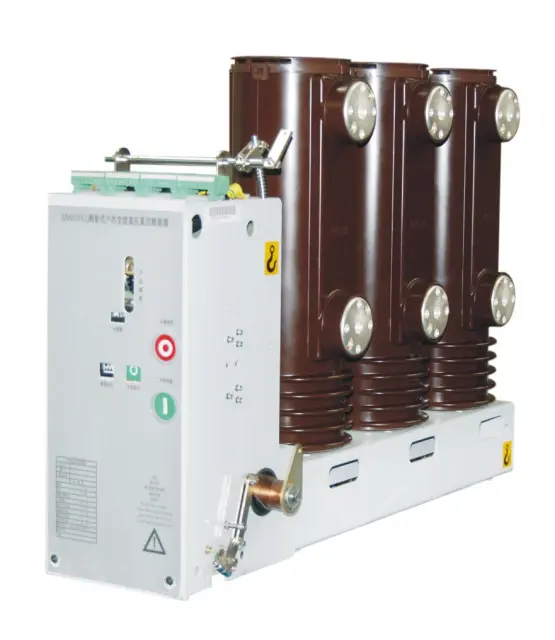
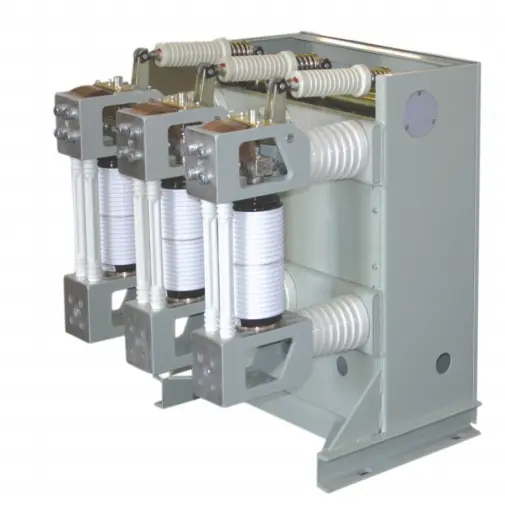
The ZN63-VS1 Indoor Vacuum Circuit Breaker is designed for medium-voltage systems up to 24 kV. It comes in rated currents of 630, 1250, 1600, 2000, 2500, and 3150 A at 50 Hz, with breaking capacity up to 40 kA. A spring-operated or permanent magnetic mechanism drives the vacuum interrupter, and the compact body can retrofit into panels such as KYN28A-24. Because U.S. grids run at 60 Hz, confirm frequency suitability with us before you plan a project. Xi'an Xikai holds 3C, ISO 9001, ISO 14001, and ISO 45001 certifications, the product meets IEC standards, and independent lab test reports are available.
Operating Conditions and Derating
A vacuum circuit breaker's rated values apply only inside its stated service conditions. The ZN63-VS1 is specified for -15°C to +40°C, altitude up to 1000 m, and seismic intensity up to MSK-8. Humidity limits are a daily average of 95% RH or less (2.2 kPa vapor pressure) and a monthly average of 90% RH or less (1.8 kPa). The air should be free of significant dust, smoke, corrosive or flammable gases, vapors, and salt spray. Outside these limits, you need derating or a different design. Xi'an Xikai also builds plateau-type equipment for altitudes up to 4,000 meters, so tell us your site elevation early.
Avoid Common Mistakes with a Practical Vacuum Circuit Breaker Checklist
Mistakes That Cause Rework
Most selection errors come from a few habits. Some buyers treat the 24 kV class as proof of fit for every duty. Others list continuous current without breaking current, or the reverse. Derating factors such as altitude, ambient temperature, enclosure heating, ventilation, pollution, and humidity get missed. Oversizing raises cost and can dull relay sensitivity, while undersizing creates thermal or interruption risks. Interfaces cause trouble as well: coils, auxiliary contacts, interlocks, earthing switches, racking systems, and control voltages must match the cabinet. For OEM panel builders, handcart interchangeability is a frequent check item, so confirm dimensions and interlock logic on a sample before placing monthly orders.
Electrical and Environmental Data to Collect
A good checklist for a 24kV vacuum circuit breaker gives every supplier the same starting point. On the electrical side, list voltage, frequency, earthing arrangement, maximum load, transformer or motor capacity, prospective fault current, withstand duration, and peak current. On the environmental side, note indoor or outdoor use, altitude, temperature range, pollution, humidity, enclosure protection, cable entry, and busbar layout. Space limits matter, since a breaker that meets the rating but not the cabinet depth still fails the project. With this data in hand, a technical manager can verify ratings in minutes, and a purchasing team can send one clean request to several suppliers.
Operational and Commercial Items
Operational needs come next: switching frequency, expected endurance, remote control, maintenance access, and condition monitoring. Then add commercial items such as lead time, warranty, documentation, spare parts, export capability, and lifecycle support. For OEM buyers who place large monthly orders, standard ratings and stable documentation keep price comparison transparent. New specifications need sampling time, so share your requirement early and agree on the test reports you expect. A checklist that covers technical and commercial points reduces back-and-forth, and it protects the schedule when a project has a fixed delivery date.
Evaluate Vacuum Circuit Breaker Suppliers and Reach a Decision
What to Check in a Vacuum Circuit Breaker Manufacturer
Judge a vacuum circuit breaker manufacturer on documented capability, not purchase price alone. Confirm experience with 24 kV products, the available current and breaking ranges, and the ability to supply compliant drawings and test reports. Look at the interrupter construction, contact materials, operating mechanism, insulation system, production traceability, and routine testing. Ask which interrupter the breaker uses, domestic or imported, and request type-test evidence rather than relying on brand name alone. Xi'an Xikai offers seven product categories, 34 series, and over 100 variants. Our products serve State Grid systems, steel and metallurgy, petrochemicals, rail transportation, and renewable energy.
Support for Export and OEM Projects
International buyers need English documentation, export packaging, certification, commissioning support, and spare parts. Clear, prompt communication matters when a drawing needs a change. We support customized configurations, including dual-voltage grids and space-constrained sites, and OEM panel builders can send cabinet drawings for a fit review. A project-specific technical review based on the single-line diagram exposes derating and coordination issues before tooling or sampling begins. For a 24kV vacuum circuit breaker used at high altitude, with parallel transformers, or in capacitor and motor switching, direct manufacturer input saves time.
A Five-Step Decision Process
Follow a fixed order. First, define the application, normal and emergency modes, and growth plans. Second, set minimum ratings for voltage, insulation, continuous current, fault interruption, withstand, and endurance from verified data. Third, compare qualified options on the same specification, including dimensions, mechanism, accessories, certifications, delivery, warranty, and total cost of ownership. Fourth, approve the datasheet, general arrangement, wiring diagram, and protection information before the purchase order. Fifth, require routine test reports and inspection records before shipment. This sequence keeps technical and purchasing teams aligned and makes each quotation easy to audit.

Conclusion
Matching a 24kV vacuum circuit breaker starts with four rating groups: voltage and insulation, continuous current, short-circuit breaking current, and withstand current. Continuous current comes from maximum load, as the 25 MVA example showed. Breaking capacity comes from a fault study, as the 1000 MVA example showed. Transformers, motors, capacitors, and renewable sources each add switching demands that affect the choice. Site conditions such as temperature, humidity, altitude, and air quality can limit the usable rating, as the ZN63-VS1 service conditions illustrate. A checklist and a fixed decision process let teams compare suppliers on equal terms. The practical result is a breaker that carries normal load, interrupts the expected fault, and fits the switchgear assembly.
FAQ
1. What current ratings does the ZN63-VS1 offer?
The ZN63-VS1 Indoor Vacuum Circuit Breaker comes in 630, 1250, 1600, 2000, 2500, and 3150 A at 50 Hz.
2. How do I calculate load current at 24 kV?
Divide apparent power in kVA by 1.732 times voltage in kV. A 25 MVA load draws about 601 A.
3. Is continuous current the same as breaking current?
No. Continuous current covers normal heating, while breaking current covers fault interruption. State both in your purchase documents.
4. Does altitude change the rating?
Yes. The ZN63-VS1 is specified for altitudes up to 1000 m. Higher sites need a review or plateau-type equipment.
5. Which documents should I request?
Ask for the datasheet, type-test reports, drawings, wiring diagram, and routine test records before shipment.
Match Your 24kV Vacuum Circuit Breaker Current Ratings with Xi'an Xikai
Send your single-line diagram, load data, and fault level to Xi'an Xikai, a vacuum circuit breaker supplier with seven product categories, 34 series, and plateau-type equipment for altitudes up to 4,000 meters. Our engineers will review ratings, handcart fit, and documents for your switchgear project. Contact serina@xaxd-electric.com, amber@xaxd-electric.com, or luna@xaxd-electric.com, or visit xaxd-electric.com for details.

References
1. IEC 62271-100: High-voltage switchgear and controlgear – Part 100: Alternating-current circuit-breakers, 2021
2. IEC 62271-1: High-voltage switchgear and controlgear – Part 1: Common specifications for alternating current switchgear and controlgear, 2017
3. IEEE C37.04: IEEE Standard for Ratings and Requirements for AC High-Voltage Circuit Breakers with Rated Maximum Voltage Above 1000 V, 2018
4. IEEE C37.010: IEEE Application Guide for AC High-Voltage Circuit Breakers > 1000 V Rated on a Symmetrical Current Basis, 2016
5. IEEE C37.20.2: IEEE Standard for Metal-Clad Switchgear, 2015
6. IEC 62271-200: High-voltage switchgear and controlgear – Part 200: AC metal-enclosed switchgear and controlgear for rated voltages above 1 kV and up to and including 52 kV, 2021
